
Shingles Vaccine and Dementia: What the Evidence Shows
Natural experiments in Wales, Australia and Canada linked shingles vaccination to fewer dementia diagnoses. What they found, and why the size is disputed.
Population change, ageing, birth rates, household structure, urbanisation and migration.
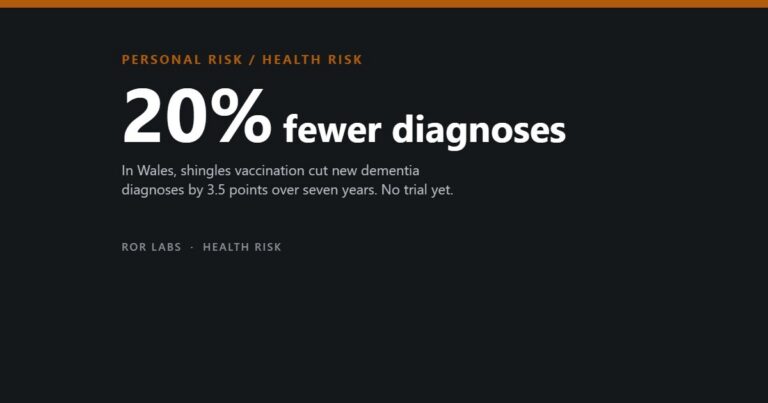
Natural experiments in Wales, Australia and Canada linked shingles vaccination to fewer dementia diagnoses. What they found, and why the size is disputed.
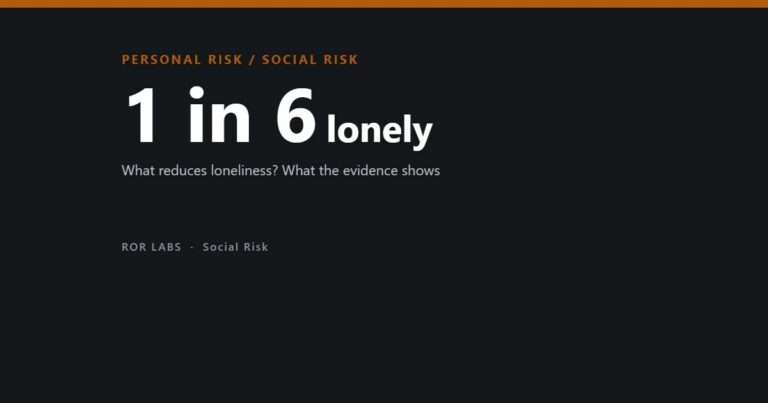
A 2026 meta-analysis of 280 studies found loneliness interventions work on average, but not always the ones people expect. What helps, how much, and for whom.
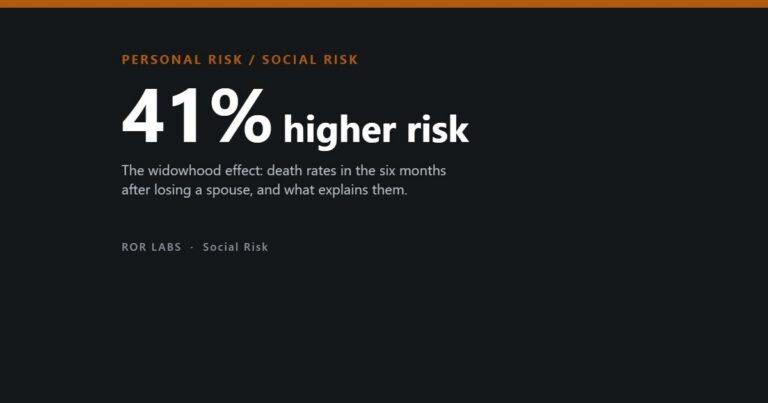
Death rates rise about 41% in the six months after losing a spouse. What meta-analyses show about the widowhood effect, who is most at risk, and why.
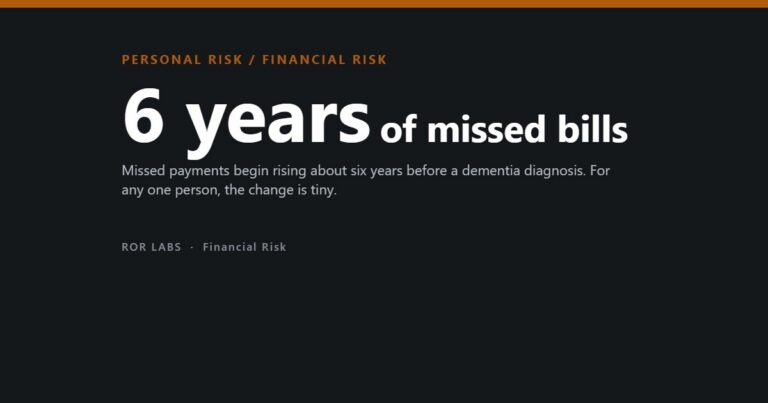
Missed payments begin rising about six years before a dementia diagnosis, and confidence in managing money does not fall as ability does. What the evidence shows.
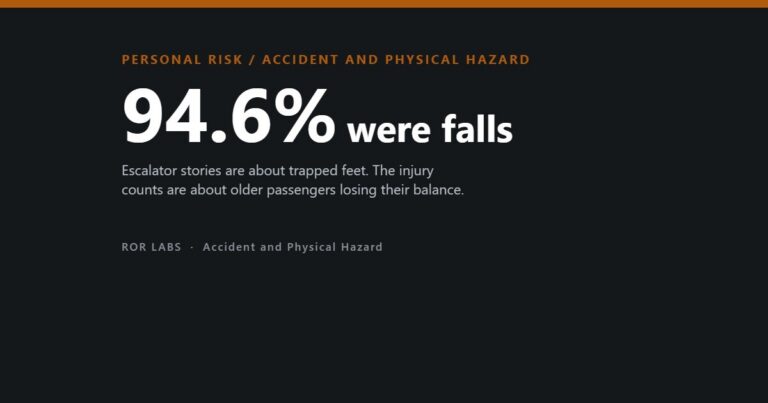
Escalator stories are about trapped feet, but most escalator injuries are falls, and most of the injured are older adults. What the evidence shows.
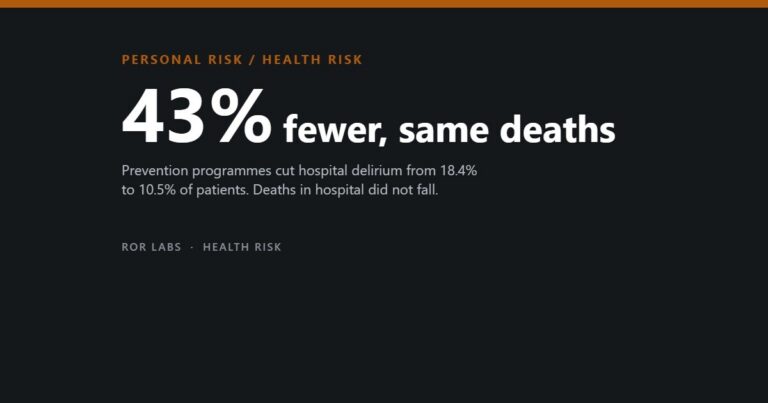
About 29% of older medical inpatients develop delirium, and many cases are missed. Prevention programmes cut cases by 43%, but did not reduce deaths. What the evidence shows on detection, dementia and treatment.
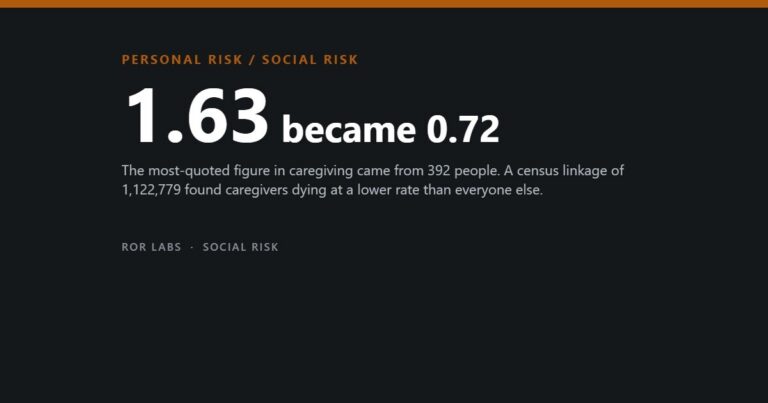
The famous figure came from 392 people, applied only to strained spouses, with a confidence interval starting at 1.00. Larger studies found the reverse — and inside them, strain still predicts death.
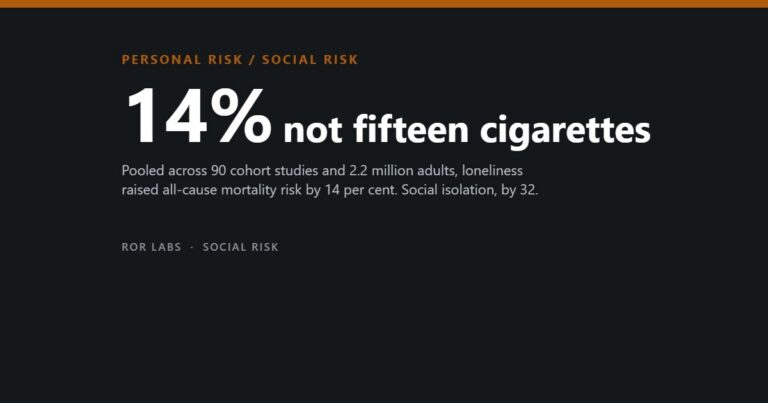
The 50 per cent figure everyone quotes is an average across measures that disagree. Across 90 cohorts and 2.2 million adults, social isolation raised mortality risk 32 per cent and loneliness 14 — and every improvement in method makes the number smaller.
While you are saving, only the average return matters. The moment you start withdrawing, the order matters enormously – and a bad first decade does permanent damage. Where the 4% rule came from, what Morningstar puts the number at now, and why planning to average life expectancy is a coin flip.
The 2024 Lancet Commission put 45% of dementia cases down to 14 modifiable risk factors. Two were added that year — midlife cholesterol and untreated vision loss. Almost none of the list is something you buy, and no supplement appears on it at all.