
Daylight Saving Time: What the Evidence Shows
What studies show about sleep loss, heart attacks, road crashes and errors after the clocks change, why countries disagree, and the fight over permanent time.
Illness, infectious disease, injury, chronic conditions, deteriorating mental health, disability and the risks that come with ageing.
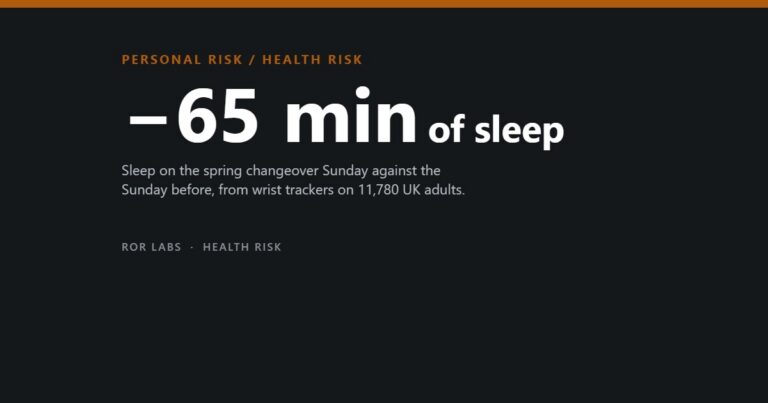
What studies show about sleep loss, heart attacks, road crashes and errors after the clocks change, why countries disagree, and the fight over permanent time.
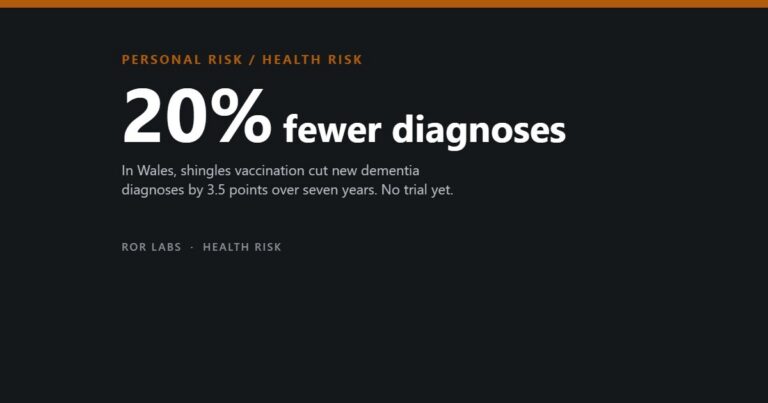
Natural experiments in Wales, Australia and Canada linked shingles vaccination to fewer dementia diagnoses. What they found, and why the size is disputed.
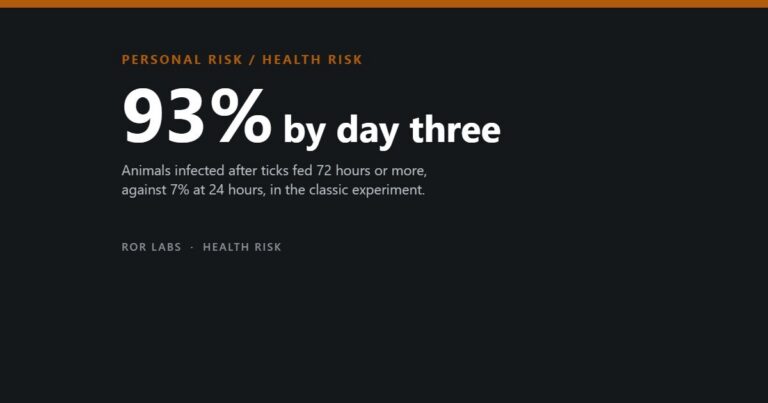
How long a tick must be attached, what works after a bite, why US case counts jumped, and what trials of longer antibiotics and a new vaccine found.
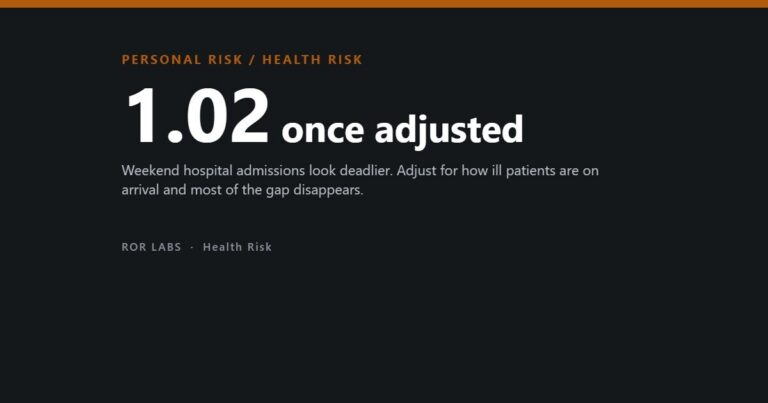
Patients admitted to hospital at weekends die at slightly higher rates. Adjust for how ill they are on arrival and most of the gap disappears. What the evidence shows.
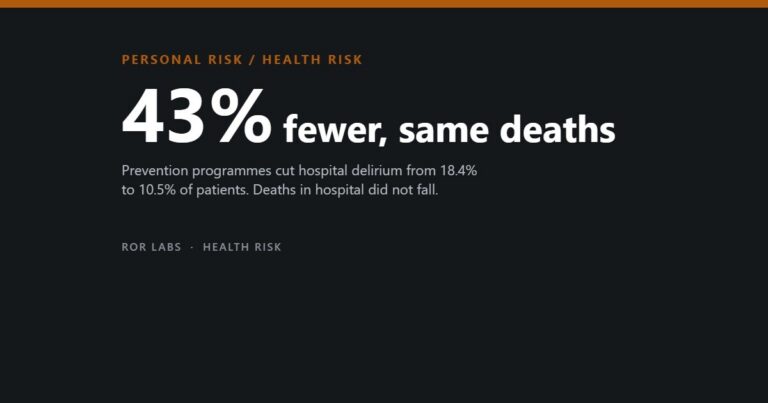
About 29% of older medical inpatients develop delirium, and many cases are missed. Prevention programmes cut cases by 43%, but did not reduce deaths. What the evidence shows on detection, dementia and treatment.
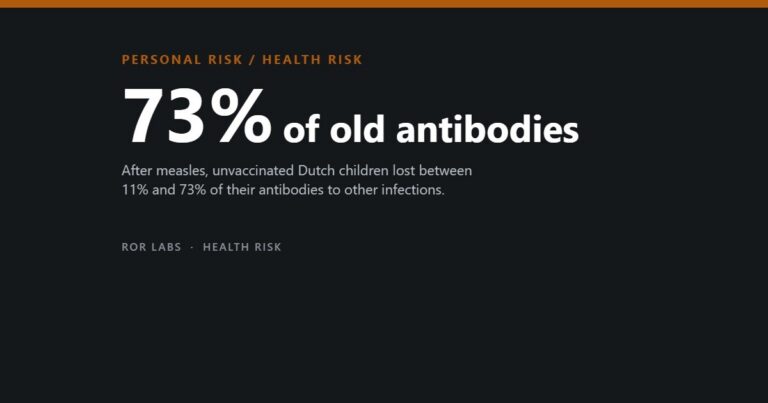
US measles cases went from 285 in 2024 to 3,471 by September 2026. How contagious measles is, how well the vaccine works, what immune amnesia is, and where the famous numbers are firmer or softer than they sound.
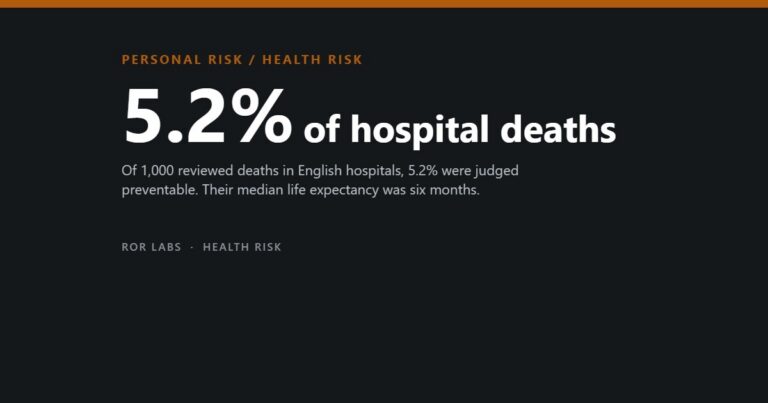
File photo: a modern hospital room. Photo: JesusisGreat7, via Wikimedia Commons, CC0. In the news · September 2026 For World Patient Safety Day on 17 September 2026, the WHO focused on safe care for people with noncommunicable diseases. It states that about 1 in 10 patients are harmed during healthcare worldwide, roughly half of that…
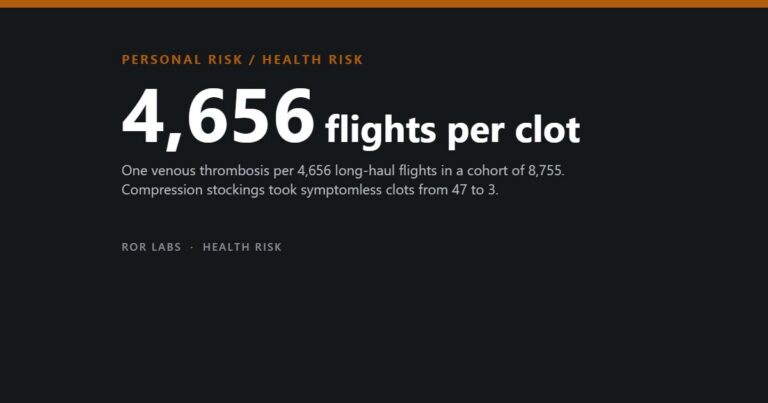
Long flights roughly double clot risk from a small baseline, and the risk peaks two weeks after landing. Compression stockings have high-certainty Cochrane evidence behind them, with one caveat worth reading.
A randomised trial found that using a regular adult cuff on someone who needs an extra-large one overestimates systolic pressure by about 20 mmHg – enough to turn 125/79 into 144/87 on the same arm. What the WHO numbers say about the 600 million who do not know, what SPRINT actually showed, and how to get a reading worth acting on.
Between 20 and 25% of epinephrine administrations in schools are to children with no known allergy — a first reaction, with no care plan. And the delay that turns a frightening afternoon into a fatal one is usually an antihistamine reached for first.