
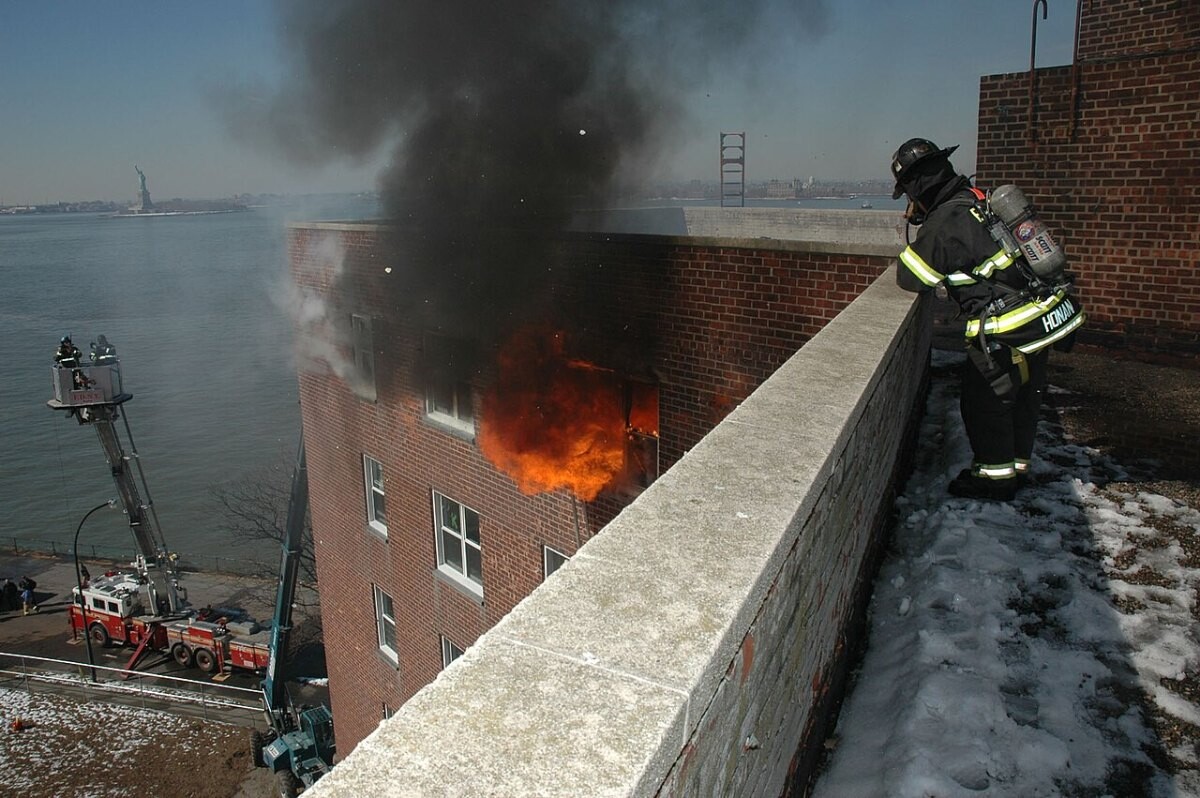
Trend summary
- Fires in offices, shops, warehouses, schools and factories are far rarer than home fires, and kill far fewer people.
- USFA estimates 111,900 non-residential building fires in 2024; NFPA counts about 119,500 non-residential structure fires on its own definition.
- The risk here is concentrated: a single warehouse or industrial fire can cost hundreds of millions of dollars or kill several workers at once.
- The July 2025 Esparto fireworks warehouse explosion in California, which killed seven workers, is the recent reminder.
What the numbers show
Out of roughly 1.39 million US fires a year, about 470,500 are structure fires, and roughly a quarter of those are in non-residential buildings (NFPA data via Triple-I). The USFA puts the 2024 non-residential count at 111,900. Neither body yet publishes a clean ten-year trend for this group on its summary pages, so we treat it as broadly stable rather than rising or falling.
What does change year to year is the size of the worst events. Industrial and storage fires dominate the list of large-loss fires, because of what is stored inside and how much floor area a single fire can reach before sprinklers or crews contain it.
What is driving it
Large warehouses, lithium-ion battery storage and the stocking of hazardous goods raise the stakes when a fire does start. On the other side, sprinklers and modern codes keep most workplace fires small. High-rise fires are a special case: NIST experiments showed that wind blowing into an open window can drive fire and heat along a corridor in minutes.
Policy and budget changes
The main government measures and money figures behind this risk, newest first. Each item links to the official text we checked; where only a news report was available, the source says so.
Main policy changes
- 25 September 2026 Explosives storage sites must notify local fire services yearly. ATF published a final rule, effective 26 October 2026, requiring anyone storing explosive materials to notify the local fire authority when storage starts, every 12 months while it continues, and when it stops, giving the type, magazine capacity and location. Consumer fireworks are exempt. (Federal Register (ATF final rule))
- 24 February 2026 EPA proposes revising 2024 chemical accident rule. The Environmental Protection Agency published a proposal to rescind or narrow several 2024 Risk Management Program requirements, including safer-technology analysis for existing facilities and third-party audits, citing duplication with OSHA’s process safety standard. (Federal Register (EPA proposed rule))
- 11 March 2024 Tighter accident prevention rules for chemical facilities. EPA published its Safer Communities by Chemical Accident Prevention rule, effective 10 May 2024, adding root-cause investigations, third-party audits, safer-technology analysis and community notification for about 11,740 facilities that handle hazardous chemicals. (Federal Register (EPA final rule))
- 5 February 2024 OSHA proposes new Emergency Response standard. OSHA published a proposed Emergency Response standard to replace its Fire Brigades standard, covering firefighters, emergency medical and rescue personnel, including workplace emergency response teams. No final rule has been published. (Federal Register (OSHA proposed rule))
Budget and costs
- September 2026 FEMA fire grants: $648 million for FY2025. FEMA made US$648 million available for fiscal year 2025 across the Assistance to Firefighters, SAFER staffing and Fire Prevention and Safety grant programmes; by September 2026 it had awarded more than US$320 million to over 1,400 recipients (nominal). (FEMA (announcement, Sep 2026))
- 2023 Non-residential fires caused $3.16 billion in losses in 2023. The US Fire Administration estimates that 110,000 non-residential building fires in 2023 caused US$3,164,400,000 in dollar loss; adjusted for inflation, the loss was 10% higher than in 2014. (US Fire Administration (FEMA))
Recent cases
- 1 July 2025, Esparto, California: an explosion and fire at a fireworks warehouse killed seven workers. In February 2026 Cal Fire sent its completed investigation, which it said found evidence of alleged illegal activity, to the county prosecutor (CBS Sacramento).
Our read: what the numbers add up to
The honest verdict here is that there is no clear trend to report, and the page says as much. The USFA puts non-residential building fires at 111,900 in 2024, the NFPA’s own definition gives about 119,500, and neither body publishes a clean ten-year series for this group on its summary pages. Treating the count as broadly stable is the sensible default rather than a finding.
What the numbers do show is that this is a risk measured in severity rather than frequency. Non-residential buildings account for roughly a quarter of the 470,500 structure fires, yet they dominate the list of large-loss fires. The reason is physical: a warehouse holds a great deal of stored material over a large floor area, and a fire that escapes early control can reach far more of it before crews or sprinklers contain it. Lithium-ion battery storage and hazardous goods raise that ceiling further. The Esparto warehouse explosion, which killed seven workers, shows how a single event can outweigh years of routine statistics. Put together, the count may be flat while the potential for a very bad day is growing, because the buildings themselves are getting larger and their contents more energetic.
The caveats are mostly about measurement. Two bodies count differently, totals hide the distribution of losses, and one catastrophe in a given year can distort any average. I would watch two things: whether large-loss fire reports start to show battery storage as a recurring factor, and what the Esparto prosecution reveals about how illegal storage slipped through. The bottom line: workplace fires are not becoming more common, but the worst of them are probably becoming more consequential.
Press releases and official reports, 2023–2026
Five key releases a year for the last four years, newest first. Most are from federal agencies; a few news reports are included where they are the clearest public record of an event. Releases from 2007–2022 are in the expandable list after 2023.
2026
- 16 Sep 2026CSBU.S. Chemical Safety Board Releases Final Investigation Report on 2025 Explosion and Fire at Shell Polymers Monaca Facility in Pennsylvania
- 21 Jul 2026CSBCSB Releases Bio-Lab Conyers Final Investigation Report
- 26 Feb 2026CSBU.S. Chemical Safety Board Releases Investigation Report on the 2023 Explosion and Toxic Ethylene Oxide Release at Dow Plant in Plaquemine, Louisiana
- 12 Feb 2026NFPA JournalResearch Summary: U.S. Fire Loss in 2024
- 2 Feb 2026CBS SacramentoCal Fire wraps up Esparto fireworks warehouse explosion investigation, sends report to DA
2025
- 23 Dec 2025CSBCSB Issues Interim Safety Recommendations to U.S. Steel Clairton Coke Works
- Nov 2025NFPAFire Loss in the United States During 2024 (research report, PDF)
- 12 Aug 2025CSBCSB Opens Investigation into Fatal Incident (U.S. Steel Clairton Coke Works)
- 2 Jul 2025PBS NewsHourExplosion at California fireworks warehouse sets off massive blaze, with 7 missing, officials say
- 23 May 2025CSBU.S. Chemical Safety Board Issues Second Update on Investigation of 2024 Bio-Lab Fire in Conyers, Georgia
2024
- 22 Nov 2024CSBU.S Chemical Safety Board Releases Investigation Update into September 2024 Massive Fire and Toxic Plume at Bio-Lab Facility in Georgia
- 30 Sep 2024CSBU.S. Chemical Safety Board Sends Team to Bio-Lab
- 18 Jun 2024CSBCSB Issues Update for Investigation of Toxic Chemical Release at Dow Facility in Louisiana
- 4 Apr 2024CSBU.S. Chemical Safety Board Launches Investigations Into Two Toxic Chemical Incidents in Louisiana
- 21 Feb 2024CSBCSB Issues Investigation Update into November 2023 Fire at the Marathon Renewables Facility in Martinez, California
2023
- 6 Dec 2023CSBCSB Releases Final Investigation Report for Fatal Dust Explosion and Fire at Didion Milling Facility in Cambria, Wisconsin
- 30 Nov 2023CSBCSB Releases Final Report into 2021 Fatal Vapor Explosion and Fire at Yenkin-Majestic Facility in Columbus, OH
- 15 Jul 2023WAFBExplosions, fire at Dow Chemical in Iberville Parish Friday evening
- 6 Jul 2023CSBCSB Releases Investigation Report into Fatal 2020 Explosion at Optima Belle Facility in Belle, West Virginia
- 24 Apr 2023CSBU.S. Chemical Safety Board Releases Final Report into 2020 Toxic Gas Release and Chemical Fire at Bio-Lab Facility in Westlake, LA
View 20 years of major building fire press releases (2007–2026)80 more from 2007–2022, five a year, newest first
2022
- 19 Dec 2022CSBCSB Releases Final TPC Report
- 11 Oct 2022CSBCSB Releases Final Report into 2019 PES Fire and Explosion in Philadelphia
- 28 Sep 2022CSBCSB Releases Final Investigation Report on 2016 Sunoco Oil Terminal Fire and Explosion in Texas
- 26 Sep 2022CSBCSB Deploys Team to Fatal Refinery Incident in Ohio
- 2 Aug 2022CSBCSB Releases Final Report into 2017 Pressure Vessel Explosion at Loy-Lange Box Company in St. Louis MO
2021
- Dec 2021USFANonresidential Building Fires (2017-2019)
- 24 Sep 2021CSBOn September 24, 2021, at a virtual CSB public meeting, the Board approved and voted to adopt the final Investigation Report on the Evergreen Packaging Mill Chemical Fatal Fire occurring on September 21, 2020, in Canton, NC.
- Aug 2021USFAMultifamily Residential Building Fires (2017-2019)
- 15 Jun 2021CSBChemtool, Rockton, IL, Explosion and Fire
- 8 Apr 2021CSBCSB Deploying to Fatal Incident at Paint Plant
2020
- 29 Oct 2020CSBTPC Factual Update
- 22 Sep 2020CSBCSB Sending a Team to Fatal Incident in NC
- 31 Aug 2020CSBCSB Provides Update
- 23 Jun 2020CSBCSB Issues New Video Safety Message and Safety Alert
- 23 Mar 2020CSBCSB Releases New BP Texas City Animation
2019
- 17 Dec 2019CSBCSB Releases Midland Resource Recovery Final Report
- 16 Oct 2019CSBChemical Safety Board Releases Factual Update and New Animation Detailing the Events of the Massive Explosion and Fire at the PES Refinery in Philadelphia, PA
- 21 Jun 2019CSBChemical Safety Board Deploying to Site of Refinery Explosion and Fire Outside Philadelphia, PA
- 3 May 2019CSBCSB Deploying to AB Speciality Silicones
- 24 Apr 2019CSBCSB Calls on EPA to Update HF Study in Wake of the 2017 Husky Refinery Fire
2018
- 24 Oct 2018CSBCSB Releases Call to Action on Combustible Dust Hazards
- Jul 2018USFANonresidential Building Fires (2014-2016)
- Jul 2018USFAHotel and Motel Fires (2014-2016)
- 24 May 2018CSBCSB Releases Arkema Final Report
- 26 Apr 2018CSBCSB Investigators Deploying to Incident at the Husky Energy Oil Refinery in Superior, Wisconsin
2017
- 22 Sep 2017CSBCSB Releases Factual Update on Ongoing Investigation into Midland Resource Recovery
- 18 Sep 2017CSBCSB Releases Final Report into 2016 Refinery Fire that Seriously Injured Four Workers
- 3 May 2017CSBCSB Releases Final Report into 2015 Explosion at ExxonMobil Refinery in Torrance, California
- 6 Apr 2017CSBCSB Investigators Deploying to Explosion at the Loy-Lange Box Company in Saint Louis, Missouri
- 9 Feb 2017CSBCSB Investigators Deploying to Explosion at Packaging Corporation of America plant in DeRidder, Louisiana
2016
- 19 Oct 2016CSBCSB Releases Final Case Study into 2013 Explosion and Fire at Williams Olefins Plant in Geismar, Louisiana
- Oct 2016USFAHospital Fires (2012-2014)
- 28 Jun 2016CSBChemical Safety Board Deploying to Fire at Enterprises Product Partners
- 28 Jan 2016CSBChemical Safety Board to Vote on Final Report on April 2013 Fatal West Fertilizer Explosion and Fire; Report Includes Recommendations for Hazard Awareness, Land Use Planning and Regulatory Oversight
- 13 Jan 2016CSBU.S. Chemical Safety Board Finds Multiple Safety Deficiencies Led to February 2015 Explosion and Serious Near Miss at the Exxon Mobil Refinery in Torrance, California
2015
- 3 Nov 2015CSBStatement from Board Member Kristen M. Kulinowski, PhD, on the accident at W.T. Woodson High School in Fairfax County, VA
- 21 Oct 2015CSBCSB Approves Final Investigation Report and Video from 2009 Explosion and Fire at Caribbean Petroleum Terminal Facility in Puerto Rico; Report Finds Inadequate Management of Gasoline Storage Tank Overfill Hazard
- Oct 2015USFARestaurant fires (2011-2013)
- 11 Mar 2015CSBCSB Releases Technical Analysis Detailing Likely Causes of 2010 Zinc Explosion and Fire at the Former Horsehead Zinc Facility in Monaca, Pennsylvania, that Killed Two Operators, Injured a Third
- 30 Jan 2015CSBCSB Board Approves Chevron Refinery Final Report with a Unanimous Vote
2014
- 15 Sep 2014CSBStatement of CSB Chairperson Rafael Moure-Eraso Warning Against Use of Methanol During Laboratory and Classroom Combustion Demonstrations, in the Wake of Reno, Nevada, Museum Fire
- 16 Jul 2014CSBFinal Report on AL Solutions Metal Dust Explosion and Fire that Killed Three in West Virginia Leads CSB to Reemphasize Call for OSHA Combustible Dust Standard
- 1 May 2014CSBFinal Tesoro Investigation Report Approved at Public Meeting in Anacortes, WA on May 1, 2014
- 22 Apr 2014CSBChemical Safety Board Ongoing Investigation Emphasizes Lack of Protection for Communities at Risk from Ammonium Nitrate Storage Facilities; Finds Lack of Regulation at All Levels of Government
- Apr 2014USFASchool Building Fires (2009-2011)
2013
- 25 Jul 2013CSBU.S. Chemical Safety Board Determines OSHA Response to Seven Open CSB Recommendations on Dust, Fuel Gas, and Process Safety Management to be "Unacceptable;" Board Votes to Designate a Combustible Dust Standard as "Most Wanted"
- 14 Jun 2013CSBChemical Safety Board Deploying to Accident at Williams Olefins Plant in Geismar, Louisiana
- Jun 2013USFANonresidential Building Fires (2009–2011)
- 18 Apr 2013CSBChemical Safety Board Deploying to West Fertilizer Accident
- 17 Apr 2013NISTLandmark NIST Study Evaluates Effectiveness of Crew Sizes in High-Rise Fires
2012
- 22 Oct 2012CSBCSB Chair Moure-Eraso Addresses Nationwide Meeting of International Code Council, Saluting Progress on Key Safety Issues and Encouraging Further Code Action on Combustible Dust Hazards
- 8 Aug 2012CSBCSB Deploying to Fire and Explosion at the Chevron Refinery in Richmond California
- 22 May 2012CSBCSB Deploys Team to El Dorado, Arkansas to Investigate Fatal Hot Work Explosion
- 27 Jan 2012CSBCSB Safety Recommendations from Ghent, West Virginia Propane Explosion Largely Adopted, Effecting Life-Saving Change
- 5 Jan 2012CSBCSB Releases Final Investigation Report on Three Accidents at the Hoeganaes Iron Powder Facility in Gallatin, Tennessee
2011
- 26 Dec 2011CSBStatement of CSB Chairman Rafael Moure-Eraso Following Fatal Fire at Eastern Ohio Hazardous Waste Storage and Processing Facility Tragedy Emphasizes Importance of an National Fire Code for Hazardous Waste Handling
- Jun 2011USFALarge Loss Building Fires
- 27 May 2011CSBCSB Deploys to a Third Accident at Hoeganaes Corporation Metal Powder Plant in Gallatin, Tennessee
- 15 Mar 2011NISTNIST Releases Final Report on Charleston Sofa Store Fire
- 20 Jan 2011CSBCSB Issues Report on 2008 Bayer CropScience Explosion: Finds Multiple Deficiencies Led to Runaway Chemical Reaction; Recommends State Create Chemical Plant Oversight Regulation
2010
- 28 Oct 2010NISTNIST Study on Charleston Furniture Store Fire Calls for National Safety Improvements
- 25 Aug 2010CSBCSB Final Report on Xcel Energy Accident Finds Company and its Contractor Failed to Adequately Prepare for Hazardous Work Inside Confined Space of Hydroelectric Plant Tunnel; Xcel Had No Technically Qualified Responders on Duty
- 2 Apr 2010CSBCSB Investigative Team Deploying to Fatal Tesoro Refinery Accident in Anacortes, Washington
- 7 Feb 2010CSBCSB Deploying Investigation Team to Fatal Explosion at Kleen Energy Power Plant in Middletown, Connecticut
- 4 Feb 2010CSBCSB Board Members Vote to Approve Urgent Gas Code Recommendations Following Deadly ConAgra Explosion at Public Meeting in Raleigh
2009
- 23 Oct 2009CSBCSB Investigative Team Deploying to Caribbean Petroleum Corporation Tank Explosion in Puerto Rico
- 24 Sep 2009CSBFinal CSB Report on Imperial Sugar Disaster Concludes Inadequate Equipment Design, Maintenance, and Housekeeping Led to Massive Sugar Dust Explosions
- 15 Sep 2009CSBCSB Finds T2 Laboratories Explosion Caused by Failure of Cooling System Resulting in Runaway Chemical Reaction; Report Notes Company Did Not Recognize Hazards of Chemical Process
- 9 Jun 2009CSBCSB Deploys Investigation Team to Site of Explosion at ConAgra Foods Plant in Garner, North Carolina
- 5 May 2009NISTHigh Rise Fire Study Provides Insight Into Deadly Wind-Driven Fires
2008
- 25 Sep 2008CSBCSB Investigation of the 2007 Little General Store Propane Explosion Emphasizes Need for Immediate Evacuation, Recommends Enhanced Training of Emergency Responders and Propane Technicians, Guidance for 911 Operators
- 28 Aug 2008CSBCSB Deploys to Fatal Accident at Bayer CropScience in West Virginia
- 21 Aug 2008NISTNIST WTC 7 Investigation Finds Building Fires Caused Collapse
- 18 Mar 2008NISTNIST Evaluates Firefighting Tactics In NYC High-Rise Test
- 8 Feb 2008CSBInvestigative Team from U.S. Chemical Safety Board Deploys to Explosion at Georgia Sugar Refinery
2007
- 19 Dec 2007CSBCSB Deploys to Fatal Jacksonville, Florida Explosion
- 5 Dec 2007CSBCSB Officials Encouraged with Progress Announced Today by New York City in Revising its Outdated Fire Code
- 20 Jul 2007NISTNIST Begins Technical Study of S.C. Warehouse Fire
- 19 Jul 2007CSBCSB Investigative Team Assessing Explosions and Fire at Barton Solvents near Wichita, Kansas
- 20 Mar 2007CSBU.S. Chemical Safety Board Concludes "Organizational and Safety Deficiencies at All Levels of the BP Corporation" Caused March 2005 Texas City Disaster That Killed 15, Injured 180
Photo list
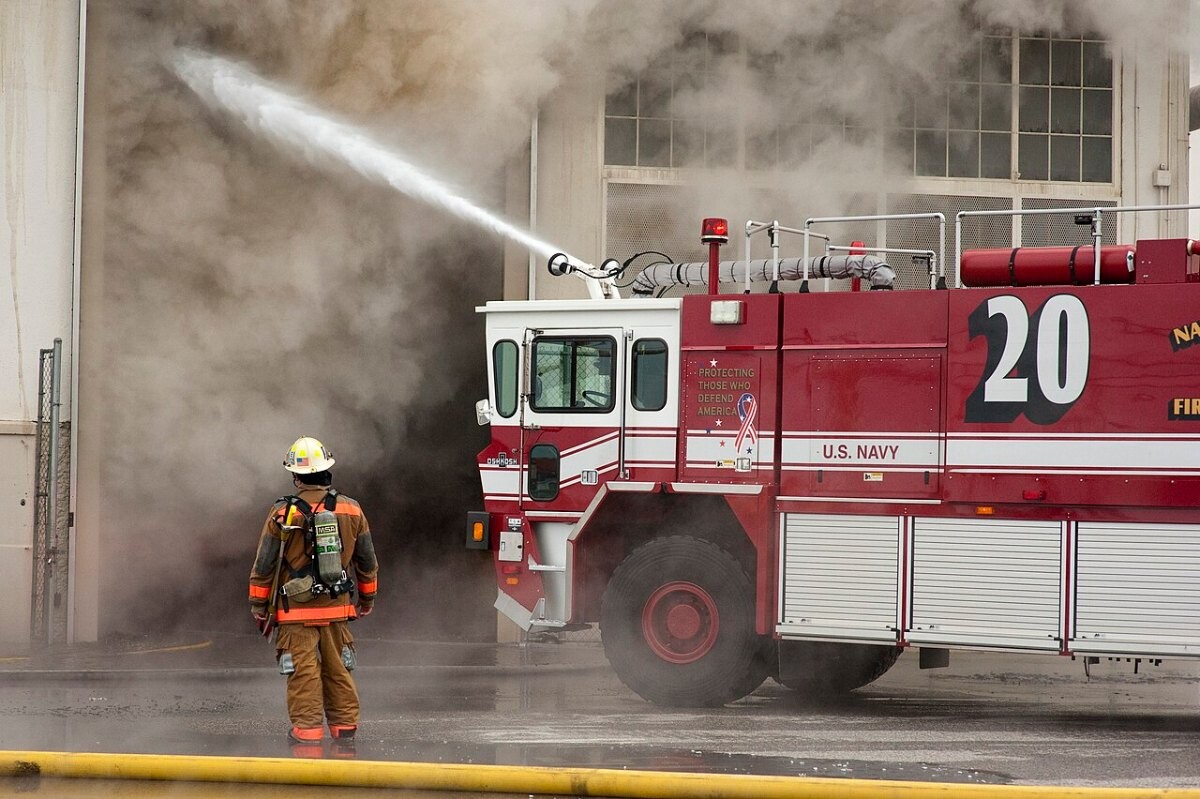
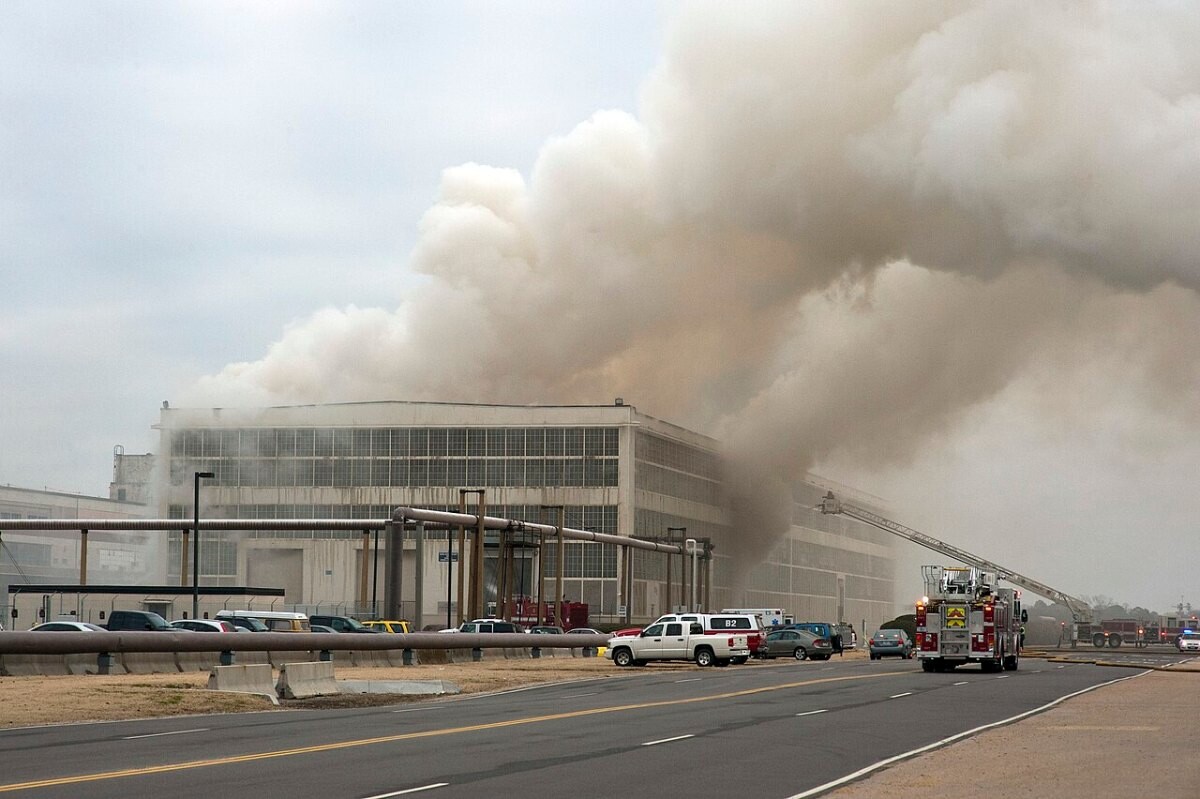
How this page is built. Figures come from the official statistical releases linked above; where agencies publish preliminary numbers we say so, because they are revised. Photos are public-domain or Creative Commons images credited in each caption; file photos are illustrative and are not from the events described unless the caption says so. This page tracks trends and is not personal safety, medical, legal or financial advice.