
What Reduces Loneliness? What the Evidence Shows
A 2026 meta-analysis of 280 studies found loneliness interventions work on average, but not always the ones people expect. What helps, how much, and for whom.
Social isolation, bullying, discrimination, social conflict, severed relationships, reputational damage and social unrest.
A 2026 meta-analysis of 280 studies found loneliness interventions work on average, but not always the ones people expect. What helps, how much, and for whom.
Around one worker in seven reports bullying, depending on how it is measured. What meta-analyses show about prevalence, health effects, who bullies and which interventions work.
Estimates of gaming disorder range from 0.3% to 10%. What research shows about the WHO diagnosis, who is affected, and whether time limits work.
Death rates rise about 41% in the six months after losing a spouse. What meta-analyses show about the widowhood effect, who is most at risk, and why.
File photo: an empty office workspace. Photo: Loominade, via Wikimedia Commons, CC0. In the news · August 2026 A study of 14,827 Swedish workers across six survey waves from 2010 to 2020 found younger workers reported more job insecurity than older ones. In younger workers, job insecurity predicted depressive symptoms two years later, while the…
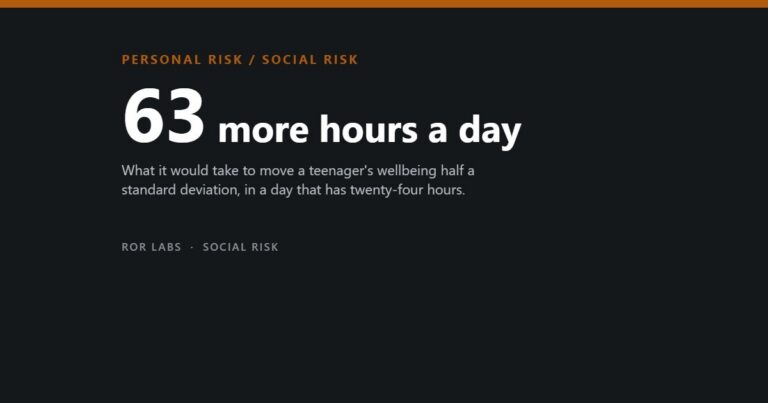
File photo: a teenager texting on a smartphone. Photo: Summer Skyes 11, via Wikimedia Commons, CC BY 2.0. In the news · June 2026 A Eurobarometer survey of 26,297 teenagers and 12,750 parents across the EU, carried out in March and April 2026, found that 25% of teens exceed six hours of daily screen time…
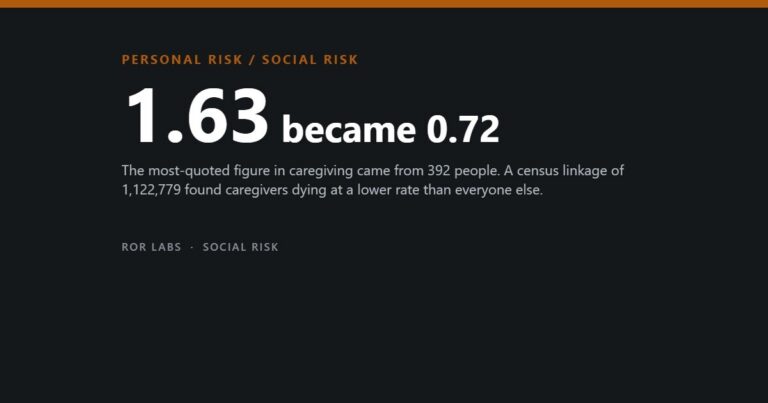
The famous figure came from 392 people, applied only to strained spouses, with a confidence interval starting at 1.00. Larger studies found the reverse — and inside them, strain still predicts death.
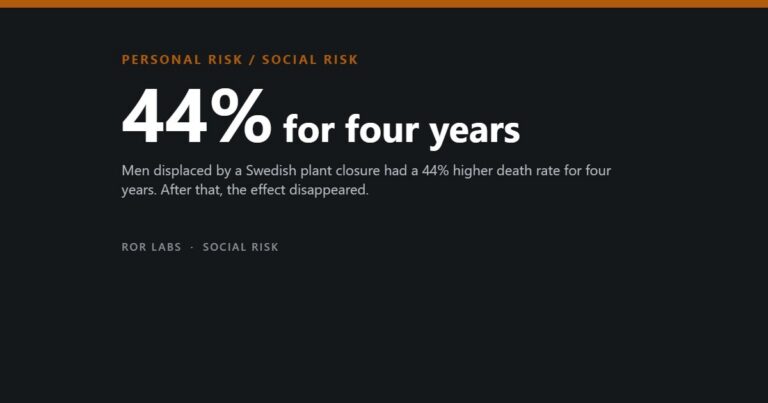
File photo: an English Jobcentre Plus office. Photo: Hassocks5489, via Wikimedia Commons, CC0. In the news · April 2026 The 2026 Economic Report of the President says workers displaced in mass layoffs face 50-100 percent higher mortality in later years, cutting life expectancy by roughly 1 to 1.5 years. It values that loss at about…
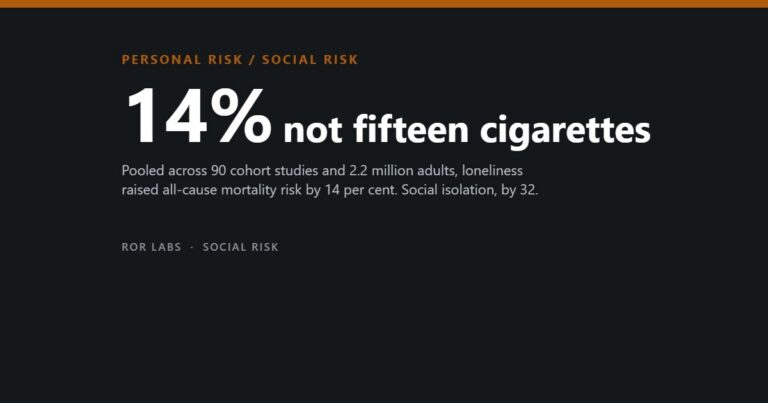
The 50 per cent figure everyone quotes is an average across measures that disagree. Across 90 cohorts and 2.2 million adults, social isolation raised mortality risk 32 per cent and loneliness 14 — and every improvement in method makes the number smaller.
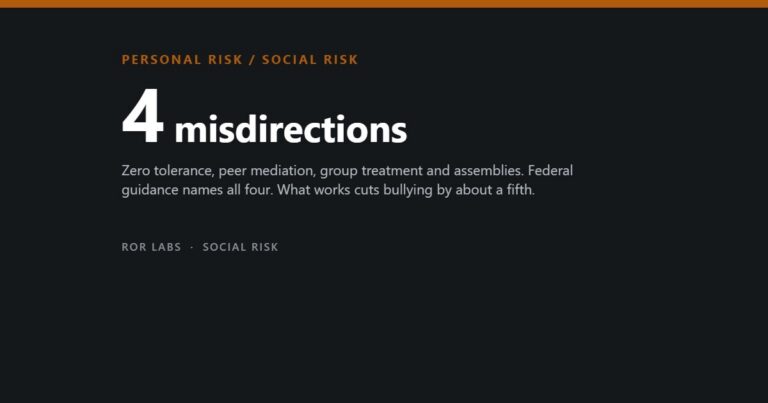
Zero tolerance, peer mediation, group treatment and assemblies are all identified as misdirections — and one of them can leave the bullied child worse. What works cuts bullying by about a fifth, and that figure needs a caveat.