
Trend summary
- Official data cited by SICT show Mexico averages about 47 aviation accidents and 195 incidents a year. Most involve small planes and helicopters rather than airliners.
- The US FAA cut Mexico to Category 2 on 25 May 2021, saying its oversight fell short of ICAO standards, and restored Category 1 on 14 September 2023. It was Mexico’s second downgrade; the first lasted from July to December 2010.
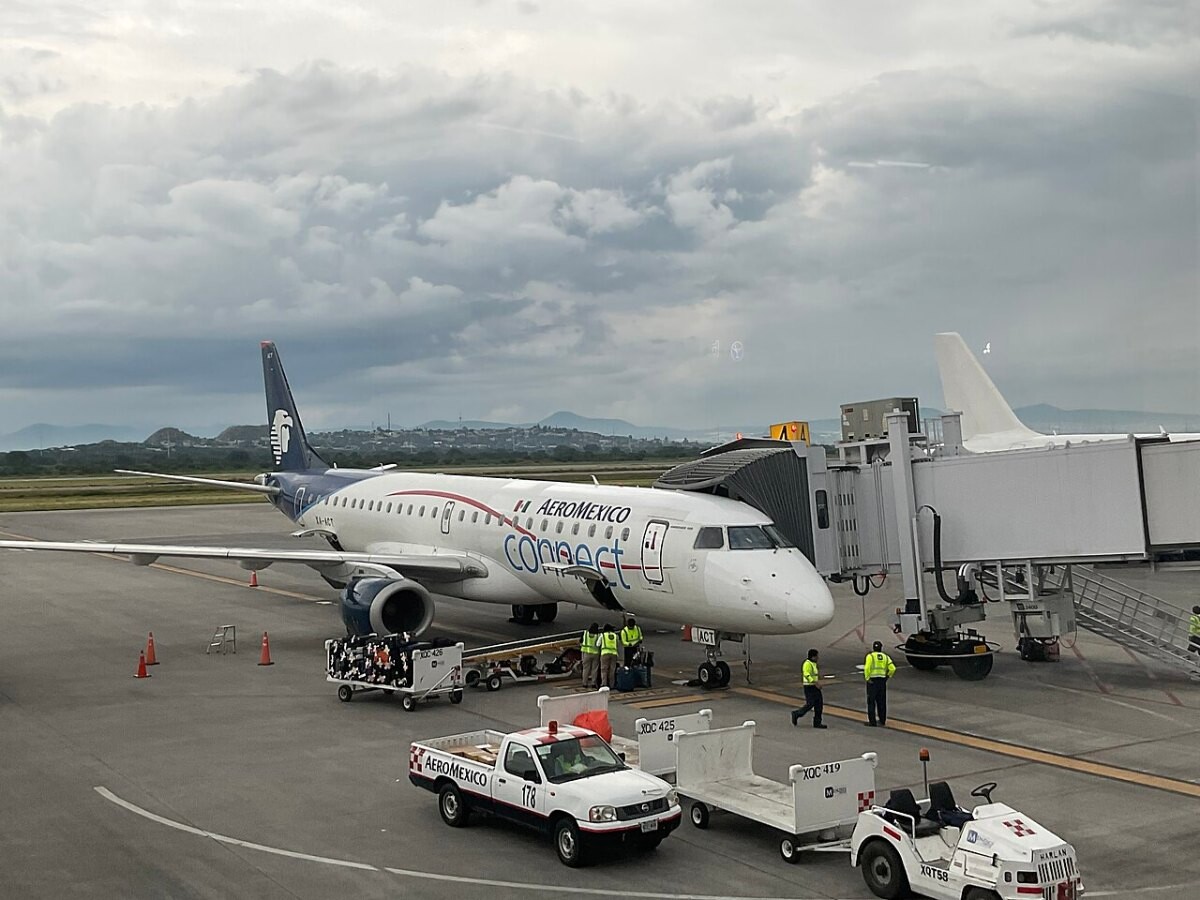
- Crashes of government aircraft have shaped the debate: two interior ministers died in 2008 and 2011, and the governor of Puebla and her husband in 2018. In 2018 an Aeroméxico Connect jet crashed on take-off at Durango and all 103 people aboard survived.
- Strain remains. Mexico has about 1,050 air traffic controllers, roughly 500 short, according to their union, and SICT’s own 2025–2030 plan calls the accident investigation system inefficient. A private jet crash near Toluca killed 10 in December 2025.
What the numbers show
Mexico does not publish an easy annual series of civil aviation deaths. The aviation agency AFAC, which replaced the old DGAC in October 2019, releases accident and incident statistics, but by September 2025 it had published nothing new since May 2025. Its last report showed a 53% rise in incidents in the first four months of 2025. Official data cited by the transport ministry (SICT) give an average of 47 accidents and 195 incidents a year, and SICT says investigations take 12 to 15 months because of limited staff, equipment and legal powers (Mexico Business News).
Big events stand out against that background. On 31 July 2018 an Aeroméxico Connect Embraer 190 crashed just after take-off from Durango in a hailstorm; all 103 people aboard escaped, though 85 were hurt and 49 went to hospital (NPR). On 24 December 2018 a helicopter crashed about 10 minutes after leaving Puebla, killing all five aboard, including Governor Martha Erika Alonso and her husband, former governor Rafael Moreno Valle; Canadian and US investigators helped Mexico with the inquiry (Animal Político). On 15 December 2025 a Cessna Citation flying from Acapulco crashed in San Mateo Atenco near Toluca airport, killing all 10 aboard (El Financiero). On 2 April 2026 a Cessna 172 crashed shortly after leaving Puebla, killing four (Emisoras Unidas).
What is driving it
The weak point is oversight rather than the airlines’ own record. The FAA’s review of AFAC, carried out from October 2020 to February 2021, found several areas that did not meet minimum ICAO standards and moved Mexico to Category 2 on 25 May 2021. Mexican airlines could keep their US flights but could not add new routes, and US carriers could no longer sell codeshare tickets on Mexican flights (FAA). The government said AFAC had been working with about a quarter of its staff during a Covid surge when the audit began, and pointed to a new civil aviation law published on 20 May 2021 (Aviacionline). A year later, Mexico said all 28 audit issues had been resolved; AFAC’s budget had fallen 37% in the first three years of the López Obrador government (Courthouse News). The FAA restored Category 1 on 14 September 2023 after more than two years of joint work (FAA). The same lack of inspectors was blamed for the 2010 downgrade, which lasted about four months (Fox News).
Busy airspace adds pressure. Mexico City’s airspace was reorganised to fit the new Felipe Ángeles airport (AIFA), and pilots’ federation IFALPA raised concerns about controller training. On 7 May 2022 two Volaris A320s came into conflict on the same runway at Mexico City airport and the head of the air navigation service, SENEAM, resigned (El CEO). On 21 July 2025 a Delta Boeing 737 aborted its take-off at the same airport to avoid an Aeroméxico Connect jet approaching the runway (Aviacionline). The controllers’ union says about 1,050 controllers work nationwide, roughly 500 too few, after budget cuts of up to 40% between 2023 and 2024 (Mexico Business News). Government flying has its own record: in November 2008 the interior minister’s Learjet crashed in Mexico City after flying into the wake turbulence of a Boeing 767 only 4.15 nautical miles ahead, below the 5-mile minimum, according to preliminary findings (Proceso via Noroeste), and on 11 November 2011 Interior Minister Francisco Blake Mora and seven other officials died in a helicopter crash (The White House).
Recent cases
- 2 April 2026: A Cessna 172 heading from Puebla to Poza Rica crashed at Santa Ana Xalmimilulco, Huejotzingo, minutes after take-off, killing four people. AFAC opened an investigation (Emisoras Unidas).
- 15 December 2025: A Cessna Citation jet from Acapulco crashed in San Mateo Atenco near Toluca airport, killing all 10 aboard, including three children. AFAC’s accident investigation directorate is leading the inquiry (El Financiero).
- 12 September 2025: Official data show Mexico averages 47 aviation accidents and 195 incidents a year. SICT’s 2025–2030 sector plan calls the accident investigation system inefficient, and controllers say they are about 500 people short (Mexico Business News).
Press releases and official reports, 2023–2026
Up to five key releases a year for the last four years, newest first. Most come from national bodies such as INEGI, the Ministry of Health, CENAPRED, the National Seismological Service, CONAFOR, the Navy, CONDUSEF and the Official Gazette, from Congress, from international agencies such as PAHO and WHO, and from research journals. Key events, especially in earlier years where official archives are missing, come from Mexican news outlets such as La Jornada, El Universal, Excélsior, El Financiero, Animal Político and Mexico News Daily. Headlines are our English translations of the Spanish originals. Releases from 2007–2022 are in the expandable list after 2023.
2026
- 5 Jun 2026La JornadaAFAC opens inquiry after a plane entered the path of another aircraft on an AICM runway
- 2 Apr 2026Emisoras UnidasVideo captures the moment a light aircraft crashes in Mexico, leaving four dead
2025
- 19 Dec 2025UnoTVAFAC investigates incident on Magnicharters flight at Mexico City airport
- 17 Dec 2025La JornadaBlack box of the jet that crashed in Toluca found
- 15 Dec 2025El Financiero'We are going down': what we know about the jet that took off from Acapulco and crashed near Toluca airport
- 12 Sep 2025Mexico Business NewsMexico's Aviation Sector Struggles With Safety, Infrastructure
- 24 Jul 2025AviacionlineNear Collision at AICM: Audio Contradicts Official Narrative from Mexican President and AFAC
2024
- 23 Dec 2024La JornadaSeven dead as a Cessna light aircraft crashes in Jalisco
- 15 Apr 2024La JornadaHelicopter crashes in Coyoacán; three dead
- 23 Jan 2024La JornadaLight aircraft crash in Tepic leaves four dead
2023
- 14 Sep 2023FAAFederal Aviation Administration Returns Mexico to Highest Aviation Safety Status
- 14 Sep 2023IATAIATA Welcomes Mexico's Return to the FAA's Category 1 Aviation Safety Rating
- 14 Sep 2023La RazónSICT amends the decree creating the Federal Civil Aviation Agency
- 8 Sep 2023AviacionlineAMLO announces Mexico will regain FAA Category 1 next week
- 4 May 2023El CEOReform of the airports and civil aviation laws takes effect; Defence Ministry to protect the airspace
View 20 years of major Mexican aviation safety press releases (2007–2026)37 more from 2007–2022, up to five a year, newest first
2022
- 25 May 2022Courthouse NewsMexico marks one year with FAA's lowest safety rating
- 9 May 2022El CEOAMLO reports Interior Ministry meeting to put airspace in order after incident at Mexico City airport
- 30 Mar 2022La JornadaSICT investigates the crash of a light aircraft onto a store in Temixco
2021
- 25 May 2021FAAFederal Aviation Administration Announces Results of Mexico's Safety Assessment
- 25 May 2021AviacionlineMexican government responds to the FAA: 'fully committed to recovering' Category 1
- 25 May 2021Zeta TijuanaUS lowers Mexico's air safety rating to Category 2; AMLO sees commercial interests
- 21 May 2021Fox NewsFAA to bar Mexican airlines from adding new US flights over safety concerns
- 30 Apr 2021La JornadaLight aircraft crashes in Nuevo León; six dead and one injured
2020
- 27 Mar 2020Zeta TijuanaTwo screws caused the accident that killed Martha Érika Alonso and Moreno Valle: SCT
2019
- 23 Dec 2019El FinancieroSCT one year after the deaths of Alonso and Moreno Valle: attack ruled out, final result in Q1 2020
- 16 Oct 2019ADN40The Federal Civil Aviation Agency comes into force
- 8 Jun 2019ExcélsiorHelicopter in which Martha Erika Alonso died was working properly: SCT
2018
- 31 Dec 2018La Jornada379 air accidents occurred in Mexico over the past six years
- 24 Dec 2018e-consultaAMLO offers to investigate the crash that killed Alonso and Moreno Valle
- Dec 2018Animal PolíticoCanadian experts begin investigating the Puebla helicopter crash; the US will also take part
- 31 Jul 2018NPRJetliner In Mexico Crashes, Catches Fire, But All 103 Aboard Escape
2014
- 5 Apr 2014La JornadaJudge declares Mexicana bankrupt
2013
- 17 Oct 2013La JornadaAll 14 occupants of the light aircraft in Baja California Sur dead
2012
- 10 Dec 2012La JornadaCrash of the plane carrying Jenni Rivera confirmed
- 10 Nov 2012La JornadaHuman error caused the crash of Blake's helicopter, SCT confirms
- 14 May 2012La JornadaMost helicopters used by the Air Force lack a black box
2011
- 14 Nov 2011La JornadaSCT backs cloud cover hypothesis as cause of the helicopter crash
- 12 Nov 2011La JornadaRemains of Blake and three other public officials lie in state at Gayosso
- 11 Nov 2011The White HouseReadout by Ben Rhodes on the President's Call to President Calderon of Mexico Aboard Air Force One En Route San Diego, CA
2010
- 8 Dec 2010Meetings & ConventionsFAA Upgrades Mexico Safety Rating
- 2 Dec 2010FlightglobalFAA restores Mexico's safety rating to category one
- 28 Aug 2010La JornadaMexicana and its subsidiaries suspend all operations
- 30 Jul 2010NPRFAA Downgrades Mexican Aviation System
- 2 Feb 2010La JornadaSCT did not report that a part of Mouriño's plane had been replaced three times
2009
- 10 Dec 2009La JornadaInvestigation into the crash that killed Mouriño classified for 12 years
- 7 Jul 2009La JornadaFor the third time the SCT suspends Aviacsa's operations, this time over debts
- 23 Jan 2009La JornadaNo signs of mechanical failure in the Learjet that carried Mouriño, officials insist
2008
- 20 Nov 2008La JornadaCockpit dialogue about a 'small detail' on the Learjet 45 minutes before it crashed
- 15 Nov 2008La JornadaSCT: the pilots in the plane crash were disoriented and inexperienced
- 8 Nov 2008La JornadaLearjet 45 shows no traces of explosives: experts
- 5 Nov 2008La JornadaMouriño, Santiago Vasconcelos and six others die in air accident
2007
- 6 Jul 2007La JornadaPlane crashes in Sinaloa; 9 dead
Many years list fewer than five items, and some have none yet. Several official archives (parts of gob.mx, the Official Gazette and older agency pages) could not be opened when we compiled this list, and we only list items we could open and check. We are still adding to these lists. Where a page shows no date, the date comes from the publisher’s own index; annual reports with no printed date are listed under the year they were released.
Photo list

How this page is built. Figures come from the official statistical releases and research linked above; where agencies publish provisional numbers we say so, because they are revised. National death data come from INEGI’s death registrations, which are finalised the year after; preliminary figures are labelled. Some figures come from news reports quoting officials, and we name the outlet. Money is given in Mexican pesos (MX$). Headlines and quotes are our translations from Spanish. Photos are public-domain or Creative Commons images credited in each caption; file photos are illustrative and are not from the events described unless the caption says so. This page tracks trends and is not personal safety, medical, legal or financial advice.