
Trend summary
- Since COVID-19 restrictions ended in 2023, Japan has had a run of record outbreaks: syphilis, streptococcal toxic shock syndrome (STSS) and then whooping cough. Those are now easing, but measles and an unusually early flu season are the concerns in 2026.
- Doctors notified 89,387 cases of whooping cough (pertussis) in 2025, the most since every case had to be reported in 2018 and more than 20 times the 2024 total (JIHS).
- 574 measles cases had been reported in 2026 by 20 September (provisional), already more than double the 265 of all of 2025.
- Flu peaked at 64.39 patients per reporting clinic in the last week of 2024, the highest since the current system began in 1999. The 2026/27 season started in August, the second-earliest start on record.
What the numbers show
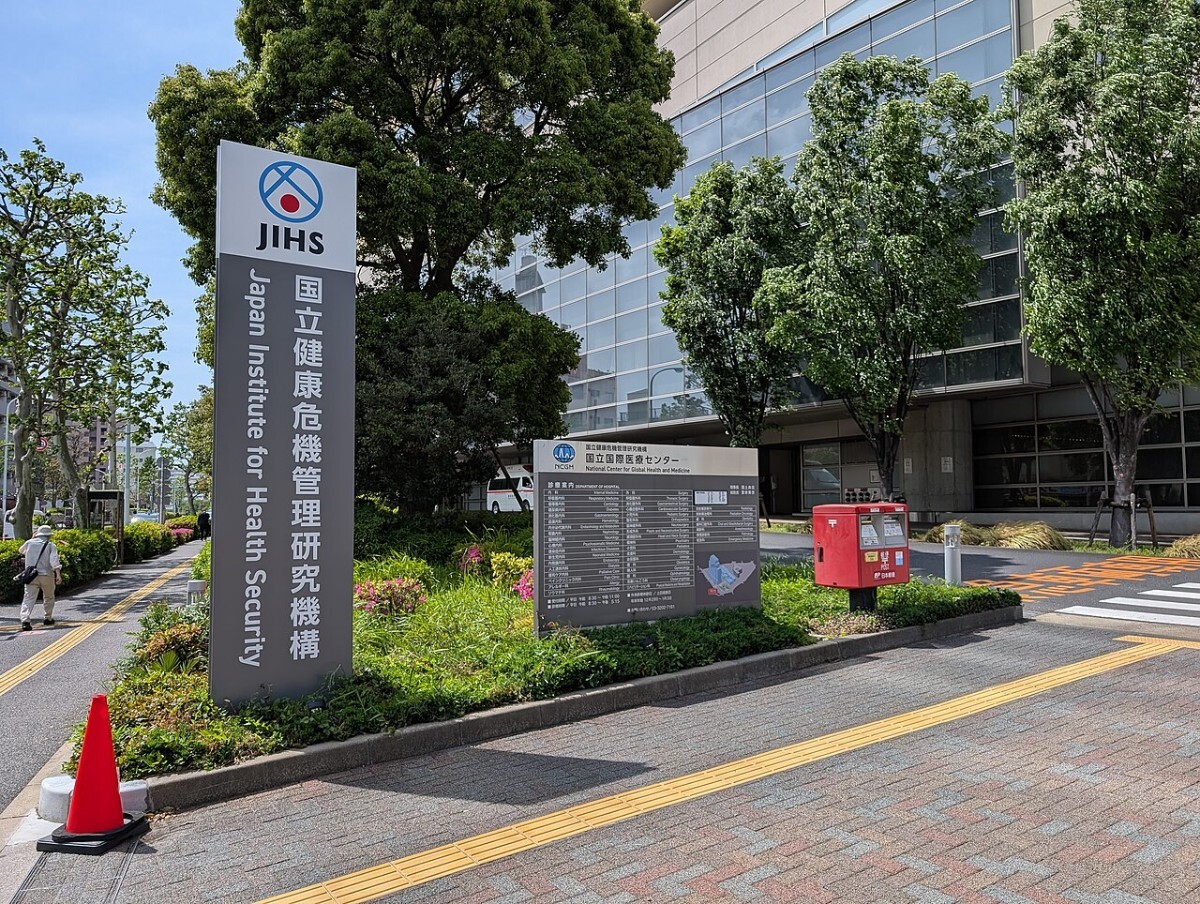
Japan’s infectious disease figures come from national surveillance under the Infectious Diseases Control Law. Doctors must report every case of some diseases, such as measles, syphilis and whooping cough. For others, such as influenza, a network of “sentinel” clinics reports weekly counts. The figures were published by the National Institute of Infectious Diseases (NIID) until April 2025, when it merged with the National Center for Global Health and Medicine to form the Japan Institute for Health Security (JIHS). Weekly provisional tables (IDWR provisional data, in Japanese) show syphilis at a record 14,906 notifications in 2023, then 14,663 in 2024 and 13,530 in 2025. The fall continued in 2026, with 8,390 cases by week 38 against 10,166 at the same point of 2025. STSS, a fast-moving and often fatal streptococcal infection, reached a record 1,888 provisional cases in 2024. JIHS reports that about a quarter of patients notified since 2015 had died by the time they were reported (IASR, September 2025). STSS fell to 1,382 cases in 2025 and stood at 938 by September 2026.
Whooping cough had the biggest jump. Fewer than 3,000 cases a year were notified from 2020 to 2023 and 4,054 in 2024 (provisional), then a nationwide epidemic in 2025 brought 89,387 cases, peaking at 4,749 in a single week in July. Teenagers made up about half of cases. Measles is now rising fast: JIHS counted 498 cases by 20 May 2026, more than at the same point of any year from 2020 to 2025, and 244 of them were in Tokyo. Reports of mpox, a viral rash illness, also rose from 23 in all of 2025 to 130 by late September 2026, and all 39 reported by mid-April were in the Kanto region around Tokyo (JIHS, in Japanese). Cases of severe fever with thrombocytopenia syndrome (SFTS), a tick-borne virus, rose to 191 in 2025 from 120 in 2024 (all provisional IDWR counts).
What is driving it
Some of this is a rebound after the pandemic. Masks and distancing in 2020–2022 left many children and young adults with less immunity, and JIHS notes that whooping cough fell and then surged in many countries. A second factor is travel: international visitor numbers have recovered, and measles is spreading worldwide. Of the measles cases reported by May 2026 whose place of infection was known, 39 were infected abroad, in countries including Indonesia, New Zealand and India. JIHS says about half of the patients in their teens and twenties had not had two doses of the measles-rubella (MR) vaccine or did not know whether they had (JIHS, in Japanese). Whooping cough strains resistant to macrolides, the usual first-choice antibiotics, have been found in Tokyo, Osaka, Tottori and Okinawa, and in April 2025 the death of a one-month-old baby from such an infection was reported.
Surveillance itself also changed. In April 2025 Japan began acute respiratory infection (ARI) surveillance, which replaced the former influenza/COVID-19 sentinel clinics with about 3,000 ARI clinics. JIHS warns that flu figures from the 2025/26 season onwards are not fully comparable with earlier seasons. COVID-19 itself has been handled as a routine Class 5 disease, like seasonal flu, since 8 May 2023, and it is no longer counted case by case. There has been progress too. In September 2025 the WHO Western Pacific Regional Office verified that Japan had eliminated rubella (German measles), and Japan, verified as measles-free in 2015, has kept that status through 2024.
The trend, 2015–2025
| Year | Cases | Change on year before |
|---|---|---|
| 2015 | 415 | – |
| 2016 | 494 | +19.0% |
| 2017 | 587 | +18.8% |
| 2018 | 694 | +18.2% |
| 2019 | 894 | +28.8% |
| 2020 | 718 | −19.7% |
| 2021 | 622 | −13.4% |
| 2022 | 708 | +13.8% |
| 2023 | 939 | +32.6% |
| 2024 | 1,893 | +101.6% |
| 2025p | 1,382 | −27.0% |
Notes: 2025 is the provisional week-52 cumulative; the confirmed annual report is not out yet. Provisional and confirmed counts differ slightly (2024: 1,888 provisional, 1,893 confirmed).
Source: JIHS/NIID, IDWR annual reports, table 6-1 (2015–2024) and IDWR 2025 week 52
Common questions
Are STSS cases in Japan going up or down?
In 2025 the figure was 1,382 cases (provisional). That is 233.0% higher than in 2015 (415) and 27.0% down on 2024.
Which year was highest and which was lowest?
In this 2015–2025 series the highest year was 2024 (1,893) and the lowest was 2015 (415).
What is STSS and how big was the 2024 rise?
STSS is a rare, fast-moving streptococcal infection that can lead to shock and organ failure. Japan recorded 1,893 cases in 2024, about double 2023 and the most in this series. Cases eased to about 1,380 in 2025 (provisional).
Policy and budget changes
The main government measures and money figures behind this risk, newest first. Each item links to the official text we checked; where only a news report was available, the source says so.
Main policy changes
- April 2026 RSV vaccine for pregnant women added to routine schedule. From fiscal 2026 the RSV vaccine for pregnant women became a routine vaccination under the Immunization Act, given once between 28 weeks 0 days and 36 weeks 6 days of pregnancy to protect newborns. (MHLW)
- 3 October 2025 Ministry asks for active push on measles-rubella jabs. The health ministry issued a notice asking local governments to actively encourage children eligible for the routine measles-rubella (MR) vaccine to get it. (MHLW)
- 7 April 2025 Acute respiratory infections made a notifiable category. Acute respiratory infection (ARI) was placed in Class 5 of the Infectious Diseases Control Law by a revision of its enforcement regulations, and became subject to sentinel surveillance. (MHLW)
- April 2024 Five-in-one vaccine enters the routine schedule. The five-in-one vaccine covering diphtheria, whooping cough, tetanus, polio and Hib became available for routine infant vaccination. (MHLW)
- 8 May 2023 COVID-19 downgraded to Class 5 disease. COVID-19 was moved from the “novel influenza and similar infections” category to Class 5 under the Infectious Diseases Control Law, ending legal stay-at-home requests and case-by-case tracing. (MHLW)
Budget and costs
- December 2025 Infectious disease budget: ¥55.1bn for FY2026. The health ministry’s FY2026 budget plan (December 2025) gives infectious disease control ¥55.1 billion, against ¥52.8 billion in FY2025, plus ¥34.0 billion in the FY2025 supplementary budget. The Japan Institute for Health Security (JIHS) receives ¥17.7 billion (¥17.4 billion). (Ministry of Health, Labour and Welfare)
- December 2025 Vaccination budget: ¥2.7bn, plus ¥17.3bn supplementary. In the same plan, vaccination measures get ¥2.7 billion for FY2026 (¥2.4 billion in FY2025), with a further ¥17.3 billion in the FY2025 supplementary budget. (Ministry of Health, Labour and Welfare)
Recent cases
- 9 October 2026: the health ministry says flu cases averaged 11.35 per sentinel clinic in the week to 4 October, passing the advisory level of 10 for the first time this season and about seven times last year’s level (Kyodo News via Kumamoto Nichinichi, in Japanese).
- 4 October 2026: flu is spreading in Kumamoto Prefecture, where more than 1,300 people remain in evacuation centres after the July earthquake. The national average was 7.17 patients per clinic in the week to 27 September, and Okinawa was above the warning level of 30 (Jiji Press via Nippon.com).
- 25 September 2026: the health ministry says pre-entry tuberculosis screening will start in Indonesia from 2 November 2026. Indonesia joins the Philippines, Nepal and Vietnam, where people planning a mid- to long-term stay in Japan must show a chest X-ray before entry (MHLW, in Japanese).
- 11 September 2026: JIHS reports that the 2026/27 flu season began in week 34 (17–23 August). That is the second-earliest start since 1999 after the 2009 pandemic, and flu hospital admissions rose from 57 to 213 a week over five weeks (IDWR, in Japanese).
Our read: what the numbers add up to
The pattern here is not one rising line but a sequence of waves, each passing through a different disease. Syphilis peaked at a record 14,906 notifications in 2023 and has eased since, to 13,530 in 2025 and 8,390 by week 38 of 2026 against 10,166 a year earlier. STSS set its record of 1,888 provisional cases in 2024, and whooping cough exploded to 89,387 in 2025. The wave now building is measles, with 581 cases by 28 October 2026 against 265 in the whole of 2025. The earlier surges have tended to subside rather than settle.
Read together, the causes look different from one disease to the next. Whooping cough fits the post-pandemic immunity gap: teenagers made up about half of cases. Measles looks less like a pandemic hangover and more like a vaccination gap meeting global spread. Of the cases with a known place of infection reported by May, 39 were caught abroad, and about half of patients in their teens and twenties had not had two MR doses or did not know. That is the more hopeful reading, since missed doses can be caught up. The quieter worry is macrolide-resistant whooping cough, which has already been linked to the death of a one-month-old baby.
The caveats are mostly about measurement. Flu surveillance moved to roughly 3,000 ARI clinics in April 2025, and JIHS says figures from the 2025/26 season onwards are not fully comparable with earlier ones, so the record of 64.39 per clinic and this season’s early start in week 34 should be set side by side with care. What I would watch is whether flu keeps climbing past the 11.35 reached in early October, and whether measles cases slow before Japan’s measles-free status comes into question. My bottom line: the post-COVID rebound is fading, but measles and flu make 2026 a live season rather than a quiet one.
Press releases and official reports, 2023–2026
Five key releases a year for the last four years, newest first. Most come from Japanese government ministries and agencies, regulators, accident investigators and national statistics; a few news reports are included where they are the clearest public record of an event. Many official releases are published only in Japanese; for those we give an English translation of the title and mark the link (in Japanese). Releases from 2007–2022 are in the expandable list after 2023.
2026
- 25 Sep 2026MHLWPre-entry tuberculosis screening to begin in Indonesia (in Japanese)
- 18 Sep 2026JIHSTrends in streptococcal toxic shock syndrome (STSS) notifications, January 2022 to July 2026 (in Japanese)
- 11 Sep 2026JIHSIDWR 2026 No.35, infectious disease of note: influenza (in Japanese)
- Jul 2026JIHSIASR Vol.47 No.7: Measles in Japan, as at May 2026
- 20 Apr 2026JIHSThe current measles situation (in Japanese)
2025
- 27 Nov 2025JIHSIASR Vol.46 No.11: Influenza, 2024/25 season (in Japanese)
- 26 Sep 2025MHLWWHO Western Pacific Regional Office verifies that Japan has eliminated rubella (in Japanese)
- 19 Sep 2025JIHSIASR Vol.46 No.9: Streptococcal toxic shock syndrome, 2015 to June 2025 (in Japanese)
- 21 Aug 2025JIHSIASR Vol.46 No.8: Severe fever with thrombocytopenia syndrome (SFTS), as at May 2025 (in Japanese)
- 13 Jun 2025JIHSIDWR 2025 No.22, infectious disease of note: pertussis (whooping cough) (in Japanese)
2024
- 24 Dec 2024NIIDIDWR 2024 No.52, infectious disease of note: influenza (in Japanese)
- 13 Sep 2024NIIDIDWR 2024 No.35, infectious disease of note: Mycoplasma pneumonia (in Japanese)
- 23 Aug 2024NIIDClade I mpox outbreak in Africa (2nd report) (in Japanese)
- 2 Aug 2024NIIDOverview of streptococcal toxic shock syndrome (STSS) cases notified under national surveillance, April 2006 to March 2024 (in Japanese)
- 1 Aug 2024NIIDCurrent National and Global Status of Severe Fever with Thrombocytopenia Syndrome (SFTS)
2023
- 25 Dec 2023NIIDIASR Vol.44 No.12: Syphilis, 2023 (in Japanese)
- 13 Dec 2023MHLWDeath of an mpox patient (in Japanese)
- 10 Nov 2023NIIDIDWR 2023 No.43, infectious disease of note: group A streptococcal pharyngitis (in Japanese)
- 22 Jun 2023NIIDIASR Vol.44 No.6: Mpox, 2023 (in Japanese)
- May 2023MHLWResponse to COVID-19 (novel coronavirus) after the classification change
View 20 years of major Japanese infectious disease press releases (2007–2026)80 more from 2007–2022, up to five a year, newest first
2022
- Dec 2022NIIDIASR Vol.43 No.12: Coronavirus disease 2019 (COVID-19) as at November 2022, Japan
- Nov 2022NIIDIASR Vol.43 No.11: Influenza 2021/22 season, Japan
- Oct 2022NIIDIASR Vol.43 No.10: HIV/AIDS in Japan, 2021
- Sep 2022NIIDIASR Vol.43 No.9: Measles in Japan as at July 2022
- Jul 2022NIIDIASR Vol.43 No.7: Mass Gathering Event (Tokyo 2020 Games) and Measures against Infectious Diseases in Japan
2021
- Nov 2021NIIDIASR Vol.42 No.11: Influenza 2020/21 season, Japan
- Sep 2021NIIDIASR Vol.42 No.9: Measles in Japan as at July 2021
- Jul 2021NIIDIASR Vol.42 No.7: COVID-19 in Japan as at May 2021
- Jun 2021NIIDIASR Vol.42 No.6: Pertussis in Japan, as at January 2021
- Feb 2021NIIDIASR Vol.42 No.2: COVID-19, as at December 2020 (in Japanese)
2020
- Nov 2020NIIDIASR Vol.41 No.11: Influenza, 2019/20 season (in Japanese)
- Sep 2020NIIDIASR Vol.41 No.9: Rubella and congenital rubella syndrome, as at July 2020 (in Japanese)
- Jul 2020NIIDIASR Vol.41 No.7: COVID-19, as at May 2020 (in Japanese)
- Apr 2020NIIDIASR Vol.41 No.4: Measles, 2020 (in Japanese)
- Jan 2020NIIDIASR Vol.41 No.1: Syphilis (in Japanese)
2019
- Nov 2019NIIDIASR Vol.40 No.11: Influenza, 2018/19 season (in Japanese)
- Aug 2019NIIDIASR Vol.40 No.8: Rubella and congenital rubella syndrome, as at May 2019 (in Japanese)
- Jul 2019NIIDIASR Vol.40 No.7: Severe fever with thrombocytopenia syndrome (SFTS), as at June 2019 (in Japanese)
- Apr 2019NIIDIASR Vol.40 No.4: Measles, as at February 2019 (in Japanese)
- Jan 2019NIIDIASR Vol.40 No.1: Pertussis, as at November 2018 (in Japanese)
2018
- Nov 2018NIIDIASR Vol.39 No.11: Influenza, 2017/18 season (in Japanese)
- Sep 2018NIIDIASR Vol.39 No.9: HIV/AIDS, 2017 (in Japanese)
- Apr 2018NIIDIASR Vol.39 No.4: Measles, as at February 2018 (in Japanese)
- Mar 2018NIIDIASR Vol.39 No.3: Rubella and congenital rubella syndrome, as at January 2018 (in Japanese)
- Jan 2018NIIDIASR Vol.39 No.1: Invasive meningococcal disease, April 2013 to October 2017 (in Japanese)
2017
- Nov 2017NIIDIASR Vol.38 No.11: Influenza, 2016/17 season (in Japanese)
- Sep 2017NIIDIASR Vol.38 No.9: HIV/AIDS, 2016 (in Japanese)
- Jun 2017NIIDIASR Vol.38 No.6: Scrub typhus and Japanese spotted fever, 2007–2016 (in Japanese)
- Mar 2017NIIDIASR Vol.38 No.3: Measles, 2016 (in Japanese)
- Feb 2017NIIDIASR Vol.38 No.2: Pertussis, as at January 2017 (in Japanese)
2016
- Nov 2016NIIDIASR Vol.37 No.11: Influenza, 2015/16 season (in Japanese)
- Sep 2016NIIDIASR Vol.37 No.9: HIV/AIDS, 2015 (in Japanese)
- Jul 2016NIIDIASR Vol.37 No.7: Mosquito-borne viral infections: Zika virus, chikungunya and dengue, 2011 to June 2016 (in Japanese)
- Apr 2016NIIDIASR Vol.37 No.4: Measles, rubella and congenital rubella syndrome, as at March 2016 (in Japanese)
- Mar 2016NIIDIASR Vol.37 No.3: Severe fever with thrombocytopenia syndrome (SFTS), as at February 2016 (in Japanese)
2015
- Dec 2015NIIDIASR Vol.36 No.12: Middle East respiratory syndrome (MERS), as at November 2015 (in Japanese)
- Aug 2015NIIDIASR Vol.36 No.8: Haemolytic streptococcal infections, 2012 to June 2015 (in Japanese)
- Apr 2015NIIDIASR Vol.36 No.4: Measles, as at March 2015 (in Japanese)
- Mar 2015NIIDIASR Vol.36 No.3: Dengue fever and dengue haemorrhagic fever, 2011–2014 (in Japanese)
- Feb 2015NIIDIASR Vol.36 No.2: Syphilis, 2008–2014 (in Japanese)
2014
- Nov 2014NIIDIASR Vol.35 No.11: Influenza, 2013/14 season (in Japanese)
- Oct 2014NIIDIASR Vol.35 No.10: Invasive Haemophilus influenzae and pneumococcal disease, as at August 2014 (in Japanese)
- Jun 2014NIIDIASR Vol.35 No.6: RS virus infection, as at May 2014 (in Japanese)
- Apr 2014NIIDIASR Vol.35 No.4: Measles, as at March 2014 (in Japanese)
- Feb 2014NIIDIASR Vol.35 No.2: Severe fever with thrombocytopenia syndrome in Japan (in Japanese)
2013
- Nov 2013NIIDIASR Vol.34 No.11: Influenza, 2012/13 season (in Japanese)
- Sep 2013NIIDIASR Vol.34 No.9: HIV/AIDS, 2012 (in Japanese)
- Apr 2013NIIDIASR Vol.34 No.4: Rubella and congenital rubella syndrome, as at March 2013 (in Japanese)
- Mar 2013NIIDIASR Vol.34 No.3: Pneumococcal infections, as at March 2013 (in Japanese)
- Feb 2013NIIDIASR Vol.34 No.2: Measles, 2012 (in Japanese)
2012
- Dec 2012NIIDIASR Vol.33 No.12: Pertussis (in Japanese)
- Nov 2012NIIDIASR Vol.33 No.11: Influenza (in Japanese)
- Oct 2012NIIDIASR Vol.33 No.10: Mycoplasma pneumonia (in Japanese)
- Aug 2012NIIDIASR Vol.33 No.8: Haemolytic streptococcal infections, April 2006 to 2011 (in Japanese)
- Feb 2012NIIDIASR Vol.33 No.2: Measles, 2011 (in Japanese)
2011
- Nov 2011NIIDIASR Vol.32 No.11: Influenza, 2010/11 season (in Japanese)
- Sep 2011NIIDIASR Vol.32 No.9: Rubella and congenital rubella syndrome, as at August 2011 (in Japanese)
- Jun 2011NIIDIASR Vol.32 No.6: Imported dengue, dengue haemorrhagic fever and chikungunya cases, as at May 2011 (in Japanese)
- Apr 2011NIIDIASR Vol.32 No.4: Cholera, 2006–2010 (in Japanese)
- Feb 2011NIIDIASR Vol.32 No.2: Measles, 2010 (in Japanese)
2010
- Sep 2010NIIDIASR Vol.31 No.9: Influenza, 2009/10 season (in Japanese)
- Aug 2010NIIDIASR Vol.31 No.8: HIV/AIDS, 2009 (in Japanese)
- May 2010NIIDIASR Vol.31 No.5: Scrub typhus and Japanese spotted fever, 2006–2009 (in Japanese)
- Apr 2010NIIDIASR Vol.31 No.4: Invasive Hib (Haemophilus influenzae type b) disease and Hib vaccine (in Japanese)
- Feb 2010NIIDIASR Vol.31 No.2: Measles, 2009 (in Japanese)
2009
- Nov 2009NIIDIASR Vol.30 No.11: Influenza, 2008/09 season (in Japanese)
- Oct 2009NIIDIASR Vol.30 No.10: Pandemic (H1N1) 2009 influenza, May to September 2009 (in Japanese)
- Sep 2009NIIDIASR Vol.30 No.9: HIV/AIDS, 2008 (in Japanese)
- Jul 2009NIIDIASR Vol.30 No.7: Polio, 2009 (in Japanese)
- Feb 2009NIIDIASR Vol.30 No.2: Measles, 2008 (in Japanese)
2008
- Nov 2008NIIDIASR Vol.29 No.11: Influenza, 2007/08 season (in Japanese)
- Sep 2008NIIDIASR Vol.29 No.9: Sexually transmitted infections, 2007 (in Japanese)
- Jul 2008NIIDIASR Vol.29 No.7: Revisions to the Infectious Diseases Control Law and Quarantine Law, and stronger measles control, as at May 2008 (in Japanese)
- Jun 2008NIIDIASR Vol.29 No.6: HIV/AIDS, 2007 (in Japanese)
- Mar 2008NIIDIASR Vol.29 No.3: Pertussis, 2005–2007 (in Japanese)
2007
- Nov 2007NIIDIASR Vol.28 No.11: Influenza, 2006/07 season (in Japanese)
- Sep 2007NIIDIASR Vol.28 No.9: Measles, 2006–2007 (in Japanese)
- Aug 2007NIIDIASR Vol.28 No.8: Imported dengue fever and dengue haemorrhagic fever cases, as at July 2007 (in Japanese)
- Jul 2007NIIDIASR Vol.28 No.7: Revision of the Infectious Diseases Control Law, as at June 2007 (in Japanese)
- Mar 2007NIIDIASR Vol.28 No.3: Rabies, 2006 (in Japanese)
Photo list
How this page is built. Figures come from the official statistical releases linked above; where agencies publish provisional numbers we say so, because they are revised. Japanese statistics often use the fiscal year (April to March) and some are published only in Japanese, so we say which period each figure covers and translate titles. Photos are public-domain or Creative Commons images credited in each caption; file photos are illustrative and are not from the events described unless the caption says so. This page tracks trends and is not personal safety, medical, legal or financial advice.