
Trend summary
- Brazil has no official national count of house fires. Fire services attended more than 730,000 fires in 2017–2019, and more than 2,700 people died, about 900 a year.
- Children are a small but steady share. 661 children aged 0–14 died from smoke, fire and flames in 2016–2024. The rate dipped from 0.184 to 0.152 per 100,000.
- Where states publish data, homes dominate. In Belo Horizonte, 62% of building fires and almost 90% of fires with victims were in homes.
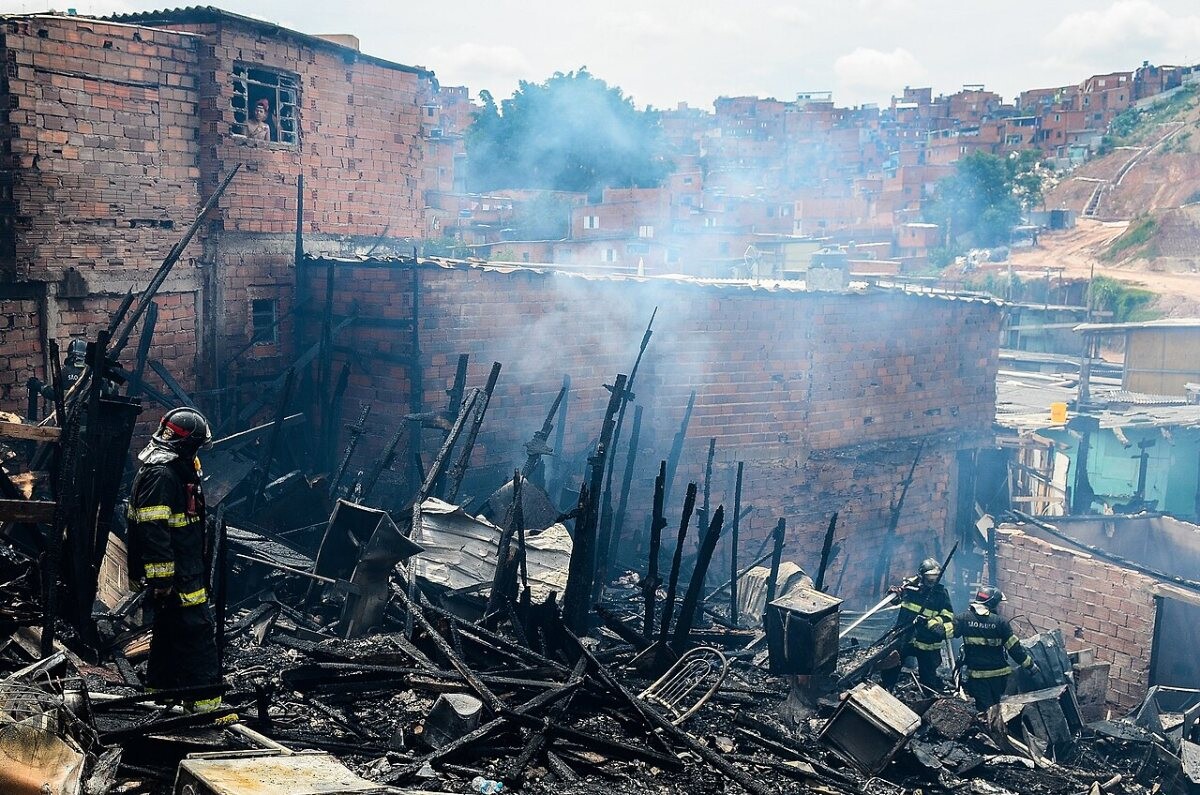
- The worst events hit crowded, informal housing: favela shacks, occupied tower blocks and shelters. Cooking-gas (LPG) leaks caused deadly building collapses in Aracaju (2023) and Maceió (2024).
What the numbers show
There is no single national figure for house fires. A 2025 study of fires in Belo Horizonte cites earlier work showing that Brazil’s fire services attended more than 730,000 fires in 2017–2019, with more than 2,700 deaths. That is about 900 deaths a year (Santos and Corrêa, 2025). Federal public-security (Senasp) data cited in Congress counted 262,087 fires in 2020, of which 83,006 were urban fires, buildings included (Agência Câmara). Hospital data give a narrower view. From 2007 to 2016, 20,907 burn patients died in hospital, and 3,510 of them had been exposed to smoke, fire and flames (ICD-10 X00–X09). This group had over twice the risk of death of other burn patients (Meschial et al., 2020). The SUS recorded 95,900 burn-care visits in 2022, or 262 a day, and 11,900 burn admissions (SIA/SIH data). Health bodies say about 70% of burns happen at home (FHEMIG).
Among children aged 0–14, 661 deaths from smoke, fire and flames were recorded in 2016–2024. Almost half were aged 1–4. The rate was 0.184 per 100,000 children in 2016, 0.144 in 2022 and 0.152 in 2024, with no tested trend (Rodriguez et al., 2026). State fire services show homes dominate building fires. Ceará’s brigade attended 1,020 home fires in 2021 and 1,184 in 2022 (O Povo / CBMCE). It counted 968 from January to September 2023, 7% more than a year earlier (O Povo). In Belo Horizonte in 2021–2022, 852 of 1,371 building fires (62%) were in homes. So were 119 of 133 fires with victims (Santos and Corrêa, 2025). In a wider Minas Gerais sample of 3,391 building fires, 64% were residential, and 45% of fires started in a bedroom (Agência Minas). The private Instituto Sprinkler Brasil tracks news reports of structural fires, but it leaves homes out, so its counts do not cover house fires.
What is driving it
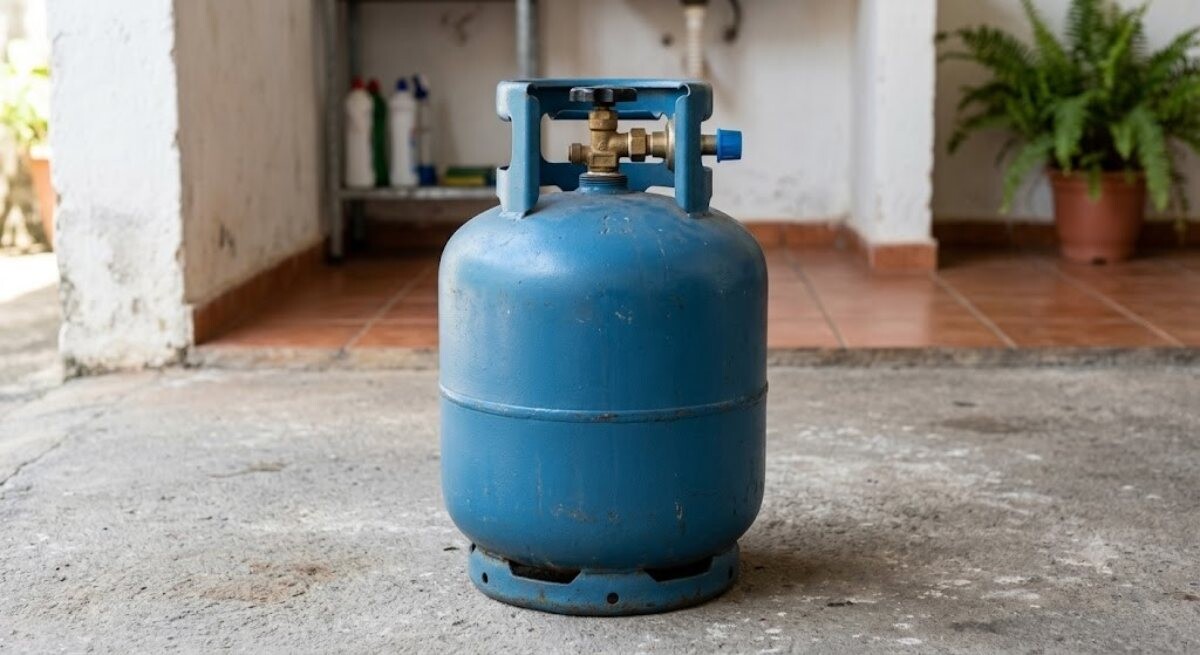
Three hazards recur. The first is cooking gas. Ceará’s brigade attends about 2,000 gas incidents a year (2,092 in 2019 and 2,043 in 2023) (CBMCE). Gas leaks brought down homes in Aracaju on 31 December 2023, killing five people (Sergipe Civil Defence), and in Maceió in November 2024, killing three (CBMAL). The second is electrical faults and overloaded, informal connections. A 2012 São Paulo city council inquiry named climate and electrical problems as the main causes of favela fires (São Paulo City Council). The third is crowding in precarious homes, where wooden shacks burn fast and escape routes are few. The São Paulo fire brigade recorded fires affecting 130 favelas in 2008 and 79 in 2010 (São Paulo City Council). It recorded 136 favela fires in 2015 and 100 by late July 2016 (Monitor Mercantil / Agência Brasil).
The law protects homes unevenly. The 2017 “Kiss Law” (Lei 13.425) was passed after the 2013 nightclub fire in Santa Maria. It targets places where the public gathers, and its only housing rule is periodic inspection of multi-family residential buildings (Planalto). Single-family homes, favelas and occupied buildings fall largely outside formal fire codes. That gap showed when the occupied Wilton Paes de Almeida tower in São Paulo burned and collapsed on 1 May 2018. About 372 people from 146 families lived there (Congresso em Foco), and seven died (Jovem Pan). It showed again when 11 people died in a Porto Alegre guesthouse used as social housing in April 2024 (MPRS). Prevention relies on state brigade campaigns, such as winter heater and stove warnings and the 6 June National Day against Burns.
Recent cases
- 16 September 2026: A national study found 661 deaths of children aged 0–14 from smoke, fire and flames in 2016–2024, with the highest rates among 1–4-year-olds (Revista Aracê).
- 24 June 2026: Rio Grande do Sul’s fire brigade launched its Safe Winter campaign after heat-source incidents rose from 1,196 in 2024 to 1,298 in 2025, a rise of 8.5% (RS Government).
- 11 May 2026: An explosion followed by fire in a Jaguaré community in west São Paulo killed one person and left 46 homes condemned, according to city councillors (São Paulo City Council).
Press releases and official reports, 2023–2026
Up to five key releases a year for the last four years, newest first. Most come from federal ministries and agencies such as the Ministry of Health, INPE, the Federal Highway Police, CENIPA and the Central Bank, from Agência Brasil, the public news agency, and from the Senate and Chamber news services and state governments; a few news reports are included where they are the clearest public record of an event. Headlines are our English translations of the Portuguese originals. Releases from 2007–2022 are in the expandable list after 2023.
2026
- 16 Sep 2026Revista Aracê (peer-reviewed journal)Mortality from exposure to smoke, fire and flames in children in Brazil: analysis by age group
- 24 Jun 2026Government of Rio Grande do SulMilitary Fire Brigade launches Safe Winter campaign to prevent residential fires
- 12 May 2026São Paulo City CouncilExplosion in the capital's west zone is one of the topics of Tuesday's session
- 15 Apr 2026Agência Minas (Minas Gerais government)Study shows simple self-protection measures can save lives in residential fires
2025
- 31 Jul 2025Rio Grande do Sul Public Prosecutor's Office (MPRS)Porto Alegre: prosecutor's office at the 2nd Jury Court will handle the Pousada Garoa case
- 5 May 2025O ImparcialMore than 100 residential fires recorded in Maranhão in 2025
- 19 Mar 2025Government of PiauíPiauí firefighters warn of gas-leak risks and reinforce safety measures
- 26 Feb 2025Brasil de FatoPorto Alegre city council sets up commission to investigate the Pousada Garoa fire
- 4 Feb 2025Alagoas Military Fire Brigade (CBMAL)Fire Brigade attended 70 gas-leak incidents in 2024
2024
- 12 Jul 2024CartaCapitalWhere did the fire in the favelas go?
- 7 Jun 2024FHEMIG (Minas Gerais hospital foundation)Reference centre for severe burns, Hospital João XXIII opens the Orange June campaign
- 26 Apr 2024Jornal do ComércioLegislators demand investigation into guesthouse fire; council may open inquiry
- 13 Mar 2024Ceará Military Fire Brigade (CBMCE)Fire Brigade responds to cooking-gas incident
- 3 Jan 2024Sergipe Civil DefenceExplosion that caused a building collapse in Aracaju was due to a gas leak in a residential unit, says Fire Brigade
2023
- 17 Oct 2023O PovoNumber of fires in homes rises 7% in Ceará
- 24 Aug 2023Chamber of Deputies News AgencySeminar calls for conclusion of the Kiss nightclub tragedy trial
- 1 Jun 2023ABC do ABCSUS recorded 262 burn-care visits a day in 2022
- 5 Feb 2023O PovoIn January, Ceará recorded almost 90 residential fires; see prevention tips
- 27 Jan 2023Senate News AgencyTen years after the Kiss nightclub fire, senators demand punishment of those responsible
View 20 years of major Brazilian home fire press releases (2007–2026)43 more from 2007–2022, up to five a year, newest first
2022
- 7 Jun 2022Senate News AgencyPacheco highlights the Orange June burn-prevention campaign
2021
- 11 Jun 2021Senate News AgencyOrange June campaign encourages action to prevent burns; listen to the advice
- 10 Jun 2021Senate News AgencySenate to be lit orange to highlight campaign against burns
- 6 Jun 2021Government of RondôniaOn National Day against Burns, Fire Brigade warns about household accidents involving children
2020
- 17 Nov 2020Chamber of Deputies News AgencyBill would allow cooking gas to be used for other purposes
- 2 Jun 2020Folha VitóriaBrazil records 25% rise in burns since the start of the pandemic
- 1 Jun 2020Senate News AgencySenate is lit orange to mark the Day against Burns
- 18 Mar 2020Senate News AgencySenate set to vote on bill allowing 70% alcohol to be sold in larger containers
2019
- 1 May 2019Jovem PanOne year after the Wilton Paes de Almeida building collapse, families still try to move on
- 28 Mar 2019São Paulo City CouncilResidents of Favela do Cimento describe fire and eviction
- 26 Mar 2019Gazeta SPMan dies after fire in favela on the Radial Leste
- 24 Mar 2019Folha VitóriaMan dies after fire in Favela do Cimento
- 8 Feb 2019São Paulo City CouncilFire prevention in occupied buildings is the subject of a bill
2018
- 18 Dec 2018CorreioFire reaches 600 homes in a Manaus neighbourhood
- 11 Dec 2018Chamber of Deputies News AgencySocial Security Committee approves mandatory evacuation plans for establishments
- Jun 2018Fiocruz (Radis magazine)Silencing the record? Documentary questions favela fires
- 3 May 2018São Paulo City CouncilCommittee inspects the rubble of the building that collapsed in central São Paulo
- 2 May 2018Congresso em FocoFirefighters say 44 people still unaccounted for after building collapse in São Paulo
2017
- 6 Jun 2017Senate News AgencyOtto Alencar marks the National Day against Burns
- 31 Mar 2017Senate News AgencyLaw on safety in nightclubs is signed with vetoes
- 30 Mar 2017Presidency of the RepublicLaw No. 13,425 of 30 March 2017: general guidelines on fire and disaster prevention and fighting
- 15 Mar 2017São Paulo City CouncilCouncillors and secretary discuss the fire in the Paraisópolis favela
2016
- 27 Jul 2016Monitor Mercantil (via Agência Brasil)Fires in São Paulo favelas already equal 73% of all 2015 cases
2015
- 5 Jun 2015Santa Catarina Nursing Council (COREN-SC)Household accidents cause most burns in children
2014
- 1 Oct 2014Estadão (via Bahia Notícias)Charred body found after favela fire
- 8 Sep 2014ExamePolice will investigate favela fire, says Alckmin
- 16 Apr 2014Federal SenateChamber Bill No. 33 of 2014 (future Kiss Law) reaches the Senate
2013
- 8 Jul 2013Vermelho (via Agência Brasil)Homeless families wait in Heliópolis to retrieve belongings
- 4 Apr 2013Senate News AgencySpeakers call for national legislation on fire prevention and firefighting
2012
- 18 Dec 2012São Paulo City CouncilFires inquiry presents its final report
- 22 Sep 2012CartaCapitalAccident or crime?
- 17 Sep 2012VermelhoSão Paulo: fire in Favela do Moinho brought under control with no victims
- 12 Sep 2012São Paulo City CouncilFires inquiry hears the coordinator of São Paulo city Civil Defence
- 4 Sep 2012São Paulo City Council2009 law should help prevent fires in favelas
2011
- 9 Feb 2011São Paulo City CouncilShort and Grand Expedient sessions [plenary round-up]
2010
- 12 Jul 2010Jornal da ParaíbaFire in São Paulo favela leaves almost a thousand homeless
2009
- 23 Nov 2009Chamber of Deputies News AgencyCommittee rejects requirement for leak-blocking device on gas cylinders
- 15 Oct 2009São Paulo City CouncilCouncil approves bill creating a fire prevention programme for the city's favelas
- 14 Sep 2009Federal Council of Medicine (CFM)Brazil establishes National Day against Burns
- 9 Sep 2009Presidency of the RepublicLaw No. 12,026 of 9 September 2009: establishes the National Day against Burns
- 9 Jun 2009Senate News AgencyBrazil today has around one million burn victims
2008
- 9 Oct 2008Senate News AgencySenators approve debate on a public policy for burn treatment and rehabilitation of burn victims
- 8 Oct 2008Senate News AgencyFlávio Arns recalls Senate initiatives on burn prevention and treatment
Many years list fewer than five items, and some have none yet. Older federal releases and the 2007–2013 Agência Brasil archive are hard to reach at their original addresses, and we only list items we could open and check. We are still adding to these lists. Where a page shows no date, the date comes from the release address or the publisher’s own index.
Photo list
How this page is built. Figures come from the official statistical releases linked above; where agencies publish provisional numbers we say so, because they are revised. Brazil’s national death data come from the Ministry of Health mortality system (SIM/DATASUS) and are usually final about two years later, and some topics, such as fires, have no single national count, so we say which year and source each figure covers. Money is given in reais (R$). Headlines and quotes are our translations from Portuguese. Photos are public-domain or Creative Commons images credited in each caption; file photos are illustrative and are not from the events described unless the caption says so. This page tracks trends and is not personal safety, medical, legal or financial advice.