
Trend summary
- Australia sits in the middle of a tectonic plate, so large earthquakes are rare, but they are not unusual. Geoscience Australia estimates about 100 earthquakes of magnitude 3 or more each year, a magnitude 5 or larger every year or two, and a magnitude 6 about once a decade.
- 2026 has been an active year: a magnitude 5.5 quake in the APY Lands of South Australia on 5 April left a ground rupture 3 to 4 km long, and a magnitude 4.8 near Korumburra, Victoria, on 3 October drew almost 21,000 felt reports.
- In August 2025 a magnitude 5.6 quake near Kilkivan was the largest onshore earthquake in Queensland in over fifty years, with more than 24,000 felt reports.
- The 2023 National Seismic Hazard Assessment (NSHA23), released in December 2024, raised the expected shaking for Darwin and for the eastern highlands through to the Latrobe Valley.
What the numbers show
Earthquake counts in Australia do not show a clear long-term rise or fall: they bounce from year to year depending on where and when a few larger events happen. Geoscience Australia’s own guide, quoted in an ABC explainer in August 2025, puts the national average at about 100 quakes of magnitude 3 or more a year. The biggest recent events are the magnitude 6.1 in the Petermann Ranges of Central Australia in May 2016, the largest in nearly 20 years, and the magnitude 5.9 near Rawson and Woods Point on 22 September 2021, the biggest to hit Victoria since modern instruments began.
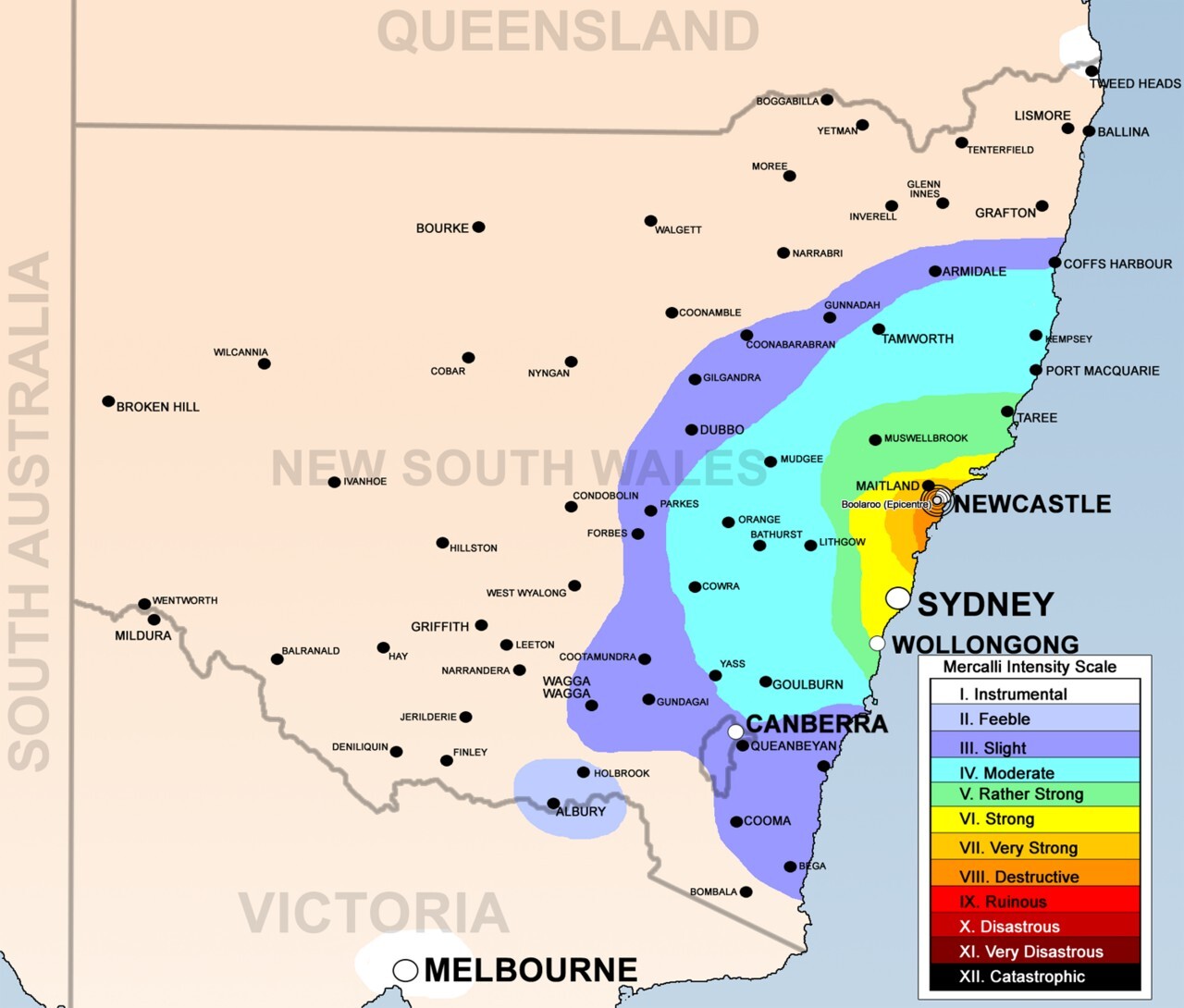
What has grown is how many people notice them. Felt reports to Geoscience Australia now run into the tens of thousands for a moderate quake near a city: more than 24,000 for the Kilkivan quake in August 2025, over 4,000 in six hours for a magnitude 4.6 near Singleton, NSW, in April 2025, and almost 21,000 for the Korumburra quake in October 2026. For historical context, the APY Lands quake of April 2026 released about as much energy as the 1989 Newcastle earthquake, which claimed 13 lives, according to Geoscience Australia; it did little harm because it struck one of the most sparsely populated parts of the country.
What is driving it
The whole Australian plate is being squeezed by distant plate boundaries, and that stress is released on old faults inside the continent. Some areas are consistently busier than others, including the south-west of Western Australia, the Flinders Ranges in South Australia, the Victorian and New South Wales highlands, and the Hunter region, where a magnitude 4.7 near Denman in August 2024 was followed by a swarm of smaller quakes.
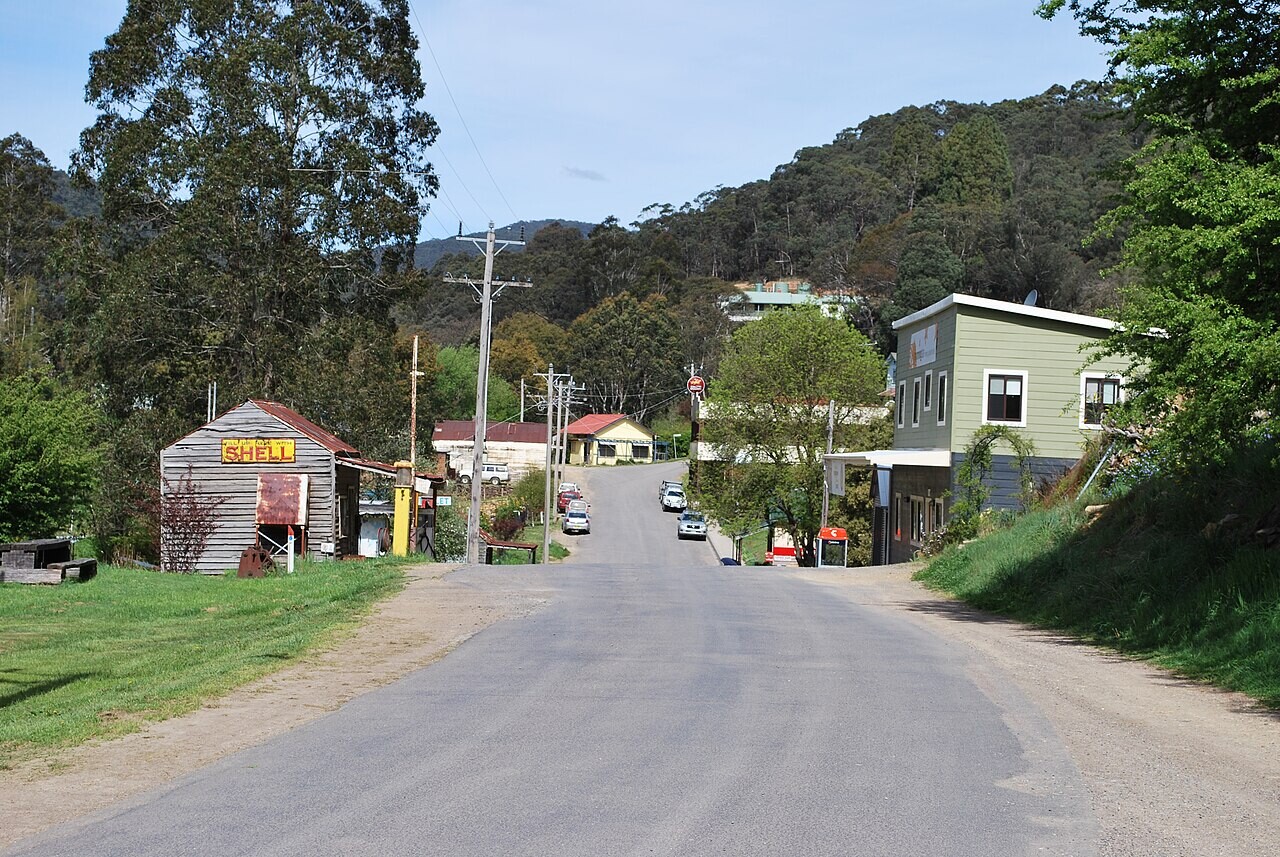
Risk depends on people and buildings as much as on shaking. Geoscience Australia’s NSHA23 update, the first since 2018, says most of Australia remains at low to moderate risk, but newer ground-motion models increased the hazard for Darwin and the Victorian high country. Older unreinforced brick buildings, chimneys and parapets are the main weakness: Geoscience Australia notes that the 2021 Rawson quake caused structural damage to properties in Melbourne, more than 100 km away.
Policy and budget changes
The main government measures and money figures behind this risk, newest first. Each item links to the official text we checked; where only a news report was available, the source says so.
Main policy changes
- 17 December 2024 Updated National Seismic Hazard Assessment released. Geoscience Australia published the first update to the National Seismic Hazard Assessment since 2018, which defines expected earthquake ground shaking across Australia and flags higher hazard for Darwin and the eastern highlands to the Latrobe Valley. (Geoscience Australia)
- 27 March 2024 Guidance on earthquake-proofing older masonry buildings. Geoscience Australia, with Western Australia’s Department of Fire and Emergency Services, the University of Adelaide and the Shire of York, released free guides for owners and builders on assessing and retrofitting older masonry buildings against earthquakes. (Geoscience Australia)
- 1 March 2023 Disaster Ready Fund replaces Emergency Response Fund. The Emergency Response Fund was continued under the new name Disaster Ready Fund, with up to $200 million a year able to be drawn from 2023–24 unless ministers set a different amount. (Federal Register of Legislation (commencement proclamation))
- 16 December 2020 National emergency declaration law comes into force. The National Emergency Declaration Act 2020 came into force, allowing a national emergency to be declared for any disaster causing nationally significant harm and simplifying the use of federal emergency powers. (Federal Register of Legislation (Act No. 128, 2020))
Budget and costs
- 13 September 2023 1989 Newcastle quake would cost A$6.54 billion today. The Insurance Council of Australia estimates that the 1989 Newcastle earthquake, which caused A$862 million in insured losses at the time, would cost A$6.54 billion normalised to 2023 values. (Insurance Council of Australia (industry body))
- 7 June 2023 Disaster Ready Fund: A$200 million for 187 projects. The Disaster Ready Fund provides up to A$200 million a year for five years from 2023–24 (up to A$1 billion in total). Round One, announced on 7 June 2023, gave A$200 million to 187 resilience projects. (National Emergency Management Agency)
Recent cases
- 3 October 2026: a magnitude 4.8 earthquake strikes near Korumburra in South Gippsland, Victoria, just after 2am, felt from Geelong to Phillip Island, with almost 21,000 felt reports and no reported injuries or damage (ABC News).
- 12 August 2026: a magnitude 4.8 earthquake shakes the remote Nullarbor Plain in Western Australia, north-west of Madura Plains Station; only one felt report came in, from the Cocklebiddy Roadhouse (ABC News).
- 5 April 2026: a magnitude 5.5 earthquake near Amata in the APY Lands, close to the South Australia–Northern Territory border, is later found to have opened a surface rupture 3 to 4 km long (ABC News).
Our read: what the numbers add up to
There is no trend to speak of in the shaking itself, and that is the honest verdict. Geoscience Australia’s estimate of about 100 quakes of magnitude 3 or more a year, a magnitude 5 every year or two and a magnitude 6 roughly once a decade describes a steady background rate,; counts bounce from year to year with a few larger events. 2026 has been busy, with the magnitude 5.5 in the APY Lands and the 4.8 near Korumburra, but a busy year is exactly what that background rate produces from time to time.
What has changed is exposure and attention. The felt reports tell the story: more than 24,000 for Kilkivan in August 2025 and almost 21,000 for Korumburra, against a single report for a magnitude 4.8 on the Nullarbor. What matters is how many people and buildings sit nearby. The APY Lands event makes the point more sharply still. It released about as much energy as the 1989 Newcastle earthquake, which claimed 13 lives, yet did little harm because so few people live there. The NSHA23 revision, which raised expected shaking for Darwin and the Victorian high country, is a reminder that the real change has come in the hazard maps, not in the quake counts.
Felt reports measure public engagement, not seismic activity, so a rise in them should not be read as more earthquakes, and annual counts are too small for confident comparisons between single years. What I would watch is how building practice responds to the higher hazard estimates, and whether older unreinforced brick buildings, chimneys and parapets are being dealt with; the 2021 Rawson quake damaged properties in Melbourne more than 100 km away. My bottom line: Australia’s earthquake hazard is stable but better understood, and the risk depends far more on old masonry near population centres than on how often the ground moves.
Press releases and official reports, 2023–2026
Key releases for the last four years, newest first. Most come from Australian Government agencies, state and territory agencies, regulators, accident investigators and national statistics; a few news reports are included where they are the clearest public record of an event. Releases from 2007–2022 are in the expandable list after 2023.
2026
- 3 Oct 2026Geoscience AustraliaEarthquake information for media outlets: preliminary magnitude 4.8 earthquake recorded near Melbourne, Victoria
- 12 Aug 2026ABC NewsEarthquake shakes remote Cocklebiddy Roadhouse on Nullarbor Plain
- 20 May 2026ABC NewsEarthquake in outback SA has ‘permanently changed landscape’
- 14 Apr 2026ABC NewsEarthquake south of Orange shakes homes over hundreds of kilometres
- 5 Apr 2026ABC NewsMagnitude-5.5 earthquake recorded in APY Lands near Northern Territory and South Australian border
2025
- 21 Aug 2025Geoscience AustraliaMagnitude 5.6 earthquake near Kilkivan, QLD
- 18 Aug 2025ABC NewsWhat causes earthquakes? How common are they in Australia?
- 13 Jun 2025Geoscience AustraliaRetrofitting Melbourne’s buildings to withstand earthquakes
- 23 Apr 2025Geoscience AustraliaMagnitude 4.6 earthquake near Singleton, NSW
- 30 Jan 2025ABC NewsGeoscience Australia declares Darwin, Latrobe Valley high-risk earthquake zones
2024
- 17 Dec 2024Geoscience AustraliaNew science sheds light on Australia’s potential risk for earthquakes
- 12 Nov 2024ABC NewsMagnitude-4.1 earthquake rattles NSW Upper Hunter
- 23 Aug 2024Geoscience AustraliaMagnitude 4.7 earthquake in Upper Hunter, NSW
- 27 Mar 2024Geoscience AustraliaResilience to the shake: science protecting older buildings against earthquakes
- 9 Feb 2024ABC News4.3 magnitude earthquake strikes Gippsland overnight, felt by thousands in Melbourne
2023
- Nov 2023AEESThe 2023 National Seismic Hazard Assessment of Australia
- 25 Oct 2023Geoscience AustraliaRecent seismic activity in Australia
- 22 Oct 2023ABC NewsMagnitude-5.0 earthquake near Great Ocean Road town of Apollo Bay largest on record in region
- 6 Aug 2023ABC NewsMagnitude-5 earthquake strikes near Gnowangerup rattling residents across southern Western Australia
- 1 Jun 2023Geoscience AustraliaMelbourne residents woken by 3.8 magnitude earthquake
View 20 years of major Australian earthquake press releases (2007–2026)58 more from 2007–2022, up to five a year, newest first
2022
- 8 Jun 2022Geoscience AustraliaFieldwork unearths scars from ancient earthquakes near Adelaide
- 30 Mar 2022ABC NewsEarthquake activity shakes Adelaide, again — and it’s because Australia’s edging northwards
- 14 Feb 2022ABC NewsWhy are there more earthquakes in Western Australia than the rest of the country?
- 25 Jan 2022Geoscience AustraliaMagnitude 4.8 earthquake near Wagin, Western Australia
- 25 Jan 2022ABC NewsEarthquake ‘swarm’ rattles WA’s south with more than than 40 over three weeks
2021
- 14 Nov 2021Geoscience AustraliaMagnitude 5.3 earthquake in Pilbara, Western Australia
- 23 Sep 2021Geoscience AustraliaVictoria’s biggest earthquake on record
- 22 Sep 2021Geoscience AustraliaRecent earthquake in Victoria
- 22 Sep 2021ABC NewsMansfield magnitude-5.9 earthquake shakes Melbourne, regional Victoria, southern NSW, Sydney, Canberra, Adelaide and Launceston
- 22 Sep 2021ABC NewsEarthquakes in Australia: How big do they get and how prepared are we?
2020
- 7 Oct 2020Geoscience AustraliaA testing time for an ever-present danger
- 26 Aug 2020ABC NewsKalgoorlie-Boulder earthquake wakes hundreds of residents in dead of night
- 22 May 2020Geoscience AustraliaHow the world’s largest earthquake made waves in Australia
2019
- 5 Nov 2019Geoscience AustraliaEver-present risk of tsunami highlighted by near-miss in Broome
- 22 Oct 2019ABC NewsKalgoorlie mine workers evacuated from Frog’s Leg mine after more than 100 seismic events in one day
- 13 Aug 2019Geoscience Australia30 years on – Commemorating the 1989 Newcastle Earthquake
- Apr 2019AIDREarthquakes happen in Australia, but are we prepared? (Australian Journal of Emergency Management, April 2019)
- 19 Jan 2019ABC NewsEarthquake in sea off north Queensland rumbles through Whitsundays region
2018
- 9 Nov 2018ABC NewsEarthquake shakes Perth and WA’s south after hitting Lake Muir, ‘moving and rumbling’ houses
- 3 Oct 2018ABC NewsFarmer’s find gives scale to Western Australia’s magnitude-5.7 earthquake, exciting researchers
- 16 Sep 2018ABC NewsMagnitude-5.7 earthquake rocks southern WA
- 8 Aug 2018ABC NewsEarthquake near Mannum felt across Adelaide suburbs and hills rumbled ‘like a train’
- 29 Jun 2018Geoscience AustraliaNational Earthquake Alerts Centre gets a shake-up
2017
- 29 Sep 2017Geoscience AustraliaSouth Australia’s shaky history revealed
- 3 Jul 2017ABC NewsWhat is the known earthquake history of the ACT?
- 20 Mar 2017Geoscience AustraliaWorking together to improve understanding of Australia’s earthquake hazard
- 13 Mar 2017ABC NewsEarthquake hotspots identified in regional Queensland as seismic activity heats up
- 4 Jan 2017ABC NewsAppin earthquake shakes homes within 56km radius, south of Sydney
2016
- 18 Aug 2016Geoscience AustraliaMagnitude 5.8 earthquake shakes far north Queensland
- 30 May 2016ABC NewsEarthquake ‘like a road train’ say station owners at the epicentre near Norseman
- 23 May 2016Geoscience AustraliaLargest earthquake in nearly 20 years shakes Central Australia
- 11 May 2016Geoscience AustraliaShaking up Australia’s earthquake sizes
- 26 Apr 2016ABC NewsKalgoorlie residents woken by early-morning earthquake
2015
- 16 Feb 2015ABC NewsEidsvold earthquake in Queensland could have been devastating, Geoscience Australia says
- 16 Feb 2015ABC NewsEarthquakes hit Queensland town of Eidsvold, south-west of Bundaberg, causing tremors in state’s south-east
2014
- 23 Dec 2014ABC NewsSmall earthquake rattles Broken Hill, prompting safety measures at mines
- 3 Dec 2014ABC NewsEarthquake of magnitude-3.3 shakes Korumburra in Victoria’s south-east
- 12 Nov 2014ABC NewsMagnitude-3.8 earthquake rattles remote Kimberley community
- 13 Jan 2014ABC NewsEarthquake rattles Melbourne’s east
- 6 Jan 2014ABC NewsAdelaide shaken by earth tremor which sounded like ‘jet taking off’
2013
- 9 Oct 2013ABC NewsEarthquake tremors reach the Gong
- 21 Jun 2013ABC NewsMelbourne’s eastern suburbs shaken by small earth tremor
2012
- 20 Jul 2012ABC NewsNo damage after earthquake hits Gippsland
- 19 Jun 2012ABC NewsMagnitude-5.4 quake shakes southern Victoria
2011
- 18 Sep 2011ABC NewsEarthquake shakes north Queensland
- 5 Jul 2011ABC NewsEarthquake shakes Victoria
- 23 May 2011ABC NewsQueensland may have minor fault lines
- 18 Apr 2011ABC NewsAftershocks continue to shake north Queensland
- 15 Mar 2011ABC NewsSmall quake off north Queensland coast
2010
- 30 Apr 2010ABC NewsGoldfields hit by another earthquake
- 22 Apr 2010ABC NewsEconomic impact of quake hits home
- 21 Apr 2010ABC NewsQuake damage threatens Kalgoorlie’s historic buildings
- 20 Apr 2010ABC NewsGovernment to help Kalgoorlie quake victims
- 30 Mar 2010ABC NewsSmall quake shakes Melbourne
2009
- 18 Mar 2009ABC NewsMore quakes could rock Victoria: seismologists
- 7 Mar 2009ABC NewsMelbourne escapes unscathed after earthquake
- 6 Mar 2009ABC NewsEarth tremor shakes Melbourne suburbs
2007
- 25 Aug 2007ABC NewsEarthquake shakes Qld town: reports
Some early years list fewer than five items. Many older Australian government releases are no longer online at their original addresses, and we only list items we could find and check.
Photo list
How this page is built. Figures come from the official statistical releases linked above; where agencies publish provisional numbers we say so, because they are revised. Australian statistics are often published separately by each state and territory, and financial years run from July to June, so we say which area and period each figure covers. Photos are public-domain or Creative Commons images credited in each caption; file photos are illustrative and are not from the events described unless the caption says so. This page tracks trends and is not personal safety, medical, legal or financial advice.