
Trend summary
- By 31 July 2026 France had 119,000 hectares burned and 14,320 forest fires since January, according to the Ministry of the Interior. The interior minister called the total a historic record; it is well above the roughly 72,000 ha burned in all of 2022.
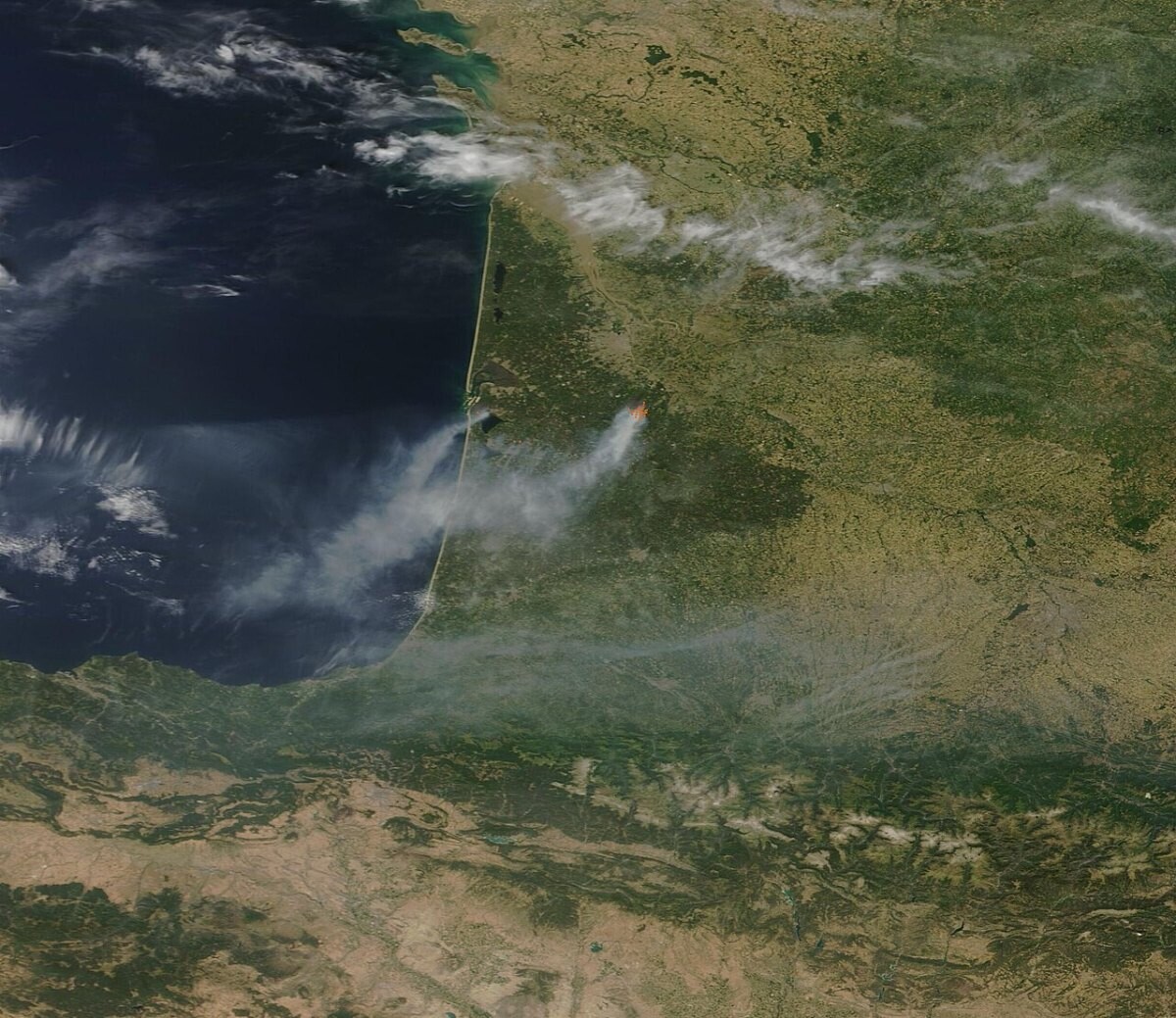
- The Saumos fire in Gironde, which started on 22 July 2026, burned about 42,000 hectares near the Arcachon basin and led to the preventive evacuation of about 220,000 people.
- In 2022 about 72,000 hectares burned (62,000 ha of forest, 10,000 ha of other vegetation). The two Landiras fires covered nearly 20,000 ha. In 2025 about 30,000 ha burned, a third of it in one fire in the Aude.
- Nine in ten fires are started by people. A 2023 law tightened brush-clearing rules and smoking bans. The state fleet of 12 Canadair water bombers is ageing: on 24 July 2026 only five were operational.
What the numbers show
France’s long-run wildfire figures come from two databases: Prométhée for the Mediterranean region and BDIFF for the rest of the country (and for the Mediterranean since 2022). Together they cover metropolitan France, including Corsica. Burned forest topped 70,000 hectares in 1989, 1991 and 2003, then fell sharply (SDES, Chiffres clés des risques naturels 2023). A 2019 Senate report put the annual average at 46,000 ha over the past 40 years, against 11,800 ha in the latest decade (Senate). In 2017, 24,500 ha burned, over 85% of it in the Mediterranean zone (Ministry of the Interior). Then 2022 broke the pattern: 62,000 ha of forest and 10,000 ha of other vegetation burned. The two Landiras fires in Gironde covered nearly 20,000 ha, and the La Teste-de-Buch fire nearly 6,000 ha, forcing about 22,000 people to leave (SDES). A 2026 study found that burned area in south-west France in 2022 was 14 times the 2006–2023 average (Zhu et al., NHESS 2026). On EFFIS satellite data, which counts fires of 30 ha or more, 2022 reached 66,300 ha, the previous annual record (AFP via Macau Business).
After a quiet 2023 and 2024, about 30,000 ha of vegetation burned in 2025, including nearly 20,000 ha of forest. That was roughly double the 2006–2021 average, the National Forests Office (ONF) said. One fire, which started in Ribaute (Aude) on 5 August 2025, burned 11,300 ha of the Corbières massif. It was the worst fire on France’s Mediterranean coast in at least 50 years (ONF via Banque des Territoires). It killed one resident and destroyed or damaged 25 homes (AFP via Paris Match). In 2026, EFFIS counted more than 42,000 ha burned by mid-July, already more than in all of 2025 (AFP via ProtoThema). By 31 July the Interior ministry counted 119,000 ha and 14,320 forest fires since the start of the year (Ministry of the Interior). The Saumos fire alone burned about 42,000 ha (AFP via Boursorama). The Gendarmerie said the south-west had 63% of the burned area but only 20% of fires (Gendarmerie). The ministry’s 2026 totals say “in France” and do not state whether overseas departments are included.
What is driving it
Climate is making extreme fire weather more likely. One attribution study found that human-caused climate change made the hot, dry conditions of July 2022 in south-west France about twice as likely, with a return period of 13 years in today’s climate (Lanet et al., npj Climate and Atmospheric Science 2024). Across south-west Europe in 2022, fuel dryness and fire weather hit record levels, and large fires started in June–July, earlier than usual (Rodrigues et al., 2022 preprint). The risk is also spreading north and west: in 2022 the Atlantic pine forests lost far more biomass than Mediterranean forests (Vallet et al., 2023). A Senate mission warned that burned area in the Mediterranean region could rise 80% by 2050, and that nearly half of French heath and forest could face high fire risk, against a third in 2010 (Banque des Territoires). People start most fires: the government says nine in ten are of human origin (Ministry of the Interior), and 474 people had been arrested over fires by mid-August 2026 (Gendarmerie).
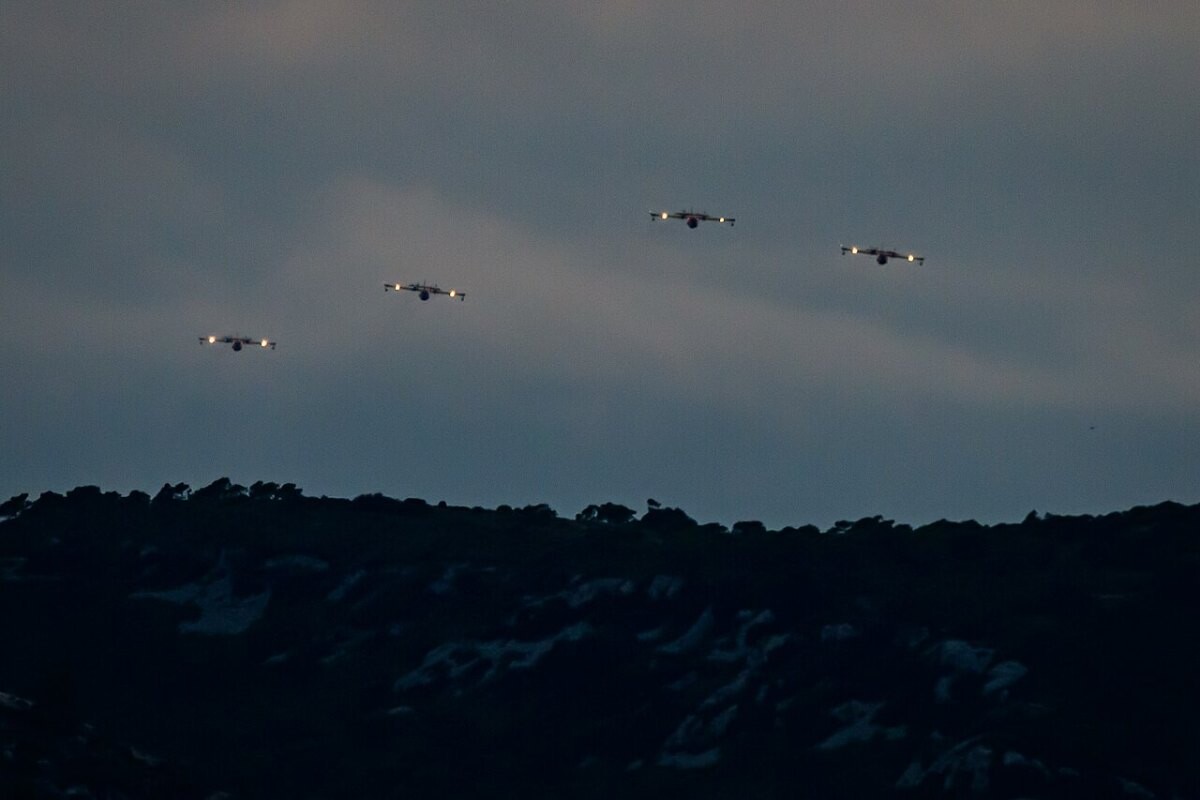
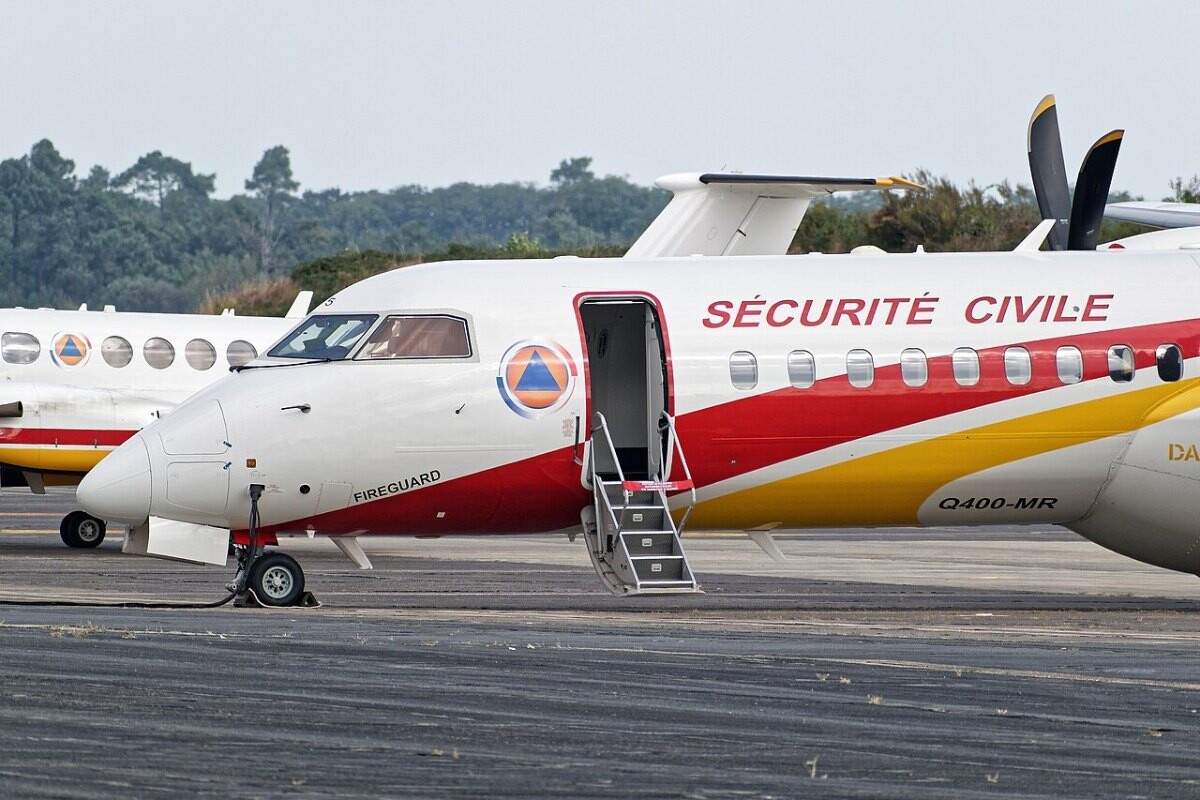
France’s strategy is to attack every new fire within ten minutes (Senate). Prevention is weaker: compliance with compulsory brush-clearing is often below 30% (Senate, 2022). After the 2022 fires, Law No. 2023-580 of 10 July 2023 required a national fire-defence strategy, tightened brush-clearing duties, banned smoking in and near forests during the risk season and set building limits in high-danger zones (Ineris AIDA). The state fleet has 12 Canadair, 8 Dash and 3 Beechcraft aircraft, plus helicopters, rented aircraft and 27 refilling bases (Ministry of the Interior). The Canadairs are nearly 30 years old. The President promised in October 2022 to expand the fleet to 16, but on 24 July 2026 only five were operational (National Assembly). Two new DHC-515s funded through the EU’s rescEU programme were due in 2026 and 2027, at about €55 million each (Senate).
Recent cases
- 8 September 2026: A National Assembly written question said only five of France’s 12 Canadair water bombers were operational on 24 July 2026, at the height of the Gironde fire, against a 95% availability target (National Assembly).
- 14 August 2026: The Gendarmerie launched Operation Nemus, sending about 300 gendarmes to patrol the most fire-prone forests. It said 257 large fires had burned more than 75,000 ha and 474 people had been arrested (Gendarmerie).
- 26 July 2026: The Saumos fire in Gironde, which started on 22 July, reached about 42,000 ha. About 220,000 people were evacuated, one of the largest wildfire evacuations in France (AFP via Paris Match).
Press releases and official reports, 2023–2026
Five key releases a year for the last four years, newest first. Most come from national bodies such as ONISR, the Ministry of the Interior, Santé publique France, the BEA and BEAmer investigation bureaus and the Banque de France, from the Senate and National Assembly, and from research journals; a few news reports are included where they are the clearest public record of an event. Headlines are our English translations of the French originals. Releases from 2007–2022 are in the expandable list after 2023.
2026
- 8 Sep 2026National AssemblyAvailability of the Canadairs (written question No. 18061)
- 14 Aug 2026Gendarmerie nationale (Gendinfo)Wildfires: the National Gendarmerie launches Operation Nemus in the most exposed areas
- 26 Jul 2026Paris Match Belgium (AFP)The fire continues to ravage Gironde: 42,000 hectares burned, 220,000 people evacuated
- 24 Jul 2026Ministry of the InteriorOn land and in the air: fighting fire on every front
- 9 Jun 2026Ministry of the InteriorLaunch of the 2026 forest and vegetation fire prevention campaign
2025
- 3 Oct 2025Banque des Territoires (AFP)Summer 2025: more forest burned and more fire starts brought under control, according to an ONF review
- 7 Aug 2025Paris Match Belgium (AFP)Massive fire in the Aude: the fire has lost intensity, but caution remains in the affected villages
- 6 Aug 2025Paris Match Belgium (AFP)The biggest fire of the summer leaves one dead and nine injured in the south of France
- 24 Jul 2025SenateFrance must rise to the challenge of forest fires (written question No. 05825 and answer)
- 2025European Commission JRC (EFFIS)Forest Fires in Europe, Middle East and North Africa 2024
2024
- Nov 2024npj Climate and Atmospheric ScienceAttribution of summer 2022 extreme wildfire season in Southwest France to anthropogenic climate change
- 13 Jun 2024Ministry of the Interior7th edition of the forest and vegetation fire prevention campaign, 2024
- 16 Feb 2024Banque des TerritoiresWildfire prevention: the regulatory arsenal grows with a new decree under consultation
- 2024European Commission JRC (EFFIS)Forest Fires in Europe, Middle East and North Africa 2023
- 2024European Commission JRC (EFFIS)Report on the large wildfires of 2022 in Europe
2023
- 10 Jul 2023Ineris (AIDA)Law No. 2023-580 of 10 July 2023 to strengthen prevention of and the fight against the intensification and spread of wildfire risk
- 5 Apr 2023EGUsphere (Copernicus)High resolution data reveal a surge of biomass loss from temperate and Atlantic pine forests, seizing the 2022 fire season distinctiveness in France
- 21 Feb 2023National AssemblyStrengthening the French fleet of water bombers (written question No. 2614 and answer)
- 24 Jan 2023SenateState of the Canadair aerial fleet (oral question No. 0167S and answer)
- 13 Jan 2023Banque des TerritoiresWildfire prevention: senators table a bill
View 20 years of major French wildfire press releases (2007–2026)70 more from 2007–2022, up to five a year, newest first
2022
- 28 Oct 2022SenateWildfire prevention: the President of the Republic follows the path laid by the senators
- 30 Sep 2022bioRxivDrivers and implications of the extreme 2022 wildfire season in Southwest Europe
- 31 Aug 2022Banque des TerritoiresForest and vegetation fires: a Senate report prepares the ground for a bill in the autumn
- 3 Aug 2022SenateForest and vegetation fires: preventing the blaze (information report No. 856, summary)
- 28 Jul 2022SenateUrgent need to give firefighters the operational resources to fight fires (written question No. 01879)
2021
- 8 Nov 2021Gendarmerie nationale (Gendinfo)The fire causes and circumstances investigation unit: no smoke without fire
- 26 Aug 2021macommune.info (AFP)The fire that ravaged the Côte d'Azur officially declared extinguished
- 17 Aug 2021Monaco TribuneFire in the Var: 6,000 hectares burned
- 17 Aug 2021Copernicus EMS (European Commission)Fire in Var, France (rapid mapping activation EMSR541)
- 2021European Commission JRC (EFFIS)Forest Fires in Europe, Middle East and North Africa 2020
2020
- 19 Nov 2020Senate2021 budget bill: civil security, incl. about 9,500 ha burned by 20 August 2020 and a less intense summer than 2019 (Finance Committee report No. 138, annex 29, vol. 2)
- 19 Nov 2020Senate2021 budget bill: civil security, incl. the withdrawal of all Tracker water bombers in 2020 and EU-funded Canadair purchases (Law Committee opinion No. 144, vol. XIII)
- 7 Aug 2020Futura SciencesThe Martigues fires seen from space
- 8 Jun 2020European Commission JRC (EFFIS)Advance EFFIS report on forest fires in Europe, Middle East and North Africa 2019
- 11 Feb 2020Copernicus EMS (European Commission)Forest fire in Corsica, France (rapid mapping activation EMSR426)
2019
- 31 Oct 2019European Commission JRC (EFFIS)Forest Fires in Europe, Middle East and North Africa 2018
- 4 Oct 2019Banque des TerritoiresForest fires: a senator's proposals to strengthen prevention and firefighting resources
- 30 Sep 2019SenateForest fires: firefighting resources must be strengthened as global warming worsens the risk
- 25 Sep 2019SenateForest fires: the pressing need to strengthen firefighting resources against a risk likely to worsen (information report No. 739)
- 3 Apr 2019European Commission JRC (EFFIS)Advance EFFIS report on forest fires in Europe, Middle East and North Africa 2018
2018
- 11 Oct 2018National Assembly2019 budget bill: civil security, incl. France's strategy for fighting forest fires (Finance Committee report No. 1302, annex 40)
- 18 Sep 2018European Commission JRC (EFFIS)Forest fires in Europe, Middle East and North Africa 2017
- 2 Aug 2018SenateCost of wildfire brush-clearing for property owners (written question No. 06414 and answer)
- 25 May 2018Ministry of the InteriorProtecting the forest against fires (2018 campaign press kit)
- 5 Jan 2018Copernicus EMS (European Commission)Copernicus Emergency Management Service monitors the impact of forest fire in Corsica, France
2017
- 15 Aug 2017National AssemblyPreventive action against forest fires (written question No. 738)
- 28 Jul 2017La Libre Belgique (AFP)Fires in France: the situation stabilises, a man charged
- 27 Jul 2017L'Avenir (AFP)Fires close to being brought under control in France, slight respite in Portugal
- 26 Jan 2017National AssemblyAerial firefighting resources (question to the government No. 4592)
- 2017European Commission JRC (EFFIS)Forest Fires in Europe, Middle East and North Africa 2016
2016
- 28 Oct 2016European Commission JRC (EFFIS)Forest fires in Europe, Middle East and North Africa 2015
- 13 Oct 2016National Assembly2017 budget bill: civil security, incl. the 2016 fire season and an ageing water-bomber fleet (opinion No. 4132, vol. XIV)
- 14 Aug 2016Futura SciencesThe scale of the Bouches-du-Rhône fires revealed from space
- 10 Mar 2016National AssemblyLaw on protecting forests against fire in at-risk departments, adopted definitively (text No. 693)
- 2 Mar 2016National AssemblyBill on protecting forests against fire (Law Committee report No. 3543)
2015
- 18 Nov 2015SenateProtecting forests against fire: Senate debate, bill adopted unanimously (official analytical record)
- 18 Nov 2015SenateBill on protecting forests against fire in at-risk departments, adopted by the Senate (text No. 38, 2015-2016)
- 4 Nov 2015SenateBill on protecting forests against fire in at-risk departments (Law Committee report No. 137)
- 28 Oct 2015European Commission JRC (EFFIS)Forest fires in Europe, Middle East and North Africa 2014
- 6 Oct 2015SenateBill on protecting forests against fire in at-risk departments (text No. 10, 2015-2016)
2014
- 20 Nov 2014Senate2015 budget bill: civil security, incl. the planned transfer of aerial forest-firefighting resources to Nîmes-Garons (opinion No. 114, vol. XVI)
- 20 Nov 2014Senate2015 budget bill: civil security, incl. the urgent renewal of the ageing water-bomber fleet (Finance Committee report No. 108, annex 29, vol. 3)
- 9 Oct 2014National Assembly2015 budget bill: civil security, incl. the objective of effective forest-firefighting resources (opinion No. 2267, vol. XIV)
- 2014European Commission JRC (EFFIS)Forest Fires in Europe, Middle East and North Africa 2013
2013
- 21 Nov 2013Senate2014 budget bill: civil security, incl. aerial forest-firefighting resources and the 2012-2013 fire campaign (opinion No. 162, vol. XX)
- 21 Nov 2013Senate2014 budget bill: civil security, incl. firefighting performance held back by an ageing water-bomber fleet (general report No. 156, annex 27c)
- 10 Oct 2013National Assembly2014 budget bill: civil security, incl. State aerial resources against forest fires (Finance Committee report No. 1428, annex 44)
2012
- 22 Nov 2012Senate2013 budget bill: civil security, incl. aerial forest-firefighting resources under budget pressure (opinion No. 154, vol. XX)
- 10 Oct 2012National Assembly2013 budget bill: civil security, incl. aerial firefighting against forest fires (Finance Committee report No. 251, annex 44)
- 10 Oct 2012National Assembly2013 budget bill: civil security, incl. prospects for renewing the forest-firefighting aircraft fleet (opinion No. 258, vol. XIV)
- 11 Sep 2012National AssemblyFires: request to station two Canadair water bombers at Bordeaux-Mérignac again after the Lacanau fire (written question No. 4265 and answer)
- 2012European Commission JRC (EFFIS)Forest Fires in Europe, Middle East and North Africa 2011
2011
- 17 Nov 2011Senate2012 budget bill: civil security, incl. State aerial firefighting against forest fires (opinion No. 112, vol. XX)
- 17 Nov 2011Senate2012 budget bill: civil security, incl. State aerial firefighting against forest fires and the fire-season campaign (general report No. 107, annex 27)
- 12 Jul 2011National AssemblyFires: will France acquire two Canadair water bombers based permanently in Aquitaine? (written question No. 114257 and answer)
- 2011European Commission JRC (EFFIS)Forest Fires in Europe 2010
2010
- 18 Nov 2010Senate2011 budget bill: civil security, incl. forest fire prevention and firefighting measures (general report No. 111, annex 28)
- 18 Nov 2010Senate2011 budget bill: civil security, incl. 10,760 ha burned and 750 fires in the 2010 season (Law Committee opinion No. 116, vol. X)
- 18 May 2010National AssemblyFires: forest fire prevention funding in the Var and Mediterranean departments (written question No. 78962)
- 2010European Commission JRC (EFFIS)Forest Fires in Europe 2009
2009
- 19 Nov 2009Senate2010 budget bill: civil security, incl. State participation in fighting forest fires (opinion No. 106, vol. X)
- 19 Nov 2009Senate2010 budget bill: civil security, incl. optimising forest-fire prevention and firefighting (general report No. 101, annex 29)
- 13 Nov 2009National Assembly2010 budget bill, civil security mission: floor debate incl. forest-fire prevention and firefighting (official record of the sitting)
- 30 Oct 2009European Commission JRC (EFFIS)Forest Fires in Europe 2008
- 28 Jul 2009National AssemblyFires: preparing the forest fire campaign and resources deployed (written question No. 56340)
2008
- 20 Nov 2008Senate2009 budget bill: civil security, with the fight against forest fires as a set priority (general report No. 99, annex 28)
- 20 Nov 2008Senate2009 budget bill: civil security, incl. an exceptionally quiet season for water bombers (Law Committee opinion No. 104, vol. X)
- 2008European Commission JRC (EFFIS)Forest Fires in Europe 2007
2007
- 22 Nov 2007Senate2008 budget bill: civil security, incl. the fight against forest fires (opinion No. 96, vol. IX)
- 22 Nov 2007Senate2008 budget bill: civil security, incl. State participation in fighting forest fires (general report No. 91, annex 29)
Many years list fewer than five items, and some have none yet. Several official archives (Légifrance, older ministry pages and PDFs) could not be opened when we compiled this list, and we only list items we could open and check. We are still adding to these lists. Where a page shows no date, the date comes from the publisher’s own index; annual reports with no printed date are listed under the year they cover or were released.
Photo list
How this page is built. Figures come from the official statistical releases and research linked above; where agencies publish provisional numbers we say so, because they are revised. National death data come from Inserm’s cause-of-death centre (CépiDc) and take two to three years to finalise, and some figures cover metropolitan France only while others include the overseas departments, so we say which year, area and source each figure covers. Money is given in euros. Headlines and quotes are our translations from French. Photos are public-domain or Creative Commons images credited in each caption; file photos are illustrative and are not from the events described unless the caption says so. This page tracks trends and is not personal safety, medical, legal or financial advice.