
Cricket injuries, fast bowlers and the guard for the neck
Cricket injury rates by role, the workload patterns behind fast bowlers’ back stress fractures, helmet and neck-guard rules, and why the evidence says play carefully.
Baseball, basketball, American football, soccer, volleyball and ice hockey: injury risk in team ball sports, and what has been shown to reduce it.
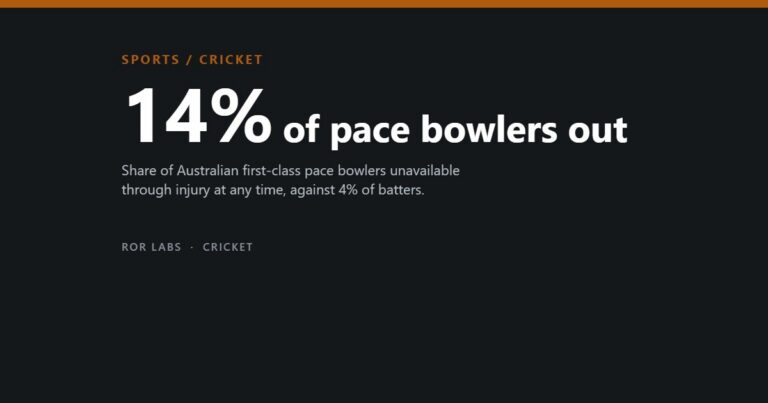
Cricket injury rates by role, the workload patterns behind fast bowlers’ back stress fractures, helmet and neck-guard rules, and why the evidence says play carefully.
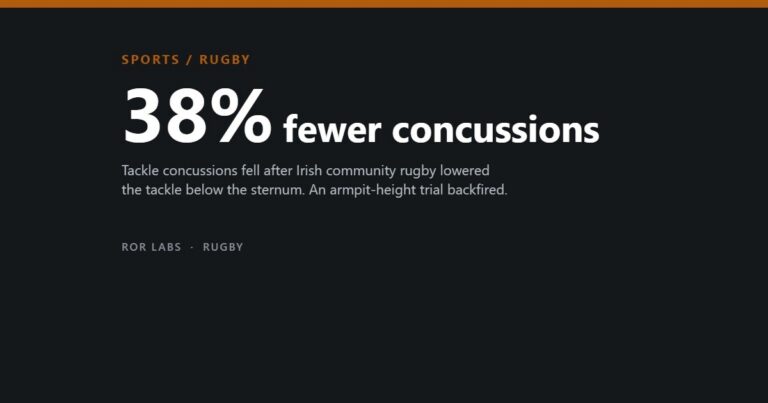
Tackle concussions fell 38% after Irish community rugby lowered the tackle below the sternum. What rugby injury research shows, and how to play safely.
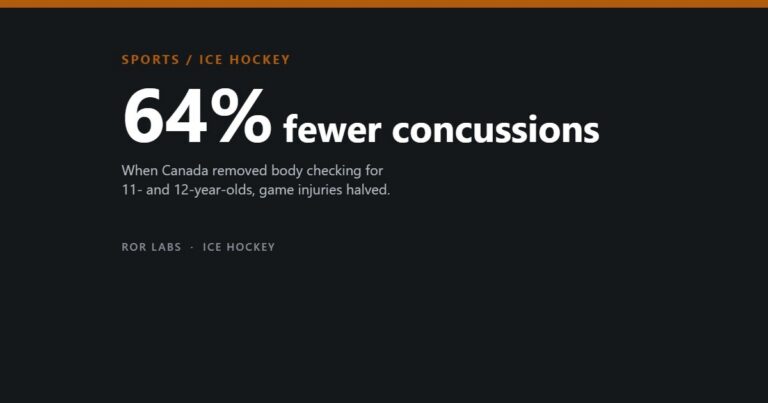
Ice hockey injuries: concussion, faces and necks, and how removing body checking for 11- and 12-year-olds halved injuries in Canadian youth hockey.
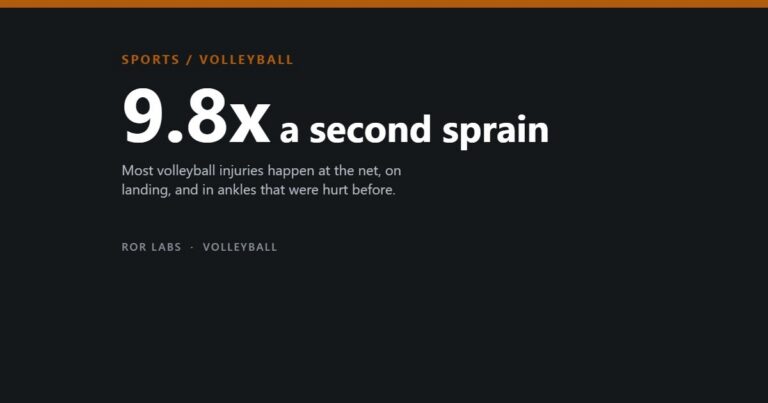
Volleyball injuries: why ankle sprains happen at the net, the 9.8-fold risk of a second sprain, what the prevention trials found, and how the sport compares.
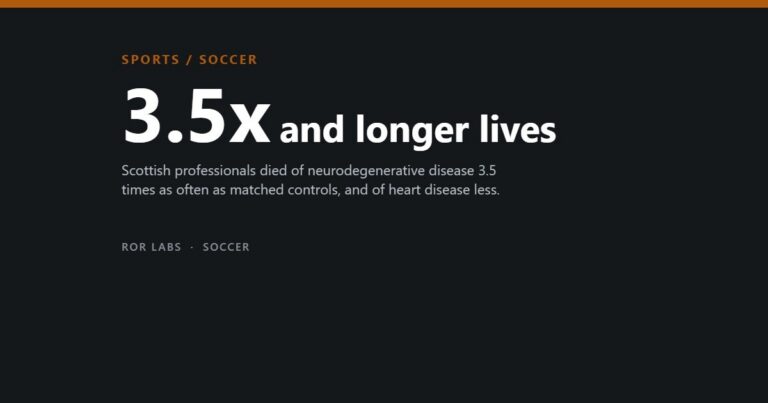
File photo: a soccer match. Photo: U.S. Army photo by Spc. Dean Johnson, via Wikimedia Commons, public domain. In the news · July 2026 A case-control study reported in JAMA Neurology compared amateur players who headed the ball with those who did not. Heading was followed by short-lived rises in two brain-injury blood proteins, S100B…
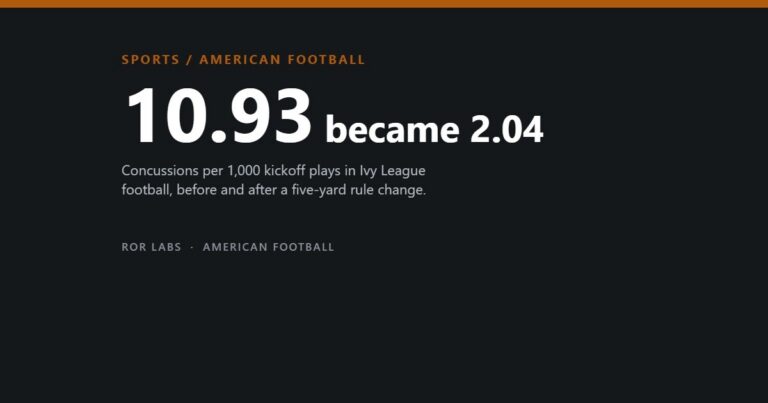
Half of football injuries are to the lower limb, the risk is concentrated in games and on one play type, and moving a line five yards cut concussions on that play by four-fifths.
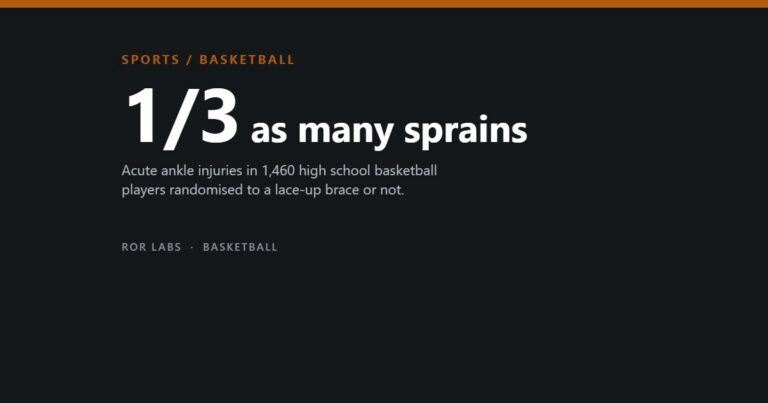
Ankles first and knees second, plus two of the best-tested precautions in team sport — a randomised trial of lace-up braces and a warm-up whose benefit depends almost entirely on actually doing it.
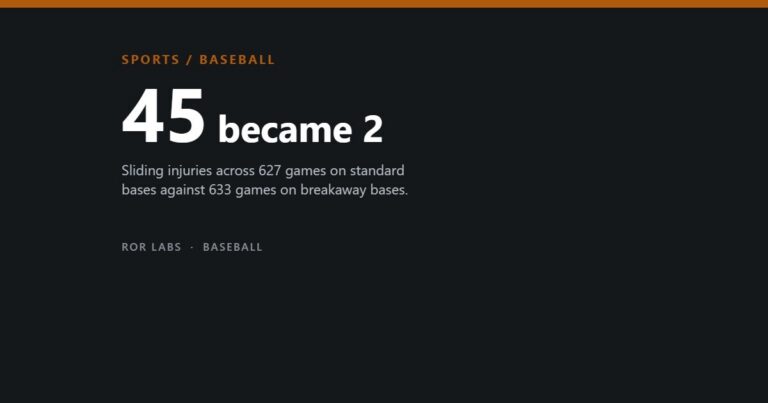
Baseball has one of the lowest injury rates in college sport, and one specific arm problem that the rate hides entirely. What the evidence says about volume, fatigue and the two precautions that have been tested.