
Trend summary
- Japan has far fewer forest fires than it did decades ago, but the fires that do break out have been getting much bigger, and in 2025 the area burned was about five times that of the year before.
- Provisional figures for 2025 show 1,043 forest fires across Japan, up 25.5% on 2024, burning about 5,413 hectares, compared with 1,073 hectares in 2024 (FDMA).
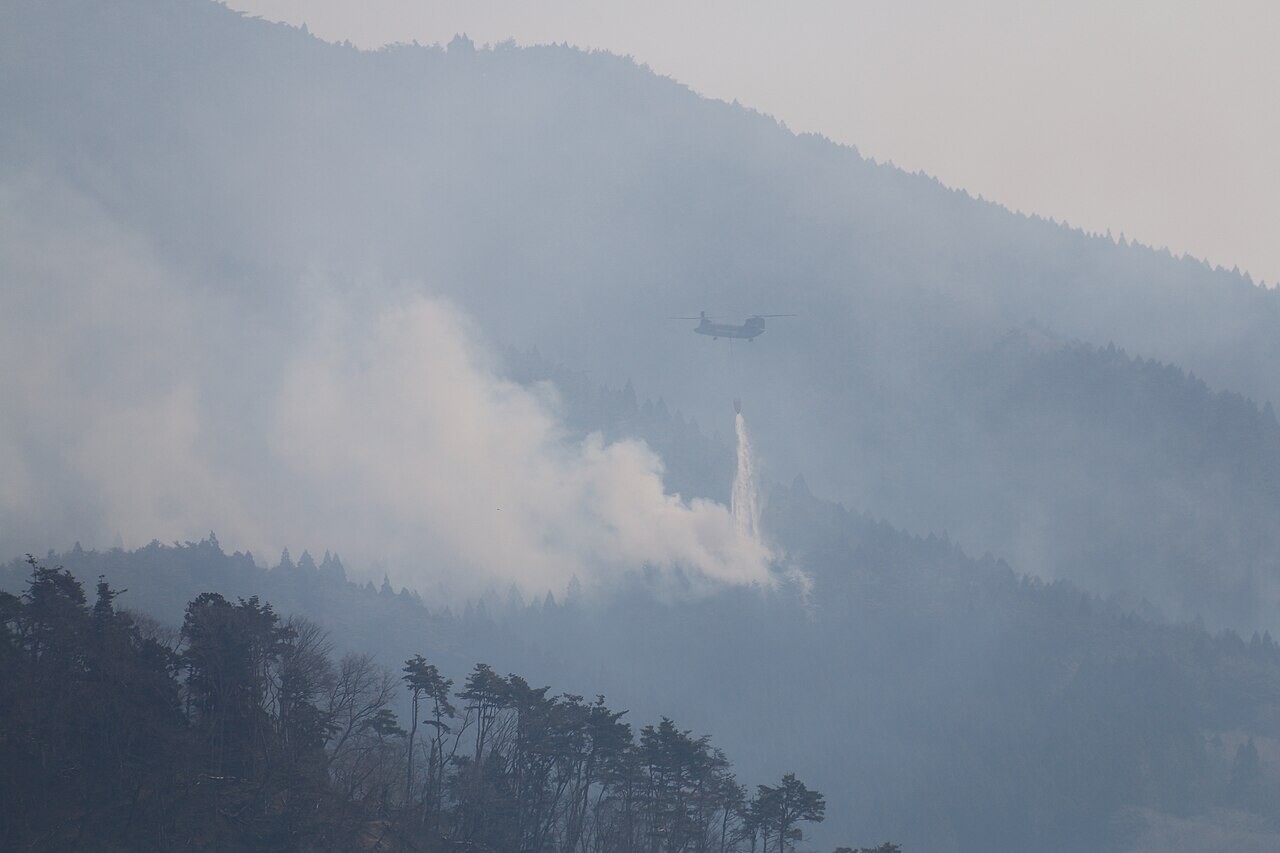
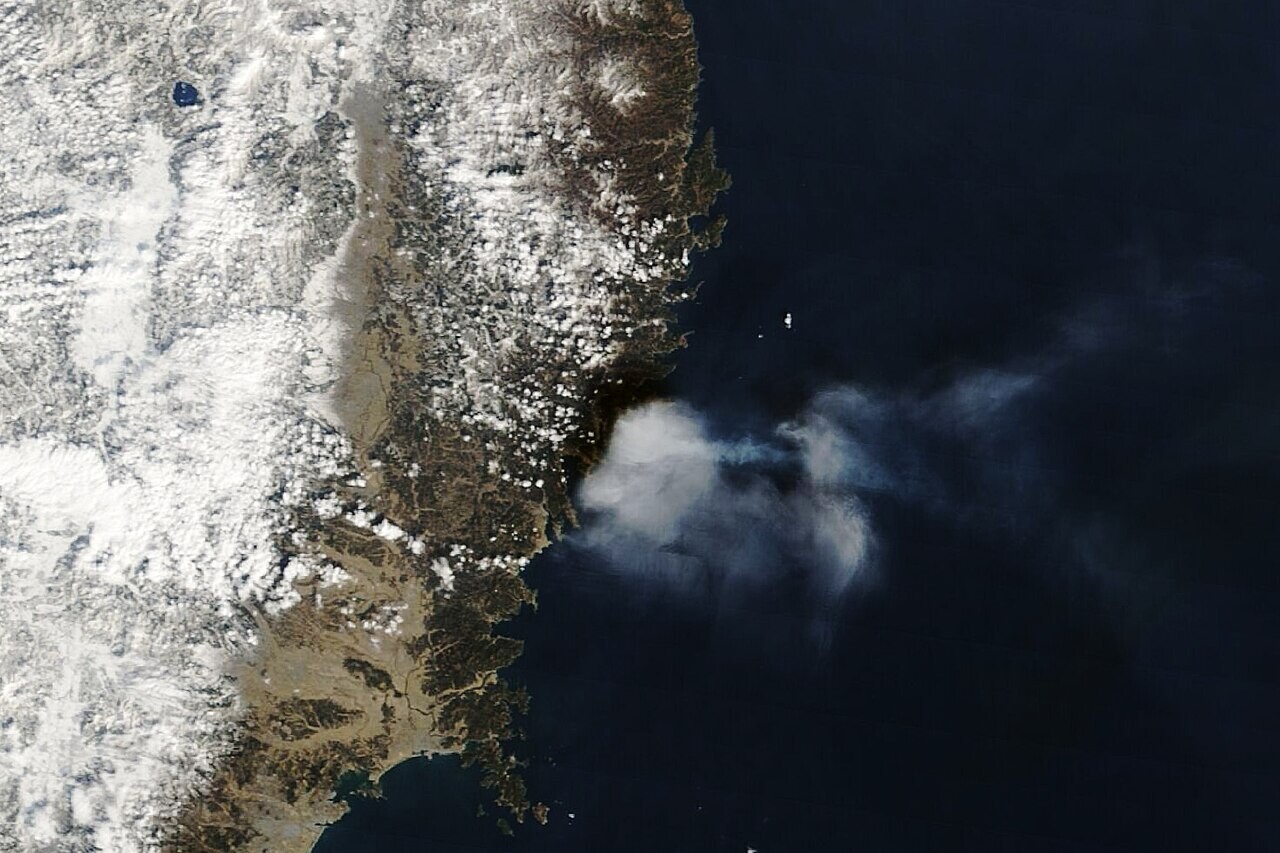
- The Ofunato fire in Iwate in February 2025 burned about 3,370 hectares, the largest forest fire in Japan since 1964. It killed one person and damaged 226 buildings.
- A new national system of forest fire advisories and warnings started on 1 January 2026. Less than four months later, in April 2026, two fires at Otsuchi in Iwate burned 1,708 hectares.
What the numbers show
Japan counts forest fires as rinya kasai (林野火災, fires in forests and open wildland). The Fire and Disaster Management Agency (FDMA) collects the figures for calendar years, and the Forestry Agency republishes them. The Forestry Agency says the number of forest fires has been falling over the long term since records began in 1947 (in Japanese). In the five years from 2020 to 2024 there were about 1,167 a year, burning an average of 752 hectares. Annual counts ran between 1,027 and 1,391 from 2015 to 2023, then dropped to 831 in 2024, the lowest in that ten-year run (FDMA, final figures for 2024, in Japanese).
2025 broke that pattern. FDMA’s provisional figures for 2025 (in Japanese), published in May 2026, show 1,043 forest fires and 541,288 ares (about 5,413 hectares) burned, up 404% on the year before. Seven people died in forest fires and 91 were injured. Where a cause was recorded, outdoor bonfires and rubbish burning (takibi) were the most common, at 345 fires (33.1%), followed by permitted field and grass burning (hiire) at 179 (17.2%). Most of the burned area came from a handful of very large fires. The Forestry Agency’s list of fires over 10 hectares (in Japanese) shows Ofunato at 3,370 ha, Okayama City at 486 ha and Imabari in Ehime at about 482 ha. The Okayama and Imabari fires both started on 23 March 2025 and led to evacuation orders covering more than 3,800 households in the Imabari area. About seven in ten forest fires happen between January and May.
What is driving it
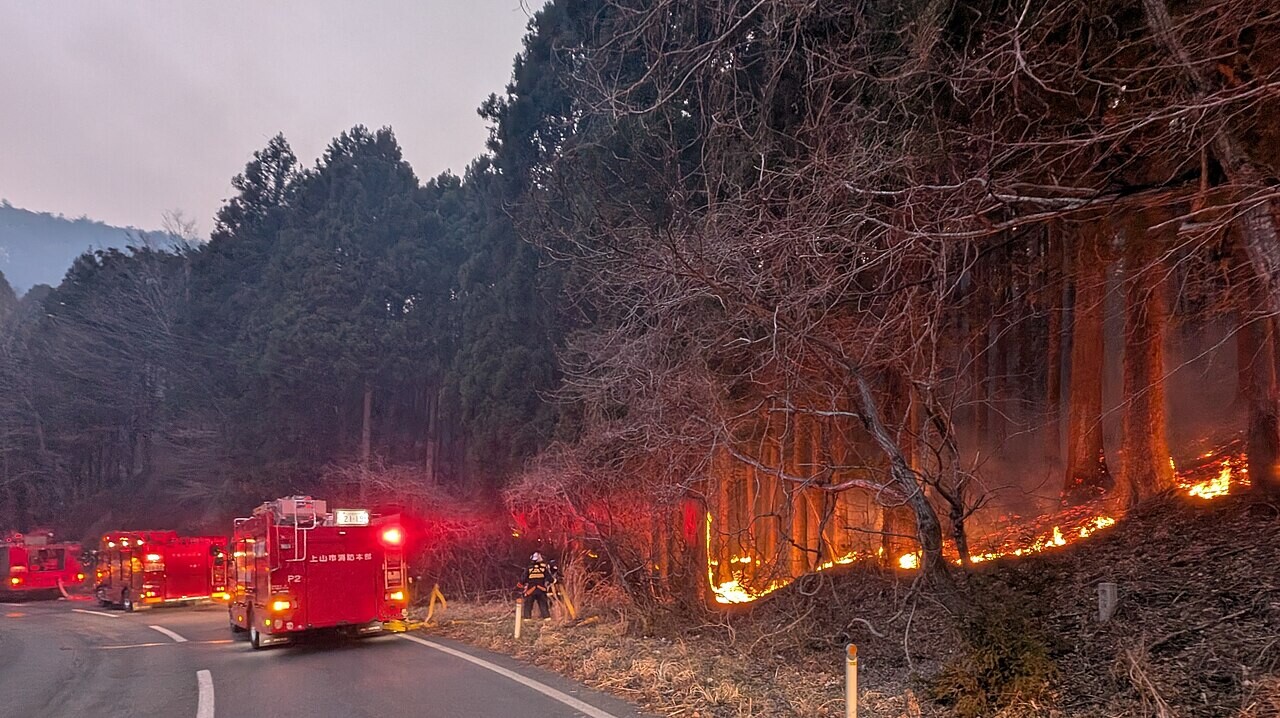
Dry, windy late winters and human carelessness are the main drivers. The joint FDMA and Forestry Agency review of the Ofunato fire (in Japanese) found that the forest floor was extremely dry: February 2025 had the lowest monthly rainfall on record there. Gusts reached 18.1 m/s, so the fire spread through the treetops and threw embers ahead of itself. The most likely cause was sparks from a wood-stove chimney, although the exact ignition source could not be confirmed. The dry pattern returned the next winter. In January 2026 the Japan Meteorological Agency (JMA), FDMA and the Forestry Agency warned of rainfall seen about once in 30 years (in Japanese) across Pacific-side eastern and western Japan, and FDMA logged a series of large fires from January to April.
The policy response is new. Following the review, FDMA amended its model fire prevention ordinance (in Japanese) so that, from 1 January 2026, municipalities can issue a forest fire advisory (rinya kasai chūihō). This asks people to avoid outdoor fires and carries no penalty. They can also issue a forest fire warning (rinya kasai keihō), which restricts outdoor fire use and does carry penalties. The suggested trigger for an advisory is 1 mm of rain or less over three days, plus either 30 mm or less over 30 days or a dry-air advisory. A warning adds a strong-wind advisory. FDMA publishes a national map of advisories and warnings (in Japanese), and the JMA opened a forest fire prevention weather portal in December 2025. The Otsuchi fire showed the system’s limits: 4.5 mm of rain had fallen the day before, so no advisory was in force, yet humidity dropped to 8.6% and gusts reached 17.2 m/s on the afternoon the fire started.
The trend, 2015–2025
| Year | Fires | Area burned (ha) | Change on year before |
|---|---|---|---|
| 2015 | 1,106 | 538 | – |
| 2016 | 1,027 | 384 | −7.1% |
| 2017 | 1,284 | 938 | +25.0% |
| 2018 | 1,363 | 606 | +6.2% |
| 2019 | 1,391 | 837 | +2.1% |
| 2020 | 1,239 | 449 | −10.9% |
| 2021 | 1,227 | 789 | −1.0% |
| 2022 | 1,239 | 605 | +1.0% |
| 2023 | 1,299 | 844 | +4.8% |
| 2024 | 831 | 1,073 | −36.0% |
| 2025p | 1,043 | 5,413 | +25.5% |
Notes: Area is rounded to whole hectares. 2025 is provisional. The jump in area in 2025 comes from the large Ōfunato (Iwate) fire of February–March 2025.
Source: FDMA, White Paper on Fire Service (2016–2025 editions) and 2025 provisional fire release
Common questions
Are forest fires in Japan going up or down?
In 2025 the figure was 1,043 fires (provisional). That is 5.7% lower than in 2015 (1,106) and 25.5% up on 2024.
Which year was highest and which was lowest?
In this 2015–2025 series the highest year was 2019 (1,391) and the lowest was 2024 (831).
Why was 2025 so bad when the number of fires was ordinary?
One fire did most of the damage. The Ōfunato fire in Iwate in February–March 2025 pushed the burned area to about 5,413 hectares (provisional), five times 2024, even though the number of fires (1,043) was lower than in most years since 2015.
Policy and budget changes
The main government measures and money figures behind this risk, newest first. Each item links to the official text we checked; where only a news report was available, the source says so.
Main policy changes
- 1 January 2026 Forest fire advisories and warnings start nationwide. Municipalities began issuing forest fire advisories, which ask people to avoid outdoor fires, and forest fire warnings, which restrict them with penalties, after the Fire and Disaster Management Agency (FDMA) revised its model fire prevention ordinance on 29 August 2025. (Kagoshima City Fire Bureau)
- 17 December 2025 Weather agency adds dry-weather alerts for fire risk. The Japan Meteorological Agency announced new steps for the January–May fire season, including information and press briefings on low rainfall and a new forest fire prevention weather portal. (Japan Meteorological Agency)
- 26 August 2025 Review of the Ofunato fire published. The Forestry Agency and the FDMA published the report of their joint review of the February 2025 Ofunato forest fire, covering prevention, firefighting and recovery, and proposing the new forest fire advisories and warnings. (Forestry Agency)
- April 2024 National forest environment tax levied. From fiscal 2024 a forest environment tax of ¥1,000 a year per person is collected with local residence tax under the 2019 Act on the Forest Environment Tax and the Forest Environment Transfer Tax; transfers to local governments for forest management began in fiscal 2019. (Yamanashi Prefecture)
Budget and costs
- August 2026 ¥3.94bn sought to prepare for large forest fires. The Fire and Disaster Management Agency’s FY2027 budget request (August 2026) includes ¥6.36 billion for special vehicles and equipment for large disasters, of which ¥3.94 billion is to prepare for large forest fires such as the Otsuchi fire, and ¥30 million for forest fire awareness (¥10 million in the FY2025 supplementary budget). (Fire and Disaster Management Agency)
- 2025 Forest fire damage: ¥737m in 2024. The 2025 Fire White Paper records ¥737 million of damage from forest fires in 2024, against ¥125 million in 2023 (nominal). These figures predate the 2025 Ofunato fire. (FDMA, Fire White Paper 2025)
Recent cases
- 27 October 2026: the Fire and Disaster Management Agency reports 882 forest fires in January–June 2026, with about 1,726 hectares burned, 67.5% less than in the same period of 2025 (provisional) (FDMA, in Japanese).
- 22 April 2026: two fires break out in the Kozuchi and Kirikiri districts of Otsuchi, Iwate, and burn 1,708 hectares before they are declared out on 29 May. FDMA’s investigation could not determine the cause (FDMA, in Japanese).
- 21 March 2026: a forest fire in Uenomura, Gunma, spreads across scattered patches within an area of about 192 hectares and destroys one outbuilding. Firefighting helicopters from Gunma and Nagano help fight it (FDMA, in Japanese).
- 8 January 2026: a fire near Mount Ogi in Uenohara, Yamanashi, spreads into neighbouring Otsuki and burns about 396 hectares. Evacuation orders cover more than 200 households in the two cities, and the fire is not declared out until 12 February (FDMA, in Japanese).
Our read: what the numbers add up to
There are really two trends on this page, and they need to be kept apart. The number of forest fires has been falling over the long term since records began in 1947, and even the 1,043 fires of 2025, up 25.5% on the unusually low 831 of 2024, sit within the range of recent years. The area burned is a different matter: about 5,413 hectares in 2025 against 1,073 hectares the year before. Since the Ofunato fire alone burned about 3,370 hectares, the national figure for 2025 is largely the story of one fire, with Okayama and Imabari adding hundreds more.
What links these large fires is weather meeting ordinary human activity. February 2025 had the lowest monthly rainfall on record at Ofunato, and in January 2026 the authorities warned of rainfall seen about once in 30 years across Pacific-side Japan. Meanwhile, where a cause was recorded in 2025, bonfires and rubbish burning accounted for 33.1% of fires and permitted field burning for 17.2%, so around half of the explained fires began as deliberate burning that got away. That is exactly what the new advisory and warning system targets. Otsuchi shows its limits, though: 4.5 mm of rain the day before meant no advisory was in force, yet humidity fell to 8.6% and the fires burned 1,708 hectares.
The 2025 figures are provisional. The early 2026 data cut both ways: 882 fires from January to June, with about 1,726 hectares burned, 67.5% less area than the same period of 2025. Less area, yes, but 882 fires in six months is a lot next to 1,043 for all of 2025, even allowing for most fires falling between January and May. What I would watch is the full-year 2026 count. My bottom line: “fewer fires, bigger burns” holds for the long run, but the size of any year’s losses now depends on a few dry, windy weeks.
Press releases and official reports, 2023–2026
Five key releases a year for the last four years, newest first. Most come from Japanese government ministries and agencies, regulators, accident investigators and national statistics; a few news reports are included where they are the clearest public record of an event. Many official releases are published only in Japanese; for those we give an English translation of the title and mark the link (in Japanese). Releases from 2007–2022 are in the expandable list after 2023.
2026
- 25 Sep 2026FDMATrials of aerial firefighting with fire-suppressant additives for forest fires (in Japanese)
- 27 Aug 2026FDMAPublication of the FDMA Commissioner’s fire cause investigation report on the forest fire in Otsuchi, Iwate, of 22 April 2026 (in Japanese)
- 29 May 2026Forestry AgencyCabinet order designating the Otsuchi, Iwate, forest fire of 22 April 2026 a local severe disaster, and notice of the areas covered (in Japanese)
- 28 May 2026FDMAOverview of fires in 2025 (January–December), provisional figures (in Japanese)
- 24 Feb 2026Forestry Agency2026 National Forest Fire Prevention Campaign (in Japanese)
2025
- 17 Dec 2025JMA, FDMA and Forestry AgencyNew measures to prevent forest fires: warnings on fire use during record low rainfall (in Japanese)
- 29 Aug 2025FDMAPartial amendment of the model fire prevention ordinance (creating forest fire advisories and warnings) (in Japanese)
- 26 Aug 2025FDMAReport of the review panel on fire and disaster measures in light of the Ofunato forest fire (in Japanese)
- 24 Mar 2025FDMAForest fire in Imabari, Ehime: damage and fire service response (21st report) (in Japanese)
- 26 Feb 2025FDMAForest fire in Ofunato, Iwate: damage and fire service response (37th report) (in Japanese)
2024
- 8 Nov 2024FDMAFires in 2023 (January–December), final figures (in Japanese)
- 4 May 2024FDMAForest fire in Nanyo, Yamagata: damage and fire service response (5th report) (in Japanese)
- 28 Apr 2024FDMAForest fire in Miyako, Iwate: damage and fire service response (6th report) (in Japanese)
- 22 Feb 2024Forestry Agency2024 National Forest Fire Prevention Campaign (in Japanese)
- 13 Jan 2024FDMAForest fire in Etajima, Hiroshima: damage and fire service response (5th report) (in Japanese)
2023
- 29 Nov 2023FDMAFires in 2022 (January–December), final figures (in Japanese)
- 1 Nov 2023FDMAForest fire in Ozu, Ehime: damage and fire service response (6th report) (in Japanese)
- 28 Feb 2023FDMA2023 spring national fire prevention campaign (in Japanese)
- 23 Jan 2023FDMAWhite Paper on Fire Service 2022: current state and recent trends in forest fires (in Japanese)
- 12 Jan 2023FDMAStepping up vigilance against forest fires (notice to prefectures) (in Japanese)
View 20 years of major Japanese wildfire press releases (2007–2026)55 more from 2007–2022, up to five a year, newest first
2022
- 28 Oct 2022FDMAFires in 2021 (January–December), final figures (in Japanese)
- 25 Jul 2022FDMARevision of the notice on the prevention and suppression of forest fires (in Japanese)
- 1 Mar 2022FDMA2022 spring national fire prevention campaign (in Japanese)
- 25 Feb 2022FDMAStepping up vigilance against forest fires (notice to prefectures) (in Japanese)
- 18 Jan 2022FDMAWhite Paper on Fire Service 2021: current state and recent trends in forest fires (in Japanese)
2021
- 21 May 2021FDMAReview panel on more effective forest firefighting convened (in Japanese)
- 22 Apr 2021FDMAForest fire in Midori, Gunma: damage and fire service response (3rd report) (in Japanese)
- 25 Feb 2021FDMAForest fire in Kiryu, Gunma: damage and fire service response (4th report) (in Japanese)
- 24 Feb 2021FDMAForest fire in Ashikaga, Tochigi: damage and fire service response (16th and final report) (in Japanese)
- 18 Feb 2021FDMAStepping up vigilance against forest fires (notice to prefectures) (in Japanese)
2020
- 15 Oct 2020FDMAFires in 2019 (January–December), final figures (in Japanese)
- 28 Feb 2020FDMA2020 spring national fire prevention campaign (in Japanese)
- 19 Feb 2020FDMAStepping up vigilance against forest fires (notice to prefectures) (in Japanese)
- 18 Feb 2020FDMAWhite Paper on Fire Service 2019: current state and recent trends in forest fires (in Japanese)
2019
- 6 Sep 2019FDMAFires in 2018 (January–December), final figures (in Japanese)
- 14 Feb 2019FDMAStepping up vigilance against forest fires (notice to prefectures) (in Japanese)
- 8 Feb 2019FDMAWhite Paper on Fire Service 2018: current state and recent trends in forest fires (in Japanese)
2018
- 7 Aug 2018FDMAFires in 2017 (January–December) (in Japanese)
- 27 Feb 2018FDMA2018 spring national fire prevention campaign (in Japanese)
2017
- 19 Dec 2017FDMAWhite Paper on Fire Service 2017: current state and recent trends in forest fires (in Japanese)
- 28 Jul 2017FDMAFires in 2016 (January–December) (in Japanese)
- 10 May 2017FDMAStepping up vigilance against forest fires and making full use of aerial firefighting (notice) (in Japanese)
- 8 May 2017FDMAForest fire in Kamaishi, Iwate (16th report) (in Japanese)
- 24 Feb 2017FDMA2017 spring national fire prevention campaign (in Japanese)
2016
- 20 Dec 2016FDMAWhite Paper on Fire Service 2016: current state and recent trends in forest fires (in Japanese)
- 19 Aug 2016FDMAFires in 2015 (January–December) (in Japanese)
- 26 Feb 2016FDMA2016 spring national fire prevention campaign (in Japanese)
- 4 Feb 2016FDMAImplementation of the 2016 spring national fire prevention campaign (notice to prefectures) (in Japanese)
2015
- 22 Dec 2015FDMAWhite Paper on Fire Service 2015: current state and recent trends in forest fires (in Japanese)
- 16 Jul 2015FDMAFires in 2014 (January–December), final figures (in Japanese)
- 20 Feb 2015FDMA2015 spring national fire prevention campaign (in Japanese)
- 14 Jan 2015FDMAStepping up vigilance against forest fires (notice to prefectures) (in Japanese)
2014
- 19 Dec 2014FDMAWhite Paper on Fire Service 2014: current state and recent trends in forest fires (in Japanese)
- 23 Jul 2014FDMAFires in 2013 (January–December), final figures (in Japanese)
- 16 May 2014FDMAMaking full use of aerial firefighting against forest fires (in Japanese)
- 25 Feb 2014FDMA2014 spring national fire prevention campaign (in Japanese)
- 16 Jan 2014FDMAStepping up vigilance against forest fires (notice to prefectures) (in Japanese)
2013
- 20 Dec 2013FDMAWhite Paper on Fire Service 2013, Section 4: Forest fire countermeasures (in Japanese)
- 31 Jul 2013FDMAFires in 2012 (January–December), final figures (in Japanese)
- 14 Jun 2013FDMAResults of the 2013 spring national fire prevention campaign (in Japanese)
- 27 Feb 2013FDMAStepping up vigilance against forest fires (notice to prefectures) (in Japanese)
- 21 Feb 2013FDMA2013 spring national fire prevention campaign (in Japanese)
2012
- 2 Mar 2012FDMAStepping up vigilance against forest fires (notice to prefectures) (in Japanese)
- 27 Jan 2012FDMAImplementation of the 2012 spring national fire prevention campaign (Commissioner’s notice) (in Japanese)
2011
- 14 Feb 2011FDMAStepping up vigilance against forest fires (notice to prefectures) (in Japanese)
- 25 Jan 2011FDMAImplementation of the 2011 spring national fire prevention campaign (notice) (in Japanese)
2010
- 2 Mar 2010FDMAStepping up vigilance against forest fires (notice to prefectures) (in Japanese)
- 21 Jan 2010FDMAImplementation of the 2010 spring national fire prevention campaign (Commissioner’s notice) (in Japanese)
2009
- 15 Apr 2009FDMAStepping up vigilance against forest fires and making full use of aerial firefighting (notice) (in Japanese)
- 27 Feb 2009FDMAStepping up vigilance against forest fires (notice to prefectures) (in Japanese)
- 22 Jan 2009FDMAImplementation of the 2009 spring national fire prevention campaign (Commissioner’s notice) (in Japanese)
2008
- 21 Feb 2008FDMAStepping up vigilance against forest fires (notice to prefectures) (in Japanese)
- 5 Feb 2008FDMAImplementation of the 2008 spring national fire prevention campaign (Commissioner’s notice) (in Japanese)
2007
- 23 Feb 2007FDMAStepping up vigilance against forest fires (notice to prefectures) (in Japanese)
- 23 Jan 2007FDMAImplementation of the 2007 spring national fire prevention campaign (in Japanese)
Some early years list fewer than five items. Many older Japanese government releases are no longer online at their original addresses, and we only list items we could find and check.
Photo list
How this page is built. Figures come from the official statistical releases linked above; where agencies publish provisional numbers we say so, because they are revised. Japanese statistics often use the fiscal year (April to March) and some are published only in Japanese, so we say which period each figure covers and translate titles. Photos are public-domain or Creative Commons images credited in each caption; file photos are illustrative and are not from the events described unless the caption says so. This page tracks trends and is not personal safety, medical, legal or financial advice.