Vitamin K food sources and the one dose that matters at birth
Vitamin K food sources by the spoonful, why natto’s K2 is missing from food tables, the newborn injection and refusal data, and what trials found for bones.
The thirteen compounds classed as vitamins, one article each: function, food sources per measured portion, deficiency signs, and upper limits.
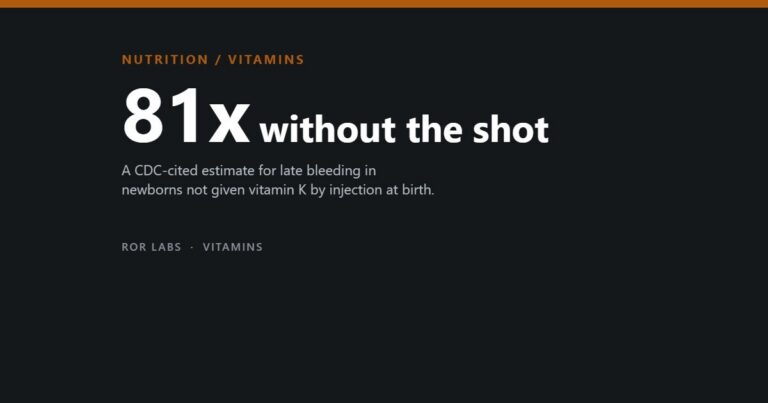
Vitamin K food sources by the spoonful, why natto’s K2 is missing from food tables, the newborn injection and refusal data, and what trials found for bones.
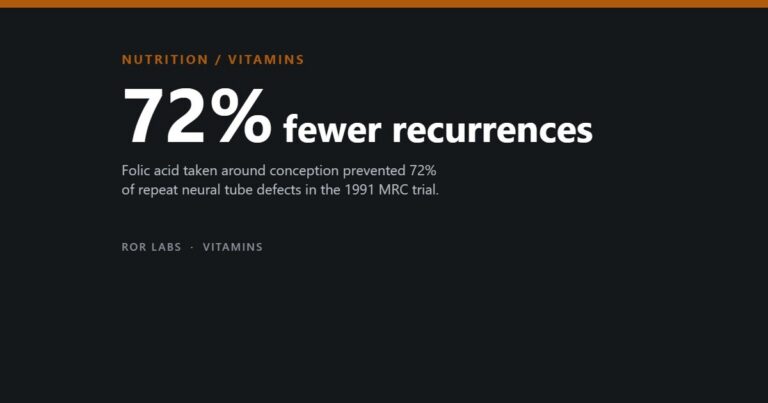
Folate food sources by the spoonful, the MRC trial that cut neural tube defects by 72%, flour fortification, and why the folic acid limit protects B12.
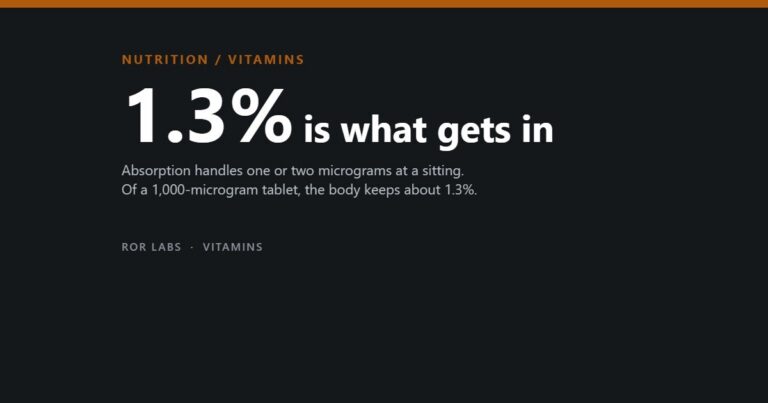
Clams and liver top the tablespoon table, but the gut absorbs B12 a microgram or two at a time. Who runs short, and what 1,000 mcg tablets really do.
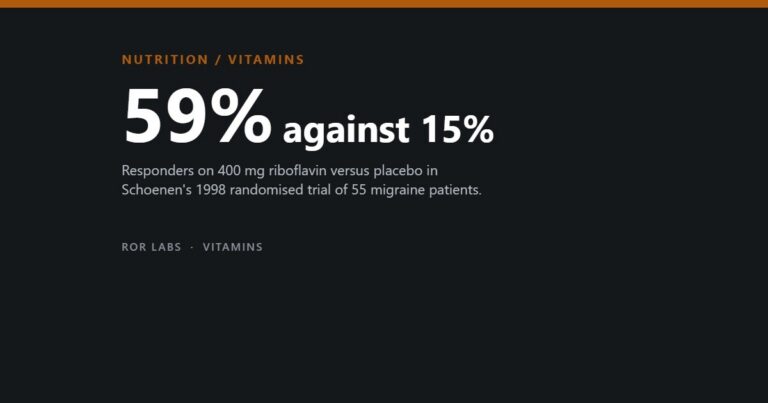
Riboflavin per measured tablespoon, why deficiency almost never occurs alone, and what four hundred milligrams a day did in the migraine trials.
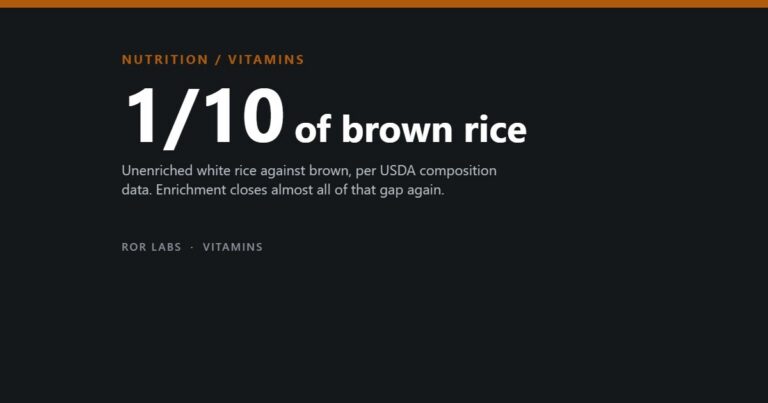
Thiamin per measured tablespoon, the milling step that turned beriberi into an epidemic, and why the Food and Nutrition Board set no upper limit at all.
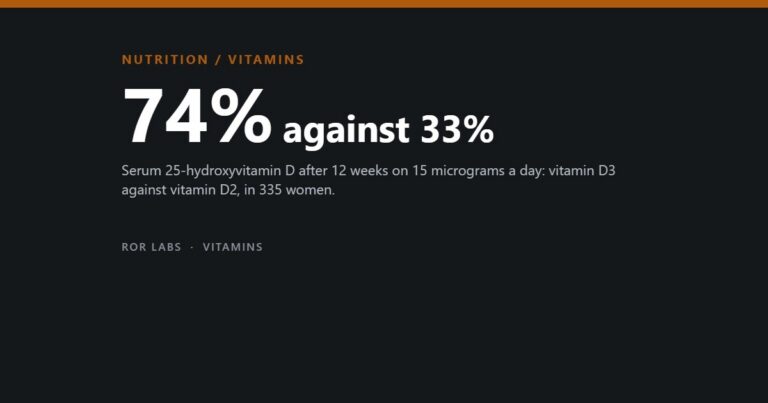
There is no vitamin D1. There are two forms, the label treats them as interchangeable, and the randomised comparisons put D3 ahead by about 15 nmol/L — with most of the gap in a dosing schedule almost nobody uses.
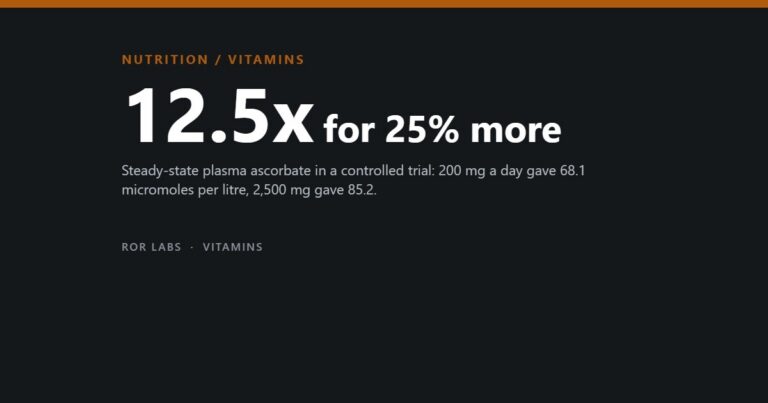
Vitamin C per measured tablespoon, what a deliberate depletion showed about scurvy, and why the dose-response curve flattens long before the tablet does.
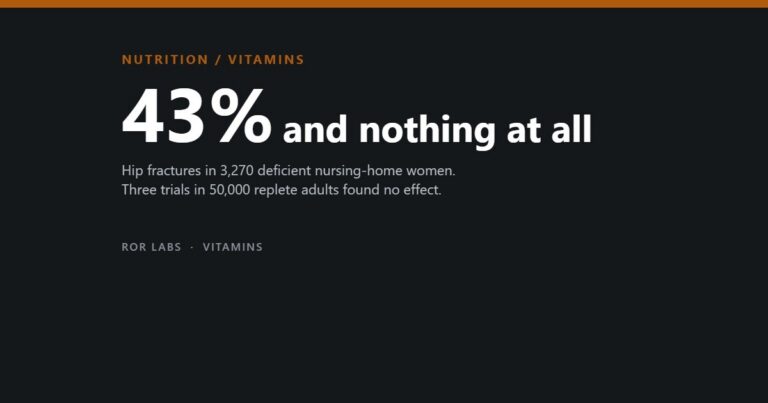
Vitamin D per measured tablespoon, why the food table misses most of the supply, and why three large trials found nothing where a smaller one cut hip fractures by 43 per cent.
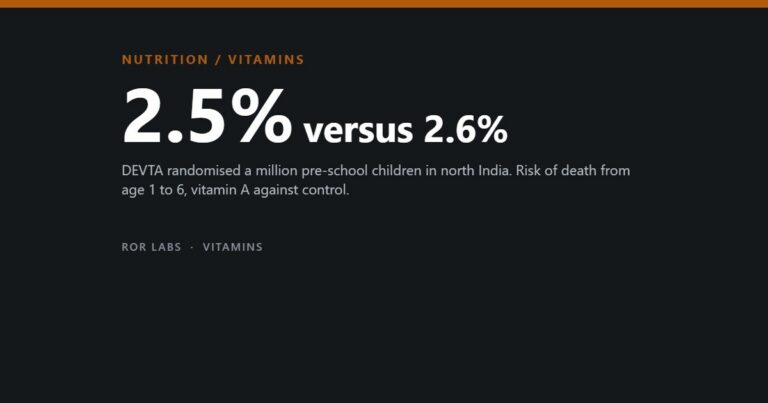
How much vitamin A a tablespoon of liver, cod liver oil or sweet potato actually carries — what deficiency does, and why the 3,000 microgram upper limit matters.