
Escalator Injuries: What the Evidence Shows
Escalator stories are about trapped feet, but most escalator injuries are falls, and most of the injured are older adults. What the evidence shows.
Falls, road collisions, drowning, fire, explosion, structural collapse and building defects, electrical and gas incidents, and industrial injury.
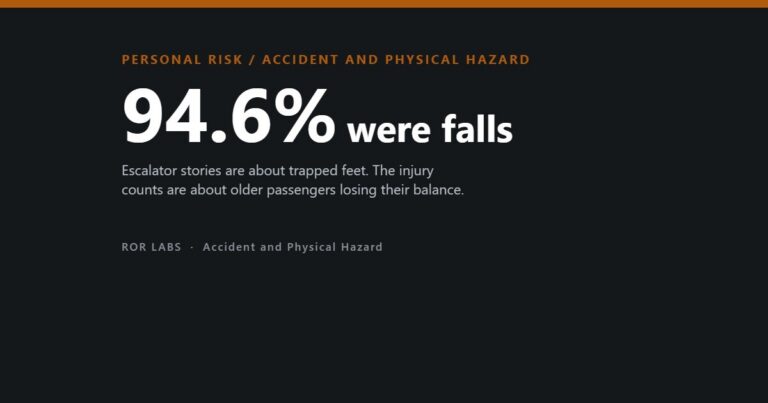
Escalator stories are about trapped feet, but most escalator injuries are falls, and most of the injured are older adults. What the evidence shows.
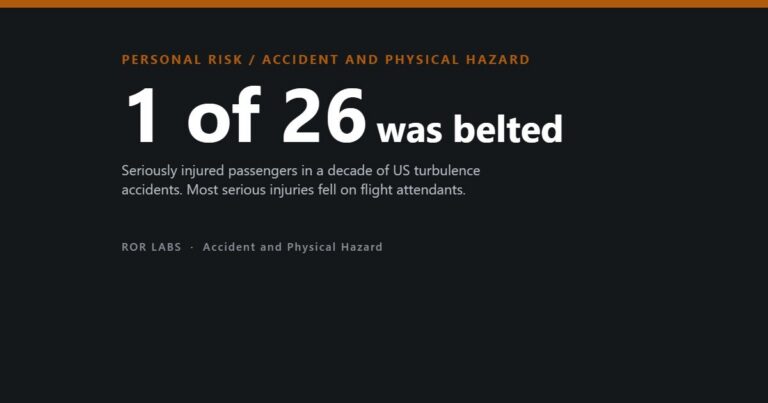
Turbulence causes more than a third of US airline accidents, and most serious injuries fall on flight attendants. Of 26 seriously injured passengers, one wore a seat belt.
In This Series: Road, Transit & Child Safety Nobody Skips the Car Seat. The Deaths Are in the Exceptions. Half of the People Who Die in Crashes Were Not Wearing a Belt Three Quarters of Pedestrian Deaths Happen After Dark. Your Reflective Vest Is in the Wrong Place. A Child Physically Cannot See a Car…
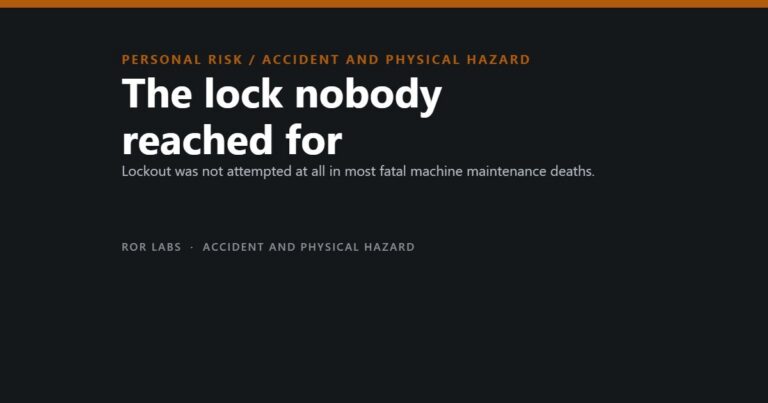
OSHA investigation records show lockout was not attempted at all in at least 59% of fatal machine maintenance incidents, and a national audit of 2,632 machines explains why: procedures were posted at 9% of them. What the evidence says about guards, locks, and the short jobs that kill.
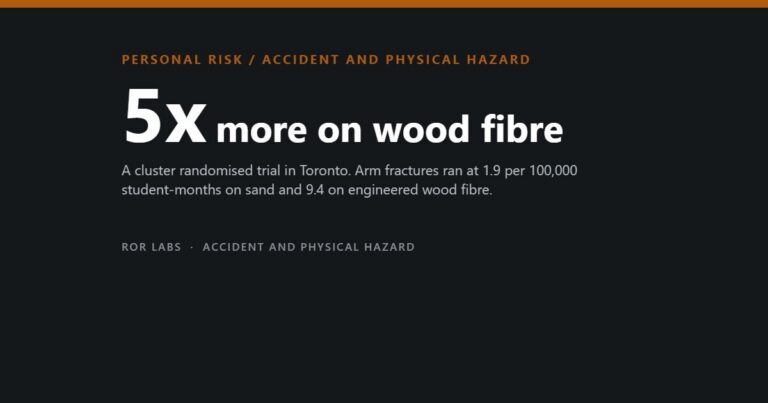
213,000 children a year, three quarters of them from falls, and mostly broken arms. The one randomised trial of playground surfacing found the certified material came off worse — and one piece of safety equipment has killed children on climbing frames.
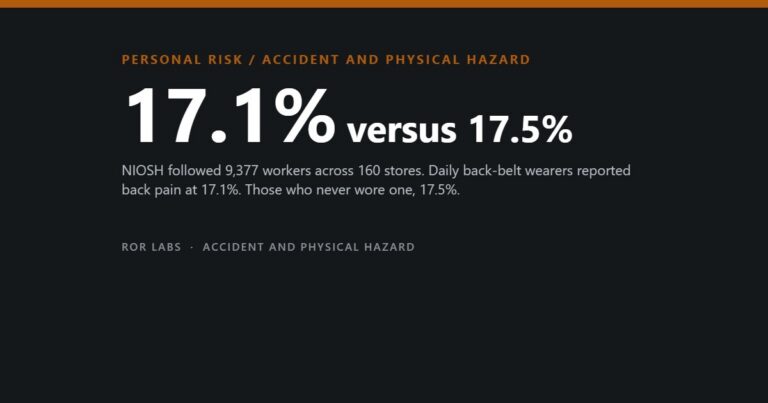
The largest prospective study of back belts found 17.1% back pain among daily wearers and 17.5% among those who never wore one. What the evidence supports instead is changing the task.
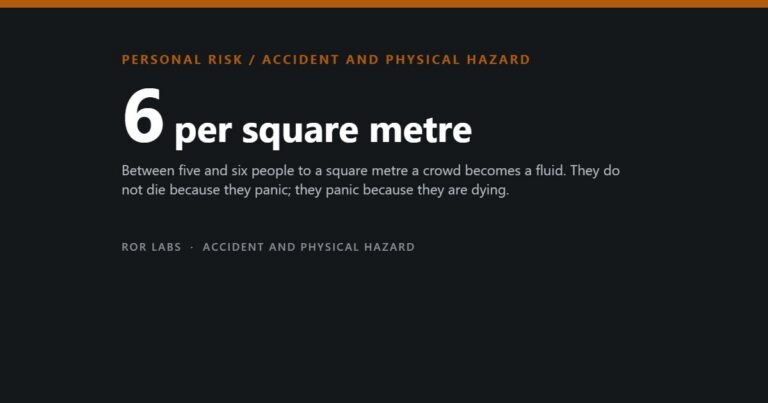
Virtually all crowd deaths are compressive asphyxia, not trampling, and the word stampede points the blame in the wrong direction. The density ladder, the forces involved, what the Itaewon and Karur investigations found, and the one threshold worth acting on: when you are touched on all four sides, leave.
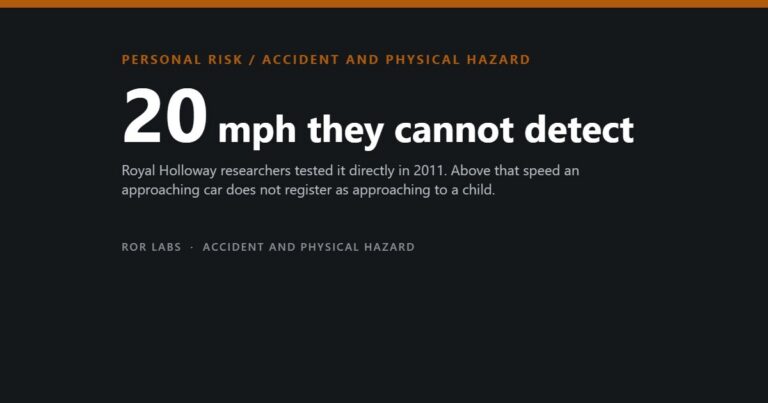
Children cannot reliably detect a vehicle approaching above 20 mph – a developmental limit, not carelessness. What that means for the school run, the 44% injury reduction Safe Routes to School produced in New York, and why nearly two thirds of school-bus-related child deaths happen outside the bus.
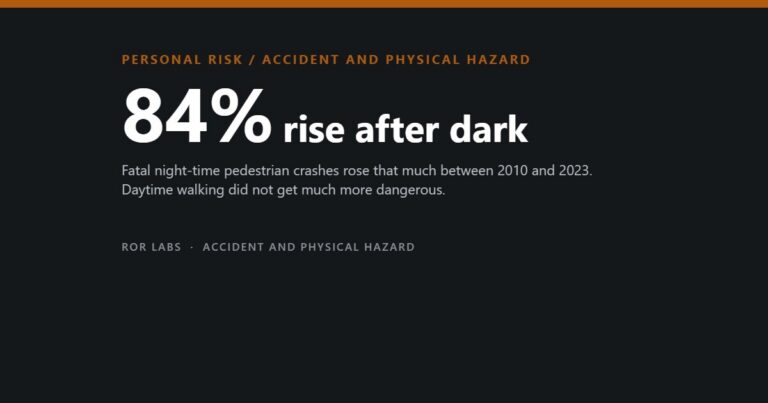
More than three quarters of US pedestrian deaths happen after dark, and fatal night crashes rose 84% in thirteen years. What the IIHS found about tall, flat vehicle fronts, why night-time autobrake still struggles, and the vision research showing the same reflective material works two to five times better on your ankles than on your chest.
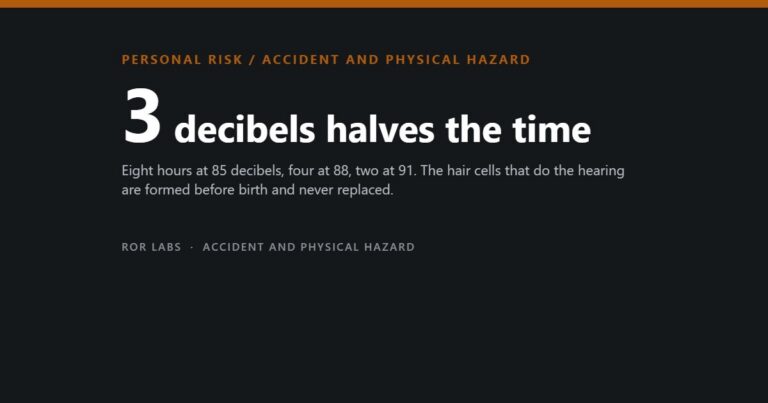
Hair cells do not grow back, and the safe exposure time halves with every three decibels. At 100 dBA – earbuds near maximum – the daily allowance is fifteen minutes; venues average 104 to 112 dB. The exposure table, the evidence on temporary threshold shift, and the protection actually worth buying.