
Data Breaches: What the Evidence Shows
Most data breach victims report little loss, but just under 6% report $10,000 or more. What research shows about breaches, fraud and what protects you.
Fraud and financial scams, theft, robbery, assault, cybercrime, data leaks, identity theft, account takeover and stalking.
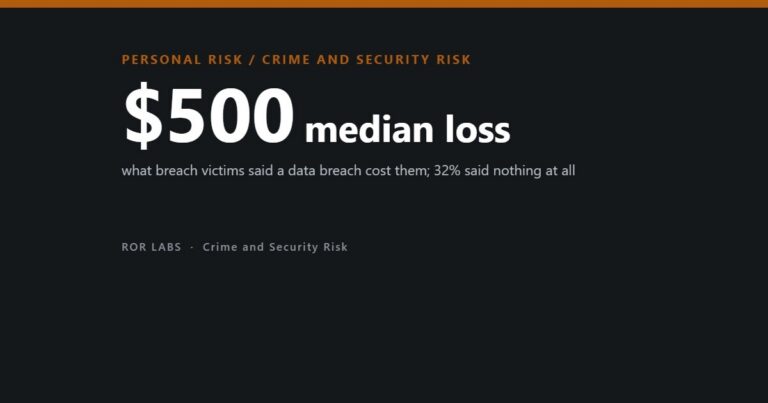
Most data breach victims report little loss, but just under 6% report $10,000 or more. What research shows about breaches, fraud and what protects you.
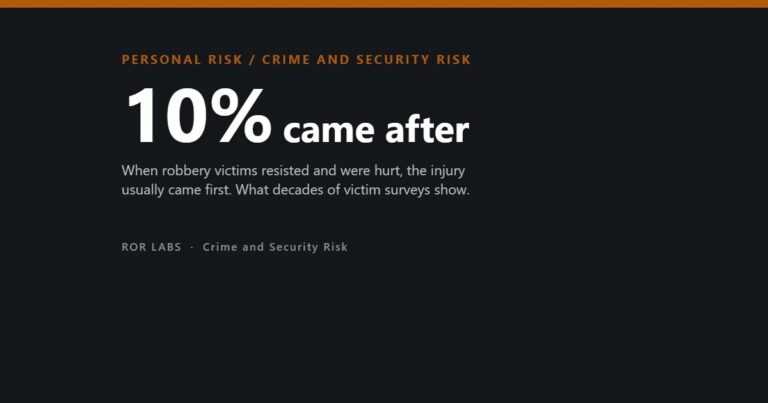
Should you resist a robbery? A study of 27,595 crimes found injury came after resistance in only 10% of cases. What victim surveys show, and their limits.
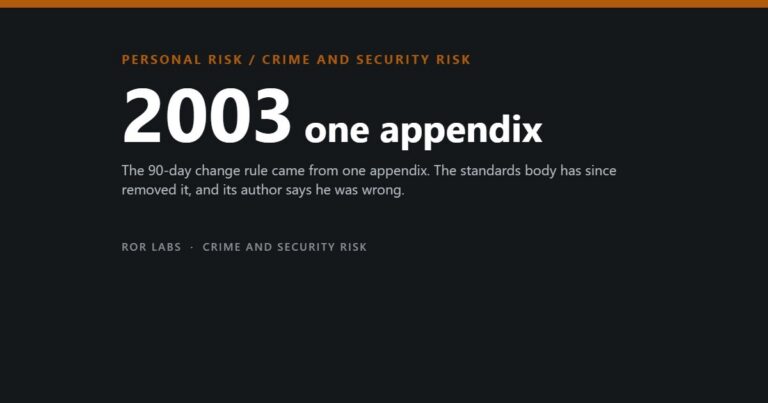
The composition and expiry rules came from one 2003 appendix, and its author regrets it. What actually takes over accounts is reuse, infostealers and phishable codes.
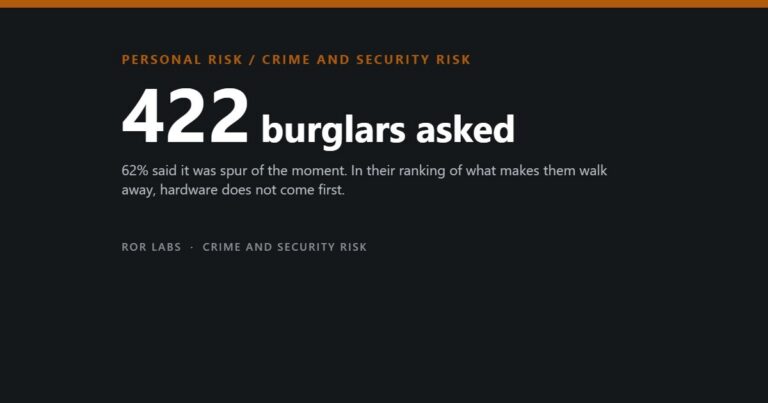
A survey of 422 incarcerated burglars found occupancy, police proximity and a dog outranked alarms and cameras, that only about 12% picked a lock, and that fewer than a third cared about lighting or neighbourhood watch signs. What that means for where the money is worth spending.
The FBI warned in May 2025 that end-of-life home routers are being taken over for criminal proxy networks, using malware that needs no password. What attackers actually want is your residential IP address. The eight settings that matter, why the guest network is the highest-value free change, and the backup rule that is the only answer to ransomware.
Four known places-and-times identify 95% of people in an anonymised mobility dataset, and coarsening the data barely helps. How real-time bidding broadcasts your location to bidders who keep it even when they lose, what the FTC found inside Mobilewalla and X-Mode, and which defences actually work – including the deletion platform California switched on this month.
Seventy-six per cent of identity theft involves an account you already have, and a credit freeze does not touch that category. What a freeze actually blocks, how fast the bureaus must act by law, the difference between a freeze, a lock and a fraud alert, and what covers the other three quarters.
The FBI logged its first AI-fraud category in 2025: 22,364 complaints and $893 million. A few seconds of public audio is enough to clone a voice. The scam has one shape, one tell, and one free defence that defeats all of it.
US fraud losses hit $16 billion in 2025. The six-digit code texted to your phone can be relayed by a fake page in real time — and CISA ranks it last. What phishing-resistant authentication does differently, and the two free steps that matter most.