
Trend summary
- Mexico’s National Seismological Service (SSN) located 39,871 earthquakes in 2025, the highest yearly count in its recent series. Almost all were small: 23,511 were between magnitude 3.0 and 3.9.
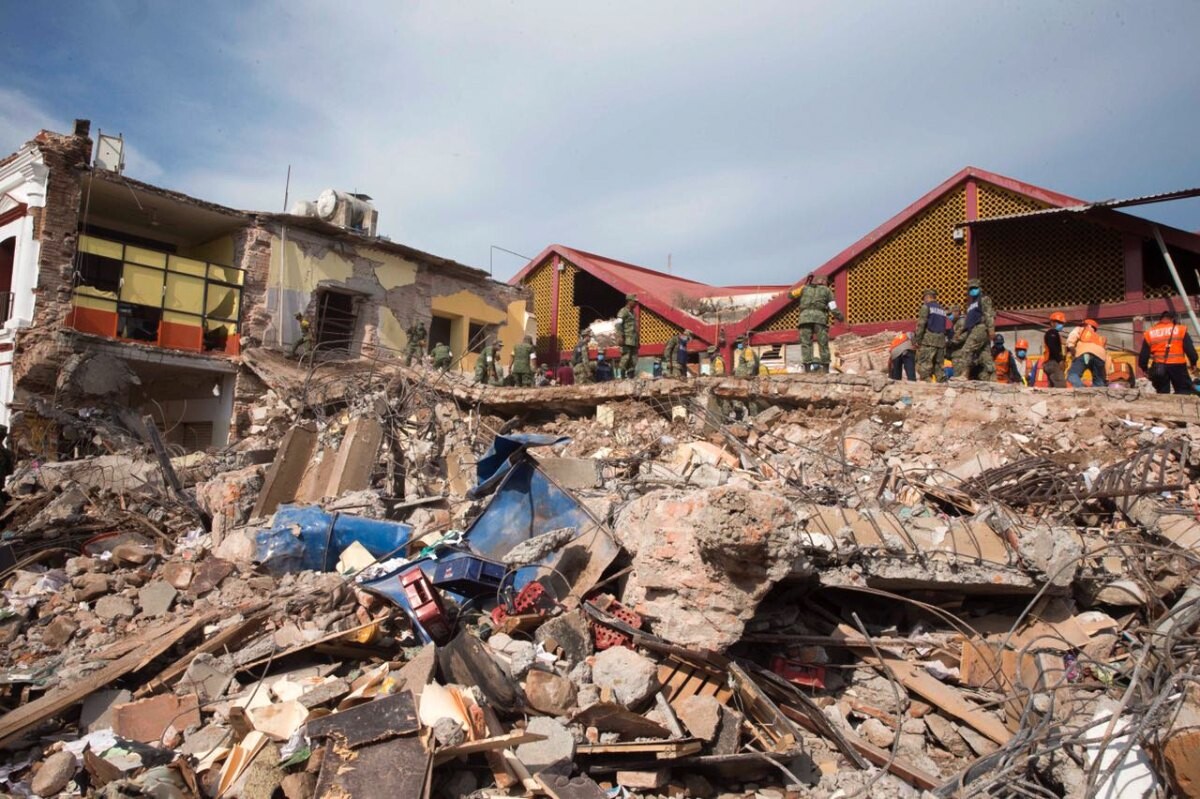
- The deadliest recent year was 2017. The M8.2 Tehuantepec quake of 7 September killed 99 people, mostly in Oaxaca, and the M7.1 Puebla-Morelos quake of 19 September killed 369. Together the earthquakes caused MX$81.7 billion in damage and losses.
- Big quakes keep coming but recent ones have been far less deadly: Michoacán (M7.7) in September 2022, Guerrero (M6.5) in January 2026, which killed two people, and offshore Chiapas (M7.4) in July 2026, with no injuries reported.
- Mexico City’s SASMEX early warning system has run since 1991. Alerts now also reach mobile phones: the national drill of 19 September 2026 was to send them to more than 80 million handsets.
What the numbers show
The SSN, run by UNAM’s Institute of Geophysics, locates every earthquake its network picks up. Its yearly totals were 26,564 in 2017, 30,407 in 2018, 26,442 in 2019, 30,130 in 2020, 29,030 in 2021, 29,872 in 2022 and 24,117 in 2023 (ADN40, citing SSN), then 33,418 in 2024 (Gaceta UNAM) and 39,871 in 2025. In 2025 a quarter of epicentres were in the Gulf of California region, 19.2% in Oaxaca, 18.9% in Chiapas and 16.1% in Guerrero. The largest that year were an M6.2 near Coalcomán, Michoacán, on 12 January and an M6.0 off Chiapas on 9 August; Mexico City itself had 73 local quakes (Por Esto!, citing SSN). Higher counts mostly mean more small events are being detected; they are not a measure of damage. The SSN also publishes a special report on each notable event (SSN special reports).
Damage is concentrated in a few years. CENAPRED, the national disaster prevention centre, put 2017 disaster damage and losses at MX$88.4 billion (about US$4.9 billion) and deaths at 877. Earthquakes accounted for 92.4% of the damage, MX$81.7 billion, including MX$44.0 billion in Mexico City, MX$10.3 billion in Oaxaca and MX$8.9 billion in Chiapas. They damaged 182,809 homes and 10,470 schools (CENAPRED 2017 report). In 2018, the M7.2 Pinotepa Nacional quake in Oaxaca cost MX$1.3 billion and geological events killed 20 people (CENAPRED 2018 summary). In 2022, the Michoacán quake caused MX$789 million of damage in Michoacán and MX$1.0 billion in Colima; geological events killed seven people (CENAPRED 2022 report). In 2023, geological events caused just MX$14 million of damage and one death, out of MX$88.9 billion in total disaster losses that year, most of them from Hurricane Otis (CENAPRED 2023 summary).
What is driving it
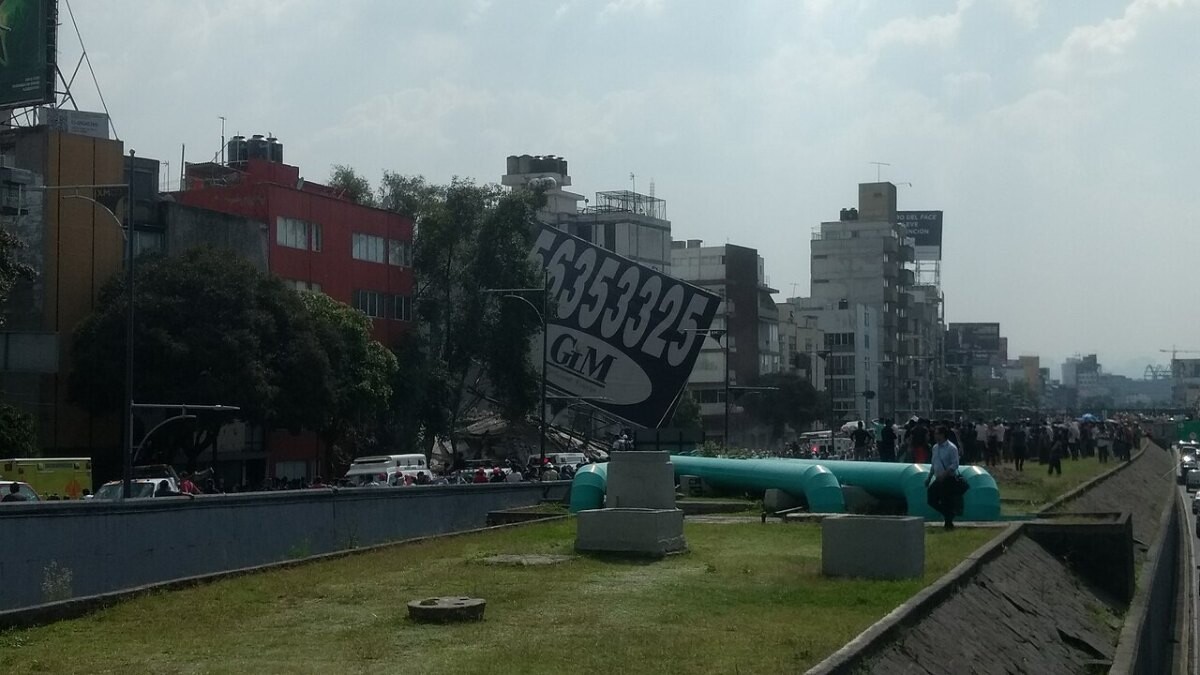
Mexico sits where the Cocos plate dives beneath the North American plate. Two kinds of quake matter most. Megathrust events on the plate boundary, such as Guerrero’s M7.1 near Acapulco in 2021 and Michoacán’s M7.7 in 2022, are shallow, at around 10 to 15 km (SSN, SSN). Intraslab quakes break inside the sinking plate: both 2017 disasters were of this normal-faulting type. The Tehuantepec quake was 45.9 km deep and one of only five of magnitude 8 or more in Mexico’s instrumental record (SSN). The Puebla-Morelos quake was 57 km deep and only about 120 km from Mexico City (SSN). The city’s soft former lakebed amplifies shaking. In 2017, 44 buildings collapsed there; 91% had been built before 1985, 64% had one to five storeys and 57% failed with a soft storey (Galvis et al., Earthquake Spectra, 2020). A wider survey found more than 1,600 buildings severely damaged, collapsed or demolished, more than 700 of them designed under modern collapse-prevention codes (Tena-Colunga et al., Asian Journal of Civil Engineering, 2021). After 2017, Mexico City updated its Complementary Technical Norms for building design and created a standard for assessing and retrofitting existing buildings (Alcocer and Fernández Sola, 2025).
Warning time depends on distance. SASMEX, operated by the non-profit CIRES, has run for over 30 years, recorded about 9,800 quakes, issued 111 alerts and reaches an estimated 25 million people through receivers, loudspeakers, radio and TV (Suárez, Frontiers in Earth Science, 2022). For the distant M8.2 in 2017 it gave Mexico City nearly two minutes’ warning, but for the nearby M7.1 only a few seconds before strong shaking arrived (Suárez et al., Seismological Research Letters, 2018). A survey of 2,400 residents found people judged the system useful when there was enough time to act (Santos-Reyes, Sustainability, 2021). An earlier study had found a high rate of missed and false alerts between 1991 and 2004 (Iglesias et al., BSSA, 2007). National drills now pair the loudspeakers with phone alerts: the second national drill of 2026 used five regional scenarios and was set to reach more than 80 million mobiles (UnoTV, Por Esto!).
Recent cases
- 19 September 2026: Mexico held its second national drill of the year, the first on a Saturday, with five regional scenarios including an M7.7 near Tehuacán, Puebla, and an M7.6 off Tonalá, Chiapas. Alerts went to mobile phones through the government’s national alert system, and about 23,000 loudspeakers sounded in central Mexico (UnoTV).
- 17 July 2026: An M7.4 earthquake struck at 08:48 off the Chiapas coast, 135 km southwest of Ciudad Hidalgo, at 10 km depth; by 11:00 the SSN had counted 39 aftershocks, the largest M6.5 (SSN). Chiapas Civil Protection reported no injuries or deaths, and the Navy told people to keep away from beaches for six hours because of a possible small tsunami (La Crónica).
- 2 January 2026: An M6.5 quake near San Marcos, Guerrero, set off the seismic alert in Mexico City, where 12 people were hurt (Expansión). Two people died: one in a house collapse in Guerrero and one in a fall while evacuating a building in Mexico City. The SSN counted 1,071 aftershocks by 10 pm (Por Esto!).
Press releases and official reports, 2023–2026
Five key releases a year for the last four years, newest first. Most come from national bodies such as INEGI, the Ministry of Health, CENAPRED, the National Seismological Service, CONAFOR, the Navy, CONDUSEF and the Official Gazette, from Congress, from international agencies such as PAHO and WHO, and from research journals. Key events, especially in earlier years where official archives are missing, come from Mexican news outlets such as La Jornada, El Universal, Excélsior, El Financiero, Animal Político and Mexico News Daily. Headlines are our English translations of the Spanish originals. Releases from 2007–2022 are in the expandable list after 2023.
2026
- 19 Sep 2026UnoTVDid you get the alert? How the 2026 National Drill unfolded in Mexico
- 17 Jul 2026National Seismological ServiceSpecial report: Chiapas earthquake (M7.4)
- 17 Jul 2026La Crónica de HoyTsunami alert activated after M7.4 Chiapas quake; injuries and structural damage ruled out
- 6 Jan 2026Por Esto!Seismicity in Mexico in 2025: almost 40,000 earthquakes recorded, according to the National Seismological Service
- 2 Jan 2026National Seismological ServiceSpecial report: Guerrero earthquake (M6.5)
2025
- 16 Dec 2025National Seismological ServiceSpecial report: Yucatán earthquake (M4.1)
- 18 Sep 2025Gaceta UNAMPrevention and staying alert, the best protection against earthquakes: Institute of Geophysics
- 9 Aug 2025National Seismological ServiceSpecial report: Chiapas earthquake (M6.0)
- 28 May 2025National Seismological ServiceSpecial report: Pacific earthquake sequence (M5.9)
- 12 Jan 2025National Seismological ServiceSpecial report: Michoacán earthquake (M6.1)
2024
- 18 Sep 2024ADN40Earthquakes in Mexico: which year had the most activity from 19 September 2017 to today?
- Sep 2024CENAPREDSocio-economic impact of disasters in Mexico in 2023: executive summary
- 12 May 2024National Seismological ServiceSpecial report: Chiapas earthquake (M6.2)
- 18 Apr 2024National Seismological ServiceSpecial report: Baja California Sur earthquake sequence (M5.6)
- Feb 2024CENAPREDSocio-economic impact of the main disasters in Mexico, 2022
2023
- 7 Dec 2023National Seismological ServiceSpecial report: Puebla earthquake (M5.7)
- 6 Oct 2023National Seismological ServiceSpecial report: Oaxaca earthquake (M6.0)
- 14 Jul 2023National Seismological ServiceSpecial report: Chiapas earthquake (M6.5)
- 18 Jun 2023National Seismological ServiceSpecial report: Baja California Sur earthquake (M6.4)
- 1 Mar 2023National Seismological ServiceSpecial report: Oaxaca coast earthquake (M5.8)
View 20 years of major Mexican earthquake press releases (2007–2026)73 more from 2007–2022, up to five a year, newest first
2022
- 11 Dec 2022National Seismological ServiceSpecial report: Guerrero earthquake (M6.0)
- 22 Nov 2022National Seismological ServiceSpecial report: Baja California earthquake (M6.2)
- 4 Nov 2022National Seismological ServiceSpecial report: Gulf of California earthquake (M6.3)
- 23 Sep 2022National Seismological ServiceSpecial report: Los Reyes, Michoacán earthquake sequence (M4.3)
- 19 Sep 2022National Seismological ServiceSpecial report: earthquakes of 19 September 2022, Michoacán (M7.7)
2021
- 7 Sep 2021National Seismological ServiceSpecial report: earthquakes of 7 September 2021, Guerrero (M7.1)
- 6 Sep 2021National Seismological ServiceSpecial report: Guanajuato earthquake sequence (M4.5)
- 11 Aug 2021National Seismological ServiceSpecial report: Sonora earthquake sequence (M5.1)
- 4 Aug 2021National Seismological ServiceSpecial report: Veracruz earthquake (M4.9)
- 2021CENAPREDSocio-economic impact of the main disasters in Mexico, 2018: executive summary
2020
- 23 Jun 2020National Seismological ServiceSpecial report: Oaxaca coast earthquake (M7.5)
- 7 Jun 2020National Seismological ServiceSpecial report: Valley of Mexico earthquake (M2.9)
- 22 May 2020National Seismological ServiceSpecial report: Pacific earthquake (M6.1)
- 13 Jan 2020National Seismological ServiceSpecial report: Michoacán earthquake sequence (M3.9)
- 4 Jan 2020National Seismological ServiceSpecial report: Oaxaca earthquake (M6.0)
2019
- Dec 2019CENAPREDSocio-economic impact of the main disasters in Mexico, 2017
- 19 Nov 2019National Seismological ServiceSpecial report: Chiapas earthquake (M6.4)
- 23 Oct 2019National Seismological ServiceSpecial report: Guerrero earthquake sequence (M4.9)
- 12 Jul 2019National Seismological ServiceSpecial report: Valley of Mexico earthquake (M2.5)
- 1 Feb 2019National Seismological ServiceSpecial report: Chiapas earthquake (M6.5)
2018
- 9 May 2018La JornadaSeptember quakes altered the subsoil of Morelos and Puebla (CENAPRED briefing to deputies)
- 8 Mar 2018National Seismological ServiceSpecial report: Morelos earthquake sequence (M3.8)
- 16 Feb 2018National Seismological ServiceSpecial report: Oaxaca earthquake (M7.2)
- 9 Feb 2018National Seismological ServiceSpecial report: Jalisco earthquake (M5.9)
- 19 Jan 2018National Seismological ServiceSpecial report: Gulf of California earthquake (M6.3)
2017
- 19 Sep 2017National Seismological ServiceSpecial report: earthquake of 19 September 2017, Puebla-Morelos (M7.1)
- 9 Sep 2017National Seismological ServiceSpecial report: Valley of Mexico earthquake (M2.6)
- 7 Sep 2017National Seismological ServiceSpecial report: Tehuantepec earthquake (7 September 2017, Mw 8.2)
- 14 Jun 2017National Seismological ServiceSpecial report: Chiapas earthquake (M7.0)
- 1 Mar 2017National Seismological ServiceSpecial report: Mexico City earthquake (M2.7)
2016
- 7 Jun 2016National Seismological ServiceSpecial report: Rivera fracture zone earthquake (M6.1)
- 11 May 2016National Seismological ServiceSpecial report: Guadalajara earthquake (M4.8)
- 8 May 2016National Seismological ServiceSpecial report: Oaxaca earthquake (M6.0)
- 15 Apr 2016National Seismological ServiceSpecial report: Chiapas earthquake (M6.1)
- 21 Jan 2016National Seismological ServiceSpecial report: Jalisco earthquake (M6.5)
2015
- 17 Dec 2015National Seismological ServiceSpecial report: Chiapas earthquake (M6.6)
- 15 Dec 2015National Seismological ServiceSpecial report: Jalisco earthquake (M4.4)
- 13 Sep 2015National Seismological ServiceSpecial report: Gulf of California earthquake (M6.7)
- 31 May 2015National Seismological ServiceSpecial report: Saltillo earthquake (M4.0)
- 11 Jan 2015National Seismological ServiceSpecial report: Quintana Roo earthquake (M4.2)
2014
- 1 Dec 2014National Seismological ServiceSpecial report: Valley of Mexico earthquake (M3.4)
- 29 Jul 2014National Seismological ServiceSpecial report: Veracruz earthquake (M6.4)
- 7 Jul 2014National Seismological ServiceSpecial report: Chiapas earthquake (M6.9)
- 8 May 2014National Seismological ServiceSpecial report: Guerrero earthquake (M6.4)
- 18 Apr 2014National Seismological ServiceSpecial report: Guerrero earthquake (M7.2)
2013
- 21 Sep 2013National Seismological ServiceSpecial report: Chihuahua earthquake (M5.4)
- 21 Aug 2013National Seismological ServiceSpecial report: Guerrero earthquake (M6.0)
- 16 Jun 2013National Seismological ServiceSpecial report: Guerrero earthquake (M5.8)
- 21 Apr 2013National Seismological ServiceSpecial report: Michoacán earthquake (M5.8)
- 26 Mar 2013National Seismological ServiceSpecial report: Guerrero-Oaxaca earthquake (M5.5)
2012
- 15 Nov 2012National Seismological ServiceSpecial report: Guerrero earthquake (M6.1)
- 7 Nov 2012National Seismological ServiceSpecial report: Chiapas earthquake (M7.3)
- 12 Apr 2012National Seismological ServiceSpecial report: Baja California Sur earthquake (M6.8)
- 11 Apr 2012National Seismological ServiceSpecial report: Michoacán earthquake (M6.4)
- 20 Mar 2012National Seismological ServiceSpecial report: Oaxaca-Guerrero earthquake (M7.4)
2011
- 10 Dec 2011National Seismological ServiceSpecial report: Guerrero earthquake (M6.5)
- 5 May 2011National Seismological ServiceSpecial report: Guerrero earthquake (M5.5)
- 26 Apr 2011National Seismological ServiceSpecial report: Guerrero earthquake (M5.5)
- 7 Apr 2011National Seismological ServiceSpecial report: Isthmus of Tehuantepec earthquake (M6.7)
- 25 Feb 2011National Seismological ServiceSpecial report: Veracruz earthquake (M6.0)
2010
- 21 Oct 2010National Seismological ServiceSpecial report: Gulf of California earthquake (M6.5)
- 23 Aug 2010National Seismological ServiceSpecial report: Jalisco earthquake (M6.1)
- 30 Jun 2010National Seismological ServiceSpecial report: Oaxaca earthquake (M6.0)
- 18 May 2010National Seismological ServiceSpecial report: Hidalgo earthquake (M5.3)
- 4 Apr 2010National Seismological ServiceSpecial report: Baja California earthquake (M7.2)
2009
- 29 Oct 2009National Seismological ServiceSpecial report: Veracruz earthquake (M5.5)
- 6 Oct 2009National Seismological ServiceSpecial report: Pacific earthquake (M5.4)
- 24 Sep 2009National Seismological ServiceSpecial report: Pacific earthquake (M6.2)
- 3 Aug 2009National Seismological ServiceSpecial report: Gulf of California earthquake (M6.9)
- 3 Jul 2009National Seismological ServiceSpecial report: Gulf of California earthquake (M6.0)
2008
- 13 Feb 2008La JornadaAt least 90 buildings damaged in Oaxaca by magnitude 6.6 earthquake
- 12 Feb 2008La JornadaTremors continue in Baja California; schools and offices closed
2007
- 14 Apr 2007La JornadaAuthorities report no casualties from the earthquake; 13 aftershocks recorded
Many years list fewer than five items, and some have none yet. Several official archives (parts of gob.mx, the Official Gazette and older agency pages) could not be opened when we compiled this list, and we only list items we could open and check. We are still adding to these lists. Where a page shows no date, the date comes from the publisher’s own index; annual reports with no printed date are listed under the year they were released.
Photo list
How this page is built. Figures come from the official statistical releases and research linked above; where agencies publish provisional numbers we say so, because they are revised. National death data come from INEGI’s death registrations, which are finalised the year after; preliminary figures are labelled. Some figures come from news reports quoting officials, and we name the outlet. Money is given in Mexican pesos (MX$). Headlines and quotes are our translations from Spanish. Photos are public-domain or Creative Commons images credited in each caption; file photos are illustrative and are not from the events described unless the caption says so. This page tracks trends and is not personal safety, medical, legal or financial advice.