
Trend summary
- Deaths on Australian commercial vessels are rare and have stayed at a handful a year. Far more people die in recreational boating, and that toll has not come down.
- Australia recorded 313 drowning deaths in 2025-26, 12% fewer than the record 357 the year before but still 10% above the ten-year average. On average 49 people a year drown while boating or using watercraft.
- On domestic commercial vessels, AMSA recorded 4 operational deaths in 2025, the same as in 2024, plus 228 injuries (44 serious) and 92 people overboard.
- Missing lifejackets, alcohol, coastal bar crossings and tired or unsupervised watchkeepers keep turning up in the investigations.
What the numbers show
Australia counts deaths at sea in two separate systems. Recreational boating deaths are counted as drownings by Royal Life Saving Australia and Surf Life Saving Australia from coronial records. The National Drowning Report 2026, released on 10 September 2026, counts 313 drowning deaths in Australia in 2025-26, down from a record 357 in 2024-25 but 10% above the ten-year average. Coastal places accounted for 48% of deaths (151). Royal Life Saving says that on average 49 people drown each year while boating or using watercraft, and boats feature in the worst events: in 2025-26 there were 14 drowning incidents that killed more than one person, with 30 deaths, the most in almost a decade (Royal Life Saving).
Commercial shipping is counted by the Australian Maritime Safety Authority. Its Marine incident annual report 2025 lists 4,174 incident reports across domestic commercial vessels, regulated Australian vessels and foreign ships, down from 5,625 in 2024. Most of that fall comes from a reporting change on 1 January 2025: about 1,272 equipment defect reports are no longer counted as incidents, so the two years cannot be compared directly. Domestic commercial vessels had 4 fatal incidents and 4 deaths in 2025. There were also 4 deaths in 2024 and 3 in 2023, when the rate was 1.5 deaths per 100,000 crew against a five-year average of 3.0. Between 2019 and 2023, 7 of the 13 deaths on these vessels happened on fishing boats.
What is driving it
The same few causes recur. In AMSA’s 2024 figures, two crew drowned when an aluminium fishing dinghy capsized and neither wore a lifejacket; in 2025 a charter crew member without a lifejacket died when the boat capsized crossing a coastal bar. Royal Life Saving finds that at least 15% of adults who drowned while boating were over the legal alcohol limit. Fatigue is another thread: AMSA reissued its watchkeeping and crewing standards notice in 2025, and in September 2026 described a fishing vessel that ran onto rocks after an uncertified crew member fell asleep at the helm (Marine Business News).
On larger ships, the ATSB’s recent investigations point to bridge systems and training rather than weather. The research vessel Nuyina grounded off Heard Island with its navigation echo sounders switched off, and the Bass Strait ship Matthew Flinders III lost steering when crew had not been trained on the backup controls. Official counts may also understate the risk: a 2022 study of the commercial fishing industry argued that its true death rate is higher than official records show.
Policy and budget changes
The main government measures and money figures behind this risk, newest first. Each item links to the official text we checked; where only a news report was available, the source says so.
Main policy changes
- 1 June 2025 New certificate-of-operation rules for commercial vessels. Marine Order 504 (Certificates of operation — national law) 2024 came into force, making a compliant safety management system a condition of the certificate that domestic commercial vessels need to operate. (Federal Register of Legislation (explanatory statement, F2024L01458))
- 1 January 2023 New crew competency certificates for commercial vessels. Marine Order 505 came into force, introducing new certificates of competency for crew on domestic commercial vessels and phasing out older certificates. (Federal Register of Legislation (explanatory statement, F2022L01622))
- 30 September 2021 Marine accident reporting rules updated. The Transport Safety Investigation Regulations 2021 came into force, defining the marine occurrences, such as deaths, serious injuries, loss of a ship or a person overboard, that must be reported to the ATSB immediately. (Federal Register of Legislation (explanatory statement, F2021L01248))
- 1 July 2018 AMSA takes over commercial vessel safety nationwide. The Australian Maritime Safety Authority took over all service delivery under the national law for domestic commercial vessels, which the states and the Northern Territory had delivered since 2013. (Federal Register of Legislation (explanatory statement, F2018L00821))
Budget and costs
- 2025 AMSA’s government funding rises to A$236.3 million. The 2025–26 Portfolio Budget Statements give the Australian Maritime Safety Authority A$236.3 million in funds from government in 2025–26, up from A$216.6 million (estimated actual) in 2024–25; this includes A$15.9 million for regulating domestic commercial vessels and A$81.3 million for search and rescue. (Department of Infrastructure (Portfolio Budget Statements))
- 2024 A$36 million for water safety organisations. The Australian Government is providing A$36 million over two years from 2024–25 through the Water and Snow Safety Program, which funds Royal Life Saving, Surf Life Saving Australia and other water safety groups. (Department of Infrastructure (Office for Sport))
Recent cases
- 10 September 2026: the National Drowning Report 2026 counts 313 drowning deaths in 2025-26, 12% fewer than the year before but still 10% above the ten-year average (Royal Life Saving).
- 7 July 2026: the ATSB recommends that the operator of Matthew Flinders III improve its safety management system after the mixed cargo and passenger ship lost steering and rolled heavily in Bass Strait (ATSB).
- 12 March 2026: the ATSB publishes its preliminary report on the grounding of the Australian-flagged cruise ship Coral Adventurer in Papua New Guinea on 27 December 2025, with 80 passengers and 44 crew on board. Two months earlier, an 80-year-old passenger had died on Lizard Island after the ship left without her (ATSB; ABC News).
Our read: what the numbers add up to
The two halves of this page move differently. Commercial shipping deaths are low and stable, with 4 on domestic commercial vessels in 2025, the same as in 2024. Recreational boating is the larger and more stubborn problem: on average 49 people a year drown while boating or using watercraft, and the overall drowning toll of 313 in 2025-26, though 12% below the record 357, remains 10% above the ten-year average. I would not read the drop from the record year as a turning point.
The more telling detail is how consistent the causes are. Missing lifejackets, alcohol (at least 15% of adults who drowned while boating were over the legal limit), coastal bar crossings and fatigue recur across both recreational and commercial cases. On larger ships, the ATSB investigations into the Nuyina and Matthew Flinders III point instead to equipment settings and training on backup systems. Put together, this suggests the toll is driven less by bad luck at sea than by a small set of known, preventable failures. The 14 multiple-fatality drowning incidents in 2025-26, with 30 deaths, the most in almost a decade, fit the page’s point that boats feature in the worst events.
The commercial statistics need careful handling. AMSA’s incident reports fell from 5,625 in 2024 to 4,174 in 2025, but mostly because a reporting change stopped counting about 1,272 equipment defect reports, so the two years cannot be compared directly. A 2022 study also argued that official records understate the death rate in commercial fishing. What I would watch is whether the drowning toll moves back towards the ten-year average in the next report. My bottom line: commercial vessel deaths are low and steady, but recreational boating deaths are not falling, and the causes are the same ones that keep appearing in the investigations.
Press releases and official reports, 2023–2026
Five key releases a year for the last four years, newest first. Most come from Australian Government agencies, state and territory agencies, regulators, accident investigators and national statistics; a few news reports are included where they are the clearest public record of an event. Where only the year of publication is shown in what we could find, we give the year alone. Releases from 2007–2022 are in the expandable list after 2023.
2026
- 10 Sep 2026Royal Life SavingNational Drowning Report 2026
- 7 Jul 2026ATSBMixed cargo vessel lost steering in Bass Strait
- Jun 2026AMSAMarine incident annual report 2025
- 17 Mar 2026ATSBPreliminary report details Nuyina grounding
- 12 Mar 2026ATSBCoral Adventurer grounding preliminary report
2025
- 3 Nov 2025ABC NewsAMSA investigators board cruise ship following 80yo's death on island
- Aug 2025Royal Life SavingTragic surge in drowning deaths prompts urgent call for action ahead of summer
- Jun 2025AMSAMarine Notice 2025/03: Watchkeeping and crewing standards
- 2025AMSAMarine incident report: July – September 2025
- 2025AMSAMarine incident annual report 2024
2024
- 22 Dec 2024ABC NewsSummer drowning deaths spike as lifesavers renew water safety warnings
- 12 Sep 2024AMSAGet on board with lifejacket safety
- 2024Royal Life SavingNational Drowning Report 2024
- 2024AMSAMarine Incident Annual Report 2023 – Domestic commercial vessels
- 2024AMSA2024 monthly domestic commercial vessel incident reports
2023
- Dec 2023AMSAPassenger vessel collision with unseen submerged rock
- Sep 2023Royal Life SavingNational Drowning Report 2023
- 22 Jun 2023ATSBGrounding of Trinity Bay, Harrington Shoal, Queensland, on 19 January 2021
- May 2023AMSALack of regular planned maintenance results in engine fire
- 2023AMSA2023 monthly domestic commercial vessel incident reports
View 20 years of major Australian maritime accident press releases (2007–2026)50 more from 2007–2022, up to five a year, newest first
2022
- 16 Dec 2022ATSBLoss of containers overboard from APL England, 46 NM south-east of Sydney, New South Wales, on 24 May 2020
- 1 Mar 2022AMSAIndependent Review of Domestic Commercial Vessel Safety: AMSA submission
- 2022Frontiers in Public HealthDeath at sea—the true rate of occupational fatality within the Australian commercial fishing industry
- 2022AMSA2022 monthly domestic commercial vessel incident reports
2021
- 12 Oct 2021ABC NewsMandatory life jackets announced for people on boats in Western Australian waters
- 30 May 2021ABC NewsAustralia's longest ever shipping ban issued for 'unbearable' conditions and 'systemic' failures
- Mar 2021Royal Life SavingTragic Summer As Ninety Drown
- 2021Royal Life SavingRoyal Life Saving National Drowning Report 2021
2020
- 12 Jun 2020ABC NewsCargo ship captain allowed to leave Australia after 50 containers fell overboard in rough seas while bound for Brisbane
- 30 May 2020ABC NewsAPL England shipmaster charged over container spill, operator ordered to pay $22 million before ship will be released
- 27 May 2020ABC NewsShip APL England carrying cargo from China loses containers overboard in rough seas, AMSA investigating
- 2020AMSADomestic commercial vessel annual incident report, January–December 2019
2019
- 29 Aug 2019ABC NewsFindings from trawler Dianne sinking inquest condemn bureaucrats, urges inflatable vests for fishers
- 25 Mar 2019ABC News'Dianne' trawler tragedy to be examined by coronial inquest this week
2018
- 23 Jul 2018ABC NewsTrawler capsize survivor Ruben McDornan heard banging from boat as it sank off Qld's coast
- 2018Royal Life SavingNational Drowning Report 2018
2017
- 21 Oct 2017ABC NewsPolice divers find two bodies in sunken Queensland fishing trawler recovery mission
- 17 Oct 2017ABC NewsHopes fading for six men missing after fishing trawler capsizes north of Bundaberg
- 13 Sep 2017ABC NewsFamilies of asylum seekers killed in 2010 Christmas Island boat crash lose class action
- 22 Jun 2017ABC NewsGreat Barrier Reef: Panama company charged, faces up to $17m fine for spilling tonnes of oil
- 8 Jun 2017ABC NewsPasha Bulker anniversary: 10 years since coal ship ran aground on Newcastle beach during storm
2016
- 30 Oct 2016ABC NewsLife jackets not being serviced enough and drownings will increase, Tasmanian marine authority warns
- 6 Sep 2016ABC NewsBarrier Reef spill: Commonwealth seeks $120m in damages over Shen Neng One grounding
- 9 Feb 2016ATSBMan overboard fatality from Cape Splendor, Port Hedland, Western Australia, on 6 October 2014
2015
- 27 May 2015ABC NewsBarrier Reef spill: Commonwealth launches court bid to recover costs from Shen Neng One
- 16 Feb 2015ABC NewsChinese coal ship captain arrested for sailing through Great Barrier Reef without pilot
2014
- 17 Jun 2014ABC NewsSIEV 221 tragedy: Asylum seekers' families to sue Government over 2010 Christmas Island accident
- 20 Mar 2014ATSBFall from the pilot ladder on board the chemical tanker Golden Concord
2013
- 5 Feb 2013ATSBMan overboard fatality from the container ship MSC Siena
2012
- 14 Nov 2012ABC NewsCaptain fined $25k over Shen Neng oil spill
- 8 Jun 2012ABC NewsFive years on from wild Pasha storm
- 23 Feb 2012ABC NewsCoroner critical of Christmas Island rescue capability
- 2012Royal Life SavingNational Drowning Report 2012
2011
- 27 Jul 2011ABC NewsChristmas Island survivor slams rescue operation
- 25 May 2011ABC NewsUnseaworthy boats unable to assist in shipwreck tragedy
- 1 Feb 2011ABC NewsPacific Adventurer oil spill case goes to trial
- 2011ATSBWatchkeeper fatigue a significant safety risk on ships, says ATSB
2010
- 6 Apr 2010ABC NewsReef oil spill an outrage: Rudd
- Mar 2010AMSAResponse to the Montara Wellhead Platform incident
- 1 Feb 2010AMSAResponse to the Pacific Adventurer incident—strategic issues report, operational and technical issues report
- 2010ATSBRelease of Shen Neng 1 preliminary factual report
- 2010ATSBATSB investigates bulk carrier grounding
2009
- 8 Aug 2009ABC NewsQld reaches $25m settlement on oil spill
- 1 Apr 2009ABC NewsPacific Adventurer captain to front court over oil spill
- 1 Apr 2009AMSAResponse to the Pasha Bulker grounding—report of the incident analysis team
- 13 Mar 2009ABC NewsOil spill: Qld beaches declared disaster zones
2007
- 26 Jul 2007ABC NewsNewcastle farewells Pasha Bulker
- 2 Jul 2007ABC NewsTeams assess Pasha oil leak
- 25 Jun 2007ABC NewsPasha Bulker salvage efforts intensify
- 9 Jun 2007ABC NewsPasha Bulker crew 'aren't to blame'
Some early years list fewer than five items. Many older Australian government releases are no longer online at their original addresses, and we only list items we could find and check.
Photo list
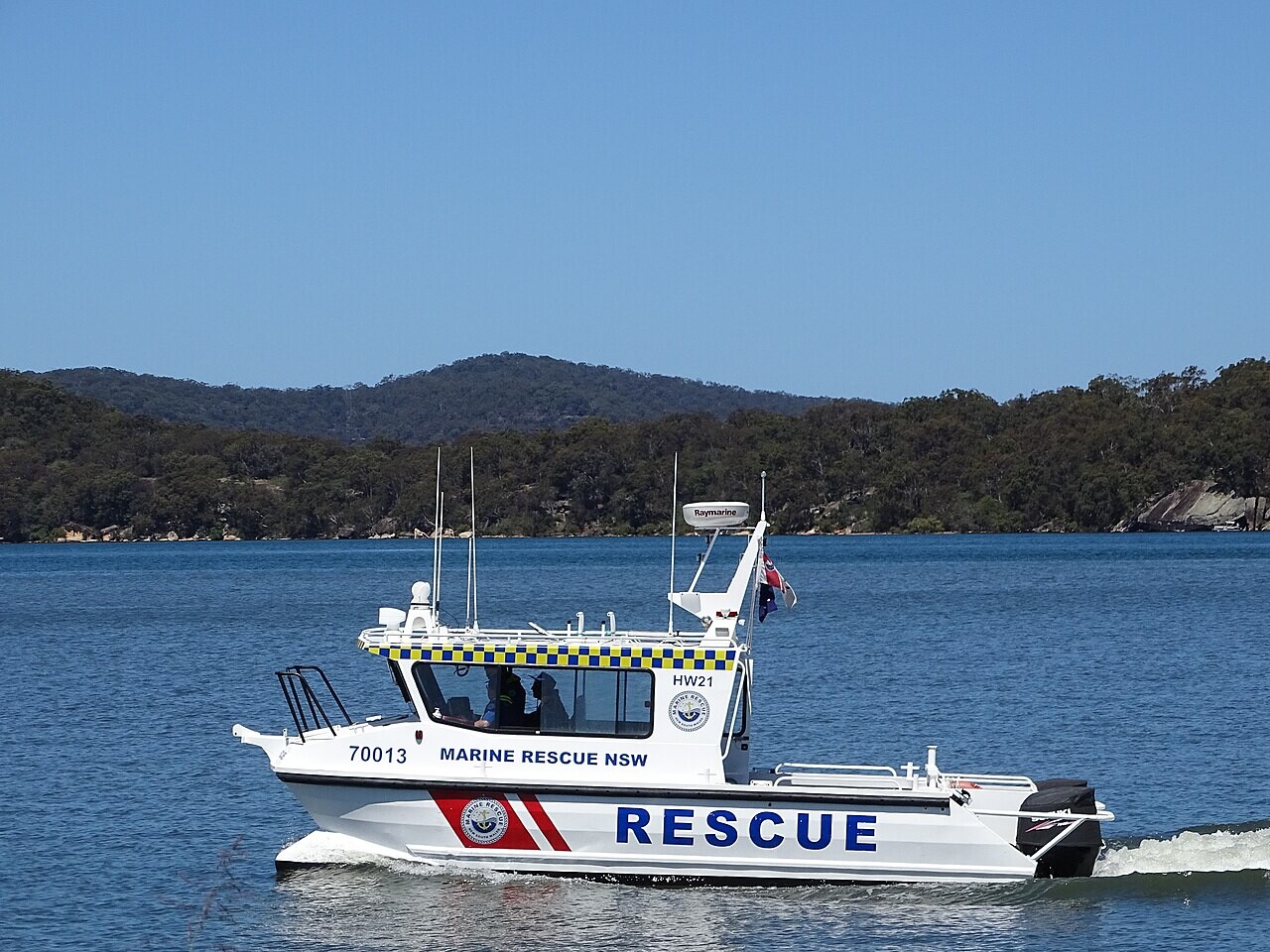
How this page is built. Figures come from the official statistical releases linked above; where agencies publish provisional numbers we say so, because they are revised. Australian statistics are often published separately by each state and territory, and financial years run from July to June, so we say which area and period each figure covers. Photos are public-domain or Creative Commons images credited in each caption; file photos are illustrative and are not from the events described unless the caption says so. This page tracks trends and is not personal safety, medical, legal or financial advice.