Swimming underwater on one breath, and the lifeguard on duty in 14 of 15 blackouts
Key takeaways · 10 min read
- Hyperventilating before going underwater lowers carbon dioxide, delays the urge to breathe and lets oxygen fall far enough for the brain to switch off without warning.
- The victims are mostly young, fit men: good swimmers, military candidates, spearfishers and freedivers. All 22 Australian blackout drownings from 2002 to 2015 were male.
- In New York, a lifeguard was on duty in 14 of 15 pool incidents. In a French test, a submerged manikin in deep water took a median of 39 seconds to spot.
- Coaching bodies now ban breath-holding contests and static holds in training, limit underwater drills and tell swimmers to take one breath, never several.
On 5 July 2026 a 39-year-old former university swimmer and assistant coach was practising breath-holding in the deep end of a swim club pool in Raleigh, North Carolina. Surveillance footage showed him underwater for about two minutes and 14 seconds, surfacing briefly, then going under again and not coming back up. His wife found him face down after stepping away for a few minutes. The medical examiner ruled the death an accidental drowning and found no trauma, drugs or foul play.
His family believes he had a hypoxic blackout: the brain runs short of oxygen and switches off without warning, often before the swimmer feels any real need to breathe. When New York health officials reviewed fatal and non-fatal drownings linked to deliberate breath-holding, a lifeguard had been on duty in all but one of the 15 incidents at regulated pools. The swimmers who died were the strong ones, pushing a limit they could not feel.
This article covers why breath-holding can end in silent unconsciousness, who it happens to, why lifeguards so often miss it, what pools, coaches and freedivers have changed, and what the evidence behind those changes actually is. The answer is not to stay out of the water. It is to swim carefully: one normal breath, never alone, and never past the urge to breathe.
What actually happens in a breath-hold blackout
The urge to breathe is driven mostly by carbon dioxide, not by falling oxygen. Over-breathing before going under, which swimmers call hyperventilating or “packing”, blows off carbon dioxide, so it takes longer to build back up to the point where breathing becomes irresistible. Oxygen keeps falling at the same rate. As the physiologist Albert Craig described in JAMA in 1961, oxygen can drop low enough to impair the brain before carbon dioxide rises high enough to force the swimmer up.
A 2023 Swedish laboratory study measured the trade. Eighteen people with little or no freediving experience made two series of five maximal breath-holds with their faces in cold water, once after normal breathing and once after 15 seconds of hyperventilation. Hyperventilating cut carbon dioxide in the breath before each hold from 29.0 to 17.4 mmHg, delayed the first involuntary breathing movements, and lengthened the holds. Oxygen in the breath at the end of each hold was lower.
What 15 seconds of over-breathing changes
Averages for 18 adults over five maximal breath-holds with the face in cold water, after normal breathing or after 15 seconds of hyperventilation.
Source: Pernett et al., European Journal of Applied Physiology (2023), doi:10.1007/s00421-023-05202-7. Laboratory study; partly funded by the family of a young man who drowned after a blackout while snorkelling.
The danger grew with repetition. After normal breathing, the lowest oxygen saturation stayed steady from one hold to the next. After hyperventilation it fell further with each hold, and on the fifth it dropped to 75% or below in four of the 18 volunteers. That matters because pool swimmers and recreational divers rarely make one maximal effort; they repeat lengths or dives with short rests.
Two names cause confusion. The American Red Cross, USA Swimming and the YMCA of the USA prefer “hypoxic blackout” for unconsciousness after hyperventilation and long breath-holding, and reject “shallow water blackout” for it, because depth does not change the physiology. Divers use shallow water blackout for loss of consciousness near the surface on the way up from a deep dive, when falling pressure lowers oxygen in the lungs. Both end with an unconscious person underwater who does not struggle or call out.
Where the risk concentrates
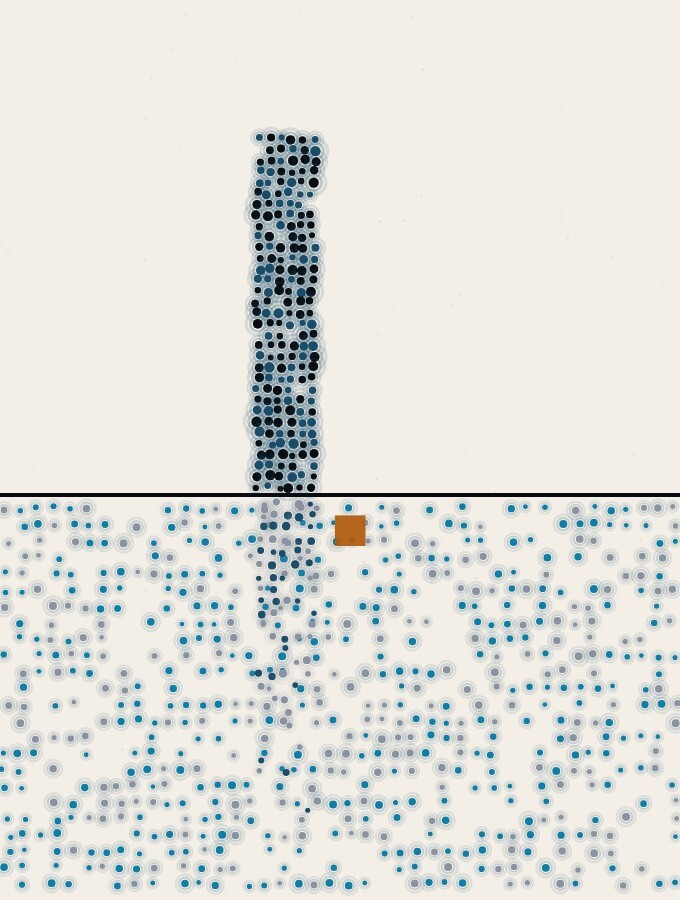
In 1976 Craig summarised 58 cases of loss of consciousness during underwater swimming and diving. Fifty-six were male, the most common age was 16 to 20, all were known to be good swimmers or divers, and about 80% of the cases happened in guarded pools. Twenty-three died. From breath-holding experiments he estimated that the gap between losing consciousness and death might be no more than two and a half minutes.
The New York review that followed two deaths in a city pool in 2011 found the same profile. Of 16 cases between 1988 and 2011, 13 were male and the average age was 17. The two men who prompted it were training for military special operations selection, and a later commentary in Military Medicine noted that three of the four deaths in the series were linked to the military. All four deaths involved hyperventilation, and both swimmers who combined it with hypoxic training died.
Who the victims were
Share of cases who were male, in four case series of breath-hold blackout or breath-hold diving incidents. The series differ in definitions and settings.
Sources: Franklin et al., Medical Journal of Australia 208(6):271 (2018); Craig, Medicine and Science in Sports (1976); Divers Alert Network annual diving report, 2015 edition, as reported by DeeperBlue; Boyd et al., MMWR 64(19) (2015).
In the sea the victims are spearfishers and freedivers. Australia recorded 22 hypoxic blackout drownings between 2002 and 2015, all male and 17 of them aged 18 to 34: 12 in pools and nine in the ocean or harbours, including five spearfishers and four freedivers. A review of 317 snorkelling and breath-hold diving deaths in Australia from 2000 to 2021 found the breath-hold divers far younger than surface snorkellers, a median of 35 against 58 years, and much less likely to have been disabled by a heart problem, 15% against 50%.
Children are a separate group. Seven of the 16 New York cases were under 15, and all five beginners in the series had been doing static breath-holds; none of the six static breath-holding cases was fatal. The settings split in a telling way. In pools the victims were usually watched and still not seen in time. In the sea they were usually alone.
Watched in pools, alone at sea
Share of incidents with supervision present, or with the victim alone or unobserved, in four case series.
Sources: Boyd et al., MMWR 64(19) (2015); Craig (1976); Lippmann, Diving and Hyperbaric Medicine 53(3) (2023), 2014 to 2018; Lippmann et al., Diving and Hyperbaric Medicine 51(1) (2021), 2007 to 2016, observational.
How big is the problem overall? Nobody knows, and some of the most repeated figures do not survive checking. A Canadian armed forces leaflet written by a Swimming Canada team physician says shallow water blackout is estimated “by a number of sources” to cause up to 20% of all drownings, names none of them, and adds that there are no hard statistics. News reports of the Raleigh death repeated the figure. Death certificates say drowning, so blackout counts come from case reviews of tens, not populations. Even the New York series has small inconsistencies between its text and tables, and its authors warned that behaviour before a drowning often goes unreported.
What has been measured to work
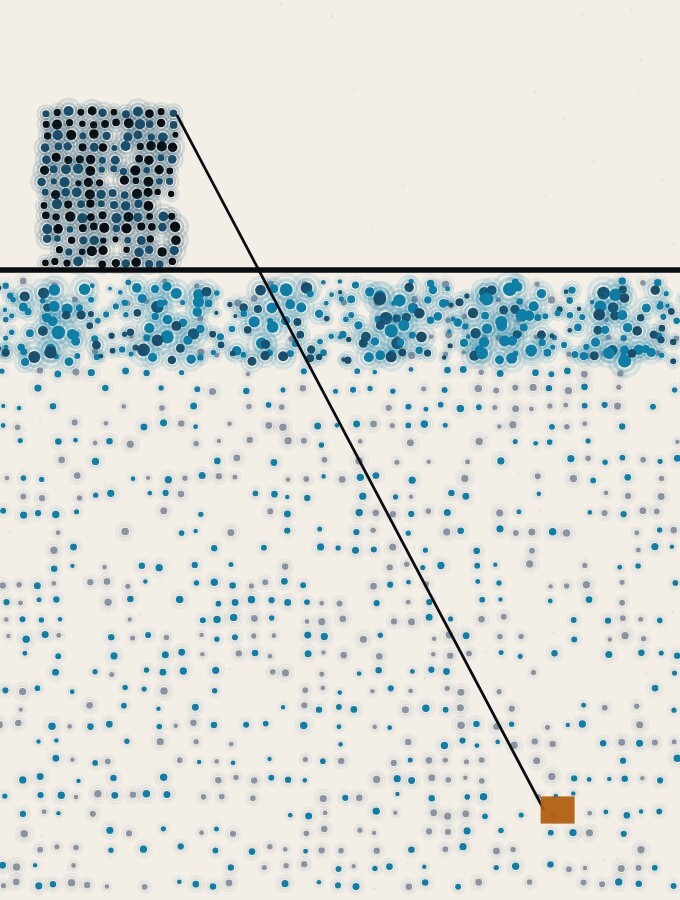
Part of the answer is simply seeing the swimmer sooner. A French study put a manikin on the bottom of two public pools 108 times while four professional lifeguards were on duty with swimmers present, and the lifeguards knew a test was under way. Half the manikins were spotted within ten seconds, but only 45% met the international standard of detection within 15 seconds, and 12 were still undetected after two minutes.
Distance and depth mattered most. A manikin near the lifeguard was found in a median of 3.5 seconds; one far away took 30. Lifeguards who walked the poolside missed none in the two-minute window, while those in a fixed high chair missed six. Light bending at the surface hides a body on the bottom, which is why the 2022 joint statement from the Red Cross, USA Swimming and the YMCA tells lifeguards to respond quickly to anyone motionless in the water, for any reason.
How long lifeguards took to spot a submerged manikin
Median seconds to detection in 108 trials in two French public pools, by water depth and distance from the lifeguard. Trials were stopped at 120 seconds.
Source: Vignac et al., International Journal of Aquatic Research and Education (2022). Four lifeguards, announced tests; real-world detection is likely slower.
The other part is stopping the behaviour. After the 2011 deaths, New York City changed its health code in 2014 to require warning signs and to make pool operators discourage dangerous breath-holding. USA Swimming now tells coaches that stationary breath-holding should never be used as training, that swimmers should never hyperventilate or run breath-holding contests, and that a one-off underwater drill should not exceed 25 yards. The 2022 joint statement asks instructors to limit breath-holding to a single inhalation before going under.
Freediving competitions show what close supervision buys. In AIDA events worldwide from 2019 to 2023, there were 1,282 losses of consciousness in 38,789 starts, 3.3%, each one with trained safety divers alongside. Earlier competition data put loss of motor control during static breath-holds at 9.6%. Blackout is routine at the limit; drowning is not, because someone is always within reach. That is the logic of the freedivers’ “one up, one down” rule, which the Divers Alert Network links to serious incidents when it is ignored.
How often trained freedivers black out in competition
Share of competition performances ending in loss of consciousness or loss of motor control, all with safety divers present.
Sources: Lindholm, International Journal of Sports Medicine (2007), doi:10.1055/s-2006-924361, as summarised by Muth and Tetzlaff (2024); Allinger et al., Diving and Hyperbaric Medicine 54(4):301 (2024), 38,789 starts.
None of these measures has been tested in a trial that counts deaths; the evidence is consistent case series and physiology. When someone is pulled out unconscious, breathing matters as much as the heart: the 2024 American Heart Association and American Academy of Pediatrics update on drowning recommends CPR with rescue breaths and chest compressions, not compressions alone, because drowning stops the heart by starving it of oxygen.
Why the answer is not to stop swimming

Swimming underwater is a skill worth having, and most of the danger sits in a few habits that are easy to drop. Take one normal breath before going under, never a string of deep ones. Come up when you first want to breathe. Do not compete over distance or time underwater, do not repeat underwater lengths without rest, and never practise breath-holding alone, in a pool or a bath. Coaches: keep underwater work early, short and watched.
For spearfishers and freedivers, the rule is one diver down and one on the surface watching, close enough to reach the diver on the way up and for the first moments after surfacing. Rest between dives for longer than the dive itself, and stop when holds start feeling easy for the wrong reasons. Learn rescue breathing and CPR. For the broader risks of the sport, from shoulders to drowning in children, see our article on swimming injuries.
What to do
Steps sorted by when they matter. Each one says how strong the evidence is: Measured Official advice Untested
Before
- Take one normal breath before going under, never a string of deep ones. Fifteen seconds of over-breathing delayed the urge to breathe by about 23 seconds in a laboratory study. Measured see Sources
- Learn rescue breathing and CPR. Official advice see Sources
If it happens
- Come up at the first urge to breathe. Official advice see Sources
- Never practise breath-holding alone, in a pool or a bath. In New York pools a lifeguard was on duty in 14 of 15 incidents and still did not reach them in time. Measured see Sources
- For spearfishing and freediving, keep one diver down and one on the surface within reach, and rest longer than each dive. Untested see Sources
What not to do
- Do not compete over distance or time underwater, and do not repeat underwater lengths without rest. Low oxygen worsened with each repeated hold after over-breathing. Measured see Sources
Not medical advice. If someone is pulled from the water unresponsive, call emergency services at once and start CPR with rescue breaths.
Questions people ask
Is shallow water blackout the same as hypoxic blackout?
They describe the same end point, unconsciousness from low oxygen underwater. US water-safety bodies use hypoxic blackout for pool breath-holding and keep shallow water blackout for divers losing consciousness near the surface on the way up from depth.
Does hyperventilating let you stay under longer?
Yes, and that is the danger. In a 2023 laboratory study it added about 22 seconds to each hold by delaying the urge to breathe while oxygen kept falling.
What should I do if I find someone unconscious underwater?
Get them out without putting yourself at risk, call emergency services, and if they are not breathing normally start CPR with rescue breaths. Send someone for an automated external defibrillator, but do not delay breaths and compressions while waiting for it.
The short version
- Hyperventilating before going underwater lowers carbon dioxide, delays the urge to breathe and lets oxygen fall far enough for the brain to switch off without warning.
- The victims are mostly young, fit men: good swimmers, military candidates, spearfishers and freedivers. All 22 Australian blackout drownings from 2002 to 2015 were male.
- In New York, a lifeguard was on duty in 14 of 15 pool incidents. In a French test, a submerged manikin in deep water took a median of 39 seconds to spot.
- Coaching bodies now ban breath-holding contests and static holds in training, limit underwater drills and tell swimmers to take one breath, never several.
- Never breath-hold alone, come up at the first urge to breathe, and if someone is pulled out unconscious, give CPR with rescue breaths.
This is a summary of published research, not medical advice. If you have fainted in the water, have a heart condition, or train with long breath-holds, talk to your doctor or a sports medicine specialist. CPR and an automated external defibrillator save lives: if someone is pulled from the water unresponsive, call emergency services at once and start CPR with rescue breaths.
Further reading: Boyd et al., MMWR 64(19) (2015), for the New York case review. Pernett et al., European Journal of Applied Physiology (2023), for what hyperventilation does to repeated breath-holds. Baker et al., Experimental Physiology (2025), for unified prevention advice.
- Why We Swim, Bonnie Tsui (2020). A journalist on survival, competition and the pull of water, with chapters on freedivers and breath-holding. Lyrical rather than technical.
- Breath: The New Science of a Lost Art, James Nestor (2020). A popular account of breathing and carbon dioxide tolerance. Read it for the physiology; never take breath-holding exercises into water.
- The Art of Uncertainty, David Spiegelhalter (2024). A Cambridge statistician on chance, risk and weak evidence. Useful for reading small case series and unsourced claims such as the one about blackouts and drownings.
Sources
- Roy S. Autopsy reveals former coach’s cause of death. EssentiallySports, 12 August 2026, reporting the medical examiner’s report obtained by The News & Observer; ABC11 Raleigh-Durham, 8 July 2026.
- Boyd C, Levy A, McProud T, et al. Fatal and nonfatal drowning outcomes related to dangerous underwater breath-holding behaviors — New York State, 1988–2011. MMWR 64(19) (2015), with erratum, MMWR 64(25) (2015).
- Lane JD. Drowning deaths from unsupervised breath holding: separating necessary training from unwarranted risk. Military Medicine (2017), doi:10.7205/MILMED-D-16-00246.
- Craig AB. Underwater swimming and loss of consciousness. JAMA (1961), doi:10.1001/jama.1961.03040170001001.
- Craig AB. Summary of 58 cases of loss of consciousness during underwater swimming and diving. Medicine and Science in Sports (1976), doi:10.1249/00005768-197621000-00143.
- Pernett F, Bergenhed P, Holmström PK, Mulder E, Schagatay EKA. Effects of hyperventilation on oxygenation, apnea breaking points, diving response, and spleen contraction during serial static apneas. European Journal of Applied Physiology (2023), doi:10.1007/s00421-023-05202-7.
- American Red Cross, USA Swimming, YMCA of the USA. Joint statement on hypoxic blackout. November 2022.
- Franklin RC, Peden AE, Pearn JH. Drowning deaths in Australia caused by hypoxic blackout, 2002–2015. Medical Journal of Australia 208(6):271 (2018).
- Lippmann JM. Snorkelling and breath-hold diving fatalities in Australia — a review of 317 deaths. International Journal of Environmental Research and Public Health 22(1):119 (2025), funded by the Australasian Diving Safety Foundation.
- Lippmann JM. Snorkelling and breath-hold diving fatalities in Australian waters, 2014 to 2018. Diving and Hyperbaric Medicine 53(3) (2023).
- Lippmann JM, Lawrence C, Davis M. Snorkelling and breath-hold diving fatalities in New Zealand, 2007 to 2016. Diving and Hyperbaric Medicine 51(1) (2021), doi:10.28920/dhm51.1.25-33.
- Divers Alert Network. Annual Diving Report, 2015 edition, breath-hold incidents 2010–2013, as reported by DeeperBlue (2015).
- Brothers A. Shallow water blackout. Canadian Forces Morale and Welfare Services, undated.
- Vignac É, Lebihain P, Guignard B, et al. Ability of lifeguards to detect submerged manikins in public swimming pool environments. International Journal of Aquatic Research and Education (2022).
- USA Swimming Operational Risk Committee. Hypoxic training recommendations, 3 May 2018.
- Lindholm P. Loss of motor control and/or loss of consciousness during breath-hold competitions. International Journal of Sports Medicine (2007), doi:10.1055/s-2006-924361.
- Muth CM, Tetzlaff K. Adverse events in competitive freediving. Deutsche Zeitschrift für Sportmedizin (2024), doi:10.5960/dzsm.2024.610.
- Allinger J, Melikhov O, Lemaître F. Trends in competitive freediving accidents. Diving and Hyperbaric Medicine 54(4):301–307 (2024), doi:10.28920/dhm54.4.301-307.
- Chimiak J, Valdivia-Valdivia J. Freediving risk assessments. Alert Diver, Divers Alert Network, November 2023.
- American Heart Association and American Academy of Pediatrics. Focused update on resuscitation following drowning, Circulation and Pediatrics, November 2024; Arnold MJ, American Family Physician 113(4):402–403 (2026).
- Baker AH, Jones A, Mayhew A, et al. The physiology of survival: breath-hold shallow-water diving. Experimental Physiology (2025), doi:10.1113/EP093322; University of Portsmouth news release, December 2025.