
Coercive Control: What the Evidence Shows
Coercive control is a pattern of domination, not a single incident. What research shows about how common it is, its link to homicide, the laws that criminalise it, and the warning signs.
Gaslighting, grooming, indoctrination and coercive persuasion, along with bullying, discrimination and social conflict aimed at a person.
Coercive control is a pattern of domination, not a single incident. What research shows about how common it is, its link to homicide, the laws that criminalise it, and the warning signs.
Only 11.8% of banners on top UK sites met minimal legal requirements in one study. How banner design steers choices, what the law requires and how to protect your privacy.
A third of 14,733 employees clicked a test phishing email, and training pages made some click more. What large field studies show about phishing training.
47% of US MLM participants lost money and 27% broke even. What surveys, FTC cases and experiments show about multi-level marketing and who pays.
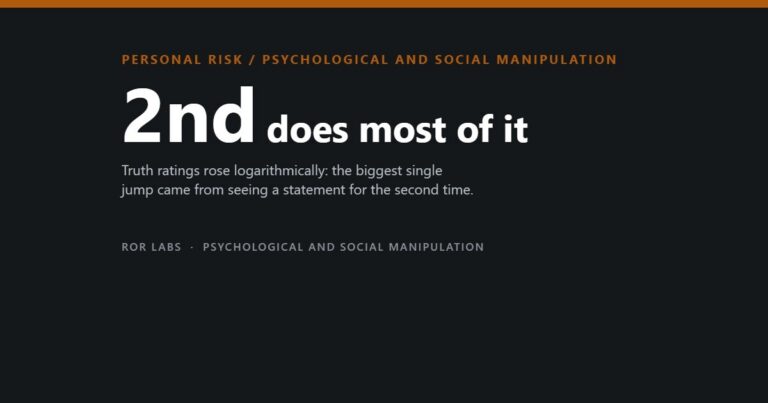
File photo: a smartphone display. Photo: Skitterphoto, via Wikimedia Commons, CC0. In the news · August 2026 An experiment with 165 participants showed Instagram-style posts that were either new or repeated, with high or low like counts. Repeated statements were again judged more true than new ones, and like counts did not change that effect….
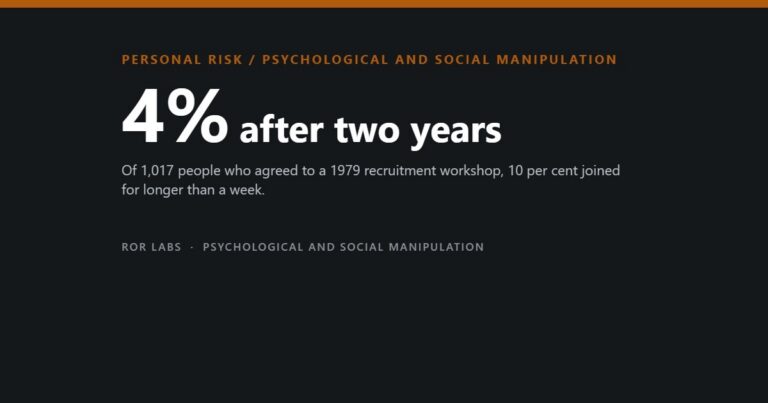
File photo: silhouettes of a group of people at sunset. Photo: Sue Huan (Unsplash), via Wikimedia Commons, CC0. In the news · July 2026 A Victorian parliamentary inquiry made 39 recommendations after reviewing 317 submissions and hearing from survivors of groups such as the Two by Twos and Geelong Revival Centre. It proposes outlawing group-based…
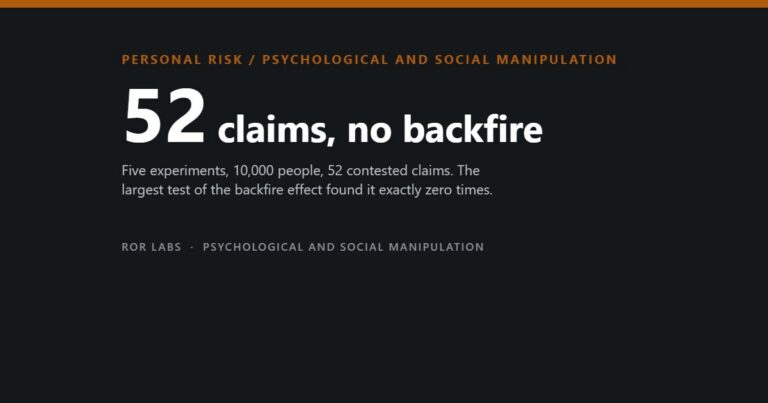
Key takeaways · 12 min read The backfire effect comes from a 2010 paper whose own second experiment failed to reproduce it at the group level. The largest test since — five experiments, more than 10,000 people, 52 corrected claims — found it zero times. Across the literature, 81% of reported backfires used a single-question…
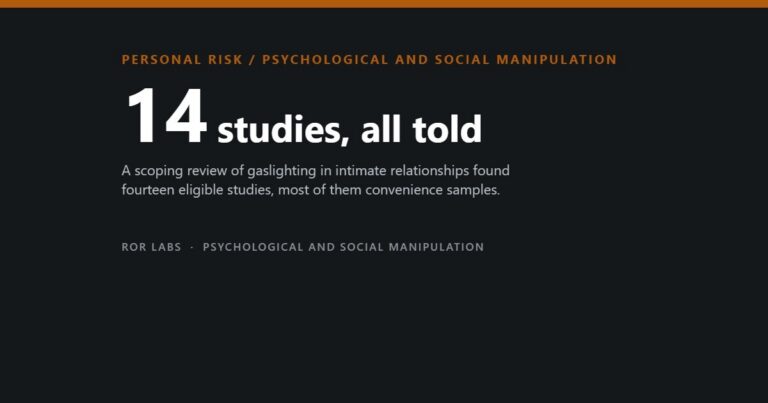
File photo: a woman sitting by a large window. Photo: Alexandre Chambon (Unsplash), via Wikimedia Commons, CC0. In the news · April 2026 A Scientific Reports study from Turkey surveyed 333 women aged 20 to 40 in romantic relationships. Using standardized scales and mediation analysis, it found that higher self-silencing was linked to greater exposure…
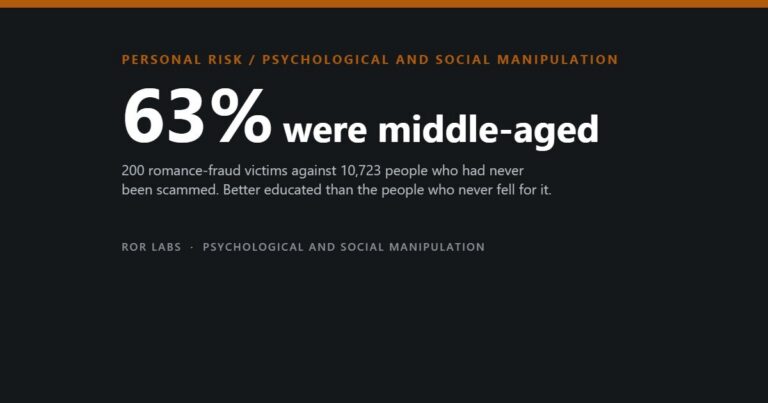
A comparison of 200 romance fraud victims with 10,723 people who were never scammed found victims middle-aged and better educated, with self-rated security knowledge predicting nothing. The current version of the fraud asks for an investment rather than a favour, stepping between the two standard warnings.
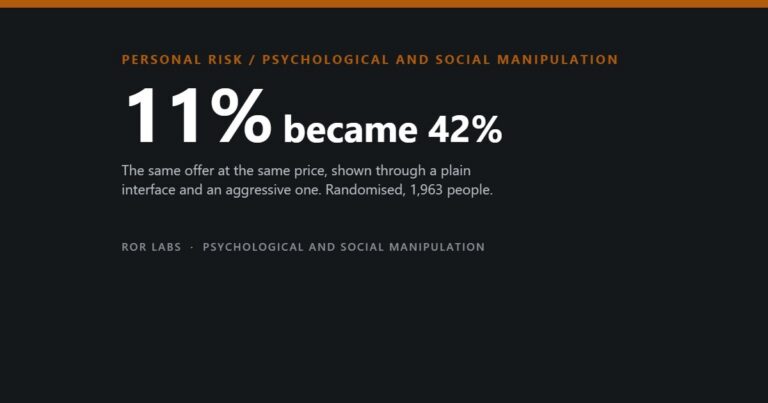
Randomised experiments show manipulative interface design nearly quadrupling acceptance of an unchanged offer, while raising its price fourfold changed nothing. What works, what is overstated, and why enforcement rather than vigilance is what altered the interfaces.