
Do Protests Work? What the Evidence Shows
Nonviolent campaigns succeeded about twice as often as violent ones in the 20th century, but success rates have fallen. What the research shows about protest, violence and personal risk.
War, conflict between states, deteriorating diplomatic relations, political instability, sanctions, abrupt policy change and geopolitical confrontation.
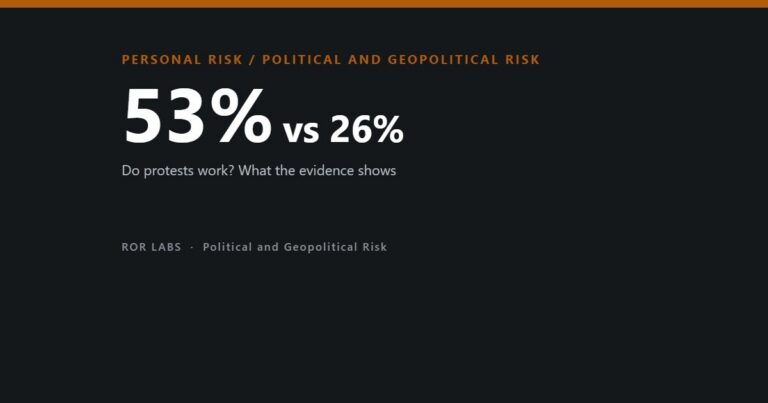
Nonviolent campaigns succeeded about twice as often as violent ones in the 20th century, but success rates have fallen. What the research shows about protest, violence and personal risk.

The famous 34% sanctions success rate fell to about 4% on re-examination. What research shows about whether sanctions work and who pays.

Mistaken eyewitnesses played a role in 76% of the first 250 US DNA exonerations. What research shows about confidence, lineups and wrongful convictions.
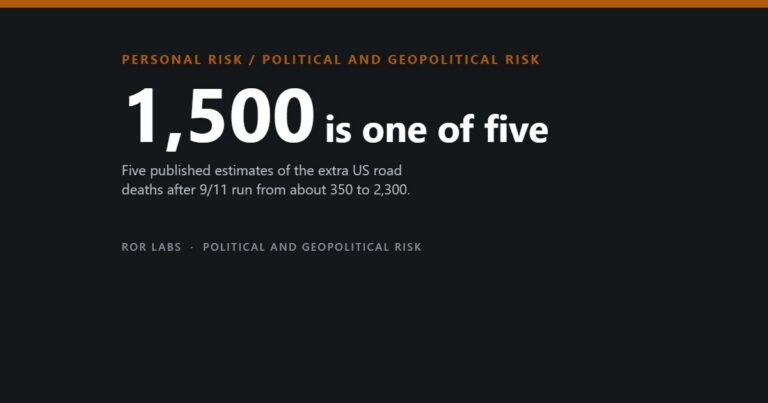
After 9/11 Americans drove instead of flying, and more died on the roads. The famous estimate is 1,500; published figures run from about 350 to 2,300. What the dread-risk research found, and why the second strike depends on the alternatives at hand.
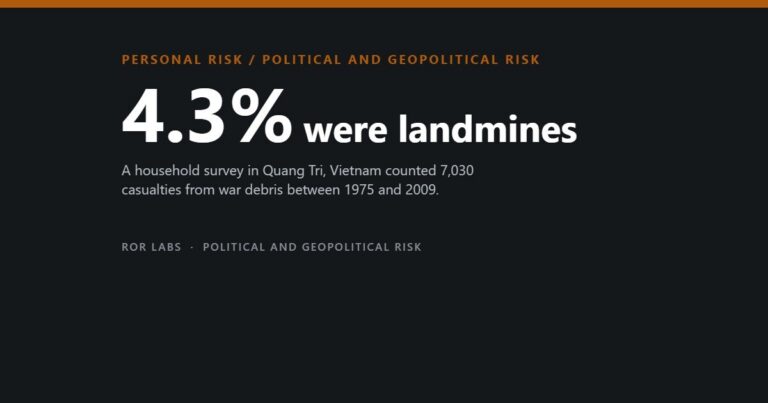
A household survey in one Vietnamese province found that only 4.3 per cent of 7,030 war-debris casualties came from landmines. What the casualty records show about explosive remnants of war, who dies, and the prevention programme nobody could measure.
In This Series: Personal Finance & Investing Why Most Stock Investors Lose Money: What the Evidence Actually Shows Options and Futures: Where Retail Money Actually Goes Two Retirees, the Same Returns, Only One Runs Out. The Difference Is the Order. Deposit Insurance Stops at $250,000. Since 2008, Uninsured Depositors Have Actually Lost Money in Six…
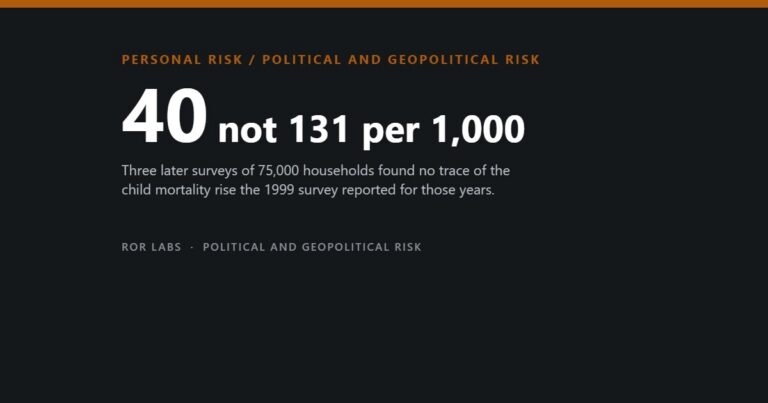
Key takeaways · 13 min read The half-million figure rests on one survey: the 1999 Iraq Child and Maternal Mortality Survey, about 38,000 households. It reported under-five deaths rising from 59 to 116 per 1,000 between 1990 and 1991, reaching 142 by 1998. Three later national surveys — 2004, 2006 and 2011, covering 75,000 households…
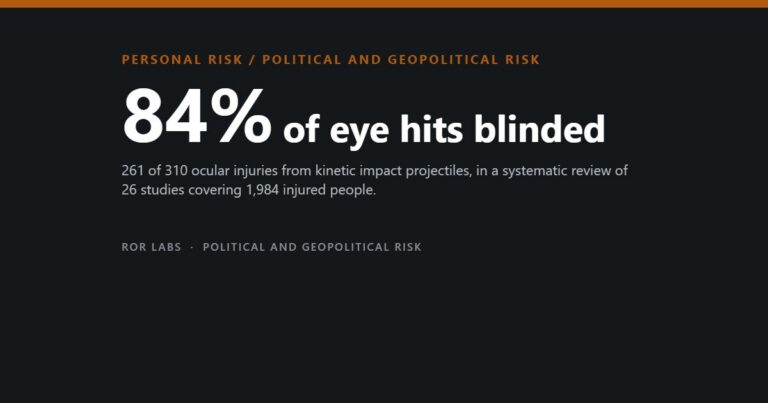
A systematic review of 26 studies found 1,984 people struck by kinetic impact projectiles: 53 died and 300 were permanently disabled. Neither that review nor its companion on tear gas can give you a rate, and both say so.
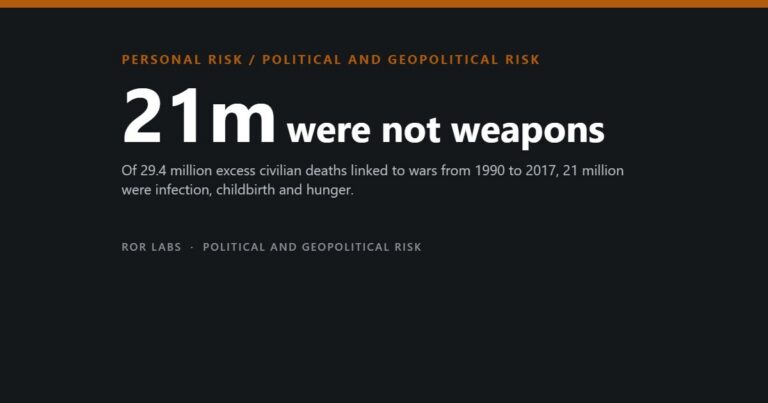
Key takeaways · 12 min read In the largest global analysis, wars between 1990 and 2017 were associated with 29.4 million excess civilian deaths after battle deaths had been removed from the data. 21.0 million of those were communicable, maternal, neonatal and nutritional; 6.0 million were non-communicable disease; 2.4 million were injuries other than combat,…
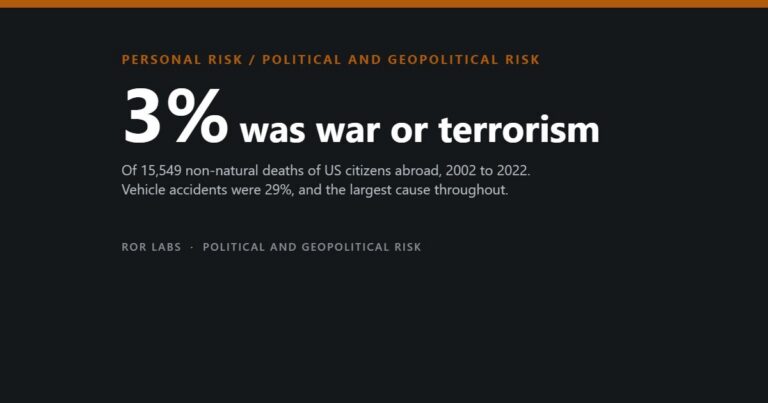
Two decades of consular records put war and terrorism at 3% of non-natural deaths of US citizens abroad and vehicles at 29%. What the advisory levels do not do, why the insurance excludes exactly this event, and why a government evacuation is a promissory note rather than a rescue.