Vitamin B12 food sources and the gate that takes two micrograms
Key takeaways · 10 min read
- Adults need 2.4 micrograms a day, and no upper limit has been set.
- A tablespoon of cooked clams holds 14.8 micrograms, more than six days’ worth, with liver close behind.
- Absorption runs through intrinsic factor, which handles about 1 to 2 micrograms at a time; at 1,000 micrograms only 1.3% is absorbed.
- Deficiency mostly comes from the gut rather than the diet: pernicious anaemia, low stomach acid, metformin, acid-suppressing drugs, surgery and a vegan diet without supplements.
In this article
- What vitamin B12 does, and how much you need
- Three foods by the spoonful
- The gate: a microgram or two at a time
- Who runs short: the gate breaks
- The cure that came from a liver
- What more B12 does not do
- Keeping B12 where it should be
- What the official pages say about vitamin B12
- Questions people ask
- The short version
- Sources
A tablespoon of cooked clams holds 14.8 micrograms of vitamin B12. An adult needs 2.4 micrograms a day, so that one spoonful carries more than six days’ worth. For most nutrients in this series, the tablespoon ranking puts a spice or a baking ingredient at the top. For B12 it puts real food there, clams and liver, and nothing on the list is strange.
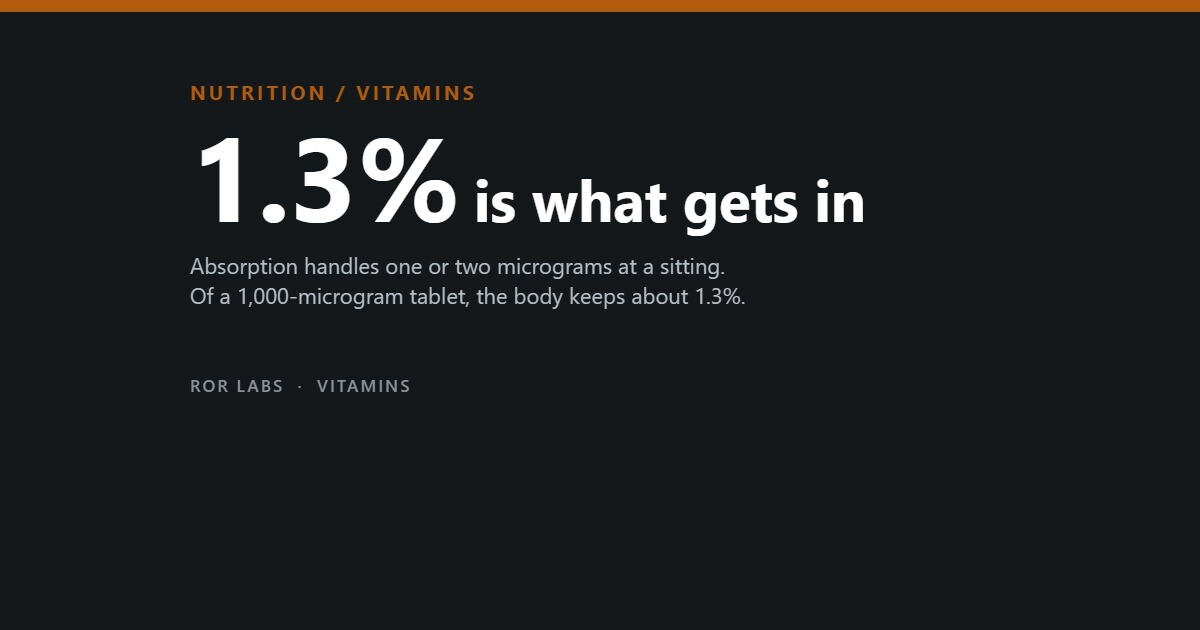
The trouble starts after the spoon. The gut takes up B12 through a narrow gate that handles only a microgram or two at a sitting, and pushing more through collapses the share absorbed: at a 1,000-microgram tablet dose, the kind sold in every pharmacy, the body keeps about 1.3%. Food is easy. Absorption is harder, and it is what fails in most people who run short.
The sections below cover what B12 does, which foods carry it, how the absorption gate works and who loses it, the liver diet that won a Nobel Prize, and what large doses do and do not fix.
What vitamin B12 does, and how much you need
Vitamin B12, or cobalamin, is needed to make red blood cells and DNA and to keep nerves working. The NIH Office of Dietary Supplements lists the results of running short: megaloblastic anaemia, fatigue, a sore tongue, pale skin, numbness and tingling in the hands and feet, and in time memory problems and dementia. These symptoms can take several years to appear, it notes.
The reference numbers for vitamin B12
US dietary reference intakes and average intakes from food, in micrograms per day.
Source: NIH Office of Dietary Supplements, vitamin B12 fact sheet for health professionals.
The Food and Nutrition Board set no upper limit because of B12’s low potential for toxicity. On paper, most Americans are covered: only 5% of men and 11% of women get less than the estimated average requirement of 2 micrograms from food and drink. The gap between that and the number who end up deficient lies in the gut rather than on the plate.
Three foods by the spoonful
The series ranks foods by what one level tablespoon (15 grams) delivers, using USDA per-100-gram values.
Vitamin B12 in one level tablespoon (15 g)
USDA FoodData Central, SR Legacy, nutrient 418. Percentages are of the 2.4-microgram adult recommendation. FDC identifiers given so the figures can be checked.
Source: USDA FoodData Central. Arithmetic on the per-100 g values: 15 g is 0.15 of the listed figure.
Clams, veal liver and lamb liver are the three, with beef liver close behind. Every one is a food people actually eat. The NIH’s own table lists 70.7 micrograms in three ounces of beef liver, 17 in three ounces of clams, 2.6 in the same weight of salmon, 1.3 in a cup of milk and 0.5 in a large egg.
The table also leaves something out. Microbes make B12, and plants do not, and the NIH lists no unfortified plant food as a source. Nutritional yeast appears in its table only because much of it is fortified, at 8.3 to 24 micrograms per quarter cup depending on the brand. Anyone who eats no animal products gets B12 from fortified foods or supplements, or not at all.
The gate: a microgram or two at a time
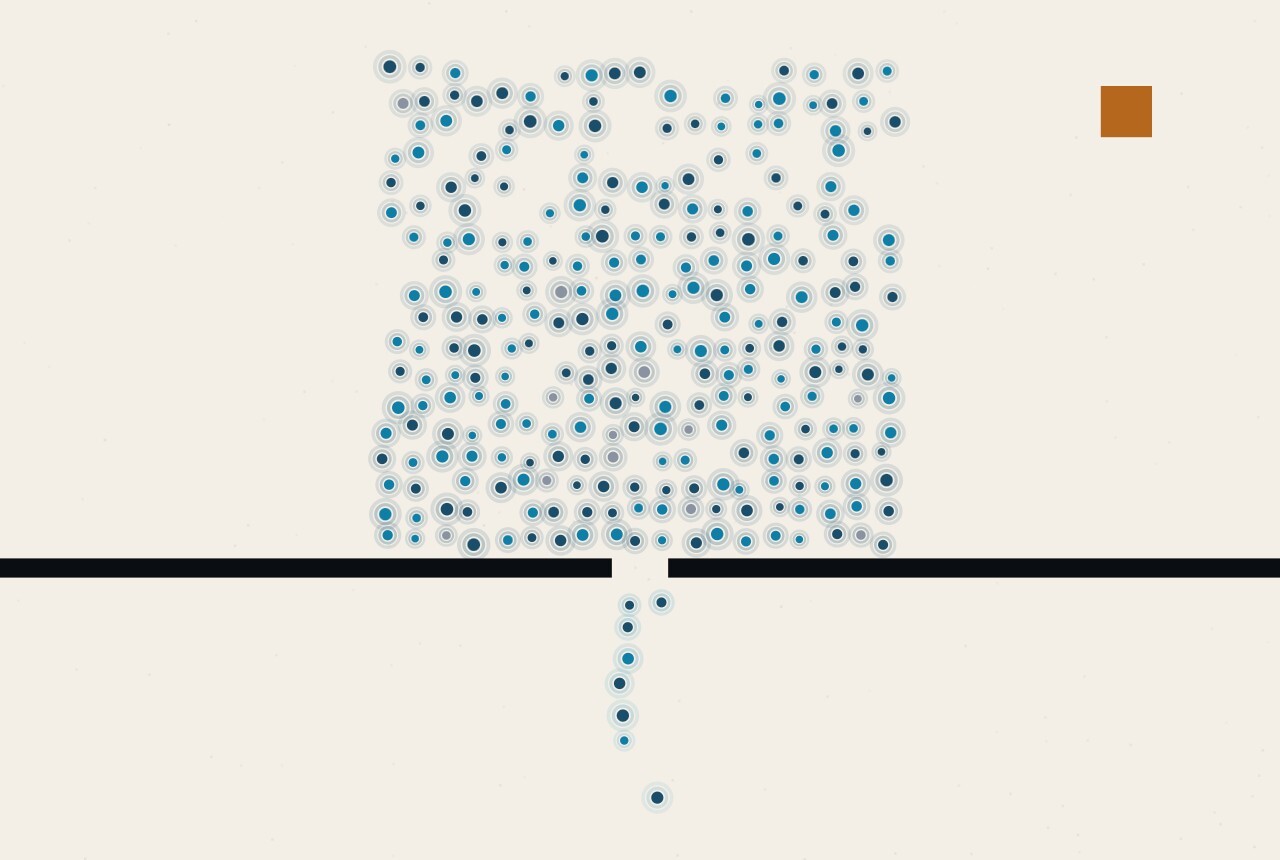
B12 in food is bound to protein. Stomach acid frees it, and it then pairs with intrinsic factor, a protein made in the stomach lining; only that pairing is taken up efficiently, far down the small intestine. Absorption is about 50% for doses of 1 to 2 micrograms, the amount intrinsic factor can handle, according to the NIH, and much lower above that.
How much of a dose the body absorbs
Share of an oral dose of vitamin B12 absorbed, by size of dose.
Source: NIH Office of Dietary Supplements, vitamin B12 fact sheet for health professionals.
A 1954 isotope study showed the shape of the curve. George Glass and colleagues fed labelled B12 to twenty healthy people and found absorption peaked at a dose of half a microgram. Raising the dose a hundredfold, to 50 micrograms, added only about one extra microgram to the amount absorbed. By that curve, most of the B12 in a spoonful of clams passes straight through.
This does not matter much, because the body keeps a large reserve. The NIH estimates stores of 1 to 5 milligrams, one to two thousand times a typical day’s intake, so deficiency is slow: a person can stop absorbing B12 and feel nothing for years while the store runs down.
Who runs short: the gate breaks
Diet explains little of most B12 deficiency. It happens when one of the steps before the gate fails.
Where vitamin B12 deficiency comes from
Selected groups and what the evidence shows.
Source: NIH ODS; Gilsing et al., Eur J Clin Nutr (2010); Aroda et al., J Clin Endocrinol Metab (2016); MHRA Drug Safety Update, June 2022.
According to the NIH, pernicious anaemia, an autoimmune loss of intrinsic factor, is the most common cause of clinically obvious deficiency worldwide. Atrophic gastritis reduces stomach acid, so B12 is not freed from food, and it affects 8% to 9% of adults aged 65 and over. Acid-suppressing drugs such as omeprazole can do the same, and gastric bypass surgery removes part of the machinery.
Diet does matter for one group. In the EPIC-Oxford cohort, 52% of vegan men were classed as deficient, against 7% of vegetarians and a single omnivore. Metformin, the most widely used diabetes drug, is the other large cause. In the Diabetes Prevention Program Outcomes Study, low B12 was more common with metformin at five years (4.3% against 2.3%), and each year of use raised the odds of deficiency by 13%. The UK’s medicines regulator called low B12 a common side effect in June 2022, affecting up to one in ten users, and advised checking levels in people with symptoms or risk factors.
One newer cause has nothing to do with food. Nitrous oxide, used recreationally from small canisters, inactivates B12 so that it can no longer do its job, and heavy users have presented with nerve damage and spinal cord degeneration. A 2021 clinical review warned that these patients often have normal serum B12 levels. The UK made possession of nitrous oxide for recreational use illegal on 8 November 2023, citing anaemia, nerve damage and paralysis among its harms.
The cure that came from a liver
Pernicious anaemia was usually fatal before anyone knew B12 existed. In 1926 George Minot and William Murphy reported that a diet heavy in liver reversed it in 45 patients. The work earned them, with George Whipple, the 1934 Nobel Prize in Physiology or Medicine “for their discoveries concerning liver therapy in cases of anaemia”. The active substance was isolated from liver in 1948 and named vitamin B12.
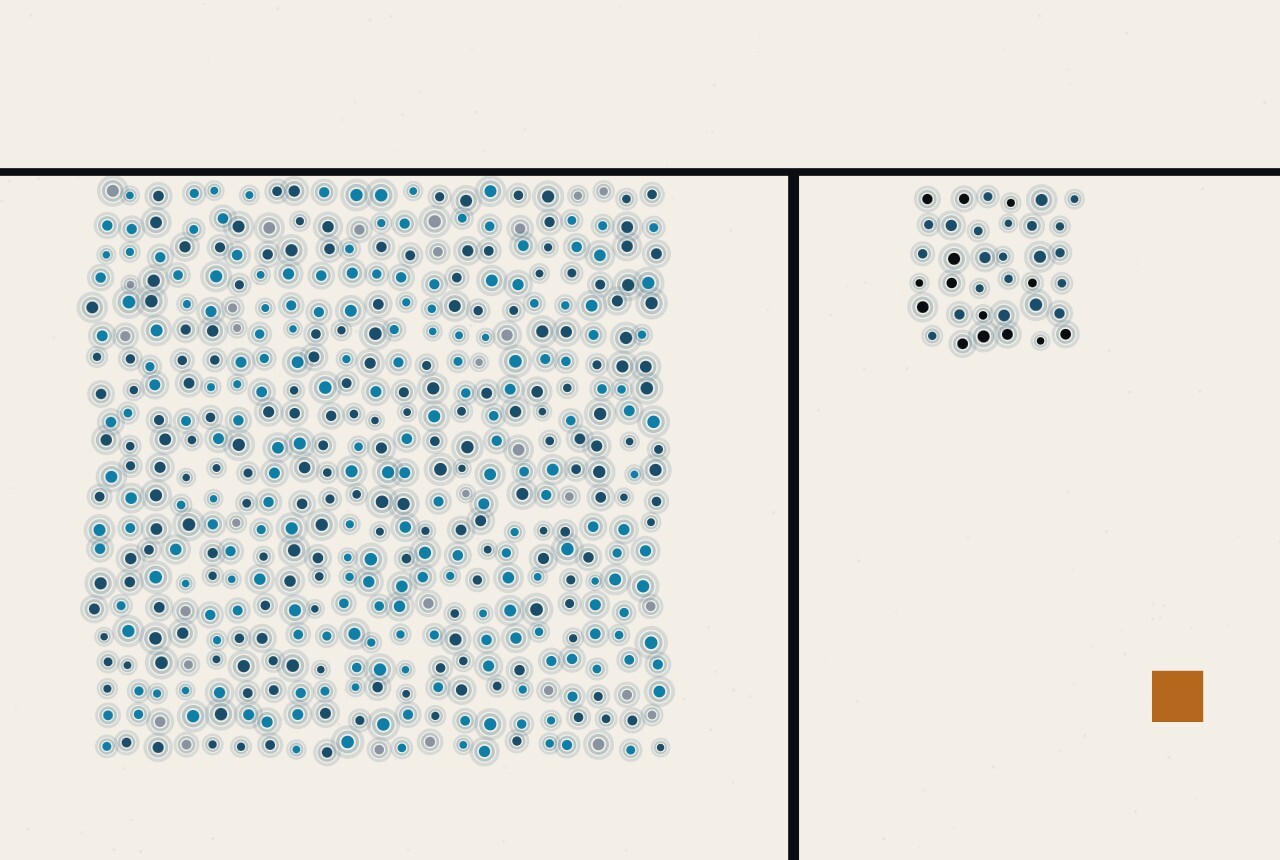
People with pernicious anaemia lack intrinsic factor, the very thing the gate needs, yet very large doses still work, because a small fraction of any dose crosses the gut without it. A 1954 report noted that massive oral doses produced an adequate response in these patients. Today’s 1,000-microgram tablets rely on that small fraction.
Tablets against injections
What the trials found when oral B12 was compared with intramuscular injections.
Source: NIH ODS summary of the 2018 Cochrane review; Sanz-Cuesta et al., BMJ Open 10(8):e033687 (2020); Duyvendak and Veldhuis (2009).
A 2018 Cochrane review of three randomised trials found that 1,000 to 2,000 micrograms by mouth normalised blood levels about as well as injections. In the OB12 trial in Madrid, with 283 people aged 65 and over, more than 90% were normal after eight weeks in both arms. Dose-finding studies in older people put the smallest effective daily dose between 647 and 1,032 micrograms. Injections remain the standard for severe neurological symptoms, where waiting is not an option.
What more B12 does not do
Deficiency causes fatigue, low mood and memory problems, and people who are not deficient widely take B12 for all three. The trials do not support it. A 2021 meta-analysis of 16 randomised trials with 6,276 participants found no effect of B12 alone, or combined with folic acid and B6, on any area of cognitive function or on depression. The NIH summarises the heart evidence the same way: B12 supplements, alone or with other B vitamins, do not prevent heart attacks or reduce death rates in people with or at risk of heart disease.
There is one interaction worth knowing about. High intakes of folic acid can correct the anaemia of B12 deficiency while doing nothing for the nerve damage, so the deficiency carries on unnoticed. That is the reason the upper limit for folic acid exists, and it is the subject of the folate article.
Keeping B12 where it should be
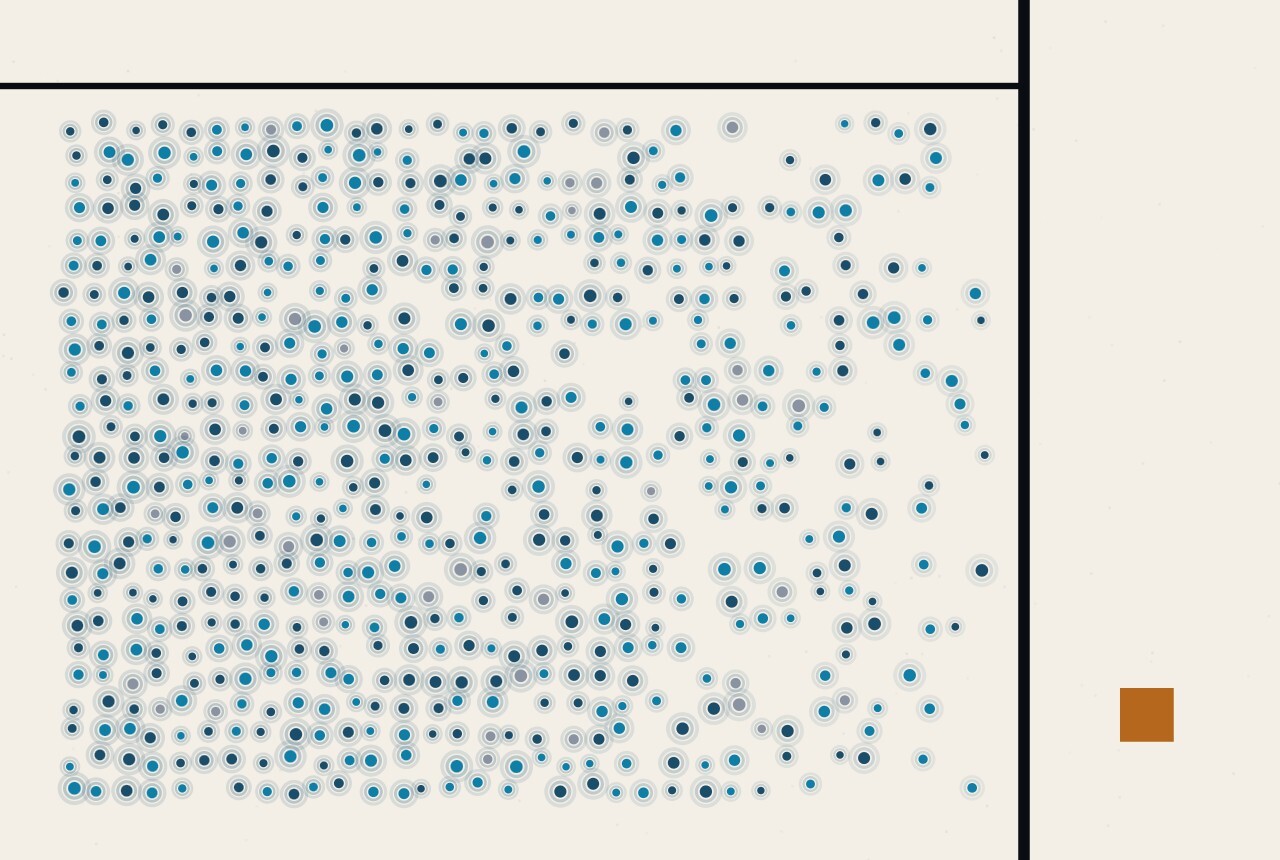
Intake takes care of itself for people who eat fish, meat, eggs or dairy, and people who eat no animal products need fortified foods or a supplement. For everyone else the question is absorption: older adults, people with pernicious anaemia or low stomach acid, people after stomach surgery, and long-term users of metformin or acid-suppressing drugs.
Testing makes sense for those groups, though serum B12 alone can mislead. Specialists increasingly combine it with other markers such as methylmalonic acid and homocysteine, which rise when B12 is not working inside the cell. If a deficiency is found, the treatment is simple, and the choice between tablets and injections is one to make with a doctor.
What the official pages say about vitamin B12
This section collects what US and UK government pages say about vitamin B12 amounts, high doses and who should ask a clinician. It is general information, not medical advice; talk to a doctor or pharmacist before taking supplements.
| Source | What it says |
|---|---|
| NIH Office of Dietary Supplements, Vitamin B12 consumer fact sheet (updated Dec. 15, 2023) | Adults: 2.4 mcg a day. Pregnancy: 2.6 mcg. Breastfeeding: 2.8 mcg. The page sets no numeric upper limit and says B12 has not been shown to cause harm even at high doses; it calls 500 or 1,000 mcg supplements safe while noting that only a small share is absorbed. |
| NIH ODS (same page) | Talk to a clinician if you have pernicious anaemia, atrophic gastritis, coeliac disease, Crohn’s disease or bowel surgery, follow a vegetarian or vegan diet (including in pregnancy and breastfeeding), or take gastric acid inhibitors or metformin. People over 50 may absorb food B12 poorly and are told to rely on fortified foods or supplements. The page does not discuss folate masking. |
| NHS, B vitamins and folic acid (last reviewed Aug. 3, 2020; the next review date has passed) | Adults 19–64 need about 1.5 micrograms a day. Supplements of 2 mg a day or less are unlikely to cause harm, though the page says there is not enough evidence on high doses. Vegans may not get enough from food. More than 1 mg of folic acid a day can mask B12 deficiency, and if untreated it can eventually damage the nervous system, which it flags as a particular concern for older people. |
| NIH ODS, folate, Folate consumer fact sheet (updated Nov. 1, 2022) | Large folate doses can correct the anaemia of B12 deficiency but not the nerve damage, which the page says can lead to permanent damage to the brain, spinal cord and nerves. |
| UK Expert Group on Vitamins and Minerals, hosted by the Food Standards Agency, 2003 report (May 2003) | Gives B12 a “Guidance Level” rather than a safe upper level and calls folic acid masking of B12 deficiency “indirect toxicity”. Doses up to 1 mg a day generally did not mask B12-related anaemia in most people; the effect of 1–5 mg was unclear. |
The amounts differ: 2.4 mcg for adults in the US, about 1.5 micrograms in the UK. The US page says high doses have not been shown to cause harm; the NHS says 2 mg or less is unlikely to cause harm and that evidence on higher doses is thin. We could not confirm the B12 guidance-level number in the 2003 UK report, because the copy we opened was cut off before it, and it is more than twenty years old. The NHS page is past its review date. Figures were read through automated page fetches, so confirm exact numbers on the live pages.
What to do
Steps sorted by when they matter. Each one says how strong the evidence is: Measured Official advice Untested
Before
- If you are vegan, take a B12 supplement or reliably fortified foods. In one British study half of vegan men were deficient. Measured see Sources
- If you take metformin or an acid-suppressing drug long term, ask your doctor about checking your B12. Keep taking metformin meanwhile. Official advice see Sources
- If you are deficient, ask whether tablets will do. Oral doses of 1,000 to 2,000 micrograms worked about as well as injections in trials. Measured see Sources
What not to do
- Do not take high doses for memory, mood or the heart if you are not deficient. Extra B12 did not improve them in trials. Measured see Sources
Not medical advice. Numbness, tingling, balance problems or unexplained anaemia need a doctor.
Who falls short on vitamin B12: OECD countries by sex and age
OECD average, 38 countries (modelled estimate)
| Age group | Women | Men |
|---|---|---|
| Children 5–14 | 13% | 11% |
| Teens 15–19 | 22% | 20% |
| Adults 20–49 | 21% | 19% |
| Adults 50–64 | 18% | 16% |
| 65 and over | 15% | 13% |
Population-weighted share with usual intake below the average requirement, from food including current fortification, excluding supplements. These are modelled estimates built from national diet data; they can differ from what national surveys measure (see the next table).
What national surveys measured
| Country and survey | Teens F / M | Adults F / M | Older F / M |
|---|---|---|---|
| United StatesNHANES 2017–Mar 2020, USDA ARS · below EAR | 20% / <3%14–18 | 11% / 3%31–50 | 10% / 7%71+ |
| CanadaCCHS-Nutrition 2015, Health Canada · below EAR | 15% / —14–18 | — | 15% / —71+ |
| AustraliaNNPAS 2023, ABS · below EAR | 14% / 4%12–17 | 16% / 6%30–49 | 12% / 8%75+ |
| JapanMINNADE 2016–20 (Shinozaki et al. 2023) · below EAR | 3% / 1%15–17 | 4% / 2%30–49 | 0% / 0%65–74 |
| United KingdomNDNS 2019–23 · below LRNI (lower cut-off) | 4% / 1%11–18 | 2% / 3%19–64 | 0% / 1%65–74 |
“—” means not published or too unreliable to publish. Surveys differ in year, age bands, reference values and method, so compare countries as a rough guide. The UK’s LRNI is a lower cut-off than the EAR, so its percentages run lower. Supplements are excluded.
Why countries, sexes and ages differ
- B12 occurs naturally only in animal foods, so vegetarians and vegans rely on fortified foods or supplements. (NIH ODS, Vitamin B12)
- Intake surveys can look fine while older adults still run low: atrophic gastritis affects 8–9% of people over 65 and blocks absorption of B12 from food, and metformin and acid-reducing drugs do the same. (NIH ODS, Vitamin B12)
- Women come out short more often than men in the global model. (Passarelli et al., Lancet Glob Health 2024)
- Why the model and surveys disagree: the model infers each country’s intake spread from median intakes, applies one harmonised set of requirements, and leaves out supplements (and, for some nutrients, fortification); surveys use national reference values and methods. (Passarelli et al., AJCN 2022)
Sources: Passarelli et al., Lancet Glob Health 2024; Global Datasets on Human Inadequate Nutrient Intakes (Harvard Dataverse, CC0, 2026; fortification from Friesen et al.); national surveys as linked in the table.
Questions people ask
Which food has the most vitamin B12?
Per tablespoon, cooked clams top the USDA data at 14.8 micrograms, followed by veal, lamb and beef liver. Per typical serving, the NIH lists three ounces of beef liver at 70.7 micrograms.
Why do B12 tablets contain 1,000 micrograms when I need 2.4?
Because absorption drops steeply above a microgram or two. At 1,000 micrograms about 1.3% is absorbed, roughly 13 micrograms, and some of that crosses without intrinsic factor.
Can you take too much vitamin B12?
No upper limit has been set, because B12 has a low potential for toxicity. That is no reason to take high doses without a deficiency.
Do vegans need a B12 supplement?
Yes, or reliably fortified foods. Unfortified plant foods are not a source, and in one British study half of vegan men were deficient.
Does metformin cause B12 deficiency?
It lowers B12 absorption, and the risk rises with years of use. UK guidance advises checking levels in users with symptoms or other risk factors; keep taking metformin and raise it with your doctor.
The short version
- Adults need 2.4 micrograms a day, and no upper limit has been set.
- A tablespoon of cooked clams holds 14.8 micrograms, more than six days’ worth, with liver close behind.
- Absorption runs through intrinsic factor, which handles about 1 to 2 micrograms at a time; at 1,000 micrograms only 1.3% is absorbed.
- Deficiency mostly comes from the gut rather than the diet: pernicious anaemia, low stomach acid, metformin, acid-suppressing drugs, surgery and a vegan diet without supplements.
- Oral doses of 1,000 to 2,000 micrograms work about as well as injections in trials.
- Extra B12 did not improve cognition, mood or heart outcomes in people who were not deficient.
This is a summary of published research, not medical advice. If you have numbness, tingling, balance problems or unexplained anaemia, take metformin or an acid-suppressing drug long term, have had stomach surgery, or follow a vegan diet, talk to your doctor or a registered dietitian about testing before starting or changing a supplement.
Further reading: Miller, Advances in Nutrition 9(4):511S (2018), on how acid-suppressing drugs and metformin affect B12 and how status is best measured. Markun et al., Nutrients 13(3):923 (2021), for the trials of B12 on cognition, mood and fatigue. Brunt, van den Brink and van Amsterdam, Addiction (2024), on nitrous oxide and B12-related nerve damage.
Sources
- NIH Office of Dietary Supplements, vitamin B12 fact sheet for health professionals: recommended amounts, the absence of an upper limit, average intakes and the share below the EAR, absorption at 1–2, 500 and 1,000 µg, body stores, food-serving values, pernicious anaemia incidence, atrophic gastritis prevalence, medication effects, deficiency symptoms, and the summaries of the Cochrane review and the cognition and cardiovascular trials.
- USDA FoodData Central, SR Legacy, nutrient 418; FDC identifiers are printed in the figure.
- Glass GBJ, Boyd LJ, Stephanson L. Proceedings of the Society for Experimental Biology and Medicine 86 (1954), doi:10.3181/00379727-86-21153.
- Gilsing AM, Crowe FL, Lloyd-Wright Z, et al. European Journal of Clinical Nutrition 64(9):933–939 (2010).
- Aroda VR, Edelstein SL, Goldberg RB, et al. Journal of Clinical Endocrinology and Metabolism 101(4):1754–1761 (2016).
- MHRA, Drug Safety Update, metformin and reduced vitamin B12 levels (June 2022).
- Evans EB, Evans MRB. Australian Journal of General Practice (2021).
- UK Home Office, possession of nitrous oxide is now illegal (8 November 2023).
- Nobel Prize in Physiology or Medicine 1934, nobelprize.org.
- Monto RW. Archives of Internal Medicine (1954), doi:10.1001/archinte.1954.00240260055005.
- Sanz-Cuesta T, Escortell-Mayor E, del Cura-González I, et al. BMJ Open 10(8):e033687 (2020).
- Duyvendak M, Veldhuis GJ. Nederlands Tijdschrift voor Geneeskunde (2009).
- Markun S, Gravestock I, Jäger L, et al. Nutrients 13(3):923 (2021).
- Miller JW. Advances in Nutrition 9(4):511S–518S (2018).
- NIH ODS, Vitamin B12 consumer fact sheet; NHS, B vitamins and folic acid; NIH ODS, Folate consumer fact sheet; UK Expert Group on Vitamins and Minerals, 2003 report.