The Leading Cause of House Fires Is a Pan Nobody Is Watching
In This Series: Home Hazards & Indoor Environment
- The Safe Level of Air Pollution Keeps Moving Down
- The Mould Is Not the Problem. The Water Is.
- Nine Million Homes Still Drink Through a Lead Pipe
- It Looks Exactly Like Flu, Except for the Fever
- Lithium-Ion Battery Fires at Home: What the Research Actually Shows
- Your Gas Stove and the Air in Your Kitchen: What the Measurements Found
- Power Outages Are Getting Longer. The Generator Is the Dangerous Part.
Disclosure: this article contains affiliate links, marked (paid link). If you buy through one we may earn a commission, at no extra cost to you. As an Amazon Associate I earn from qualifying purchases. It costs you nothing and it does not change what we recommend.
Key takeaways · 7 min read
- Cooking is the leading cause of home fires and home fire injuries — about 170,000 residential cooking fires in 2021.
- The biggest contributing factor was unattended equipment, 37%. Not wiring, not appliances.
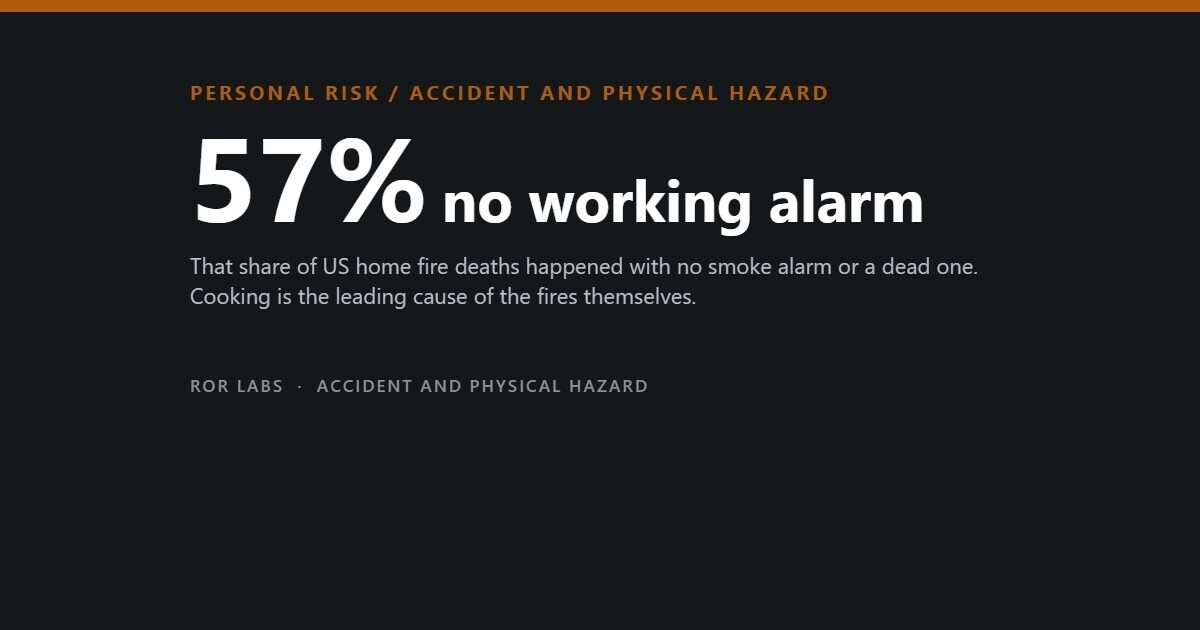
- 57% of home fire deaths occurred where there was no alarm (40%) or no working alarm (17%).
- The death rate is 12.3 per 1,000 fires without a working alarm versus 5.7 with one — roughly a 60% risk reduction.
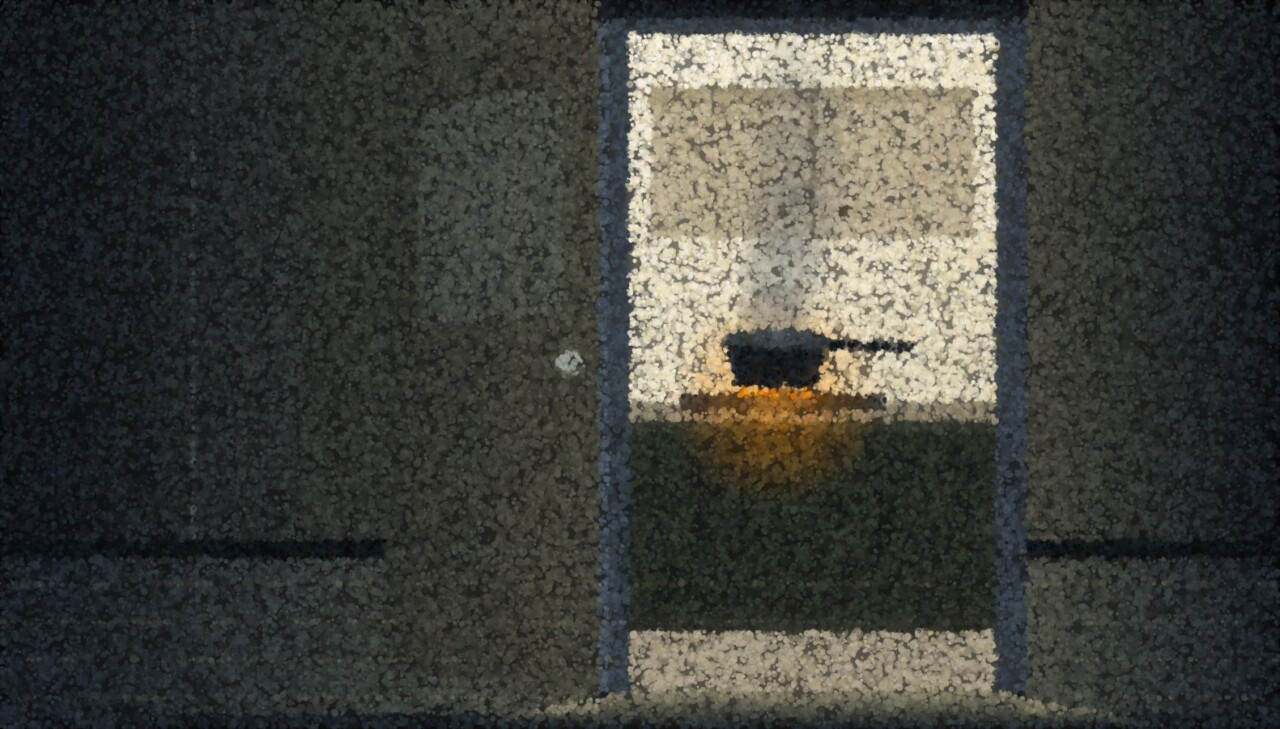
Ask anyone to picture a house fire and they will describe faulty wiring, a candle, a cigarette, or a Christmas tree. The actual leading cause is a pan on a hob with nobody standing next to it. Cooking is the number one cause of home fires and home fire injuries in the United States, and it has been for a very long time.
That gap between what people fear and what actually burns houses down matters, because it means most fire-safety effort is aimed slightly to the left of the target. The second gap is worse: the thing that most reliably keeps people alive is already installed in most homes and has usually stopped working.
The kitchen is the fire risk
Residential cooking fires in a single year
U.S. Fire Administration, 2021 residential fire data.
Source: U.S. Fire Administration, cooking fire safety data (2021).
Notice the shape of those numbers. Cooking produces an enormous number of fires and a comparatively small number of deaths, because they start in a room where somebody usually is, and get caught early. That is the opposite profile to a fire that starts at 3am in a wall cavity.
Which points at the real lesson: the frequent risk and the deadly risk are not the same risk, and they need different countermeasures. Attention handles the first. An alarm handles the second.
Almost three in five fire deaths happen where the alarm was missing or dead
Home fire deaths by smoke alarm status
NFPA analysis of U.S. home fires, 2012–2016.
Source: National Fire Protection Association, “Smoke Alarms in US Home Fires” (data years 2012–2016).
Death rate per 1,000 reported home fires
With a working smoke alarm versus without one.
Source: National Fire Protection Association smoke alarm research; NFPA press materials, September 2024.
And here is the part that turns this from a statistic into a job for this weekend. When alarms were present but did not operate, the reason was almost always the battery. Dead batteries accounted for about a quarter of failures; batteries that had been removed or disconnected accounted for over 43%.
People do not remove smoke alarm batteries out of carelessness. They remove them because the alarm goes off while they are cooking. Which closes the loop rather neatly: the leading cause of home fires is also the leading cause of people disabling the device that would warn them about one.
What to do when a pan catches fire
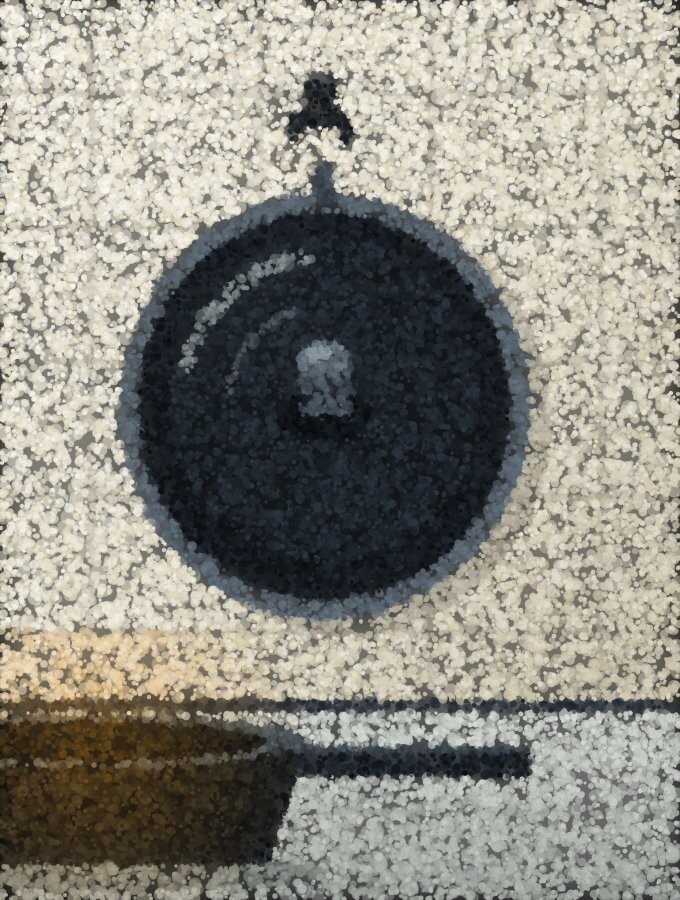
This is worth reading before you need it, because the instinctive response is the one that causes the injuries. A grease fire hit with water produces a violent steam explosion that throws burning oil across the room. Carrying a burning pan to the sink or the door spreads the fire along your route and puts it against your body.
Pan fire: the sequence
U.S. Fire Administration guidance.
Source: U.S. Fire Administration, cooking fire safety guidance.
The alarm audit worth doing this weekend
Five checks, about fifteen minutes
Most homes fail at least one of these.
Sources: NFPA smoke alarm research; CPSC/NIST household smoke alarm survey (published September 2024).
What is worth having in a kitchen (paid link)
Small, specific, and aimed at the failure modes above.
Browse on Amazon →
Browse on Amazon →
Browse on Amazon →
We are not pushing a kitchen fire extinguisher as the first purchase. Extinguishers are worth owning, but a pan fire is better handled by a lid or a blanket, and an extinguisher discharged at a pan of oil at close range can spray burning liquid. If you buy one, it belongs by the exit rather than beside the hob, so reaching it never means walking toward the fire.
Questions people ask
Ionization or photoelectric?
They detect different fires. Ionization responds faster to fast-flaming fires; photoelectric responds faster to smouldering ones — a cigarette in upholstery, wiring behind a wall — which are the fires most likely to kill people while they sleep. Photoelectric is also far less prone to false alarms from cooking steam, which matters because false alarms are why batteries get pulled. Dual-sensor units cover both.
How long do I actually have?
Less than you would guess, and much less than a generation ago. Modern furnishings are largely synthetic and burn far faster than the wood and cotton in older homes, which has compressed escape time from a matter of minutes to, in some full-scale tests, under three. That is the argument for practising the route rather than planning to improvise.
Should I close bedroom doors at night?
Yes. A closed interior door meaningfully slows smoke and heat and buys time on the other side. It is free, and it is one of the few fire-safety measures with no trade-off at all — provided there is a working alarm inside the room to wake you, since the same door that blocks smoke also muffles an alarm in the hallway.
Do I need to worry about my dryer?
It is a real but much smaller category than cooking, and the fix is unglamorous: clear the lint filter every load and have the vent duct cleared periodically. The risk is accumulated lint plus heat, not a design fault.
The short version
- Cooking is the leading cause of home fires and home fire injuries — about 170,000 residential cooking fires in 2021.
- The biggest contributing factor was unattended equipment, 37%. Not wiring, not appliances.
- 57% of home fire deaths occurred where there was no alarm (40%) or no working alarm (17%).
- The death rate is 12.3 per 1,000 fires without a working alarm versus 5.7 with one — roughly a 60% risk reduction.
- When alarms failed, over 43% had batteries removed or disconnected. Usually because of cooking false alarms.
- Alarms expire. Check the manufacture date and replace at ten years.
- Pan fire: slide a lid on, turn off the heat, leave it. Never water, never carry it.
- Close bedroom doors at night — free, and it buys time.
On the links above: some are affiliate links, marked (paid link). If you buy through one we may earn a commission at no additional cost to you. As an Amazon Associate I earn from qualifying purchases. We link to product searches rather than specific items so recommendations do not break as models change, and we say plainly when we are choosing not to link something. Full policy: Affiliate Disclosure.
Sources
- U.S. Fire Administration. Cooking fire safety and residential fire statistics (2021 data).
- National Fire Protection Association. “Smoke Alarms in US Home Fires.” Research report, data years 2012–2016.
- National Fire Protection Association. Smoke alarm data release and Fire Prevention Week materials, September 2024.
- U.S. Consumer Product Safety Commission, Fire Protection Research Foundation and NIST. Household smoke alarm survey, published September 2024.