Skiing ACL injuries, and the 62% drop that came from watching videos
Key takeaways · 10 min read
- Recreational skiers tear about 0.23 ACLs per 1,000 skier days; in one Austrian study 54% of injured skiers were hurt on easy blue runs.
- Typical recreational mechanisms are a twisting forward fall, the backward “phantom foot” fall and boot-induced landings; racers mostly tear it in a slip-catch mid-turn.
- Icy, fresh and grippy snow, cold, worn boot soles and rented gear are all linked to more ACL tears; bindings protect the shin but not reliably the knee.
- Video-based awareness training cut serious knee sprains by 62% in ski staff in 1995; it has never been tested in the general public.
On 30 January 2026 Lindsey Vonn, 41, crashed into the safety nets during a World Cup downhill at Crans-Montana. Four days later she told reporters she had completely ruptured the anterior cruciate ligament in her left knee, with bone bruising and meniscal damage, and would still try to race the Olympic downhill in a brace. On 8 February she crashed early in that race in Cortina and was flown off the mountain with a broken left leg.
Most torn ACLs on ski slopes belong to people nobody films. In a six-season study at an Austrian ski-area clinic, 392 recreational skiers with MRI-confirmed tears were on average about five years older than uninjured skiers on the same slopes, and 54% were hurt on easy blue runs. US data put the rate at about 0.23 ACL injuries per 1,000 skier days. The knee is already the commonest skier injury, as our earlier article on skiing and snowboarding injuries showed.
This article covers how the ligament tears, which skiers, snow and equipment carry the most risk, what has been measured to bring the numbers down, and why the sensible response is to ski carefully rather than hang up the skis. It ends with practical steps that have at least some evidence behind them.
What actually happens to the knee
The ACL runs through the middle of the knee and stops the shin bone sliding forward and twisting under the thigh. Skis act as long levers on it. Researchers describe three common recreational patterns: a forward fall where the inside edge catches and the knee twists outward, the “phantom foot”, and the boot-induced injury. The phantom foot happens when a skier falls backwards with the hips below the knees and all the weight on the inside edge of the downhill ski’s tail; the ski carves sharply inward and the knee rotates.
The boot-induced injury comes from landing a jump off balance on a straight leg: the back of the stiff boot drives the shin forward out from under the thigh. When injured skiers in one US study picked the description closest to their own fall, the outward-twisting forward fall came first. A later review warns that such recall is unreliable.
How recreational skiers say their ACL tore
Share of ACL-injured skiers choosing each mechanism in a US survey (Shea et al.), as summarised in a later review. Self-reported, so treat the order as approximate.
Source: Davey, Endres, Johnson & Shealy, Sports Health (2019), reporting Shea et al.
Racers tear the ligament differently. A Norwegian team obtained video of 20 ACL injuries reported to the International Ski Federation’s surveillance system over three World Cup seasons. Half were “slip-catch” injuries: the outer ski lost grip mid-turn and, as the skier extended the knee to regain it, the inside edge caught abruptly. The rest were back-weighted landings or a “dynamic snowplow”. Among 521 World Cup skiers, the knee accounted for 36% of injuries and ACL tears were the commonest single diagnosis.
Bindings do not solve this. They were designed to protect the shin, and they did: the risk of injury below the knee has fallen by almost 90% since the early 1970s. Vermont researchers wrote in 1999 that they knew of no binding design or setting that protects the knee as well. In a Japanese survey of 80 ACL-injured recreational skiers, 96% said their bindings had not released.
Where the risk concentrates
The US figure of 0.23 ACL injuries per 1,000 skier days is close to the 0.2 per 1,000 athlete-exposures calculated for female football players, a group known for ACL tears, and well above 0.09 for male players. Exposure units differ, so the comparison is rough. Among recreational skiers, women are about three times as likely as men to tear the ligament; a 2025 systematic review found odds ratios from 1.21 to 6.0 across studies.
At World Cup level the gap shrinks or disappears. The Norwegian surveillance study found no difference between men and women in ACL risk (relative risk 1.08). The Austrian Ski Federation, with 22 seasons of data, found female World Cup racers had 1.65 times the risk of severe ACL injury. Austrian researchers argued in 2026 that racers and holiday skiers face such different slopes and speeds that their risk factors should not be pooled.

Snow matters more than weather. The Austrian clinic compared its 392 ACL-injured skiers with 392 uninjured skiers interviewed in the same ski area, matched for sex and ability. Against soft or slushy snow, icy pistes carried 12.4 times the odds of an ACL tear, fresh snow 10.5 times and grippy snow 7.8 times. Feeling cold added 1.6 times. Each extra five years of age raised the risk by about 25%.
The easy-slope finding looks odd until you think about who skis there. Beginners cluster on blue runs, and most runs back to the lift are gentle; more skilled skiers may relax and speed up on them. The authors note that cold muscles generate force more slowly, which may weaken the hamstrings’ protection of the ligament, and suggest warmer clothing and more frequent breaks.
Snow, slope and ACL tears
Adjusted odds of an ACL injury in recreational skiers, from a matched case-control study of 784 skiers at one Austrian ski area, 2014–2020.
Source: Posch, Ruedl, Greier et al., International Journal of Sports Medicine 44:1003 (2023).
The same Innsbruck group measured the skis and boots of 1,817 skiers. Rented or borrowed skis, risk-taking, boot soles worn down by walking on tarmac, and a binding whose heel sits barely higher than its toe were all linked to ACL tears. Uninjured skiers had a front-to-rear standing height ratio of 88% to 89%; injured skiers had 95% to 96%, a flatter boot position.
Who tears an ACL: skier and equipment factors
Odds ratios from Austrian case-control studies of recreational skiers, adjusted for other factors; the 2022 figure compares all renters with owners. 95% confidence intervals in brackets.
Sources: Ruedl et al., Orthopaedic Journal of Sports Medicine (2023); Ruedl et al., IJERPH 19(17):11124 (2022).
Rental skis may not be the culprit in themselves. Renters in the 2022 analysis were more often female, tourists and less skilled, and the authors say it is unclear whether the equipment, its maintenance or its users explain the link. Worn boots and badly set-up gear are still worth checking.
What has been measured to work
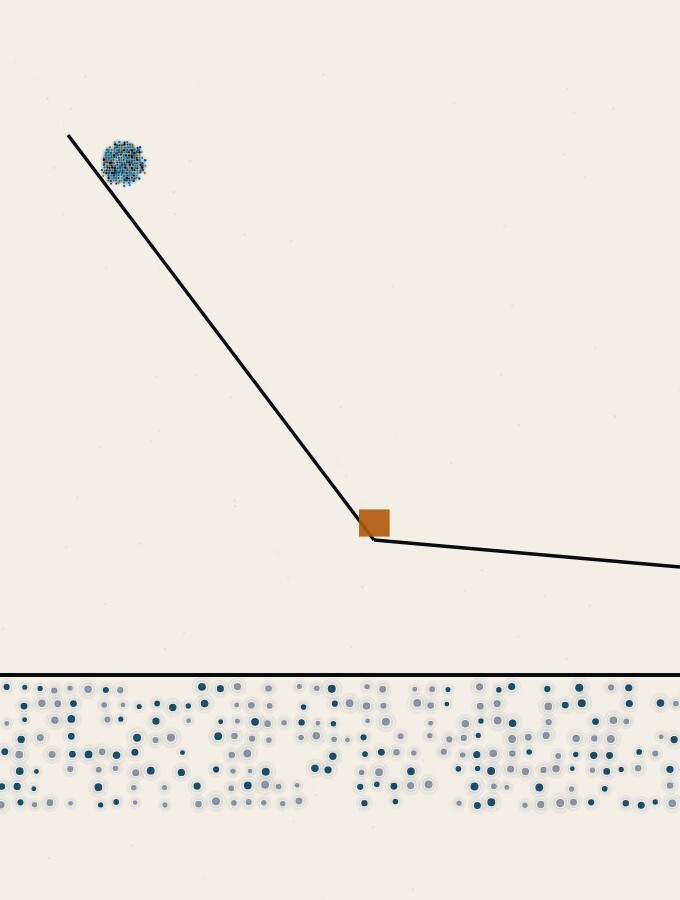
The best-known result comes from Vermont. Carl Ettlinger, Robert Johnson and Jasper Shealy had studied more than 1,400 ACL injuries over 22 years and identified the phantom foot and boot-induced mechanisms from video. In the 1993–94 season, ski patrollers and instructors at 20 ski areas watched videotaped scenes of real knee injuries and were trained to recognise the situations that lead to ACL injury and how to respond to them.
Serious knee sprains fell by 62% among the trained staff compared with the two previous seasons, while staff at 22 untrained ski areas showed no decline. The study covered 179 serious knee sprains. A 1999 review by the same group called it the only study to have shown a way to reduce these injuries, and it involved educating skiers, not changing equipment.
What prevention has measured
Falls in injury compared with controls or earlier seasons, and the state of bindings found on Austrian slopes. Ski-staff figures are from a non-randomised comparison.
Sources: Ettlinger, Johnson & Shealy, Am J Sports Med 23(5):531 (1995); Clar et al., KSSTA (2024), pooled risk ratio 0.36; Boldrino et al., Int J Injury Control & Safety Promotion 3(1):39 (1996), 351 skiers.
Binding checks remain worth doing, but for a different reason than many skiers assume. When Austrian researchers tested 351 skiers’ bindings on the slopes, 38% released more than 20% away from the calculated value and only about one in five was correctly adjusted. Properly set, tested bindings prevent lower-leg fractures. A Dutch case-control study linked non-release to 3.3 times the odds of a lower-limb injury, though it found no effect of when or by whom the binding had been adjusted.
Neuromuscular training is the strongest prevention evidence in other sports. A 2024 meta-analysis of 11 controlled studies and 16,316 athletes found ACL injury risk 64% lower with prevention programmes, with 71 athletes trained to prevent one tear. But the athletes mostly played football, handball, basketball and volleyball. No comparable trial has been run in recreational skiers, so whether squats, landing drills and balance work transfer to the slopes is an educated guess.
The famous 62% deserves a caveat. It comes from one study published in 1995, in ski employees who spend all season on snow, with no randomisation. A later review by the Vermont group noted that a similar study has never been done in the general skiing public. The Austrian case-control numbers have their own weakness: injured skiers describe the snow after the fact, perhaps looking for an explanation, while controls describe a whole day.
Why the answer is not to stop skiing
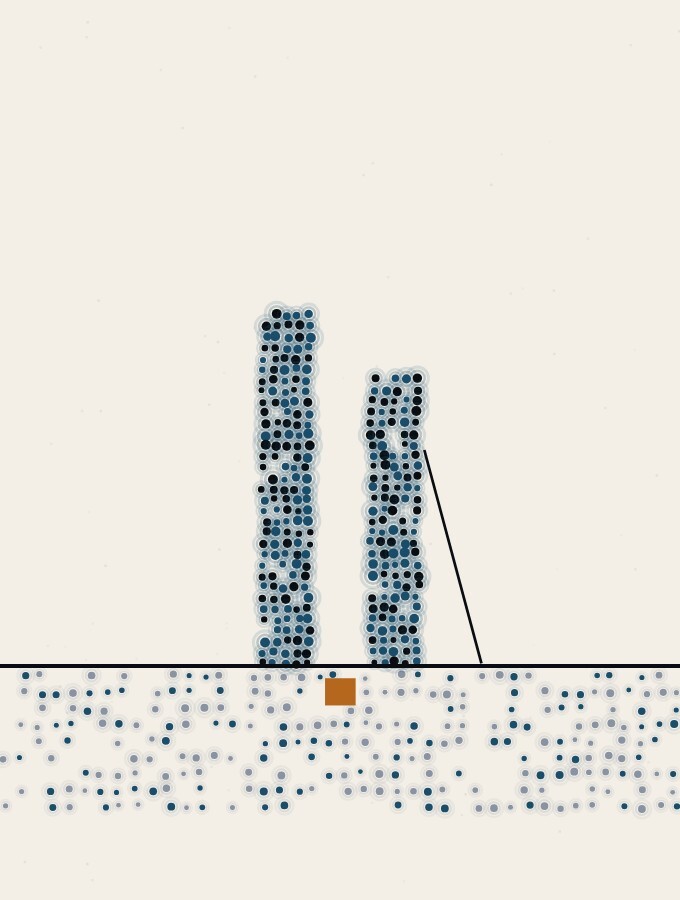
At 0.23 ACL injuries per 1,000 skier days, a skier has roughly one such injury for every 4,300 days on snow. Most knees survive a lifetime of holidays. And much of the risk sits in things a skier can change: equipment set up and checked properly, attention on icy or flat stretches, and knowing which positions put the ligament in danger.
A torn ACL is not the end of skiing either, though recovery is slower than many expect. Across 48 studies and 5,770 patients, 82% had returned to some sport after reconstruction, but only 63% to their previous level. In a three-year study of 5,646 employees at a large ski resort, reconstructed knees had 3.1 times the injury rate of intact knees, and knees left without an ACL 6.2 times.
After the tear
Return to sport after ACL reconstruction (all sports), damage found alongside ACL tears in skiers, and long-term arthritis in knees left without an ACL.
Sources: Ardern et al., Br J Sports Med (2011); Featherall et al., systematic review (2023); Magnussen et al., Cartilage (2013).
The longer view matters most. In a long-term follow-up and review, about 40% of ACL-deficient knees had osteoarthritis after 15 years and close to 90% after 25 to 35; whether reconstruction lowers that risk remains unclear, and a damaged meniscus is a strong predictor. So ski carefully: have bindings checked by a technician each season, avoid long walks in ski boots, warm up in the cold, slow down on ice and flat run-outs, and try not to get caught leaning back.
What to do
Steps sorted by when they matter. Each one says how strong the evidence is: Measured Official advice Untested
Before
- Have bindings checked and set by a technician each season. In one Austrian test only about one in five was correctly adjusted. Measured see Sources
- Check boot soles for wear and avoid long walks on tarmac in ski boots; worn toe soles were linked to more ACL tears. Measured see Sources
- Build leg strength, balance and landing control. Prevention programmes cut ACL injuries by about two thirds in team sports, though they are untested in skiers. Measured see Sources
If it happens
- Slow down on icy pistes and flat run-outs, and warm up or take a break when you feel cold. Measured see Sources
- Avoid sitting back with the hips below the knees, the position behind the phantom-foot injury. Official advice see Sources
Afterwards
- After a pop, rapid swelling or a knee that gives way, stop skiing and see a doctor or physiotherapist. Official advice see Sources
What not to do
- Do not rely on bindings to protect the knee; they protect the shin far better than the ACL. Official advice see Sources
Not medical advice. If you hurt your knee skiing, see a doctor or physiotherapist before skiing again.
Questions people ask
Will my bindings protect my knee?
Not reliably. Modern bindings protect the shin well, but forces that tear the ACL, especially in a backward twisting fall, can occur without a correctly set binding releasing.
Are women more likely to tear an ACL skiing?
Among recreational skiers, yes: about three times as likely in Austrian studies. Among World Cup racers the difference is small or absent, which suggests anatomy is not the whole story.
Can exercise prevent ski ACL injuries?
Prevention programmes cut ACL injuries by about two thirds in team sports. They have not been tested in recreational skiers, but strength, balance and landing control are unlikely to hurt and may help.
Can I ski again after an ACL tear?
Many people do, usually after reconstruction or structured rehabilitation. Discuss timing and the risk of a second injury with your surgeon or physiotherapist.
The short version
- Recreational skiers tear about 0.23 ACLs per 1,000 skier days; in one Austrian study 54% of injured skiers were hurt on easy blue runs.
- Typical recreational mechanisms are a twisting forward fall, the backward “phantom foot” fall and boot-induced landings; racers mostly tear it in a slip-catch mid-turn.
- Icy, fresh and grippy snow, cold, worn boot soles and rented gear are all linked to more ACL tears; bindings protect the shin but not reliably the knee.
- Video-based awareness training cut serious knee sprains by 62% in ski staff in 1995; it has never been tested in the general public.
- Most people return to some sport after reconstruction, but repaired knees are reinjured more often and arthritis is common in the long run.
This is a summary of published research, not medical advice. If you hurt your knee skiing, especially with a pop, rapid swelling or a feeling that the knee gives way, see a doctor or a physiotherapist before skiing again.
Further reading: Ettlinger, Johnson & Shealy, American Journal of Sports Medicine 23(5):531 (1995), for the awareness training study. Posch et al., International Journal of Sports Medicine 44:1003 (2023), for snow conditions. Davey et al., Sports Health (2019), for a review of ski injuries by the Vermont group.
Sources
- Dampf A. Lindsey Vonn ‘confident’ she can race at Olympics with ruptured ACL in left knee. Associated Press, via Boston.com, 3 February 2026.
- Dampf A, Graham P. Lindsey Vonn breaks leg in downhill crash at Winter Olympics, in stable condition after surgery. Associated Press, via ABC13, 8 February 2026.
- Posch M, Ruedl G, Greier K, Faulhaber M, Tecklenburg K, Schranz A, et al. Impact of environmental factors on the ACL injury risk in recreational alpine skiing. International Journal of Sports Medicine 44:1003–1008 (2023), doi:10.1055/a-2134-3908.
- Davey AP, Endres NK, Johnson RJ, Shealy JE. Alpine skiing injuries. Sports Health (2019), doi:10.1177/1941738118813051.
- Vermont Ski Safety Equipment. ACL awareness tips (phantom foot and boot-induced scenarios), vermontskisafety.com, accessed October 2026.
- Bere T, Flørenes TW, Krosshaug T, Koga H, Nordsletten L, Irving C, et al. Mechanisms of anterior cruciate ligament injury in World Cup alpine skiing: a systematic video analysis of 20 cases. American Journal of Sports Medicine (2011), doi:10.1177/0363546511405147.
- Flørenes TW, Bere T, Nordsletten L, Heir S, Bahr R. Injuries among male and female World Cup alpine skiers. British Journal of Sports Medicine 43(13):973 (2009), doi:10.1136/bjsm.2009.068759.
- Natri A, Beynnon BD, Ettlinger CF, Johnson RJ, Shealy JE. Alpine ski bindings and injuries. Sports Medicine 28(1) (1999), doi:10.2165/00007256-199928010-00004.
- Urabe Y, Ochi M, Onari K, Ikuta Y. Anterior cruciate ligament injury in recreational alpine skiers: analysis of mechanisms and strategy for prevention (2002), doi:10.1007/s776-002-8405-7.
- Ruedl G, Webhofer M, Linortner I, Schranz A, Fink C, Patterson C, et al. ACL injury mechanisms and related factors in male and female carving skiers: a retrospective study. International Journal of Sports Medicine (2011), doi:10.1055/s-0031-1279719.
- Bhatt AM, Lucido MF, Delbourgo Patton C, Brown E, Inclan PM, Pearle AD. Multiple intrinsic and extrinsic factors increase the risk of anterior cruciate ligament injury in skiers: a systematic review. Arthroscopy (2025), doi:10.1016/j.arthro.2025.07.027.
- Barth M, Platzer HP, Giger A, Nachbauer W, Schröcksnadel P. Acute on-snow severe injury events in elite alpine ski racing from 1997 to 2019: the Injury Surveillance System of the Austrian Ski Federation. British Journal of Sports Medicine (2020), doi:10.1136/bjsports-2020-102752.
- Ruedl G, Posch M, Burtscher M. Risk factors for an anterior cruciate ligament injury are hardly comparable between ski racers and recreational alpine skiers. Letter (2026), doi:10.1002/arj.70120.
- Ruedl G, Posch M, Tecklenburg K, Schranz A, Faulhaber M, Burtscher M, et al. Skill-specific differences in equipment-related risk factors for ACL injury in male and female recreational skiers. Orthopaedic Journal of Sports Medicine (2023), doi:10.1177/23259671231155841.
- Ruedl G, Posch M, Tecklenburg K, Schranz A, Faulhaber M, Pocecco E, et al. A comparison of ACL injury risk, ski geometry and standing height parameters between skiers with rented and with owned skis. International Journal of Environmental Research and Public Health 19(17):11124 (2022).
- Ettlinger CF, Johnson RJ, Shealy JE. A method to help reduce the risk of serious knee sprains incurred in alpine skiing. American Journal of Sports Medicine 23(5):531–537 (1995), doi:10.1177/036354659502300503, PMID 8526266.
- Boldrino C, Goethals B, Wachter-Fritz R. The actual release-values of ski safety-bindings on ski-runs in Austria. International Journal on Injury Control and Safety Promotion 3(1):39–46 (1996).
- Bouter LM, Knipschild PG, Volovics A. Binding function in relation to injury risk in downhill skiing. American Journal of Sports Medicine (1989), doi:10.1177/036354658901700213.
- Clar C, Fischerauer S, Leithner A, Rasic L, Ruckenstuhl P, Sadoghi P, et al. Reducing ACL injury risk: a meta-analysis of prevention programme effectiveness. Knee Surgery, Sports Traumatology, Arthroscopy (2024), doi:10.1002/ksa.12542.
- Ardern CL, Webster KE, Taylor NF, Feller JA. Return to sport following anterior cruciate ligament reconstruction surgery: a systematic review and meta-analysis of the state of play. British Journal of Sports Medicine (2011), doi:10.1136/bjsm.2010.076364.
- Oates KM, Van Eenenaam DP, Briggs KK, Homa KA, Sterett WI. Comparative injury rates of uninjured, anterior cruciate ligament-deficient, and reconstructed knees in a skiing population. American Journal of Sports Medicine (1999), doi:10.1177/03635465990270051001.
- Featherall JT, Rosenthal RM, Song DJ, McNamara NE, Maak TG, Aoki SK. Concurrent meniscus and chondral injuries after anterior cruciate ligament injury are more common in elite versus recreational alpine skiers: a systematic review. (2023).
- Magnussen RA, Duthon VB, Servien E, Neyret P. Anterior cruciate ligament reconstruction and osteoarthritis: evidence from long-term follow-up and potential solutions. Cartilage (2013), doi:10.1177/1947603513486559.