Wrestling skin infections, and the 20-second check before every bout
Key takeaways · 9 min read
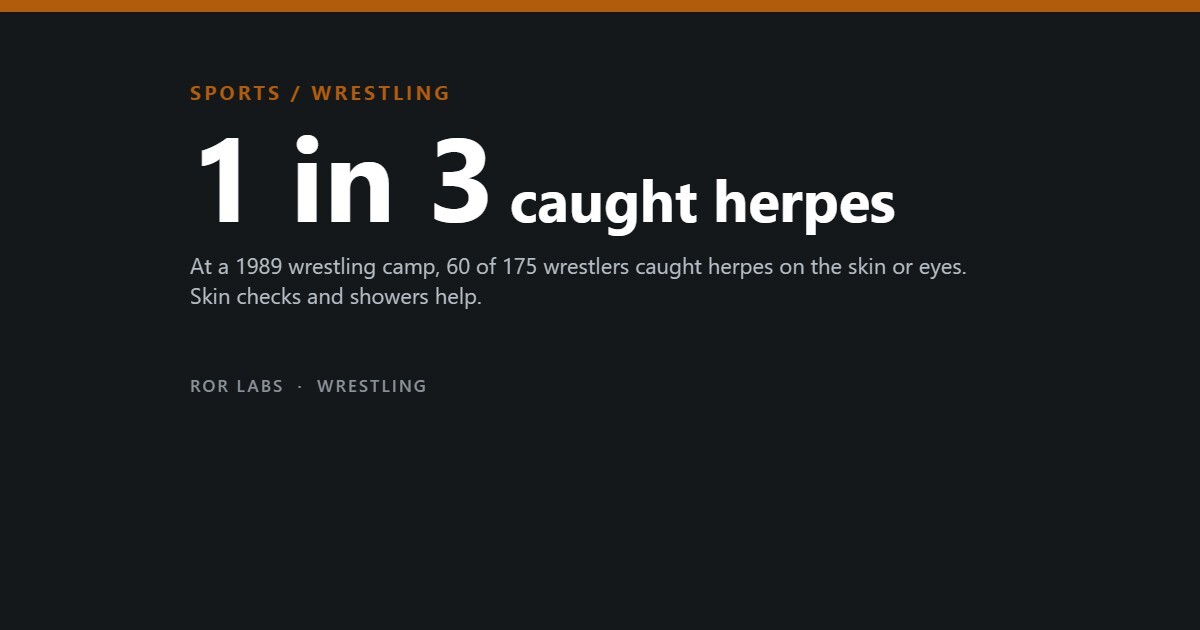
- At a 1989 Minnesota camp, 60 of 175 high-school wrestlers caught herpes gladiatorum; the heaviest group had an attack rate of 53%.
- Wrestling produced 73.6% of time-loss skin infections in US high-school sports, at about 12 times the rate in football.
- Herpes spreads almost entirely skin to skin, mostly on the head, face and neck. Mats play a smaller role than many assume, though MRSA has been found on them.
- Weekly fluconazole cut ringworm from 22% to 6% in a trial, and daily valacyclovir suppresses herpes recurrences in wrestlers who have had it.
In December 2025 United World Wrestling, the sport’s world governing body, published new skin guidelines with one notable addition: a compulsory skin inspection before the official weigh-in, supervised by its medical officer, who may overrule a clearance note signed days earlier. A proper check, the document says, takes 15 to 20 seconds. The reason is an old one. Wrestling’s most familiar infections travel skin to skin, and they travel fast.
In July 1989, 175 high-school wrestlers spent four weeks at a training camp in Minnesota. By the final week, 60 of them had herpes simplex virus type 1 infections of the skin or eyes, a third of the camp. Wrestling contact was stopped for the last two days. Investigators later found that the heaviest wrestlers, who grappled mostly with each other, had more than twice the attack rate of the lightest.
This article covers the three infections that dominate the sport — herpes gladiatorum, ringworm and bacterial infections including MRSA — how they spread, where they cluster, and what has been measured to reduce them: skin checks, return-to-play rules, preventive medicines and hygiene. The aim is not to keep anyone off the mat. It is to wrestle carefully.
What actually spreads on the mat
Herpes gladiatorum is herpes simplex virus type 1, the cold-sore virus, planted in skin that is rubbed raw. In the 1989 camp, reported in the New England Journal of Medicine, lesions were on the head in 73% of cases, on the limbs in 42% and on the trunk in 28%. Fever, chills and sore throat were common, and five wrestlers had eye inflammation. The virus stays in nerve cells for life, so outbreaks can recur.
Herpes attack rate at the 1989 Minnesota camp
Share of wrestlers who met the case definition, by weight group. Wrestlers mostly practised within their own group.
Source: CDC, MMWR 39(5):69 (1990); Belongia et al., NEJM (1991).
Ringworm, or tinea gladiatorum, is a fungal infection, usually caused by Trichophyton tonsurans. It forms scaly red rings and can settle in the scalp. In 1992–93, 21 of 28 members of one Alaskan high-school team had lesions consistent with it, and new rashes kept appearing after treatment began. Swedish wrestlers had an epidemic in 1993 that doctors traced to a visiting American team.
Bacterial infections are the commonest of all: impetigo, boils and abscesses, caused by staphylococci and streptococci. Some staph is methicillin-resistant (MRSA). In a southern Vermont high-school team in 1993–94, seven of 32 members tested positive for MRSA. In 2003 CDC described two Indiana high-school wrestlers in different weight classes who had never wrestled each other but both had MRSA skin infections, which pointed to shared items. A 2025 case series described four wrestlers on one north-west Ohio high-school team treated for MRSA in the winter of 2023.
Often several arrive together. After a January 2014 tournament in Maricopa County, Arizona, involving 168 wrestlers from 24 schools, the county health department confirmed 37 cases of skin lesions. Two pathogens had spread at once: impetigo and herpes. The herpes cases traced to a wrestler whose sores began four days before the event and who competed with uncovered lesions on his arm, even though outside clinicians checked every wrestler’s skin before competition.
What the 2014 Arizona tournament outbreak was made of
Physician diagnoses among 37 confirmed cases after one high-school tournament; the remainder had other or undetermined diagnoses.
Source: Williams et al., CDC, MMWR 64(20) (2015).
Where the risk concentrates
Wrestling dominates the skin-infection statistics. A national surveillance study of US high-school sports from 2009–10 to 2013–14 counted 474 skin infections that cost athletes time, across nearly 21 million athlete exposures. Wrestling produced 73.6% of them and football 17.9%. Bacterial infections made up 60.6%, ringworm 28.4%, and the head and face were the commonest sites.
Skin infections in US high-school sports
Time-loss skin infections per 100,000 athlete exposures (one athlete at one practice or match), 2009–10 to 2013–14.
Source: Ashack et al., Journal of the American Academy of Dermatology (2016), as reported by Healio. Schools with athletic trainers only.
College wrestling looks similar. Athletic trainers at 17 NCAA programmes reported 112 skin infections in 87 wrestlers over five seasons, 14.23 per 10,000 athlete exposures, and 22.3% were recurrences. Most were concentrated in five of the 35 team-seasons, the signature of outbreaks rather than a steady background. Herpes outbreaks show the same pattern: in a 1999 Minnesota high-school outbreak, 61 wrestlers and three coaches on 19 teams were infected over 42 days.

Contact is the route. In that 1999 outbreak, a sparring partner of an infected wrestler had a 32.7% chance of catching herpes, usually four to 11 days later. At a Minnesota summer camp, 71.9% of lesions were on the head, face and neck, the areas pressed together in the lock-up position. A 1988 survey found college wrestlers exposed to opponents with herpes lesions had about nine times the risk of those who were not.
Mats matter less than many coaches assume. A 2018 review co-written by B.J. Anderson, the physician behind several of the Minnesota studies, concluded that herpes spreads almost entirely skin to skin and that several studies show mats and other surfaces contribute little. Ringworm can survive on surfaces, but the same review called that route relatively rare. MRSA is the exception that keeps cleaning on the agenda: environmental samples found it on surfaces at all nine rural Ohio high schools tested.
MRSA-type skin infections in Nebraska high-school athletes
Physician-diagnosed skin and soft-tissue infections consistent with MRSA, per 10,000 athletes, from statewide surveys of school athletic officials.
Source: Buss and Connolly, Journal of School Nursing (2013). Survey-based estimates, not laboratory counts.
Carriage helps explain those numbers. The 2018 review cited estimates that 0.9% of high-school wrestlers contract community-associated MRSA each season, that as many as 76% of college wrestlers carry it, and that colonised athletes are about seven times as likely to develop a bacterial skin infection.
What has been measured to work
The backbone of prevention is the skin check: a trained adult looks at every wrestler before practice and competition, and anyone with a suspicious lesion sits out until a clinician signs a skin condition form. Return rules are specific. Under US high-school guidance, a first herpes outbreak means at least ten days of antiviral treatment and no wrestling; ringworm needs 72 hours of treatment, or 14 days if the scalp is involved; bacterial infections need 72 hours of antibiotics and no draining.

Medicines help those at highest risk. In a double-blind trial in the 1998–99 season, wrestlers given 100 milligrams of fluconazole once a week had a ringworm rate of 6%, against 22% on placebo. For herpes, a small Minnesota study of 42 wrestlers with recurrent outbreaks found few recurrences on daily valacyclovir. Among those whose first outbreak was under two years earlier, 21% had one on 500 milligrams and 8% on one gram; the author said that group’s best dose needed more study.
At a 28-day University of Minnesota camp, recommending daily valacyclovir to every wrestler was followed by an 87% fall in outbreaks compared with earlier years, and a ten-year review published in 2016 reported an 89.5% fall in recurrent outbreaks. These were observational comparisons, not randomised trials. Isolation works too: in a 2007 Minnesota outbreak, an eight-day pause in competition contained spread in more than 90% of exposed wrestlers.
Preventive medicines in wrestlers
Share of wrestlers with an infection during the period studied. The valacyclovir rows are wrestlers whose first herpes outbreak was under two years earlier.
Sources: Kohl et al. (2000), randomised and placebo-controlled; Anderson, Clinical Journal of Sport Medicine (1999), a small study, partly open-label.
The weakest evidence sits behind the most visible habits. A 2018 review found little evidence that antistaphylococcal cleaning products change MRSA infection rates, although written policies on cleaning and early treatment may help. A Minnesota study of 510 wrestlers under compulsory skin checks found ringworm in 4.3% over a season, far below the 24% reported before checks. The authors cautioned that the 24% figures were probably measured during outbreaks.
Why the answer is not to stop wrestling
Most of these infections are treatable, and the serious complications are uncommon. Herpes near the eye needs urgent care, and MRSA can occasionally put an athlete in hospital: in a 2000 college football cluster, seven of ten infected players were admitted. But the virus behind herpes gladiatorum is not unique to wrestlers. Among high-school wrestlers tested at one camp, 29.8% already carried antibodies to it, and a 2018 review reported that seropositivity was no higher in wrestlers than in non-wrestlers from the same communities.
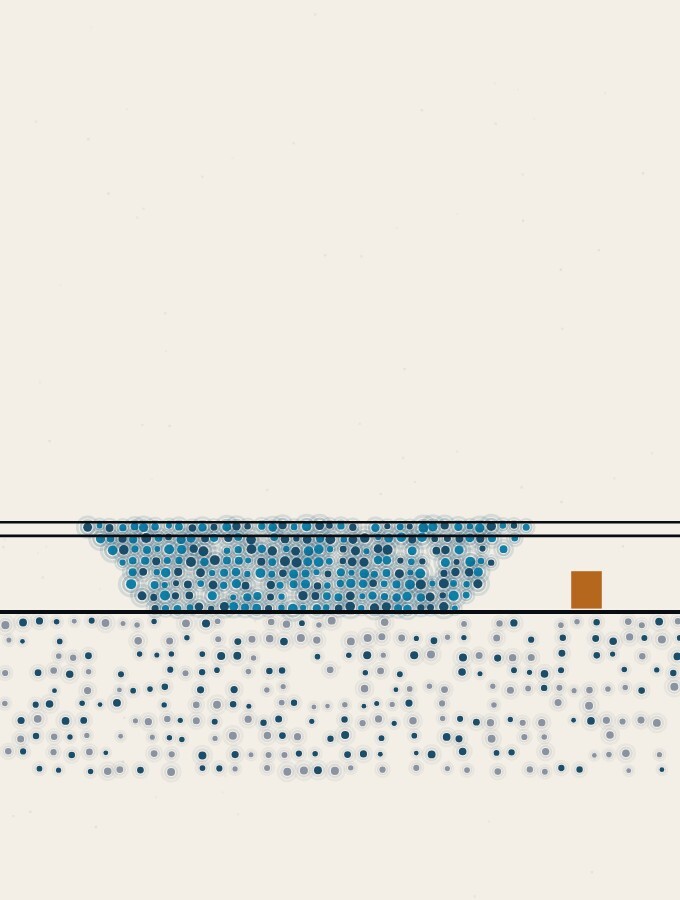
What changes the odds are habits that cost little. Report any new sore at once, and do not cover a lesion to get through a match. Shower with soap straight after practice rather than at home; a 2015 NFHS article estimated that about 8% of high-school wrestlers wait until they get home. Do not share towels, razors or soap, and wash training kit after every session.
Wrestlers with a history of herpes outbreaks can ask a doctor about seasonal antiviral prophylaxis, started about five days before the season. Those with repeated ringworm can ask about antifungal prophylaxis. Coaches can treat skin checks as part of warming up, keep a clean-mat routine and call the local health department when several wrestlers are affected. For the sport’s other risks, see our article on wrestling injuries and the rule of 1998.
What to do
Steps sorted by when they matter. Each one says how strong the evidence is: Measured Official advice Untested
Before
- Make a skin check part of every practice and competition: a trained adult looks at each wrestler, and anyone with a suspicious sore sits out until a clinician clears it. Measured see Sources
- If you have had herpes outbreaks before, ask a doctor about seasonal antiviral tablets started about five days before the season. In one camp, recommending daily valacyclovir was followed by an 87% fall in outbreaks. Measured see Sources
- If ringworm keeps coming back, ask a doctor about antifungal prophylaxis. Weekly fluconazole cut ringworm from 22% to 6% in a trial. Untested see Sources
If it happens
- Report any new sore, rash or blister at once, especially on the head, face or neck. Official advice see Sources
- Coaches: if several wrestlers are affected, pause contact and call the local health department. An eight-day pause contained a 2007 Minnesota outbreak in more than 90% of exposed wrestlers. Untested see Sources
Afterwards
- Shower with soap straight after practice, not at home later. Official advice see Sources
- Wash training kit after every session and keep mats cleaned on a routine. Official advice see Sources
- Follow return rules: under US high-school guidance, at least 10 days of antiviral treatment for a first herpes outbreak and 72 hours of treatment for ringworm (14 days on the scalp). Measured see Sources
What not to do
- Do not cover an active herpes sore or a draining wound to get through a match. Official advice see Sources
- Do not share towels, razors or soap. Official advice see Sources
Not medical advice. A sore near the eye needs urgent care; for any suspicious lesion, see a doctor before returning to contact.
Questions people ask
Can you catch herpes or ringworm from a wrestling mat?
It is possible but uncommon. Reviews conclude that herpes spreads almost entirely skin to skin, and that ringworm rarely spreads from surfaces. MRSA has been found on mats, so cleaning still matters.
How long must a wrestler with herpes sit out?
Under US high-school guidance, at least ten days of antiviral treatment for a first outbreak, longer with fever or swollen glands, and 120 hours for a recurrence. College rules differ slightly.
Does covering a lesion make it safe to wrestle?
Usually not. College rules let a wrestler cover ringworm after 72 hours of treatment, but active herpes and draining bacterial infections disqualify a wrestler whether covered or not.
Should every wrestler take antiviral tablets?
No. Prophylaxis is generally considered for wrestlers with a history of herpes gladiatorum, and it is a decision for a doctor and the athlete.
Is herpes gladiatorum the same as genital herpes?
It is caused by the same family of viruses, but in wrestling almost all cases, 94% to 97% in the studies a 2018 review summarised, are herpes simplex type 1, the cold-sore virus, passed through ordinary skin contact.
The short version
- At a 1989 Minnesota camp, 60 of 175 high-school wrestlers caught herpes gladiatorum; the heaviest group had an attack rate of 53%.
- Wrestling produced 73.6% of time-loss skin infections in US high-school sports, at about 12 times the rate in football.
- Herpes spreads almost entirely skin to skin, mostly on the head, face and neck. Mats play a smaller role than many assume, though MRSA has been found on them.
- Weekly fluconazole cut ringworm from 22% to 6% in a trial, and daily valacyclovir suppresses herpes recurrences in wrestlers who have had it.
- Skin checks before every session, prompt showers, unshared towels and honest reporting keep wrestlers on the mat.
This is a summary of published research, not medical advice. Anyone with a new sore, rash or boil, especially near the eye or with fever, should see a doctor before wrestling again, and athletes considering preventive medicines should discuss them with their own doctor.
Further reading: Peterson, Nash and Anderson, Sports Health (2018), for a review of skin infections in contact sports. CDC, MMWR 39(5):69 (1990), for the 1989 camp. United World Wrestling, Guidelines Addressing Skin Conditions in Wrestlers (2025).
Sources
- United World Wrestling Medical, Prevention and Anti-Doping Commission (Anderson BJ, Shadgan B). UWW Guidelines Addressing Skin Conditions in Wrestlers, December 2025.
- Centers for Disease Control. Herpes gladiatorum at a high school wrestling camp – Minnesota. MMWR 39(5):69 (1990).
- Belongia EA, Goodman JL, Holland EJ, et al. An outbreak of herpes gladiatorum at a high-school wrestling camp. New England Journal of Medicine (1991), doi:10.1056/NEJM199109263251302.
- Beller M, Gessner BD. An outbreak of tinea corporis gladiatorum on a high school wrestling team. Journal of the American Academy of Dermatology (1994), doi:10.1016/S0190-9622(94)70145-8.
- Hradil E, Hersle KS, Nordin PC, Faergemann J. An epidemic of tinea corporis caused by Trichophyton tonsurans among wrestlers in Sweden. Acta Dermato-Venereologica (1995).
- Lindenmayer JM, Schoenfeld S, O’Grady R, Carney JK. Methicillin-resistant Staphylococcus aureus in a high school wrestling team and the surrounding community. Archives of Internal Medicine (1998), doi:10.1001/archinte.158.8.895.
- Centers for Disease Control and Prevention. Methicillin-resistant Staphylococcus aureus infections among competitive sports participants. MMWR 52(33):793 (2003).
- Williams CL, Wells J, Klein R, Sylvester T, Sunenshine RH. Notes from the field: outbreak of skin lesions among high school wrestlers – Arizona, 2014. MMWR 64(20) (2015).
- Ashack KA, Burton KA, Johnson TR, et al. Skin infections among US high school athletes: a national survey. Journal of the American Academy of Dermatology (2016), doi:10.1016/j.jaad.2015.10.042; Healio report, April 2016.
- Herzog MM, Fraser MA, Register-Mihalik JK, Kerr ZY. Epidemiology of skin infections in men’s wrestling. Journal of Athletic Training 52(5):457–463 (2017), doi:10.4085/1062-6050-52.2.16.
- Anderson BJ. The epidemiology and clinical analysis of several outbreaks of herpes gladiatorum. Medicine & Science in Sports & Exercise (2003), doi:10.1249/01.MSS.0000093759.79673.3C.
- Becker TM, Kodsi R, Bailey P, et al. Grappling with herpes: herpes gladiatorum. American Journal of Sports Medicine (1988), doi:10.1177/036354658801600620.
- Peterson AR, Nash E, Anderson BJ. Infectious disease in contact sports. Sports Health (2018), doi:10.1177/1941738118789954.
- Stanforth B, Krause A, Starkey C, Ryan TJ. Prevalence of community-associated methicillin-resistant Staphylococcus aureus in high school wrestling environments. (2010), PMID 20104828.
- Buss BF, Connolly S. Surveillance of physician-diagnosed skin and soft tissue infections consistent with MRSA among Nebraska high school athletes, 2008–2012. Journal of School Nursing (2013), doi:10.1177/1059840513491785.
- NFHS Sports Medicine Advisory Committee. Sports-Related Skin Infections Position Statement and Guidelines (April 2018); Herpes Gladiatorum guidance (2007).
- Kohl TD, Martin DC, Nemeth R, Hill T, Evans D. Fluconazole for the prevention and treatment of tinea gladiatorum (2000), doi:10.1097/00006454-200008000-00009.
- Anderson BJ. The effectiveness of valacyclovir in preventing reactivation of herpes gladiatorum in wrestlers. Clinical Journal of Sport Medicine (1999), doi:10.1097/00042752-199904000-00008.
- Anderson BJ. Prophylactic valacyclovir to prevent outbreaks of primary herpes gladiatorum at a 28-day wrestling camp. Japanese Journal of Infectious Diseases (2006); Anderson BJ, McGuire DP, Reed M, et al. Clinical Journal of Sport Medicine (2016), doi:10.1097/JSM.0000000000000255.
- Anderson BJ. Managing herpes gladiatorum outbreaks in competitive wrestling: the 2007 Minnesota experience. Current Sports Medicine Reports (2008), doi:10.1249/JSR.0b013e31818eebde.
- Berg MA, Miner MH, Roberts WO. Tinea gladiatorum prevalence among wrestlers in the era of required skin inspection. Asian Journal of Sports Medicine (2021), e103813.
- Anderson BJ, Cooper L. Prevention key to reducing skin infections in high school wrestling. NFHS, 21 December 2015.
- Quillin K, Burkhart C. Management of wrestling team with similar cutaneous MRSA infections: a case series. The Open Dermatology Journal 19:e18743722356370 (2025).
- West Virginia Office of Epidemiology and Prevention Services. Herpes Gladiatorum public information sheet, June 2025.