
Wrestling injuries, weight cutting, and the rule of 1998
Key takeaways · 9 min read
- Wrestling has the highest NCAA injury rate of 25 sports, 13.1 per 1,000 exposures, and meets carry about 3.8 times the practice rate.
- Before 1998, 41% of surveyed college wrestlers reported weekly weight swings of 5.0 to 9.1 kg.
- Three collegiate wrestlers died within 33 days in late 1997, all exercising in vapour-impermeable suits while restricting food and fluid.
- The NCAA made weight certification mandatory in 1998: minimum weight at 5% body fat, hydration testing, banned dehydration methods, weigh-ins near competition.
Between 6 November and 9 December 1997, three collegiate wrestlers died in three different states. They were 19, 22 and 21. None of them died wrestling. All three died doing the same thing beforehand: exercising hard, in vapour-impermeable suits worn under warm-up clothes, while restricting food and fluid, in order to make a weight class.
Wrestling has the highest injury rate of any sport in the NCAA surveillance programme — 13.1 per 1,000 athlete-exposures against an average of 6.0. That is not what this article is mainly about, because the injuries are the ordinary part. The part that killed three people in thirty-three days was a practice the sport had treated as normal for decades.
What happened next is the clearest example in this series of a governing body changing a rule and the measurements moving. It is also an example of how far short of “solved” that can leave a problem.
What actually gets injured
Wrestling sits at the top of the table, and it gets there honestly rather than through roster size. The rate is per exposure, so the 13.1 figure already accounts for how many wrestlers there are.
Injuries per 1,000 athlete-exposures
NCAA Injury Surveillance Program, 2009-10 to 2013-14. 1,053,370 injuries over 176.7 million exposures.
Source: CDC, MMWR 64(48), 2015, NCAA Injury Surveillance Program.
Competition concentrates it sharply: 38.5 injuries per 1,000 exposures in meets against 10.2 in practice, a ratio of about 3.8. That is higher than soccer and lower than American football, and it is what you would expect from a sport in which every practice is also, functionally, a contest.
How much a meet concentrates the risk
Competition rate divided by practice rate, same surveillance programme.
Source: CDC, MMWR 64(48), 2015. Rates per 1,000 athlete-exposures, derived from the reported counts.
The injuries are what a sport of controlled falling and joint leverage produces: sprains and strains, shoulders and knees, and a concussion rate among the higher ones in college sport. Severity is unremarkable by the standards of the same programme — across all twenty-five sports about a fifth of injuries cost seven days or more and four per cent led to surgery. None of it is unusual enough to be the subject of an article. What follows is.
What the weight was doing before 1998
Making weight has been part of wrestling for as long as weight classes have. The question is how much, and the answer before the rule change was a great deal.
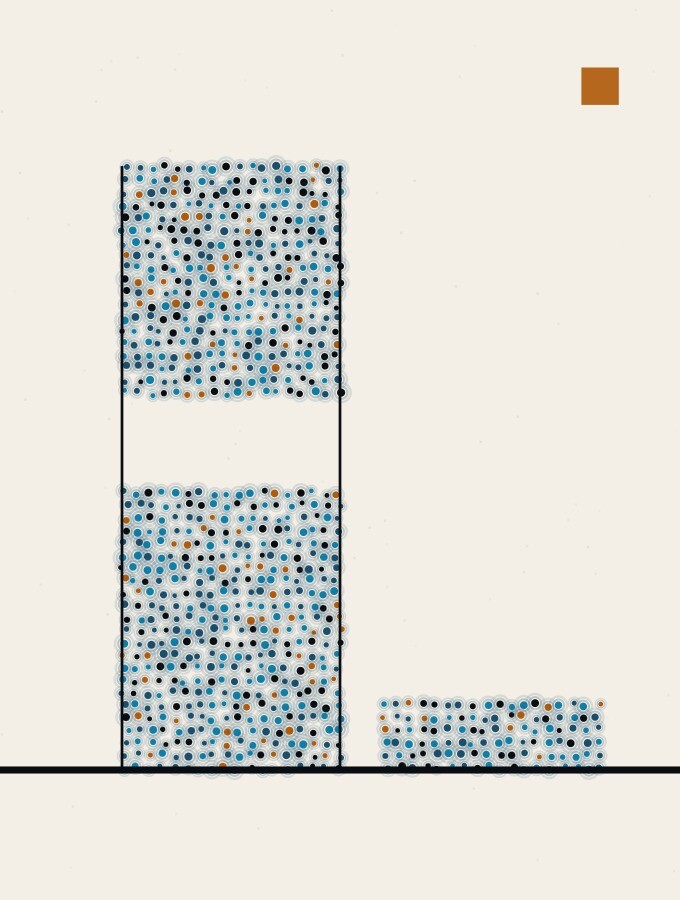
A 1990 survey of 63 college and 368 high school wrestlers found that 41 per cent of the college wrestlers reported weight swings of 5.0 to 9.1 kg in each week of the season. Thirty-five per cent said they had lost between 0.5 and 4.5 kg more than a hundred times in their lives. Making weight was associated with fatigue, anger and anxiety, and a third to two-fifths reported being preoccupied with food.
A 1993 statewide survey of 713 high school wrestlers found 1.7 per cent meeting all five criteria for bulimia nervosa, a higher rate than expected in adolescent boys, with a further 43 per cent reporting weight-control practices similar to theirs. The authors noted that the results were comparable with data published over the previous twenty years. Nothing about this was hidden. It was described in journals, repeatedly, for two decades.
What the surveys found before the rule
Sources: Steen and Brownell, Med Sci Sports Exerc 22(6) (1990); Oppliger et al., Pediatrics 91(4) (1993).
The American College of Sports Medicine published a position stand in 1996 calling for rules that limit weight loss in wrestlers, two years before the deaths. The sport had the description, the measurements and the recommendation. What it did not have was a rule anyone had to follow.
Thirty-three days
The three deaths are documented in the same public health report. The similarities are what make them useful.
Three deaths, November and December 1997
All three were exercising vigorously in vapour-impermeable suits while restricting food and fluid.
| Case | Age | Preseason to goal | Session | Recorded |
|---|---|---|---|---|
| North Carolina, 6–7 Nov | 19 | 233 lb to 195 lb | 12 hours | Sodium 152 mmol/L |
| Wisconsin, 21 Nov | 22 | 178 lb to 153 lb | 4 hours | Sodium 161; 42°C |
| Michigan, 9 Dec | 21 | 180 lb to 153 lb | 3 hours | Sodium 159; rhabdomyolysis |
Source: CDC, MMWR 47(6):105–108, 1998.
The gap between preseason weight and competition goal averaged 30 lb across the three, about 15 per cent of body weight. The report noted that the typical collegiate figure at the time was around 16 lb, or roughly 10 per cent. These three were doing more than usual, but they were doing a more extreme version of the ordinary thing, not a different thing.
The report also noted that guidelines discouraging exactly these practices already existed. They were recommendations, and they were not followed.
The rule, and what it measurably changed
In 1998 the NCAA made a weight certification programme mandatory. Each wrestler is body-fat tested before the season to establish a minimum competitive weight, set at five per cent body fat. Hydration is tested at the same assessment. Vapour-impermeable suits, saunas, diuretics and other dehydration methods are prohibited, and weigh-ins were moved much closer to competition.
The most direct measurement of the effect is the weight wrestlers regain in the hours after weighing in, which is a proxy for how much they took off to get there. Measured at national tournaments, that figure fell from 2.66 kg in 1992 to 0.66 kg in 1999.
What the rule moved, and what it did not
Sources: Scott et al., Med Sci Sports Exerc 34(5) supplement (2002), conference abstract; Oppliger et al., Int J Sport Nutr Exerc Metab 13(1):29–46 (2003).
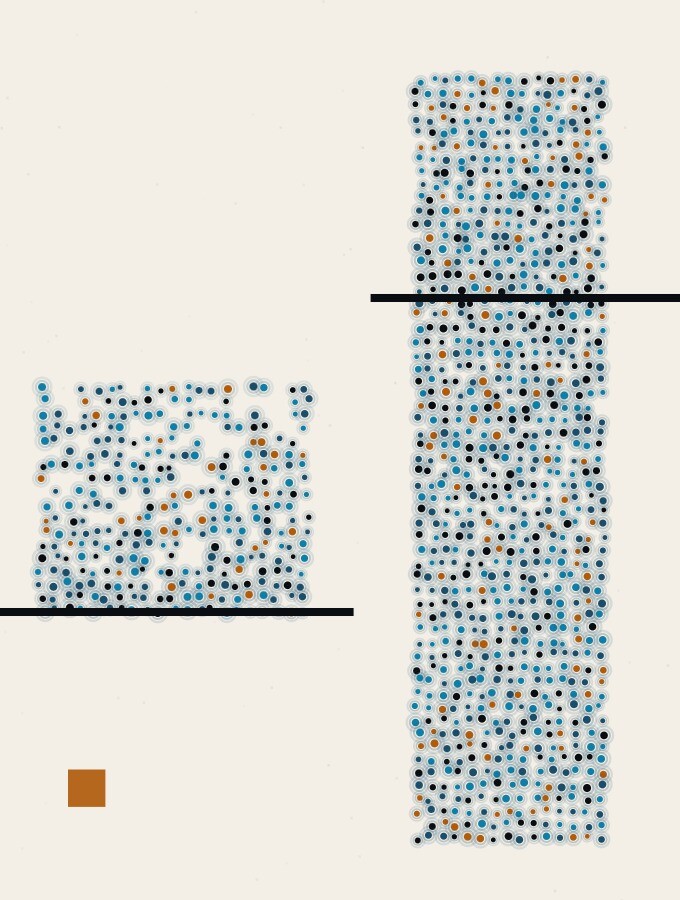
Two cautions about that first number. It comes from a conference abstract rather than a full paper, which means it has not been through the same review as the rest of the figures here. And it measures rehydration after the weigh-in, not the total weight taken off during the season, which is a narrower thing than the headline suggests.
The survey is the sturdier evidence, and it is more mixed. In the autumn of 1999, 741 wrestlers from 43 teams reported losing on average 5.3 kg across the season and cycling 2.9 kg in a typical week, then regaining 5.5 kg once it ended. Gradual dieting and extra exercise were the commonest methods. But 54.8 per cent had fasted, 27.6 per cent had used a sauna, and 26.7 per cent had used a rubber or plastic suit — the specific practice that appears in all three death reports, still in use by a quarter of wrestlers eighteen months after it was banned.
Why the answer is not to stop
The honest reading is that the rule worked and did not finish the job. Post-weigh-in rehydration fell by about three quarters. Two-fifths of wrestlers said the rules had changed what they did. And a quarter were still using the method that killed three people.

There is a further caution, which is that the strongest measurements here are twenty-five years old. A 2025 conference abstract surveying a single Division III team of 27 wrestlers reported a largest in-season loss of 6.2 kg and weekly fluctuation of 3.4 kg — numbers not obviously better than 1999. One small team is not a national picture, and it should not be read as one, but it is also not evidence that the problem has resolved itself.
What the sport does have is the thing most sports in this series do not: a specific, identified, lethal practice, a rule written against it, and a measured change in behaviour afterwards. That is the argument for wrestling rather than against it. The injuries at the top of the table are ordinary sports injuries. The thing that was actually killing wrestlers was not the wrestling.
It is also the clearest illustration of something this series keeps running into. A recommendation had existed for years and changed nothing. A requirement, tied to whether a wrestler could compete at all, changed the measurements within a season. The difference between the two was not better evidence. It was enforcement.
Questions people ask
Is wrestling more dangerous than American football?
By injury rate per exposure, yes: 13.1 against 9.2. By injury count it is not close, because football has far more players. Rates and totals answer different questions and are routinely confused.
Does the weight certification rule actually get enforced?
It is mandatory and tied to eligibility, which is stronger than the guidance that preceded it. The 1999 survey suggests compliance was partial rather than complete, and the honest answer is that nobody has published a recent national measurement.
Is cutting weight always harmful?
The deaths involved rapid dehydration in heat, not dieting. The evidence on repeated large cycles is about performance, mood and disordered eating rather than acute danger. The acute danger came from one specific method, and that method is what the rule targeted.
Why did weigh-ins move closer to competition?
Because the gap was what made extreme dehydration profitable. If you weigh in the night before, there is time to rehydrate and compete heavier than your class. Shrinking the gap removes the reward rather than relying on the warning.
Is this only a wrestling problem?
No. Every weight-class sport has a version of it, and freestyle and Greco-Roman wrestling were not covered by the NCAA rule at the time. This article is about the one place where a rule was written and the result was measured.
The short version
- Wrestling has the highest NCAA injury rate of 25 sports, 13.1 per 1,000 exposures, and meets carry about 3.8 times the practice rate.
- Before 1998, 41% of surveyed college wrestlers reported weekly weight swings of 5.0 to 9.1 kg.
- Three collegiate wrestlers died within 33 days in late 1997, all exercising in vapour-impermeable suits while restricting food and fluid.
- The NCAA made weight certification mandatory in 1998: minimum weight at 5% body fat, hydration testing, banned dehydration methods, weigh-ins near competition.
- Weight regained after weighing in at national tournaments fell from 2.66 kg in 1992 to 0.66 kg in 1999.
- In 1999, 40.2% said the rules had deterred extreme behaviour — and 26.7% were still using rubber or plastic suits.
This describes what published research has reported about a sport. It is not advice about training, weight or nutrition for any individual. Rapid weight loss for competition sits close to disordered eating, and anyone worried about their own pattern of eating or weight control should speak to a doctor or a registered dietitian rather than work from an article.
Further reading: CDC, MMWR 47(6):105–108 (1998), the three case reports. Oppliger et al., International Journal of Sport Nutrition and Exercise Metabolism 13(1):29–46 (2003), the post-rule survey of 741 wrestlers. Steen and Brownell, Medicine and Science in Sports and Exercise 22(6):762–768 (1990), for what the practice looked like before.
- Do Hard Things, Steve Magness (2022). An argument that the toughness culture in sport mistakes endurance of harm for strength. Written from inside endurance coaching, and partisan about it.
- Doom, Niall Ferguson (2021). On why institutions issue the correct warning and then fail to act on it, which is precisely what the pre-1998 guidelines were.
- The Data Detective, Tim Harford (2020). Useful here for one habit in particular: asking what a number was actually measuring before accepting what it appears to show.
Sources
CDC, MMWR 64(48):1330–1336 (2015), NCAA Injury Surveillance Program 2009-10 to 2013-14: wrestling rate 13.1, competition 2,283 injuries in 59,312 exposures, practice 5,227 in 514,972.
CDC. Hyperthermia and dehydration-related deaths associated with intentional rapid weight loss in three collegiate wrestlers — North Carolina, Wisconsin, and Michigan, November–December 1997. MMWR 1998;47(6):105–108.
Steen SN, Brownell KD. Patterns of weight loss and regain in wrestlers: has the tradition changed? Med Sci Sports Exerc 1990;22(6):762–768.
Oppliger RA, Landry GL, Foster SW, Lambrecht AC. Bulimic behaviors among interscholastic wrestlers: a statewide survey. Pediatrics 1993;91(4):826–831.
Oppliger RA, Steen SN, Scott JR. Weight loss practices of college wrestlers. Int J Sport Nutr Exerc Metab 2003;13(1):29–46.
Scott JR, Oppliger RA, Utter AC. Body weight changes at the national wrestling tournaments across NCAA divisions. Med Sci Sports Exerc 2002;34(5 Suppl) — conference abstract, reporting the 2.66 kg to 0.66 kg change.
American College of Sports Medicine position stand: weight loss in wrestlers. Med Sci Sports Exerc 1996;28(2):ix–xii — the guidance that preceded the mandatory rule.
Twohey E, Jagim AR, Dobbs WC. Weight loss practices of collegiate wrestlers — have things changed? Med Sci Sports Exerc 2025 — conference abstract, single Division III team, n = 27.