
What Reduces Loneliness? What the Evidence Shows
A 2026 meta-analysis of 280 studies found loneliness interventions work on average, but not always the ones people expect. What helps, how much, and for whom.
Articles where family support, social networks, isolation or the availability of care changes the outcome.
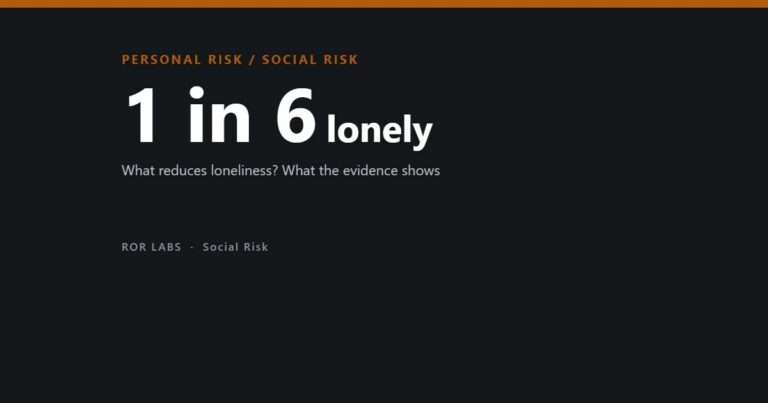
A 2026 meta-analysis of 280 studies found loneliness interventions work on average, but not always the ones people expect. What helps, how much, and for whom.
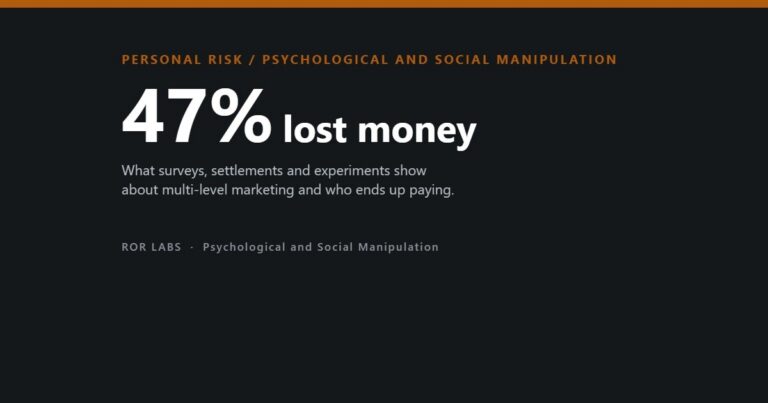
47% of US MLM participants lost money and 27% broke even. What surveys, FTC cases and experiments show about multi-level marketing and who pays.
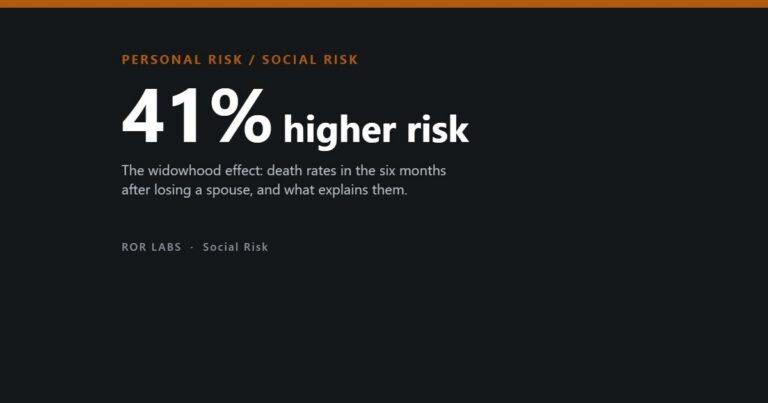
Death rates rise about 41% in the six months after losing a spouse. What meta-analyses show about the widowhood effect, who is most at risk, and why.
File photo: silhouettes of a group of people at sunset. Photo: Sue Huan (Unsplash), via Wikimedia Commons, CC0. In the news · July 2026 A Victorian parliamentary inquiry made 39 recommendations after reviewing 317 submissions and hearing from survivors of groups such as the Two by Twos and Geelong Revival Centre. It proposes outlawing group-based…
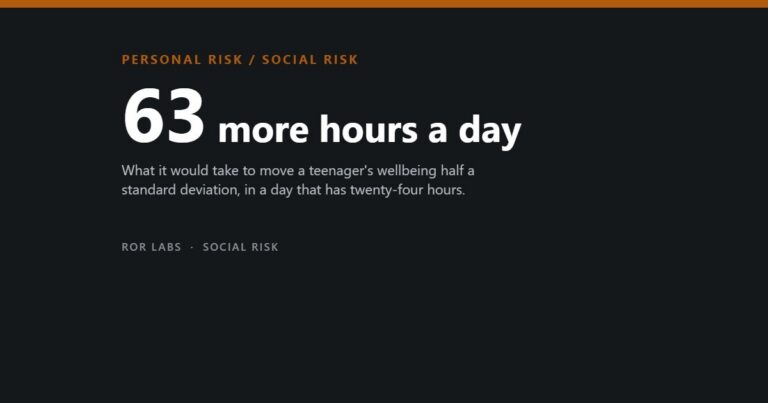
File photo: a teenager texting on a smartphone. Photo: Summer Skyes 11, via Wikimedia Commons, CC BY 2.0. In the news · June 2026 A Eurobarometer survey of 26,297 teenagers and 12,750 parents across the EU, carried out in March and April 2026, found that 25% of teens exceed six hours of daily screen time…
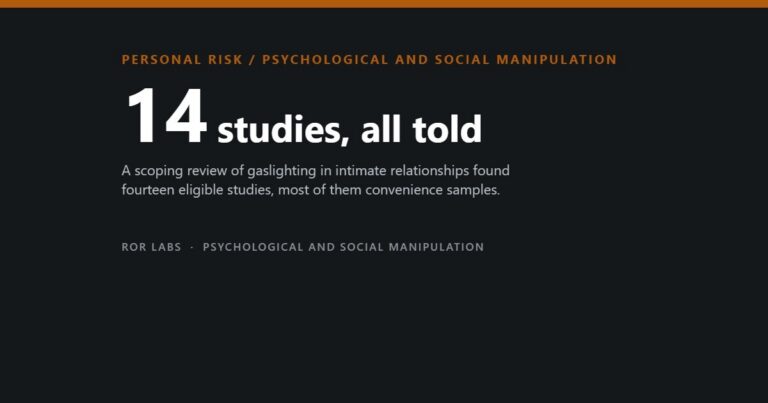
File photo: a woman sitting by a large window. Photo: Alexandre Chambon (Unsplash), via Wikimedia Commons, CC0. In the news · April 2026 A Scientific Reports study from Turkey surveyed 333 women aged 20 to 40 in romantic relationships. Using standardized scales and mediation analysis, it found that higher self-silencing was linked to greater exposure…
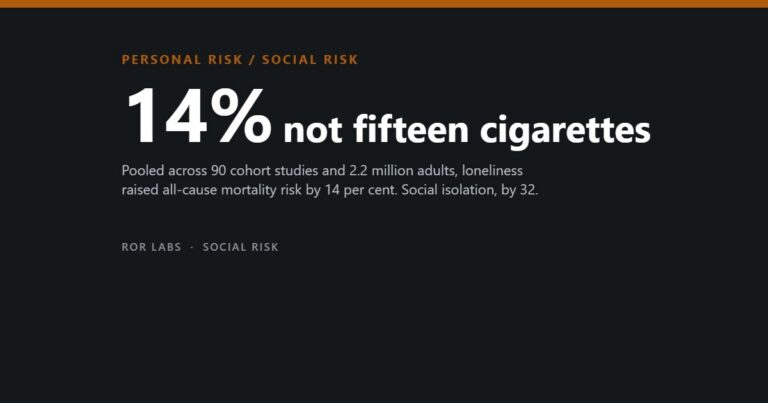
The 50 per cent figure everyone quotes is an average across measures that disagree. Across 90 cohorts and 2.2 million adults, social isolation raised mortality risk 32 per cent and loneliness 14 — and every improvement in method makes the number smaller.
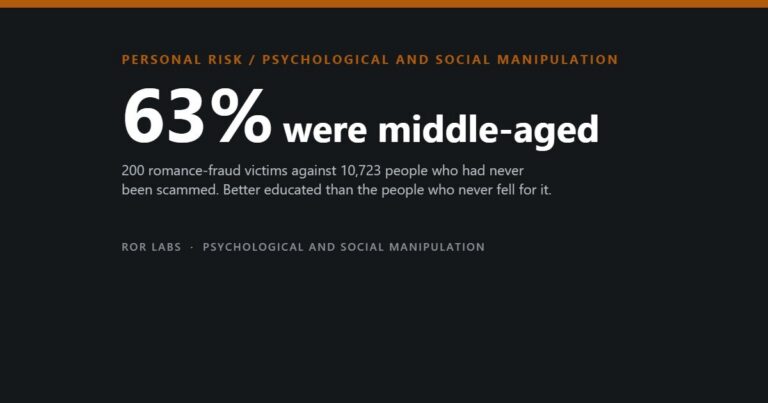
A comparison of 200 romance fraud victims with 10,723 people who were never scammed found victims middle-aged and better educated, with self-rated security knowledge predicting nothing. The current version of the fraud asks for an investment rather than a favour, stepping between the two standard warnings.
Zero tolerance, peer mediation, group treatment and assemblies are all identified as misdirections — and one of them can leave the bullied child worse. What works cuts bullying by about a fifth, and that figure needs a caveat.