Heat Kills More Americans Than Hurricanes. Almost Always Indoors.
Disclosure: this article contains affiliate links, marked (paid link). If you buy through one we may earn a commission, at no extra cost to you. As an Amazon Associate I earn from qualifying purchases. It costs you nothing and it does not change what we recommend.
Key takeaways · 9 min read
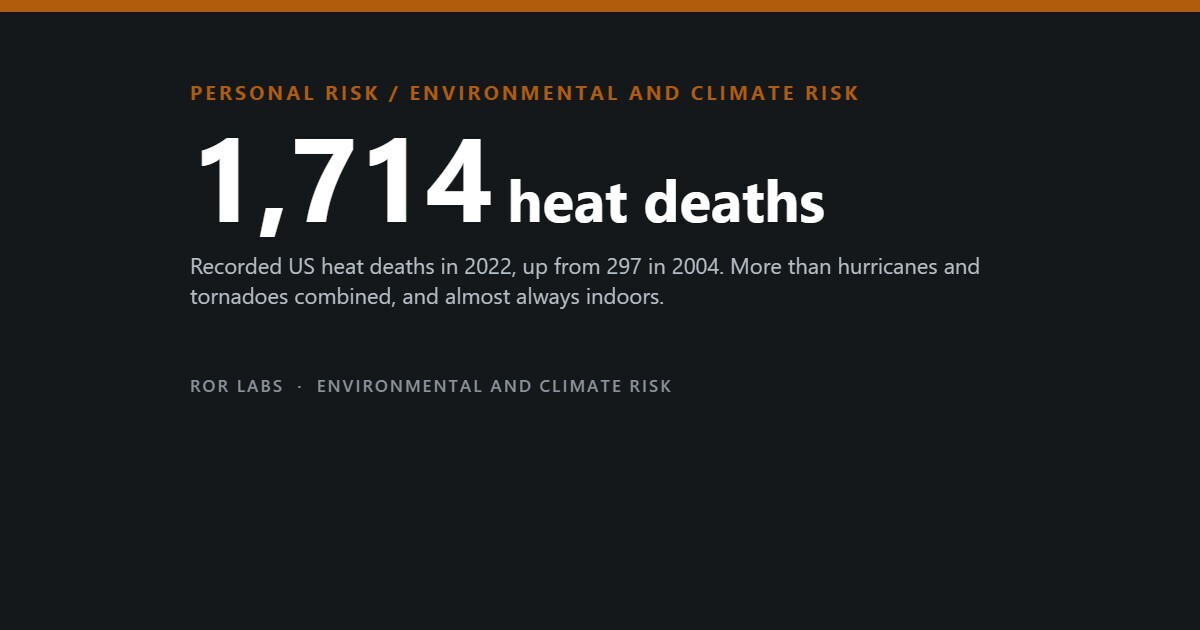
- Heat kills more Americans annually than hurricanes and tornadoes combined, and recorded deaths rose from 297 in 2004 to 1,714 in 2022.
- More than one in five heat deaths are in people aged 15–44. It is not only an elderly risk.
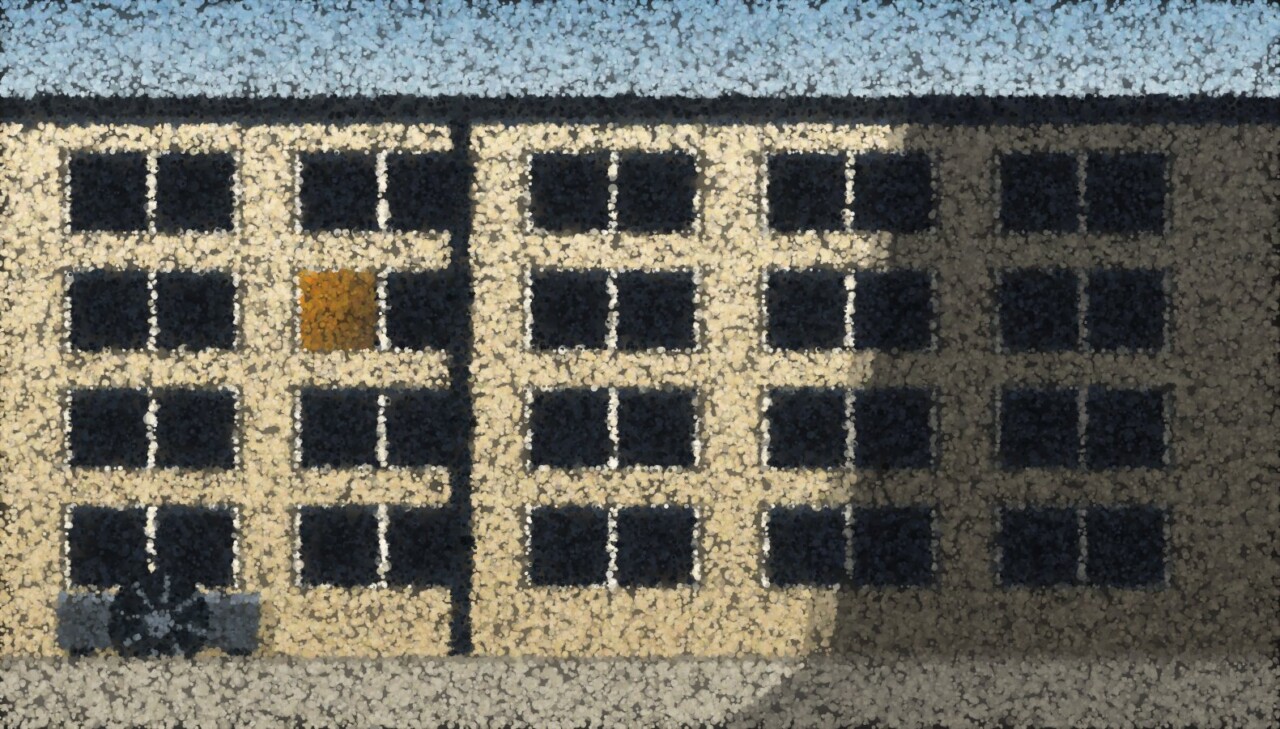
- Of at-home heat-stress deaths in New York’s records, none had air conditioning in use. About a quarter had only a fan.
- Black New Yorkers died of heat stress at three times the rate of white New Yorkers — an access problem, not a biological one.
Hurricanes get evacuations, news coverage and names. Heat kills more Americans than hurricanes and tornadoes combined, and it does it without a single dramatic image. People die indoors, alone, over several days, in apartments that look completely normal afterwards.
That invisibility is the actual hazard. A storm tells you it is coming. A heatwave produces a warm week that most people experience as uncomfortable, while a specific and identifiable minority quietly runs out of physiological margin.
The deadliest weather hazard, and it is growing
U.S. heat-related deaths recorded per year
CDC mortality data. These are recorded heat deaths — the true figure is widely believed to be higher, because heat usually kills by worsening something else.
Source: U.S. Centers for Disease Control and Prevention mortality data, as compiled by USAFacts (data through August 2023).
One detail in that data set is worth pulling out, because it contradicts the mental image most people carry. More than one in five heat deaths occur in people aged 15 to 44. Heat is not exclusively an old people’s risk. It is a risk for anyone whose body cannot shed heat faster than it gains it — which includes outdoor workers, athletes, and people on certain medications, at any age.
Where people actually die: at home, without air conditioning
New York City publishes an annual heat mortality report, and it is one of the most useful documents on this subject anywhere, because it tracks not just how many people died but the circumstances of each death.
New York City heat deaths, and the single common factor
2026 report. Heat-stress deaths are directly caused; heat-exacerbated deaths are the much larger group where heat pushed an existing condition over the edge.
Source: New York City Department of Health and Mental Hygiene, Heat Mortality Report, 2026 (Environment & Health Data Portal).
The disparities in the same report are stark and not accidental. Black New Yorkers died of heat stress at three times the rate of white New Yorkers, and Latino New Yorkers at twice the rate. The report attributes this to structural differences in access to cooling, housing quality and healthcare — which is to say, the risk factor is not heat, it is who has a working air conditioner and who can afford to run it.
The fan problem

A fan feels like cooling. It is not. A fan moves air across your skin, which speeds up evaporation of sweat and makes you feel cooler — while adding a small amount of heat to the room from its motor. It does not lower the temperature.
Below roughly body temperature, that airflow genuinely helps. Above it, moving hot air across skin can transfer heat into you, in the way a fan oven cooks faster than a still one. And for a frail or dehydrated person who is no longer sweating effectively, the evaporation mechanism a fan depends on is already gone.
What a fan does and does not do
The distinction that matters during a serious heat event.
Source: NYC Heat Mortality Report (2026); physiological limits of fan use during heat waves, as reviewed in the public health literature.
Who is actually at risk
The risk factors that stack
Most heat deaths involve several of these at once, not one.
Sources: NYC Department of Health heat mortality reporting; CDC extreme heat guidance.
What actually works
Ranked by how much they change the outcome
The first two are free and outrank everything purchasable.
Sources: CDC extreme heat guidance; NYC Heat Mortality Report (2026).
Useful equipment, in the honest order (paid link)
Cooling one room and one body, which is what the evidence supports.
Browse on Amazon →
Browse on Amazon →
Browse on Amazon →
We are listing fans last and deliberately not as a heat-safety product. A fan is genuinely useful on a warm day and it is not a substitute for cooling in a dangerous one — a quarter of at-home heat deaths in the New York records had a fan present. If a fan is all that is available to someone you know, that is a reason to get them somewhere cooler, not a reason to feel covered.
Knowing when it has become an emergency
Heat exhaustion versus heat stroke
The second is a medical emergency. The dividing line is mental state.
| Heat exhaustion | Heat stroke | |
|---|---|---|
| Skin | Cool, pale, heavy sweating | Often hot and dry — sweating may have stopped |
| Mental state | Tired, dizzy, but oriented | Confused, slurring, agitated or unconscious |
| Other signs | Nausea, headache, cramps, fast weak pulse | Very high body temperature, fast strong pulse, may have collapsed |
| What to do | Cool place, cool water on skin, sip fluids, rest | Call emergency services now. Cool aggressively while waiting. Do not give fluids to someone confused. |
Source: U.S. Centers for Disease Control and Prevention, extreme heat and heat illness guidance.

Questions people ask
Is it the temperature or the humidity?
Both, and humidity is the underrated half. Your body sheds heat mainly by evaporating sweat, and evaporation slows as humidity rises. That is why 35°C in a humid city is more dangerous than 40°C in a dry one, and why heat index or “feels like” figures are more useful than the raw temperature.
Why do the deaths keep happening at night?
Because recovery requires the body to cool down at some point in the 24 hours. Multi-day heatwaves where the overnight temperature never drops are far deadlier than a single hot afternoon, since there is no window for the body to shed accumulated heat. This is also why cooling the bedroom is the priority if you can only cool one room.
Are salt tablets or sports drinks needed?
For most people in a heatwave, water and normal meals are sufficient. Electrolyte replacement becomes relevant with heavy prolonged sweating — outdoor labour, endurance sport. Salt tablets can be actively harmful for people with high blood pressure or heart failure, which is much of the group most at risk.
My parent refuses to turn the AC on because of the cost.
Extremely common, and a genuine cause of death rather than a quirk. Many utilities operate summer bill assistance, and many places run cooling centres and check-in programmes. Framing it as “one room, at night” is usually more persuasive than asking someone to cool the whole house, and it targets the hours that matter most.
The short version
- Heat kills more Americans annually than hurricanes and tornadoes combined, and recorded deaths rose from 297 in 2004 to 1,714 in 2022.
- More than one in five heat deaths are in people aged 15–44. It is not only an elderly risk.
- Of at-home heat-stress deaths in New York’s records, none had air conditioning in use. About a quarter had only a fan.
- Black New Yorkers died of heat stress at three times the rate of white New Yorkers — an access problem, not a biological one.
- A fan is not cooling. It helps a healthy person on a warm day and fails exactly when conditions turn dangerous.
- The highest-value free actions: get to a cool place for a few hours, and phone people who live alone.
- Cool the body, not just the room — a cool shower works when the air conditioning does not exist.
- Confusion means heat stroke. Call emergency services.
Heat stroke is a medical emergency. If someone is confused, unsteady, or has stopped sweating in the heat, call emergency services immediately and begin cooling them while you wait.
On the links above: some are affiliate links, marked (paid link). If you buy through one we may earn a commission at no additional cost to you. As an Amazon Associate I earn from qualifying purchases. We link to product searches rather than specific items so recommendations do not break as models change, and we say plainly when we are choosing not to link something. Full policy: Affiliate Disclosure.
Sources
- New York City Department of Health and Mental Hygiene. Heat Mortality Report, 2026. Environment & Health Data Portal.
- U.S. Centers for Disease Control and Prevention. Heat-related mortality data and extreme heat guidance (data through August 2023).
- USAFacts. “How many people die from extreme heat in the US?” analysis of CDC mortality data.
- U.S. Centers for Disease Control and Prevention. Temperature Extremes, Climate and Health.