
Rock climbing injuries, fingers, falls and the rope
Rock climbing injuries: a gym rate of 0.02 per 1,000 hours, finger pulleys, bouldering ankles, and the short ropes behind serious outdoor falls.
Things worth keeping a reference shelf on, kept apart from the risk categories. Each branch works down from the general to the specific, one entry at a time.
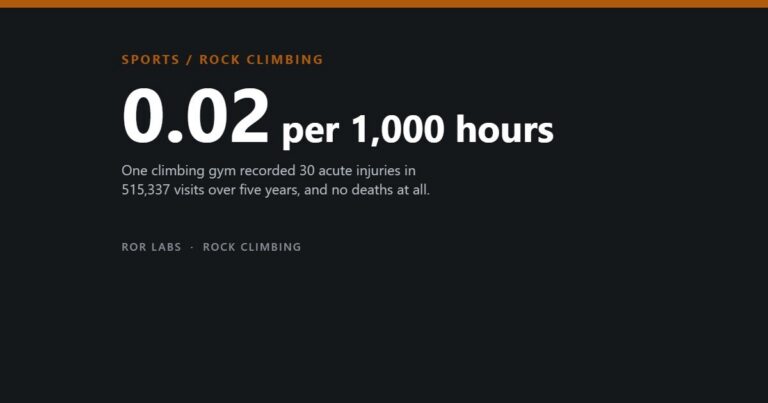
Rock climbing injuries: a gym rate of 0.02 per 1,000 hours, finger pulleys, bouldering ankles, and the short ropes behind serious outdoor falls.
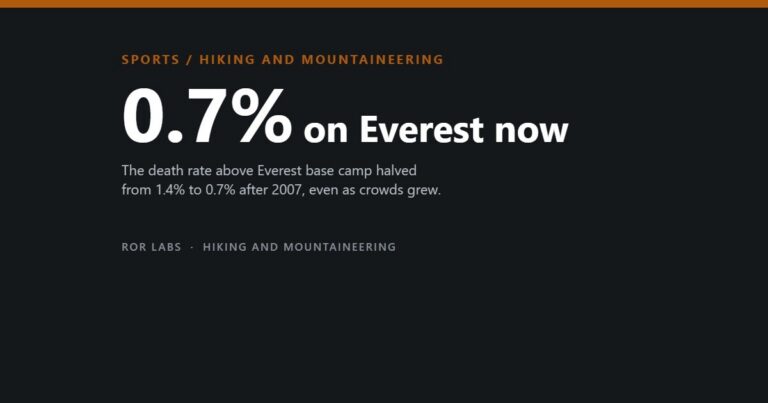
Hiking deaths: falls, first-day cardiac arrests, national park causes, and why Everest’s death rate halved to 0.7% even as crowds grew.
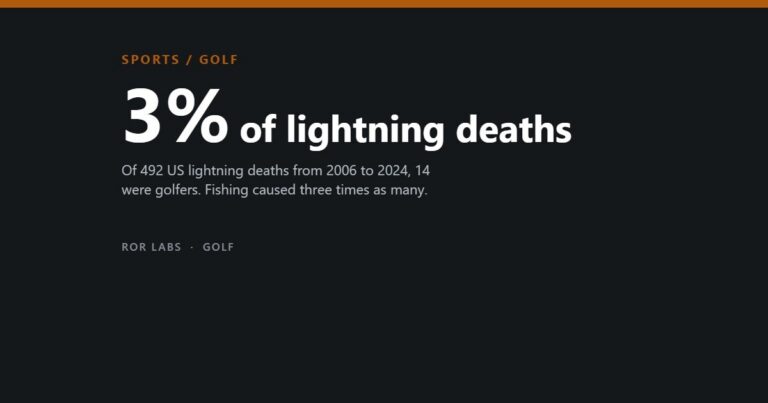
Golf injuries to backs and elbows, child club accidents, golf cart risks, and why only 3% of US lightning deaths happen on golf courses.

Tennis injuries by body part, the tennis elbow injection trial where 54% saw pain return, and how to play carefully when training time rises.
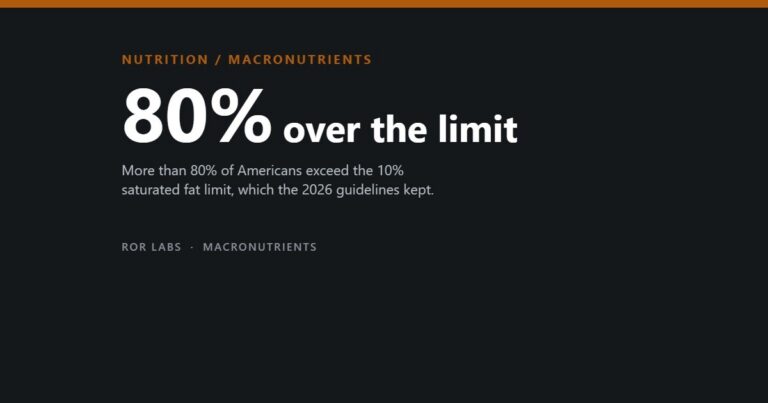
Dietary fat by the spoonful: butter and tallow against the 10% saturated fat limit kept in 2026, why most Americans exceed it, and what trials found.
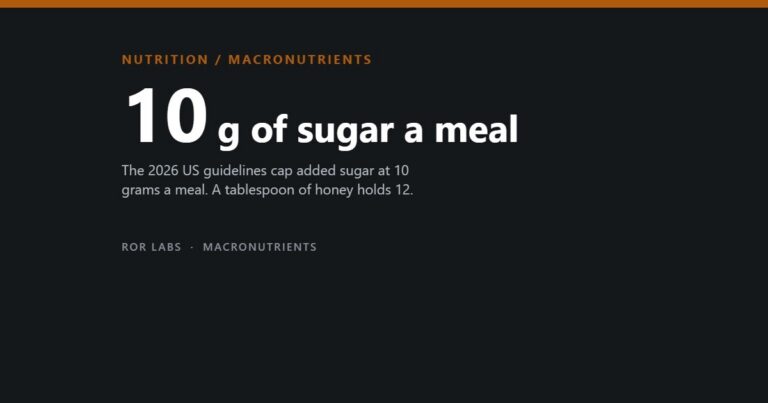
Carbohydrate food sources by the spoonful, the 130-gram brain floor, the 2026 rule of 10 grams of added sugar per meal, and what diet trials found.
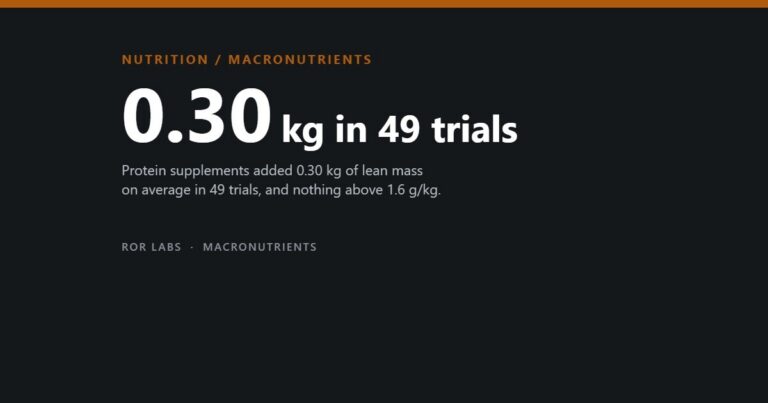
Protein food sources by the spoonful, why gelatin’s tryptophan is zero, the 2026 guideline target above the RDA, and what 49 trials found about muscle.
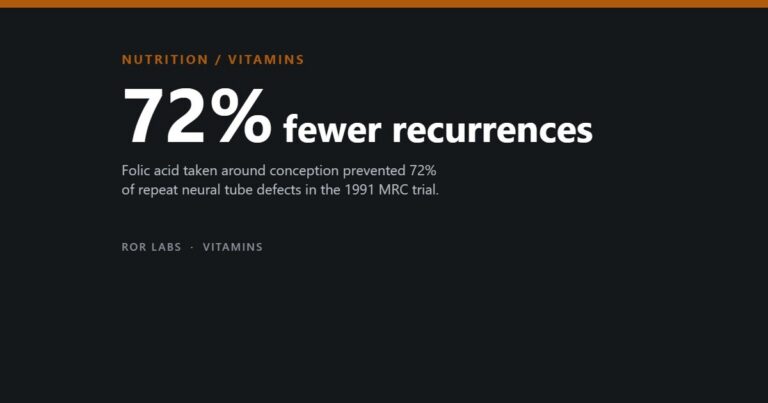
Folate food sources by the spoonful, the MRC trial that cut neural tube defects by 72%, flour fortification, and why the folic acid limit protects B12.
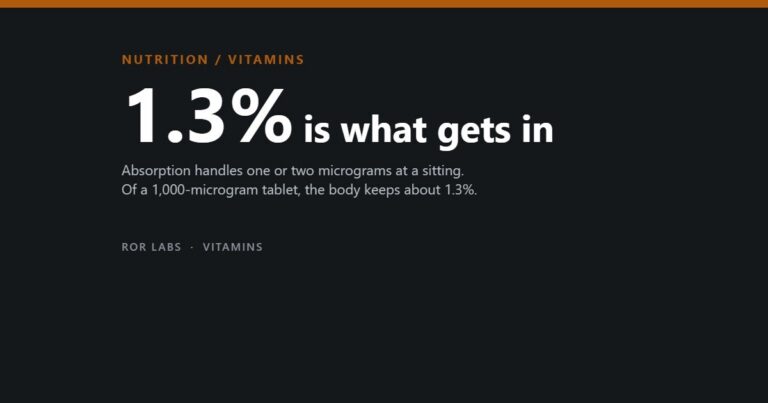
Clams and liver top the tablespoon table, but the gut absorbs B12 a microgram or two at a time. Who runs short, and what 1,000 mcg tablets really do.
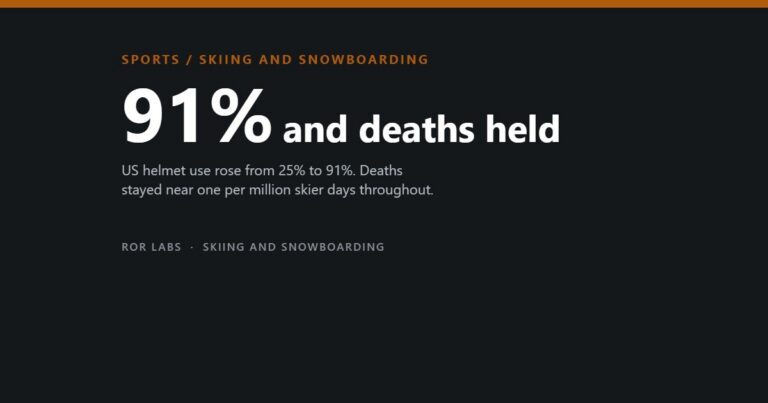
File photo: a ski lift above a snowy slope. Photo: DimiTalen, via Wikimedia Commons, CC0. In the news · September 2026 The National Ski Areas Association’s end-of-season report found that helmets were worn on 94% of U.S. skier visits in 2025-26, up from about 25% in 2002-03. Use was lowest in the Midwest (88%) and…