
Riboflavin: Food Sources, Deficiency, and the Migraine Trials
Riboflavin per measured tablespoon, why deficiency almost never occurs alone, and what four hundred milligrams a day did in the migraine trials.
Things worth keeping a reference shelf on, kept apart from the risk categories. Each branch works down from the general to the specific, one entry at a time.
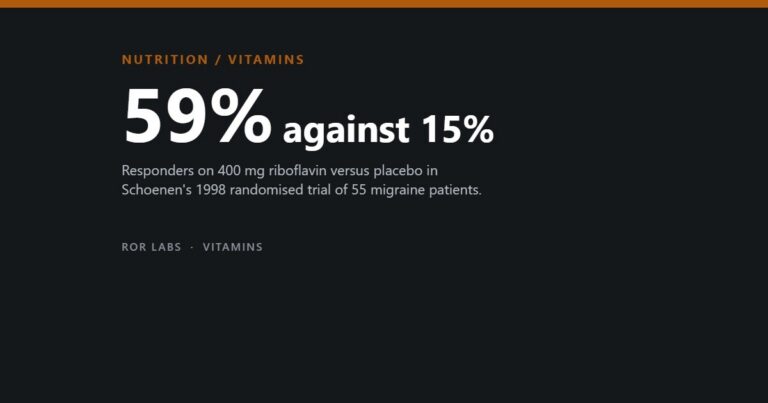
Riboflavin per measured tablespoon, why deficiency almost never occurs alone, and what four hundred milligrams a day did in the migraine trials.
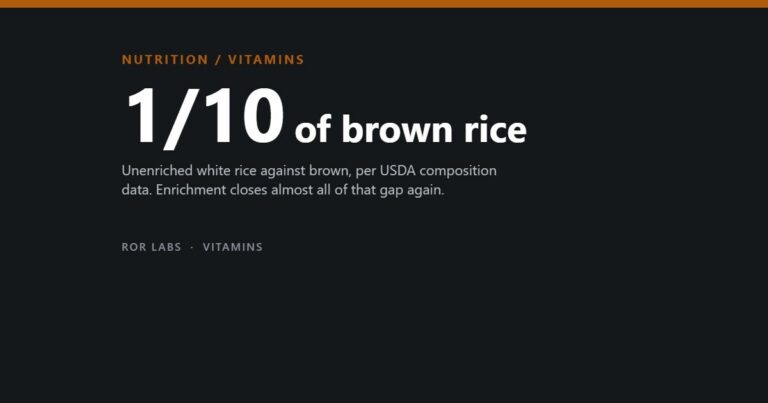
Thiamin per measured tablespoon, the milling step that turned beriberi into an epidemic, and why the Food and Nutrition Board set no upper limit at all.
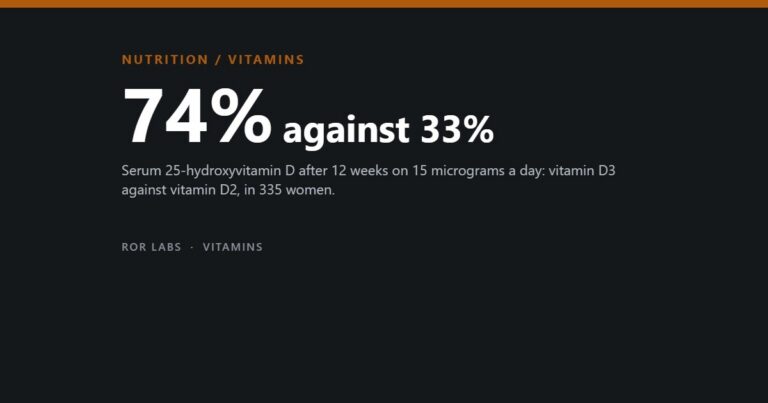
There is no vitamin D1. There are two forms, the label treats them as interchangeable, and the randomised comparisons put D3 ahead by about 15 nmol/L — with most of the gap in a dosing schedule almost nobody uses.
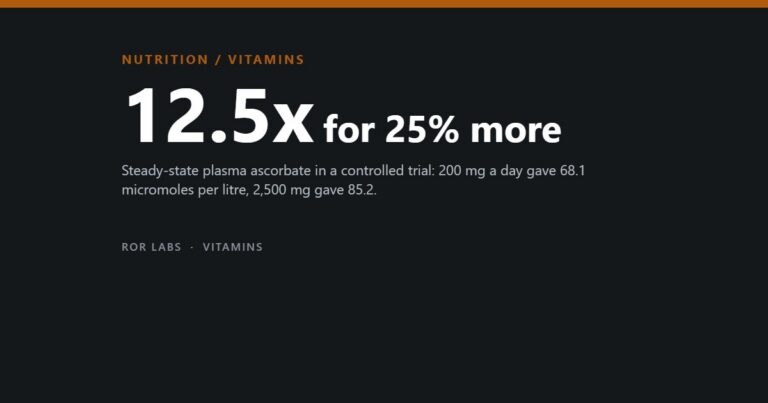
Vitamin C per measured tablespoon, what a deliberate depletion showed about scurvy, and why the dose-response curve flattens long before the tablet does.
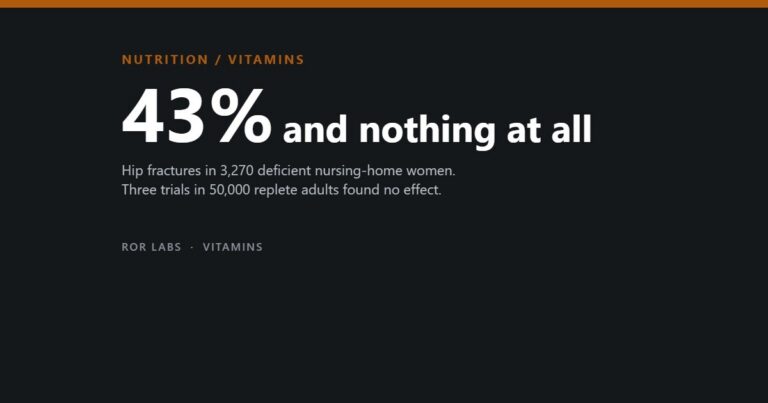
Vitamin D per measured tablespoon, why the food table misses most of the supply, and why three large trials found nothing where a smaller one cut hip fractures by 43 per cent.
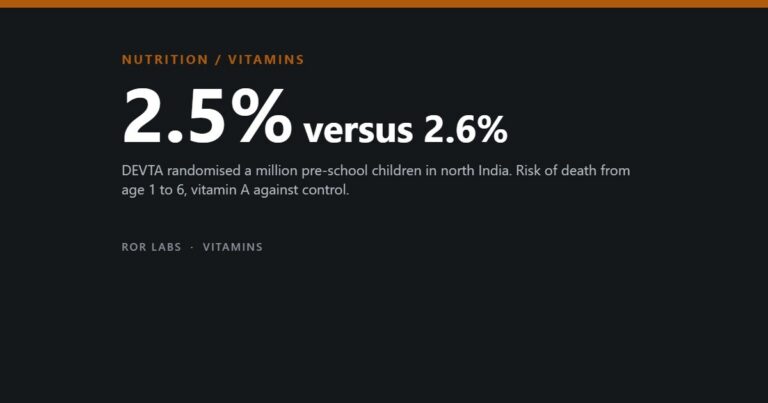
How much vitamin A a tablespoon of liver, cod liver oil or sweet potato actually carries — what deficiency does, and why the 3,000 microgram upper limit matters.
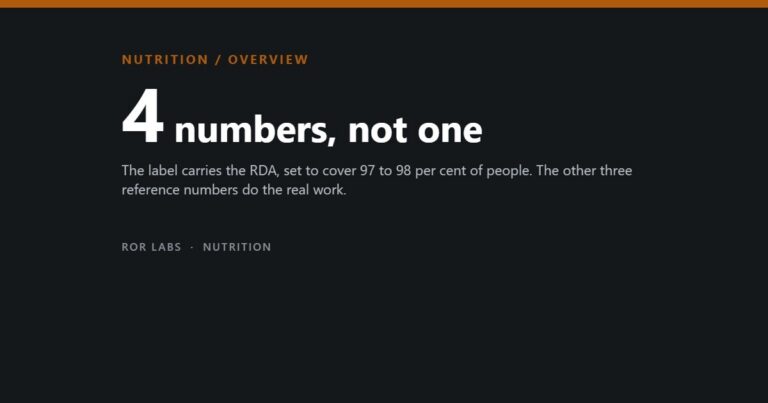
Macronutrients, micronutrients and the thirteen vitamins — plus what EAR, RDA, AI and UL actually mean, and why an intake below the RDA is not a deficiency.