It Looks Exactly Like Flu, Except for the Fever
In This Series: Home Hazards & Indoor Environment
- The Safe Level of Air Pollution Keeps Moving Down
- The Mould Is Not the Problem. The Water Is.
- Nine Million Homes Still Drink Through a Lead Pipe
- Lithium-Ion Battery Fires at Home: What the Research Actually Shows
- The Leading Cause of House Fires Is a Pan Nobody Is Watching
- Your Gas Stove and the Air in Your Kitchen: What the Measurements Found
- Power Outages Are Getting Longer. The Generator Is the Dangerous Part.
Disclosure: this article contains affiliate links, marked (paid link). If you buy through one we may earn a commission, at no extra cost to you. As an Amazon Associate I earn from qualifying purchases. It costs you nothing and it does not change what we recommend.
Key takeaways · 7 min read
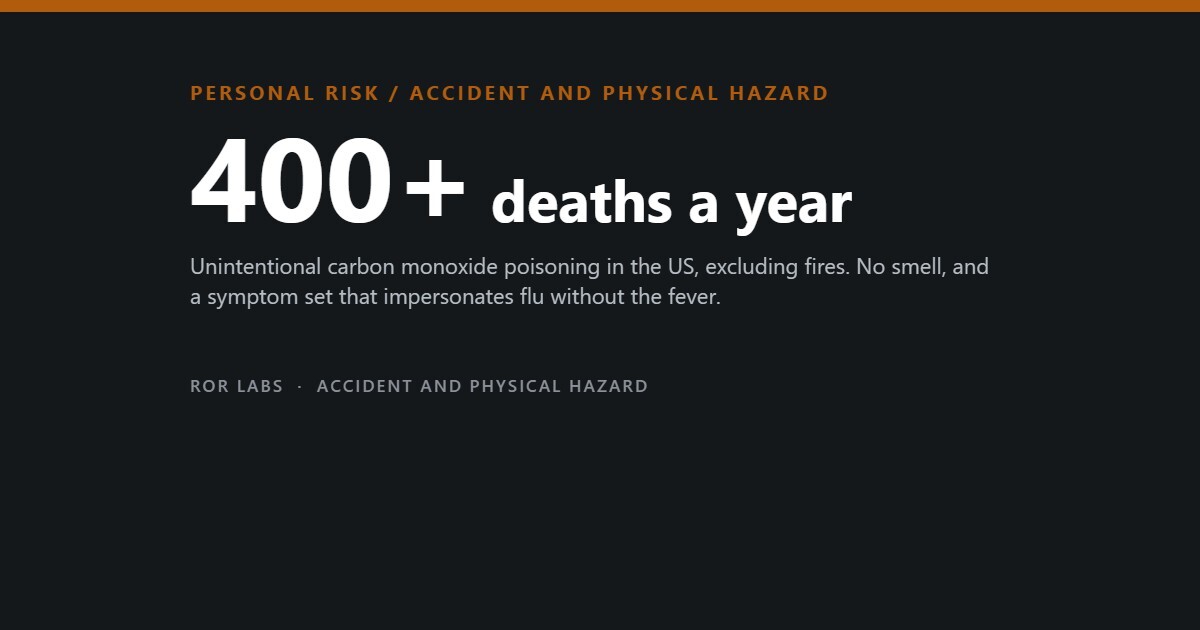
- Over 400 Americans a year die from unintentional CO poisoning unrelated to fires, with 100,000+ emergency visits.
- Symptoms mimic flu — but CO causes no fever, and it makes everyone in the building ill at once, including pets.
- If symptoms improve when you leave the house and return when you come home, that is the pattern.
- People asleep or intoxicated can die before any symptoms. The alarm has to do the noticing.
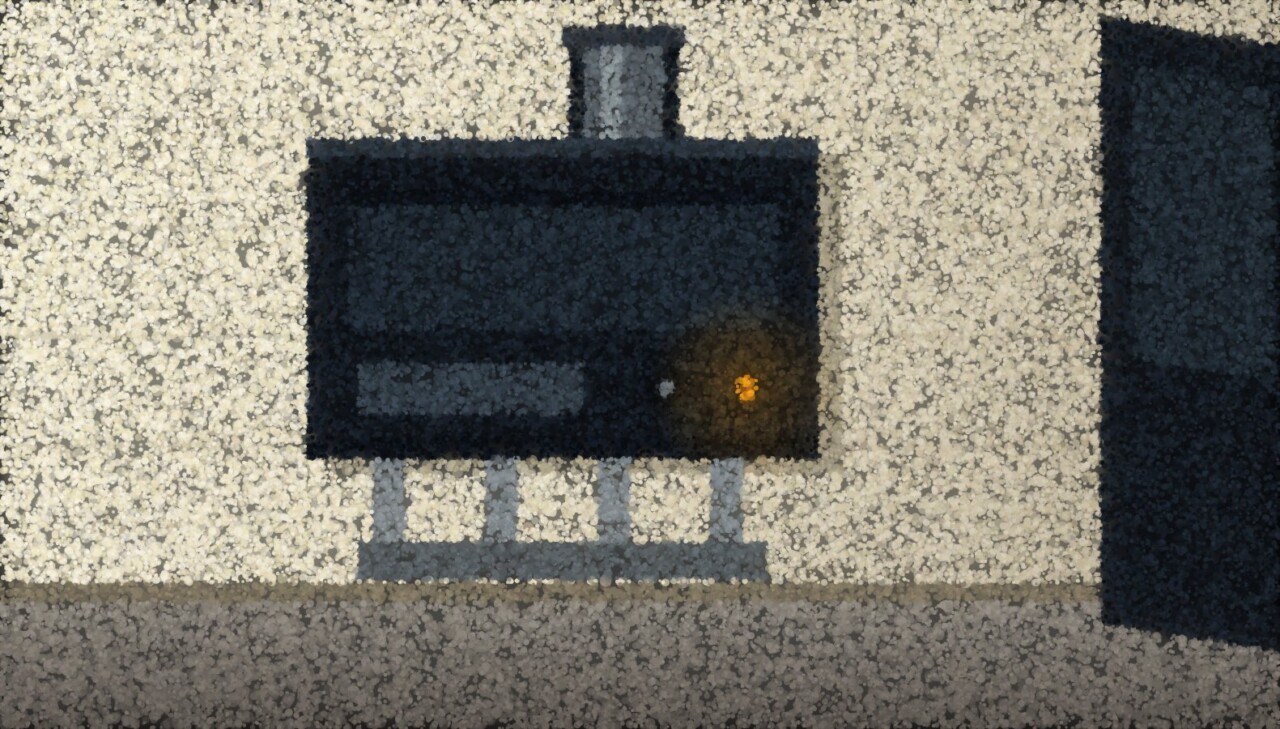
Every winter, families come down with what they take to be flu. Headache, tiredness, nausea, a bit foggy. It clears up when they go out and comes back when they are home for the evening, which nobody notices because that is also what a virus feels like when you are resting.
Carbon monoxide has no smell, no colour and no taste. The only thing it has is a symptom set that impersonates the most common illness of the season, and a detector that costs about twenty dollars.
The scale, and it is not fires
Unintentional carbon monoxide poisoning in the U.S., per year
CDC figures. These exclude poisonings linked to fires.
Source: U.S. Centers for Disease Control and Prevention, Carbon Monoxide Poisoning Basics.
Carbon monoxide binds to haemoglobin far more readily than oxygen does. Your blood keeps circulating and stops carrying what it is for. That is why the early symptoms are so vague — every tissue is mildly starved at once, and the brain complains first.
Flu, or carbon monoxide?
The symptoms overlap almost completely. The pattern does not.
| Points to flu | Points to carbon monoxide | |
|---|---|---|
| Fever | Usually present | Absent — CO does not cause fever |
| Who is ill | One person, then others over days | Several people at once, including pets |
| Location | Follows you everywhere | Improves when you leave the building, returns when you come home |
| Timing | Any season, runs its course | Starts when heating season begins, or after a new appliance or a generator |
| Other signs | Sore throat, cough, aches | Confusion, unsteadiness, unusual sleepiness |
Source: CDC carbon monoxide poisoning guidance; symptom presentation as described in clinical toxicology references.
One sentence from the CDC deserves to be read twice: people who are sleeping, drunk, or under the influence of other substances can die from CO poisoning before they have symptoms. The warning signs are only useful to someone awake enough to notice them, which is precisely why the alarm has to do the noticing.
Where it comes from

Anything that burns fuel produces some carbon monoxide. In a working appliance it goes up a flue. The danger arises when combustion is incomplete, when the flue is blocked, or when the burning happens somewhere it was never meant to.
Sources, ranked by how often they kill people
The top two are not appliances.
Sources: CDC carbon monoxide guidance; U.S. Consumer Product Safety Commission portable generator hazard reporting.
Getting the alarm right
This is one of the few risks on this site where a single cheap object genuinely solves most of the problem — provided it is present, powered, and not expired.
Four things people get wrong
CDC and manufacturer guidance.
Source: U.S. Centers for Disease Control and Prevention, CO detector placement and maintenance guidance.
If the alarm sounds
There is no version of this where you investigate first.
Source: CDC emergency guidance for carbon monoxide alarms.
What to own (paid link)
Short list, because the answer here really is one object per floor.
Browse on Amazon →
Browse on Amazon →
We are not linking “CO detector cards” — the small colour-change patches sold as a cheap alternative. They require someone to be looking at them, which excludes everyone asleep, and that is the group this hazard kills. This is a category where the audible alarm is the product and there is no budget version of it.

Questions people ask
High or low on the wall?
Carbon monoxide has almost the same density as air, so it mixes rather than sinking or rising. Height matters far less than people assume — follow the manufacturer’s instructions for that specific unit. What matters much more is being near where people sleep, and not tucked behind furniture or right beside a fuel-burning appliance where normal brief spikes cause nuisance alarms.
I have an all-electric home. Do I need one?
Lower risk, not zero. An attached garage, a fireplace, a shared wall in an apartment building, or a neighbour’s generator during an outage all put CO within reach. In a flat with no attached garage and no combustion anywhere in the building, the argument is genuinely weak — but at twenty dollars, most people find the maths easy.
What happens at the hospital?
A blood test measures carboxyhaemoglobin — how much of your haemoglobin is carrying CO instead of oxygen. Treatment is high-flow oxygen, which displaces it far faster than fresh air alone; severe cases may involve hyperbaric oxygen. Tell them you suspect CO, because a standard pulse oximeter on the finger reads falsely normal in CO poisoning and can be reassuring when it should not be.
My alarm went off once and then stopped. Ignore it?
No. A brief alarm means CO reached a level worth alarming about, and something produced it. Get it checked — a heating engineer can test the appliances, and an alarm with a peak-reading display will tell them the number it saw. Intermittent alarms are frequently the first sign of a cracked heat exchanger.
The short version
- Over 400 Americans a year die from unintentional CO poisoning unrelated to fires, with 100,000+ emergency visits.
- Symptoms mimic flu — but CO causes no fever, and it makes everyone in the building ill at once, including pets.
- If symptoms improve when you leave the house and return when you come home, that is the pattern.
- People asleep or intoxicated can die before any symptoms. The alarm has to do the noticing.
- Biggest killers: portable generators and cars in garages — not faulty boilers.
- Alarms go near every sleeping area, on every level, and they expire in about 5–7 years.
- A smoke alarm is not a CO alarm. Check the label.
- If it sounds: everyone outside, call from outside, do not go back in.
Suspected carbon monoxide poisoning is a medical emergency. Get everyone into fresh air and call emergency services from outside the building. Tell medical staff you suspect CO — it changes both the test and the treatment.
On the links above: some are affiliate links, marked (paid link). If you buy through one we may earn a commission at no additional cost to you. As an Amazon Associate I earn from qualifying purchases. We link to product searches rather than specific items so recommendations do not break as models change, and we say plainly when we are choosing not to link something. Full policy: Affiliate Disclosure.
Sources
- U.S. Centers for Disease Control and Prevention. “Carbon Monoxide Poisoning Basics” and CO detector guidance.
- U.S. Consumer Product Safety Commission. Portable generator carbon monoxide hazard reporting and winter safety guidance.
- National Safety Council. Carbon monoxide safety topic.