
Phishing Training: What the Evidence Shows
A third of 14,733 employees clicked a test phishing email, and training pages made some click more. What large field studies show about phishing training.
Exposure online: the internet, social media, communities, shopping, online finance and digital services.
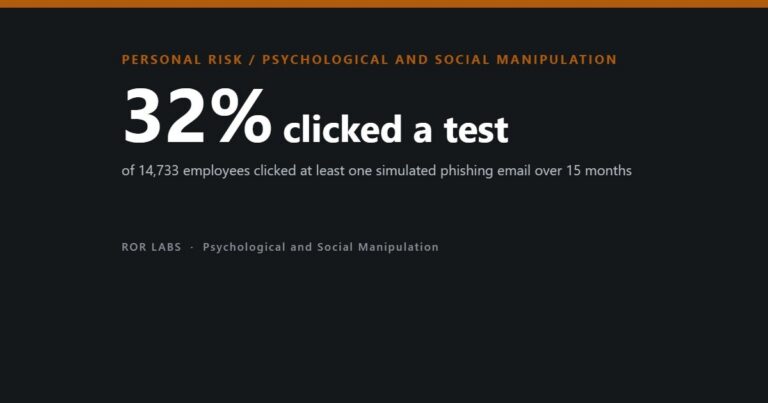
A third of 14,733 employees clicked a test phishing email, and training pages made some click more. What large field studies show about phishing training.
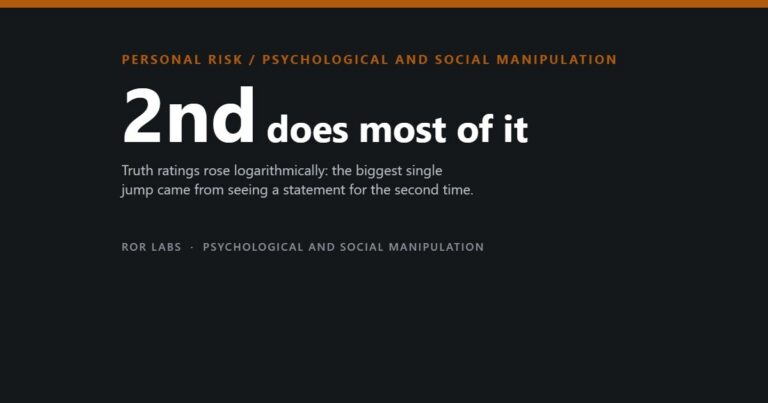
File photo: a smartphone display. Photo: Skitterphoto, via Wikimedia Commons, CC0. In the news · August 2026 An experiment with 165 participants showed Instagram-style posts that were either new or repeated, with high or low like counts. Repeated statements were again judged more true than new ones, and like counts did not change that effect….
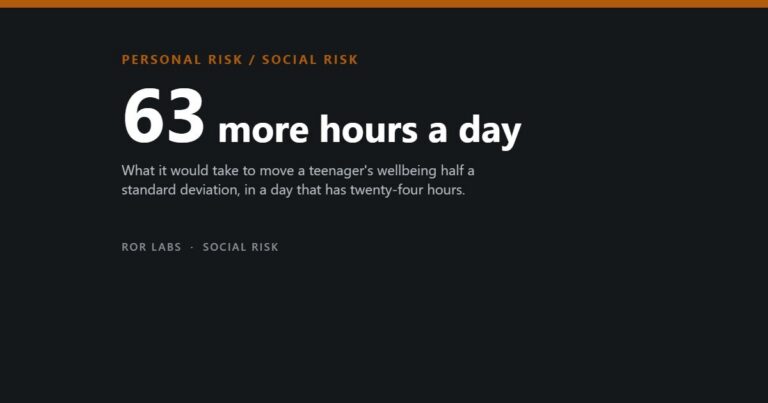
File photo: a teenager texting on a smartphone. Photo: Summer Skyes 11, via Wikimedia Commons, CC BY 2.0. In the news · June 2026 A Eurobarometer survey of 26,297 teenagers and 12,750 parents across the EU, carried out in March and April 2026, found that 25% of teens exceed six hours of daily screen time…
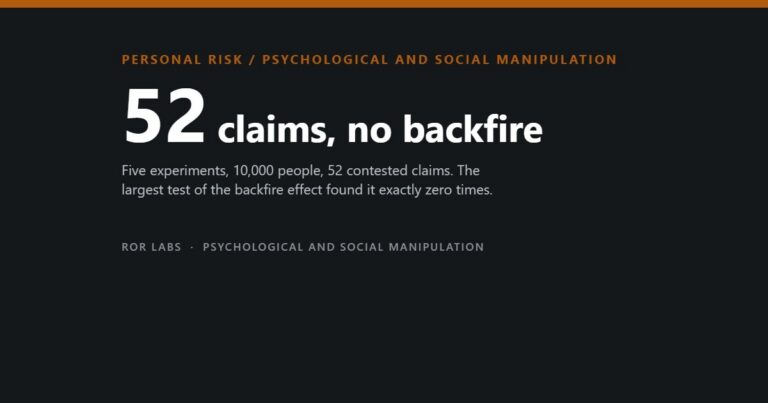
Key takeaways · 12 min read The backfire effect comes from a 2010 paper, whose own second experiment failed to reproduce it at the group level. The largest test since (five experiments, more than 10,000 people, 52 corrected claims) found it zero times. Across the literature, 81% of reported backfires used a single-question belief measure,…
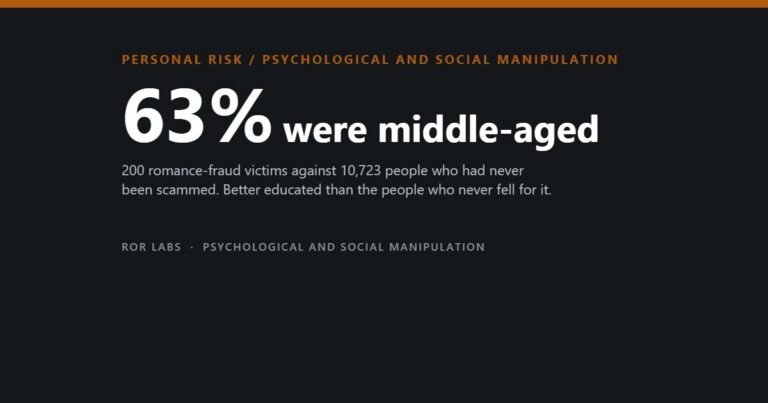
A comparison of 200 romance fraud victims with 10,723 people who were never scammed found victims middle-aged and better educated, with self-rated security knowledge predicting nothing. The current version of the fraud asks for an investment rather than a favour, stepping between the two standard warnings.
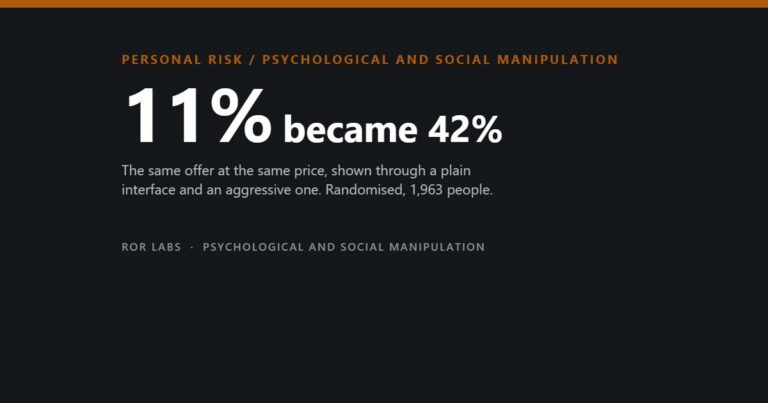
Randomised experiments show manipulative interface design nearly quadrupling acceptance of an unchanged offer, while raising its price fourfold changed nothing. What works, what is overstated, and why enforcement rather than vigilance is what altered the interfaces.
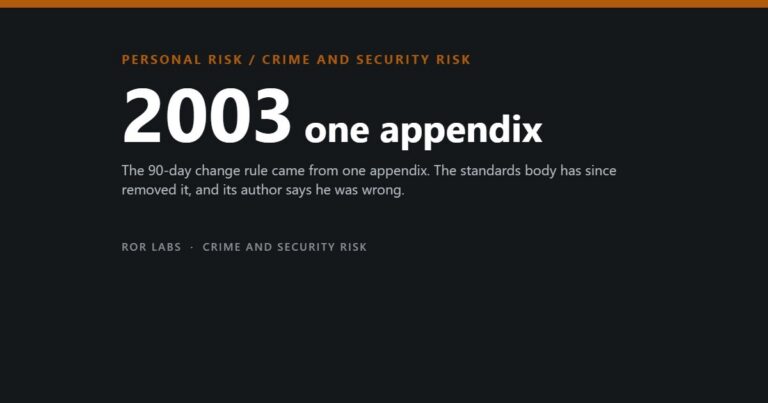
The composition and expiry rules came from one 2003 appendix, and its author regrets it. What actually takes over accounts is reuse, infostealers and phishable codes.
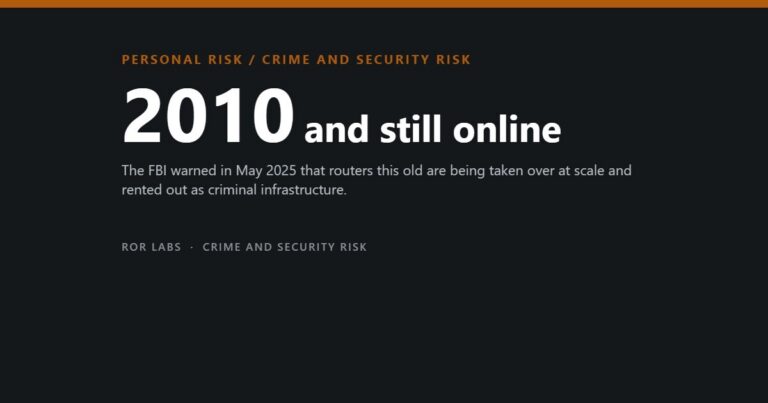
The FBI warned in May 2025 that end-of-life home routers are being taken over for criminal proxy networks, using malware that needs no password. What attackers actually want is your residential IP address. The eight settings that matter, why the guest network is the highest-value free change, and the backup rule that is the only answer to ransomware.
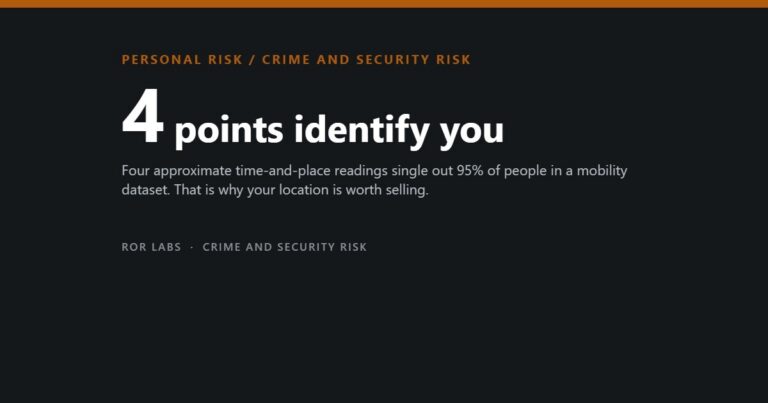
Four known places-and-times identify 95% of people in an anonymised mobility dataset, and coarsening the data barely helps. How real-time bidding broadcasts your location to bidders who keep it even when they lose, what the FTC found inside Mobilewalla and X-Mode, and which defences actually work – including the deletion platform California switched on this month.
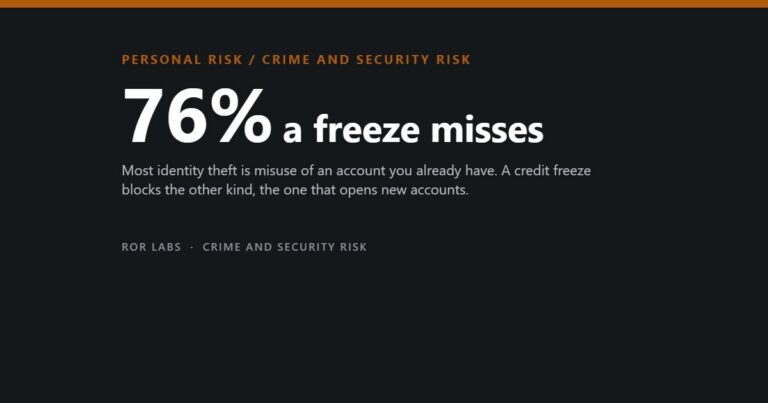
Seventy-six per cent of identity theft involves an account you already have, and a credit freeze does not touch that category. What a freeze actually blocks, how fast the bureaus must act by law, the difference between a freeze, a lock and a fraud alert, and what covers the other three quarters.