Horse riding air vests and body protectors, and what a falling horse does to them
Key takeaways · 10 min read
- About 40% of adult air vest owners in a US survey wear one on every ride, yet the FEI’s medical chair says there is very little data on how well air vests work.
- Torso injuries come mostly from falls at fences at canter, and the shoulder or head usually hits first, outside the area a vest covers best.
- In a dead-horse drop test an air jacket cut chest compression and the modelled severe chest injury risk from 94% to 81%, but severe injury stayed likely.
- Studies of real falls found more injuries among air vest wearers, but who chooses a vest can explain that; confounding has not been ruled out.
In December 2024 US Equestrian asked its members about the vests they ride in, and 6,097 answered. Among adults who own an air vest, about 40% said they wear it on every ride; among owners of foam body protectors, 15%. About a third of air vest owners thought the vest might prevent a spinal injury. Publishing the results in February 2026, Mark Hart, who chairs the FEI medical committee, said: “We have very little current scientific data on the actual effectiveness of air vests.”
That gap is now being worked on. In June 2025 the FEI set up an Equestrian Safety Vest Working Group to review foam and air vests and recommend new test standards. There is still no European standard for equestrian air vests: some jackets sold in Britain are tested to a French standard that the British governing bodies do not recognise, and a standard drafted by BETA, the British trade association, is hoped for in 2026.
This article covers how foam protectors and air vests work, what a fall does to a rider’s torso, where the danger concentrates, what laboratory tests and studies of real falls have measured, why the two disagree, and how to ride carefully with the kit that exists. It goes deeper than our earlier article on horse riding injuries, which gave air vests a single paragraph.
What a fall does to a rider’s torso
A foam body protector is a vest of shock-absorbing panels. In Britain the BETA 2018 standard, which meets the European standard EN 13158, has three levels: Level 1 only for licensed jockeys, Level 2 for very low-risk riding, and Level 3 for general riding, eventing and work with horses. BETA’s own claim for Level 3 is modest: it should prevent minor bruising, reduce soft-tissue injuries and prevent “a limited number of rib fractures”.
An air vest is worn over clothes or over a foam protector, with a lanyard clipped to the saddle. When rider and horse part, the pull fires a carbon dioxide cartridge; one study measured trigger forces of 150 to 593 newtons. Manufacturers quote inflation times from about 0.06 to 0.25 seconds. In the lab, EN 13158 passes a foam vest if the mean peak force behind it stays under 4 kilonewtons.
Where the rider hits the ground first
Share of falls in which each body region struck first, in US Equestrian incident reports with suspected torso injury, 2020–2023. More than one region can strike first.
Source: Brolin, Bonin and Stigson, IRCOBI conference (2024); first-impact information was available for 296 hunter/jumper and 33 eventing falls.
That Swedish team read 902 reports with a suspected torso injury. Falls from the horse made up 92% of hunter/jumper cases and 90.5% of eventing cases. Among hunter/jumper riders the shoulder, including the collarbone, was injured in about half, the back in 38% and the chest in 13%. Riders braced with their arms in only about 3% of falls. In an older series of 16,940 cross-country rides, head and face injuries were 31% of 193 injuries, although every rider wore a body protector.
Where the risk concentrates
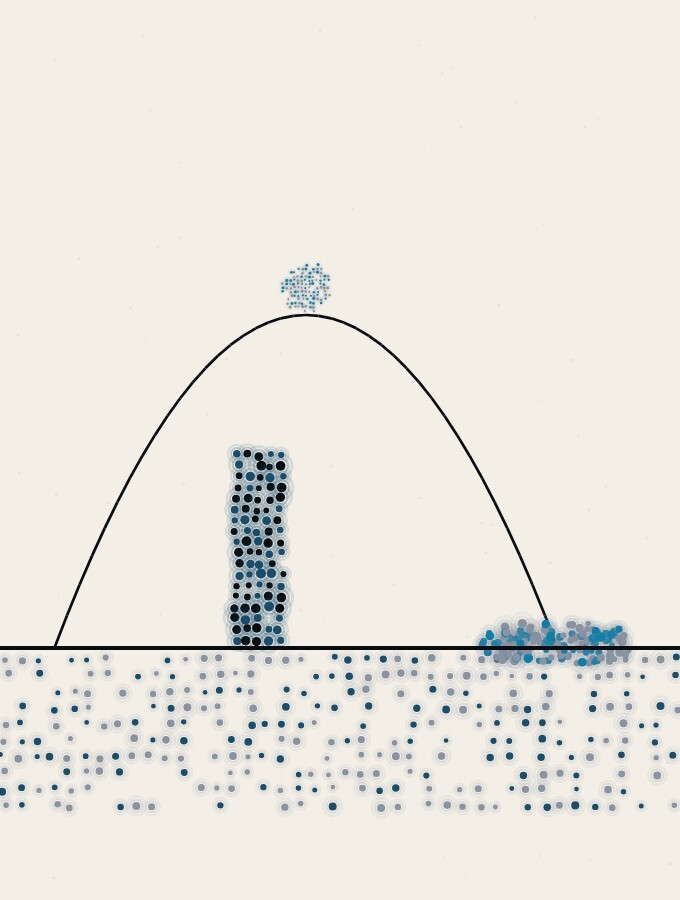
Torso injuries gather at jumps and at speed. In the US reports, 77.9% of the eventing falls and 74.7% of the hunter/jumper falls happened at a fence, and almost all at canter. The horse fell too in 36% of the eventing cases and 25% of the hunter/jumper ones. In eventing, riders were thrown forward nearly three times as often as they simply slid off, which puts the head and shoulder, not the padded back, first in line.
The researchers then modelled what a vest absorbs. In a simulated sideways fall the foam soaked up about 166 joules and stayed compressed for about 100 milliseconds. The certification tests deliver far less energy, far faster: the EN 13158 drop put 28 joules into the vest over 25 milliseconds. That loading looks more like a hoof kick, which typically peaks below 2 kilonewtons and lasts under 30 milliseconds, than like a rider landing at canter.
A simulated fall against the test bench
Energy taken up by a foam vest (joules) and how long it stayed compressed (milliseconds) in computer simulations. Modelled values, not measurements on riders.
Source: Brolin, Bonin and Stigson, IRCOBI conference (2024), simulations with a mid-sized female human body model.
Speed matters for air vests too. Experiments with motorcyclists’ airbag vests found the protection fell away above about 40 km/h, and a 2024 review notes that a cross-country gallop averages about 44 km/h, from a greater height than a motorcycle seat. The worst case is the rotational fall, in which the horse somersaults over a fence and may land on the rider. A report on British Eventing’s research counted 45 on cross-country courses from July 2013 to June 2014: 16 caused serious injury and one was fatal.
What has been measured to work
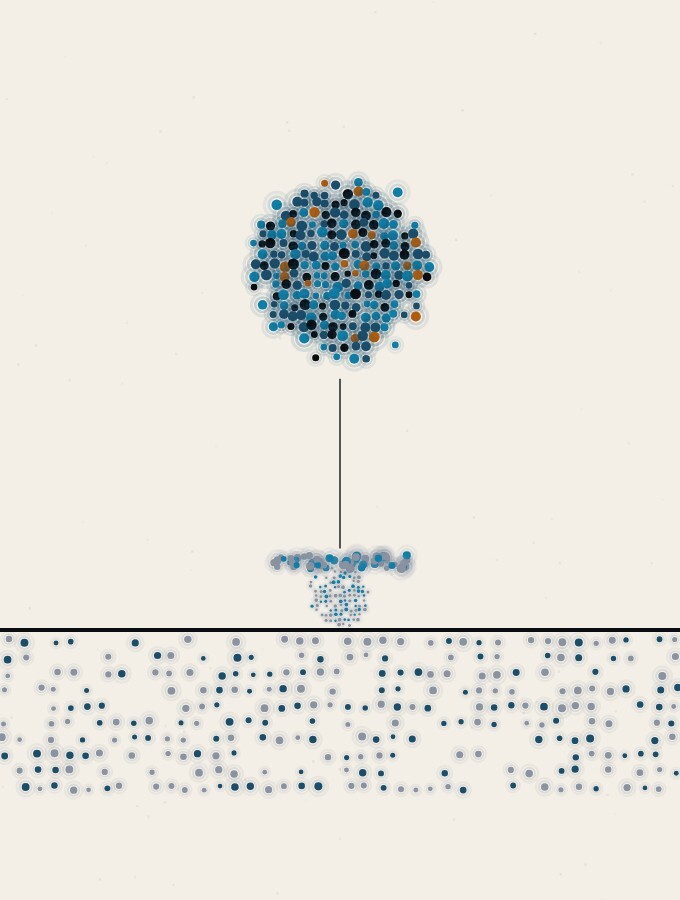
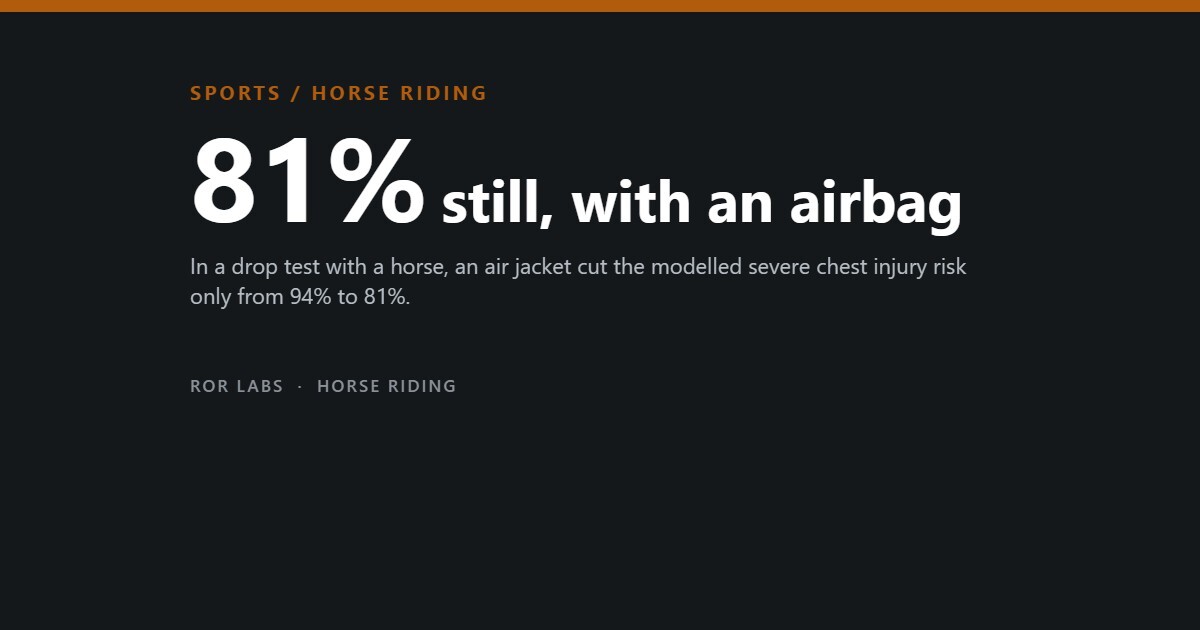
The most direct test dropped a dead horse. The Transport Research Laboratory and British Eventing let an equine cadaver fall 1.2 metres onto a crash-test dummy the size of an average 45-year-old man, wearing a Level 3 protector with and without an air jacket. With the jacket, peak chest deflection fell from 77 to 66 millimetres, and the modelled risk of a severe chest injury from 94% to 81%. The horse was lighter than a typical event horse.
The authors were frank that there was a high probability of severe injury either way; the report on the study said the jacket was unlikely to prevent a death if a horse lands squarely on a rider. In a laboratory drop-weight test, adding an air vest raised one foam vest’s force reduction from 79% to 94%, though the vests were inflated by hand. Simulations of foam vests show a similar pattern: a vest helps most in a hard blow and adds little in a soft sideways fall.
What laboratory tests and simulations found
Dead-horse drop onto an instrumented dummy wearing a foam protector, with and without an air jacket; rib fractures predicted by a female body model aged 45. Single tests and models.
Sources: Hynd et al., IRCOBI conference (2016), as reported by British Eventing and summarised by Meyer et al. (2024); Brolin, Bonin and Stigson, IRCOBI conference (2024).
Studies of real falls point the other way. A French prospective study of cross-country falls at Pompadour from 2013 to 2015 found 13.7% of fallers wearing an airbag vest were injured, against 9% without. A video analysis of 87 high-risk cross-country falls linked air jacket use with high-risk landings, with odds 6.5 times higher, and the jacket inflated late in a quarter of the falls in which one was worn, more often when horse and rider fell together.
None of this proves air vests cause harm. Riders choose them, and the riders who choose them may jump bigger fences, ride faster or have fallen before, which is confounding by indication. The author of the FEI analysis covered in our earlier article, which found 1.7 times the odds of serious injury, wrote that there was not enough data to explain it. A German study of foam vests in 92 children found no protective link and blamed the same problem.
What studies of real falls found
Observational studies of falls. These are associations, not proof of cause; riders who wear vests differ from those who do not.
Sources: Chiodetti et al. (2015) and Nylund et al. (2021), as summarised by Meyer et al. (2024); Hessler et al. (2012).
The 2024 systematic review that gathered these studies rated every air vest study fair or poor, and it was funded by the US Department of Veterans Affairs, not by industry. Its authors listed possible reasons a vest might hurt, from late inflation to a lanyard that could alter how a rider falls, but these remain hypotheses. A survey of 363 German show jumpers is a reminder of the other side: those who always or often wore a foam vest reported fewer spinal injuries.
Why the answer is not to stop riding
The sport is improving its kit rather than abandoning it. Since 17 October 2024 the British Horseracing Authority has required body protectors meeting EN 13158:2018 at Level 2 or above, enforced from February 2025 on racecourses and June 2025 for riding out. US Equestrian has made reporting of every competition fall compulsory since December 2023, and the FEI study will combine fall videos, movement tests and computer models, with its data released openly.
In practice, riding carefully means a Level 3 BETA 2018 protector for jumping and fast work, fitted by someone trained to do it and replaced every three to five years. After a heavy fall, check the foam: a dent still there after 30 minutes means that section has lost protection. If you wear an air vest, use one designed to go over a protector unless the maker says otherwise, check the canister, and unclip before dismounting.
What vest owners believe and do
US Equestrian member survey, December 2024, 6,097 responses, mostly adult amateur riders. Values marked “about” were reported as approximate.
Source: US Equestrian, “Safety vests in horse sports: what we know and what we don’t” (February 2026).
Those beliefs run ahead of the evidence: US Equestrian itself says there is no clear evidence that vests substantially reduce the risk of severe chest or spinal injury. Neither kind of vest protects the head, so the helmet stays essential. The rest of the protection comes from choices: a horse fit and schooled for the fences, courses within your ability, and slowing down when the ground or the horse is wrong.
What to do
Steps sorted by when they matter. Each one says how strong the evidence is: Measured Official advice Untested
Before
- For jumping and fast work, wear a BETA 2018 Level 3 body protector fitted by a trained person, and replace it every three to five years. Measured see Sources
- Wear a certified helmet every ride. Neither vest protects the head, and the head or shoulder often hits the ground first. Measured see Sources
- If you choose an air vest, pick one made to go over a body protector unless the maker says otherwise, and check the gas cartridge before riding. Official advice see Sources
If it happens
- Ride horses and courses within your and your horse's ability, and slow down when the ground or the horse feels wrong. Official advice see Sources
- Unclip the air vest lanyard before you dismount. Official advice see Sources
Afterwards
- After a hard fall, press the foam. If a dent has not recovered after 30 minutes, that part no longer protects you. Measured see Sources
- See a doctor after a heavy fall, especially onto the chest, back or head, even if you feel fine. Official advice see Sources
What not to do
- Do not treat a vest as a reason to ride faster or jump bigger; no clear evidence yet shows vests greatly cut serious chest or spine injuries. Official advice see Sources
Not medical or safety advice. Have body protectors and air vests fitted by a trained person and follow your sport's current rules.
Questions people ask
Do equestrian air vests work?
In laboratory tests they reduce force and chest compression, especially worn over a foam protector. Studies of real falls have not shown fewer injuries, and some found more, probably because of who wears them. Nobody yet knows the true effect.
Should I wear an air vest over a body protector?
Many air vests are designed to be worn over one, and the combination did best in laboratory tests. Some are sold to be worn alone. Follow the maker’s instructions and your competition rules.
Which body protector level do I need?
BETA Level 3 is for general riding, eventing and working with horses. Level 2 is for very low-risk riding, and Level 1 only for licensed jockeys.
Can an air vest protect me if the horse falls on me?
Only partly. In a dead-horse drop test an air jacket cut the modelled risk of a severe chest injury from 94% to 81%, and the authors stressed that severe injury remained likely.
The short version
- About 40% of adult air vest owners in a US survey wear one on every ride, yet the FEI’s medical chair says there is very little data on how well air vests work.
- Torso injuries come mostly from falls at fences at canter, and the shoulder or head usually hits first, outside the area a vest covers best.
- In a dead-horse drop test an air jacket cut chest compression and the modelled severe chest injury risk from 94% to 81%, but severe injury stayed likely.
- Studies of real falls found more injuries among air vest wearers, but who chooses a vest can explain that; confounding has not been ruled out.
- Ride carefully: a fitted BETA Level 3 protector, a certified helmet, an air vest if you choose one, and riding within your and your horse’s ability.
This is a summary of published research, not medical or safety advice. If you have had a heavy fall, especially onto your chest, back or head, see a doctor even if you feel fine, and talk to a physiotherapist before returning to riding. For fitting body protectors and air vests, use a trained fitter and follow your sport’s current rules.
Further reading: Meyer et al., Annals of Biomedical Engineering 52(11):2916 (2024), for a systematic review of airbag vests. Brolin, Bonin and Stigson, IRCOBI conference (2024), for real accidents compared with vest tests. US Equestrian, “Safety vests in horse sports” (2026), for what riders believe.
Sources
- Voss N. Safety vests in horse sports: what we know and what we don’t. US Equestrian, 5 February 2026.
- Keim C. FEI equestrian safety vest study aims to set the standards. The Chronicle of the Horse, 28 May 2026.
- British Equestrian Trade Association. Body protection made easy (web page, accessed October 2026).
- Horse & Rider UK. Buying guide: air jackets (web page, accessed October 2026).
- Meyer C, Gabriel F, Schrum KD, Hollis M, Short M, Gould SJ. Airbag vests in equestrian sports: is use associated with harm? Annals of Biomedical Engineering 52(11):2916–2922 (2024).
- Brolin K, Bonin S, Stigson H. Description of equestrian accidents and implications on testing of equestrian safety vests. IRCOBI Conference Proceedings, IRC-24-10 (2024).
- Whitlock MR. Injuries to riders in the cross country phase of eventing: the importance of protective equipment. British Journal of Sports Medicine 33(3):212 (1999).
- Hynd D, Muirhead M, Carroll J, Barr ARS, Clissold J. Evaluation of the effectiveness of an exemplar equestrian air jacket against crush injuries. IRCOBI Conference Proceedings, IRC-16-107, 888–895 (2016).
- Horse & Country TV. Study looks at effectiveness of air jackets (report on the TRL and British Eventing study, undated).
- Ade N, Stämpfli R, Schmitt KU. Evaluating airbag safety vests for equestrian sports. Journal of Testing and Evaluation (ASTM, published online 2015).
- Chiodetti L, Coustillas S, Bouthin B, Édouard P. Study of airbag vests in cross-country falls at Pompadour, 2013–2015 (2015), doi:10.1016/j.jts.2015.09.004; findings as summarised by Meyer et al. (2024).
- Nylund LE, Sinclair PJ, McLean AN, Cobley SP. Development of a video analysis protocol and assessment of fall characteristics in equestrian cross-country eventing (2021), doi:10.1111/sms.14037.
- Nylund LE. The characteristics of jockey and rider falls and the development of a clinical trial protocol to evaluate the effect of fall safety training on injury severity in equine sports. PhD thesis, University of Sydney (2026), hdl:2123/35465.
- Hessler C, Eckert V, Vettorazzi E, et al. Effectiveness of safety vests in pediatric horseback riding (2012), doi:10.1055/s-0032-1327621.
- Sale J. BHA sets new minimum standards for body protectors and helmets. Insider Sport, 4 October 2024.