
Daylight Saving Time: What the Evidence Shows
What studies show about sleep loss, heart attacks, road crashes and errors after the clocks change, why countries disagree, and the fight over permanent time.
Outside forces you cannot realistically influence. Preparation changes the damage, not the event.
What studies show about sleep loss, heart attacks, road crashes and errors after the clocks change, why countries disagree, and the fight over permanent time.
Only 11.8% of banners on top UK sites met minimal legal requirements in one study. How banner design steers choices, what the law requires and how to protect your privacy.
Nonviolent campaigns succeeded about twice as often as violent ones in the 20th century, but success rates have fallen. What the research shows about protest, violence and personal risk.
The famous 34% sanctions success rate fell to about 4% on re-examination. What research shows about whether sanctions work and who pays.
In 2014 about 400,000 people in Toledo were told not to drink their tap water. What research shows about toxic algae in drinking water and how to protect your household.
For every 82 admitted patients delayed 6 to 8 hours in the ED, one extra death follows. What research shows about emergency department boarding and what patients can do.
Mistaken eyewitnesses played a role in 76% of the first 250 US DNA exonerations. What research shows about confidence, lineups and wrongful convictions.
Cold is linked to about 4.6 million deaths a year, far more than heat. What the evidence shows about cold-related deaths and where researchers disagree.
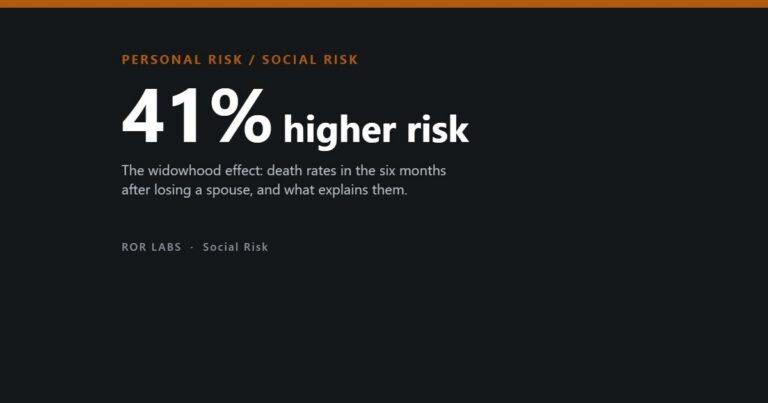
Death rates rise about 41% in the six months after losing a spouse. What meta-analyses show about the widowhood effect, who is most at risk, and why.
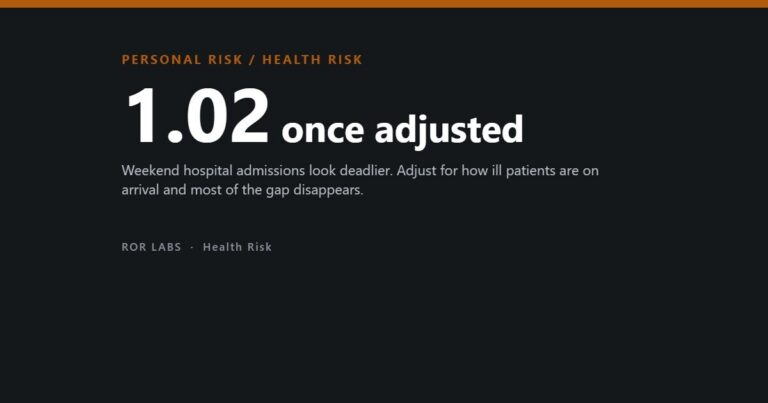
Patients admitted to hospital at weekends die at slightly higher rates. Adjust for how ill they are on arrival and most of the gap disappears. What the evidence shows.