
Workplace Bullying: What the Evidence Shows
Around one worker in seven reports bullying, depending on how it is measured. What meta-analyses show about prevalence, health effects, who bullies and which interventions work.
Risk landing on the job, employment, earning power, career, education, ability to work and career interruption.
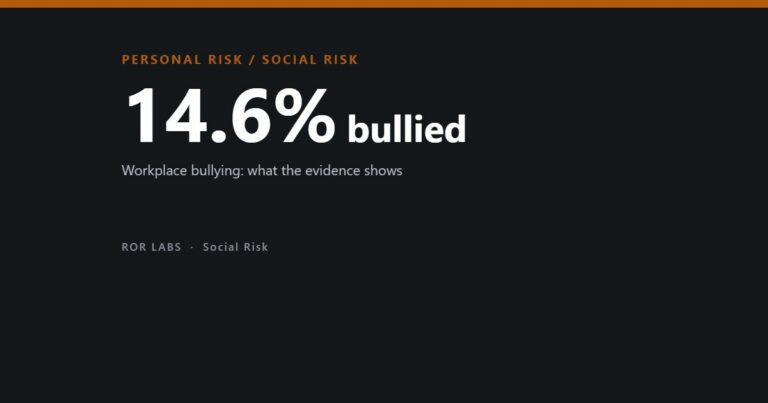
Around one worker in seven reports bullying, depending on how it is measured. What meta-analyses show about prevalence, health effects, who bullies and which interventions work.
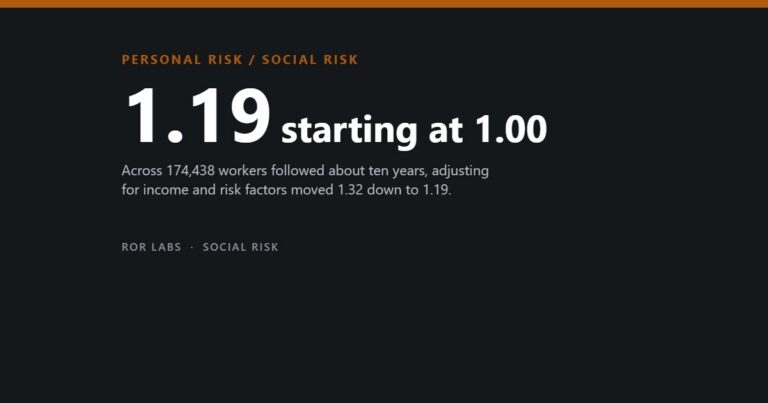
File photo: an empty office workspace. Photo: Loominade, via Wikimedia Commons, CC0. In the news · August 2026 A study of 14,827 Swedish workers across six survey waves from 2010 to 2020 found younger workers reported more job insecurity than older ones. In younger workers, job insecurity predicted depressive symptoms two years later, while the…
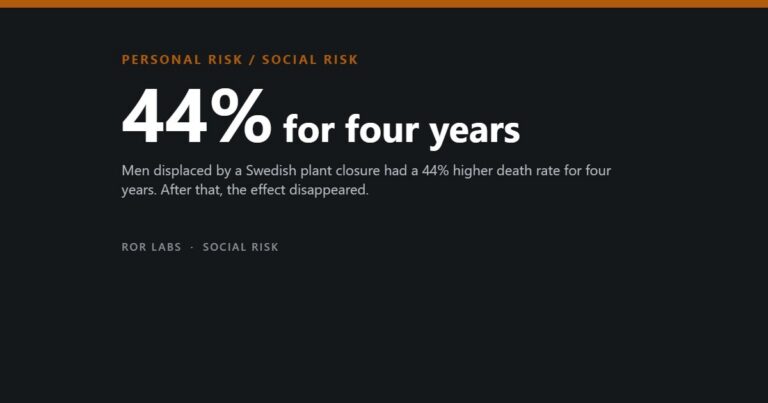
File photo: an English Jobcentre Plus office. Photo: Hassocks5489, via Wikimedia Commons, CC0. In the news · April 2026 The 2026 Economic Report of the President says workers displaced in mass layoffs face 50-100 percent higher mortality in later years, cutting life expectancy by roughly 1 to 1.5 years. It values that loss at about…
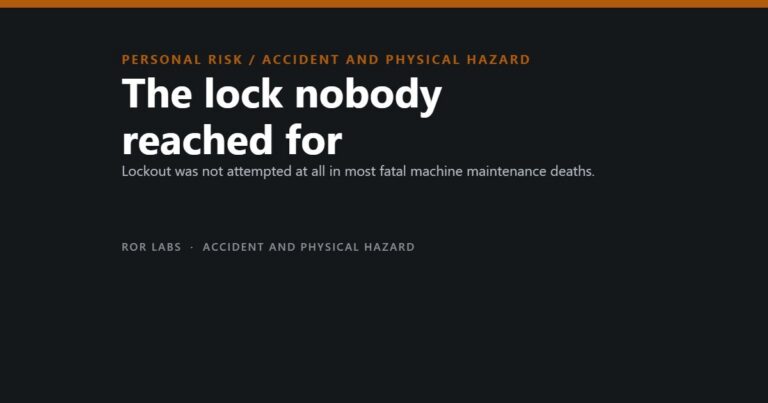
OSHA investigation records show lockout was not attempted at all in at least 59% of fatal machine maintenance incidents, and a national audit of 2,632 machines explains why: procedures were posted at 9% of them. What the evidence says about guards, locks, and the short jobs that kill.
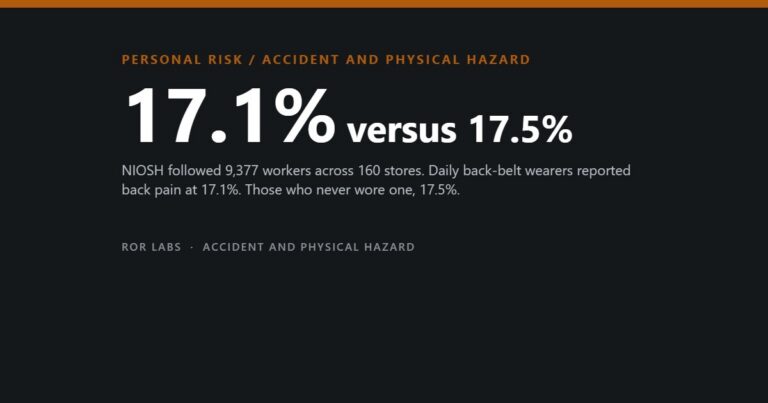
The largest prospective study of back belts found 17.1% back pain among daily wearers and 17.5% among those who never wore one. What the evidence supports instead is changing the task.
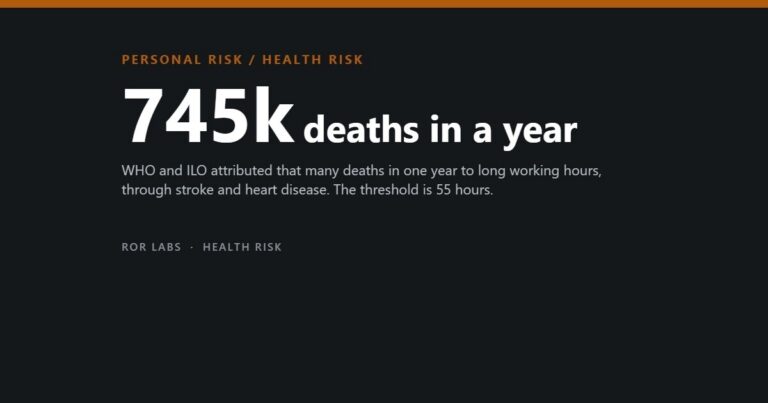
The WHO and ILO attributed 745,000 deaths in a single year to long working hours — a 35% higher stroke risk at 55+ hours a week. And the WHO defines burnout as workplace stress that was not managed, which puts the failure somewhere other than your resilience.