
Sinkholes: What the Evidence Shows
In South Korea, damaged sewer pipes caused 46% of ground collapses between 2019 and 2023. What research shows about natural and urban sinkholes, who pays, and what detection can do.
Exposure in shared space: roads, parks, shops, public buildings and crowded venues.
In South Korea, damaged sewer pipes caused 46% of ground collapses between 2019 and 2023. What research shows about natural and urban sinkholes, who pays, and what detection can do.
Nonviolent campaigns succeeded about twice as often as violent ones in the 20th century, but success rates have fallen. What the research shows about protest, violence and personal risk.

Should you resist a robbery? A study of 27,595 crimes found injury came after resistance in only 10% of cases. What victim surveys show, and their limits.
Escalator stories are about trapped feet, but most escalator injuries are falls, and most of the injured are older adults. What the evidence shows.
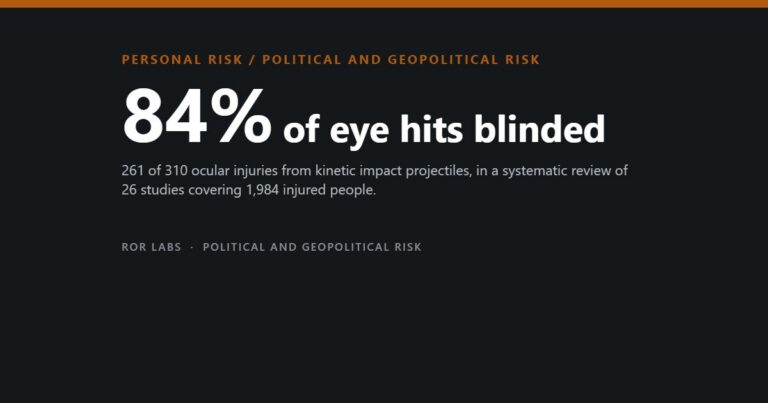
A systematic review of 26 studies found 1,984 people struck by kinetic impact projectiles: 53 died and 300 were permanently disabled. Neither that review nor its companion on tear gas can give you a rate, and both say so.
Six inches knocks an adult down and twelve carries away most cars — and over half of flood drownings are drivers. Meanwhile the official maps miss about six million American properties.
213,000 children a year, three quarters of them from falls, and mostly broken arms. The one randomised trial of playground surfacing found the certified material came off worse — and one piece of safety equipment has killed children on climbing frames.
Virtually all crowd deaths are compressive asphyxia, not trampling, and the word stampede points the blame in the wrong direction. The density ladder, the forces involved, what the Itaewon and Karur investigations found, and the one threshold worth acting on: when you are touched on all four sides, leave.
Children cannot reliably detect a vehicle approaching above 20 mph – a developmental limit, not carelessness. What that means for the school run, the 44% injury reduction Safe Routes to School produced in New York, and why nearly two thirds of school-bus-related child deaths happen outside the bus.
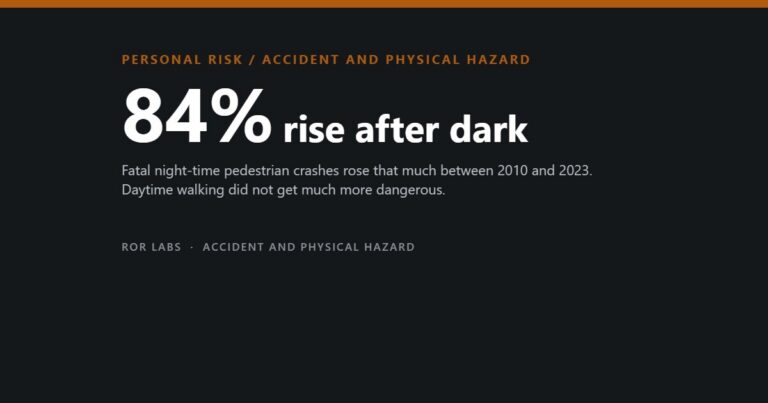
More than three quarters of US pedestrian deaths happen after dark, and fatal night crashes rose 84% in thirteen years. What the IIHS found about tall, flat vehicle fronts, why night-time autobrake still struggles, and the vision research showing the same reflective material works two to five times better on your ankles than on your chest.