
Overdraft Fees: What the Evidence Shows
9% of US checking accounts pay 79% of overdraft fees. What research shows about who pays, why alerts help only a little, and what happened to the CFPB fee cap.
Your choices and preparation reduce the risk, but you do not control whether it happens.
9% of US checking accounts pay 79% of overdraft fees. What research shows about who pays, why alerts help only a little, and what happened to the CFPB fee cap.
More than 80% of US payday loans are rolled over within 14 days. But careful studies disagree on the harm, and bans push borrowers elsewhere. What the evidence shows.
Missed payments begin rising about six years before a dementia diagnosis, and confidence in managing money does not fall as ability does. What the evidence shows.
Escalator stories are about trapped feet, but most escalator injuries are falls, and most of the injured are older adults. What the evidence shows.
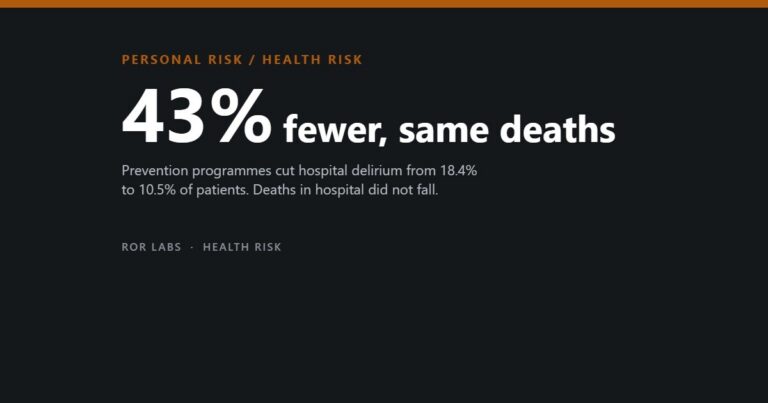
About 29% of older medical inpatients develop delirium, and many cases are missed. Prevention programmes cut cases by 43%, but did not reduce deaths. What the evidence shows on detection, dementia and treatment.

US level crossing collisions fell by more than three-quarters between 1981 and 2010, then stopped falling. Gates and lights explain about a fifth of the decline. Who dies at crossings, which kinds are safest, and why the safest kind is not always chosen.

After 9/11 Americans drove instead of flying, and more died on the roads. The famous estimate is 1,500; published figures run from about 350 to 2,300. What the dread-risk research found, and why the second strike depends on the alternatives at hand.
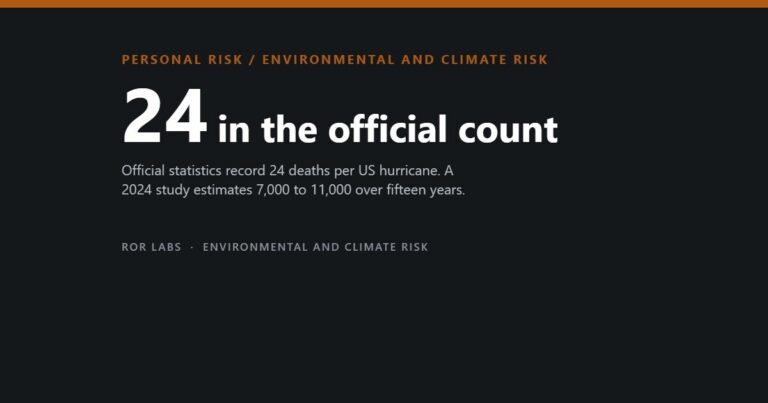
Official statistics record about 24 deaths per US hurricane. Excess-mortality studies find far more, in the months and years after the storm. What kills people directly, who dies later, and how much weight the biggest estimates can carry.
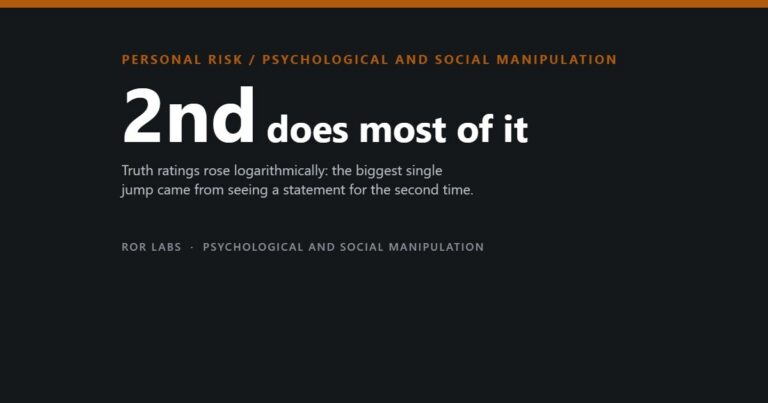
File photo: a smartphone display. Photo: Skitterphoto, via Wikimedia Commons, CC0. In the news · August 2026 An experiment with 165 participants showed Instagram-style posts that were either new or repeated, with high or low like counts. Repeated statements were again judged more true than new ones, and like counts did not change that effect….
In This Series: Personal Finance & Investing Why Most Stock Investors Lose Money: What the Evidence Actually Shows Options and Futures: Where Retail Money Actually Goes Two Retirees, the Same Returns, Only One Runs Out. The Difference Is the Order. Deposit Insurance Stops at $250,000. Since 2008, Uninsured Depositors Have Actually Lost Money in Six…