
Trend summary
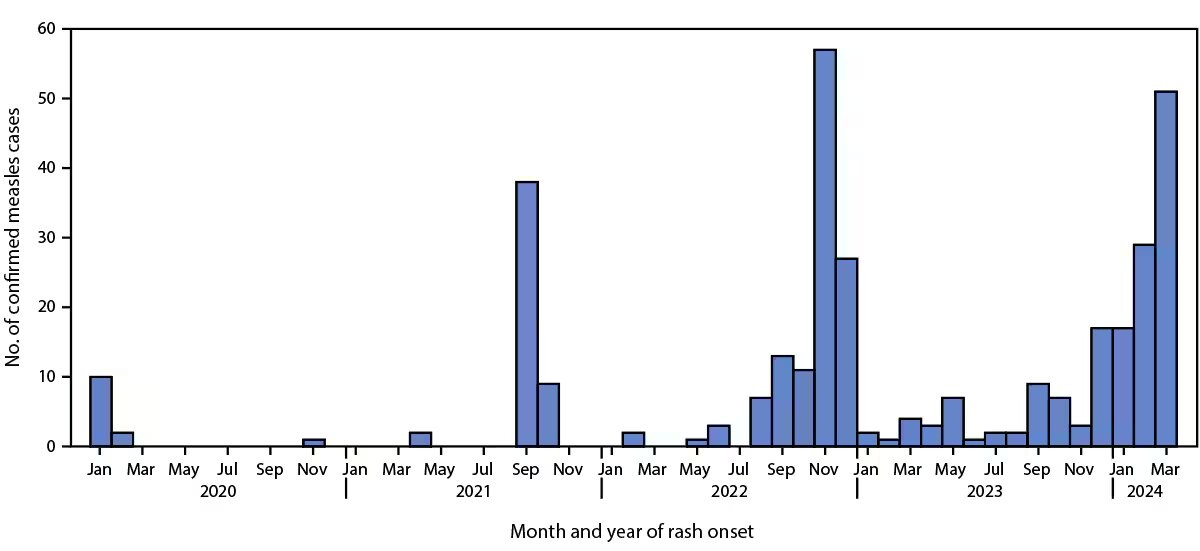
- Measles, declared eliminated in the US in 2000, is spreading again. As of 1 October 2026 the CDC had confirmed 3,887 cases this year, against 2,289 in all of 2025.
- Cases have been reported in 47 states and DC, 95% of them linked to outbreaks; two deaths have been reported so far in 2026.
- The 2025–26 flu season caused an estimated 32 million illnesses, 380,000 hospitalisations and 24,000 deaths, with 166 child deaths.
- Influenza and pneumonia rose from the 11th to the 8th leading cause of death in 2025 provisional data.
What the numbers show
The CDC measles page lists 3,887 confirmed cases as of 1 October 2026, 42 new outbreaks this year and 3,700 outbreak-associated cases. The agency notes that 2025–2026 counts are preliminary.
For flu, CDC FluView rated the 2025–26 season moderate overall but of high severity in children, with influenza A(H3N2) dominant. About 85% of the children who died and whose status was known had not been fully vaccinated. NCHS provisional mortality data show influenza and pneumonia deaths at 56,511 in 2025, up from 48,139 the year before (NCHS).
What is driving it
Measles needs about 95% vaccination coverage to stop spreading, and pockets of low uptake let imported cases ignite local outbreaks. Flu severity varies with the dominant strain and how well that year’s vaccine matches it. Both are tracked weekly, so this page moves faster than most others in this section.
Policy and budget changes
The main government measures and money figures behind this risk, newest first. Each item links to the official text we checked; where only a news report was available, the source says so.
Main policy changes
- 3 August 2023 RSV antibody recommended for infants. The CDC’s Advisory Committee on Immunization Practices recommended nirsevimab, a long-acting antibody, for all infants under 8 months born during or entering their first RSV season, and for some higher-risk children aged 8–19 months. (CDC, MMWR)
- 21 June 2023 First RSV vaccines recommended for adults 60 and over. ACIP voted that adults aged 60 and over may receive a single dose of an RSV vaccine, based on shared clinical decision-making with their doctor. CDC published the recommendation in July 2023. (CDC, MMWR)
- 11 May 2023 COVID-19 public health emergency ends. The federal COVID-19 Public Health Emergency expired at the end of 11 May 2023. Vaccines stayed available at no cost under CDC agreements, but HHS lost the power to require laboratories to report COVID-19 test results, and hospital reporting moved from daily to weekly. (US Department of Health and Human Services)
- 19 January 2017 CDC updates federal quarantine regulations. The CDC published a final rule, effective 21 February 2017, updating federal quarantine and isolation regulations. It adds due-process protections such as medical review, and requires airlines on commercial passenger flights to report deaths and illnesses to the CDC. (Federal Register (CDC final rule))
Budget and costs
- 8 August 2024 Childhood vaccines saved an estimated $540 billion in direct costs. A CDC analysis estimated that routine childhood vaccination of about 117 million children born in 1994–2023 will avert 1,129,000 deaths and save US$540 billion in direct costs and US$2.7 trillion in societal costs over their lifetimes. (CDC, MMWR)
- 9 May 2023 $5 billion for next-generation COVID-19 vaccines and treatments. As the COVID-19 public health emergency ended, HHS described an investment of US$5 billion in Project NextGen to develop next-generation COVID-19 vaccines and treatments. (HHS (fact sheet))
Recent cases
- September 2026: reports noted that outbreaks in South Carolina and Pennsylvania were driving much of the late-summer increase, taking 2026 past double the 2025 total (Global Biodefense).
Our read: what the numbers add up to
This is one of the few pages in the section where the direction is plainly upward, and on two fronts at once. Measles has already reached 3,887 confirmed cases by 1 October 2026, against 2,289 for the whole of 2025, and influenza and pneumonia have moved from 11th to 8th place among causes of death. Neither shift looks like a reporting artefact; both show up in independent measures.
Read together, the two stories share a thread that the bullets do not spell out: both are diseases where vaccination does most of the protective work, and both are hitting hardest where protection is thin. Measles needs about 95% coverage, and with 95% of cases linked to outbreaks, the spread is clearly clustered in communities with low uptake rather than diffuse across the country. On the flu side, the season was rated moderate overall but severe in children, and about 85% of the children who died, where status was known, had not been fully vaccinated. The rise in influenza and pneumonia deaths from 48,139 to 56,511 is probably partly strain-driven, since an H3N2-dominant season tends to be rough, but the child deaths point to the same gap.
The caveats are real. The CDC itself calls the 2025–2026 measles counts preliminary, the flu figures are estimates, and one bad flu season does not make a trend. What would change my reading is the next season: if flu deaths fall back with a milder strain, 2025 was mostly bad luck. If measles outbreaks keep igniting through the winter, the elimination status is the thing at risk. For now, the bottom line is that this is a genuine deterioration, concentrated where vaccination has slipped.
Press releases and official reports, 2023–2026
Five key releases a year for the last four years, newest first. Most are from federal agencies; a few news reports are included where they are the clearest public record of an event. Releases from 2007–2022 are in the expandable list after 2023.
2026
- 1 Oct 2026CDCMeasles cases and outbreaks (data update)
- May 2026CDCWeekly US Influenza Surveillance Report: Key Updates for Week 18, ending May 9, 2026
- 12 Mar 2026CDC MMWRMeasles Outbreak — New Mexico, 2025
- 9 Mar 2026CDCCDC Reinforces National Measles Response Through State Collaboration
- 5 Jan 2026CDCCDC Acts on Presidential Memorandum to Update Childhood Immunization Schedule
2025
- 26 Sep 2025CDCInfluenza Activity in the United States during the 2024–25 Season and Composition of the 2025–26 Influenza Vaccine
- 7 Mar 2025CDC HANExpanding Measles Outbreak in the United States and Guidance for the Upcoming Travel Season
- 3 Mar 2025HHSMeasles Outbreak is Call to Action for All of Us
- 27 Feb 2025CDCCDC Statement on Measles Outbreak
- 17 Jan 2025CDCCDC Activities and Accomplishments to Date in 2024—2025 H5 Bird Flu Response
2024
- 18 Dec 2024CDCCDC Confirms First Severe Case of H5N1 Bird Flu in the United States
- 27 Jun 2024CDCCDC Recommends Updated 2024-2025 COVID-19 and Flu Vaccines for Fall/Winter Virus Season
- 21 May 2024CDCReadout of CDC Call with State Public Health Partners on H5N1 Influenza Monitoring
- 10 Apr 2024CDCCDC Issues Alert for Increase in Global and Domestic Measles Cases and Outbreaks
- 18 Mar 2024CDC HANIncrease in Global and Domestic Measles Cases and Outbreaks: Ensure Children in the United States and Those Traveling Internationally 6 Months and Older are Current on MMR Vaccination
2023
- 16 Nov 2023CDCGlobal measles threat continues to grow as another year passes with millions of children unvaccinated
- 22 Sep 2023CDCCDC recommends new vaccine to help protect babies against severe respiratory syncytial virus (RSV) illness after birth
- 30 May 2023CDCTranscript: Mpox Briefing
- 20 Mar 2023CDCIncreasing Threat of Spread of Antimicrobial-resistant Fungus in Healthcare Facilities
- 13 Jan 2023CDCTranscript for Vaccine Telebriefing
View 20 years of major infectious disease press releases (2007–2026)80 more from 2007–2022, five a year, newest first
2022
- 30 Dec 2022CDCEarly Estimates of Bivalent mRNA Vaccine Effectiveness in Preventing COVID-19–Associated Emergency Department or Urgent Care Encounters and Hospitalizations Among Immunocompetent Adults — VISION Network, Nine States, September–November 2022
- 11 Nov 2022CDCEpidemiologic Features of the Monkeypox Outbreak and the Public Health Response — United States, May 17–October 6, 2022
- 19 Aug 2022CDCPublic Health Response to a Case of Paralytic Poliomyelitis in an Unvaccinated Person and Detection of Poliovirus in Wastewater — New York, June–August 2022
- 4 Aug 2022HHSDetermination that a Public Health Emergency Exists Nationwide as the Result of the Consequences of Monkeypox
- 10 Jun 2022CDCMonkeypox Outbreak — Nine States, May 2022
2021
- 17 Dec 2021CDCSARS-CoV-2 B.1.1.529 (Omicron) Variant — United States, December 1–8, 2021
- 12 Nov 2021CDCThe Advisory Committee on Immunization Practices’ Interim Recommendation for Use of Pfizer-BioNTech COVID-19 Vaccine in Children Aged 5–11 Years — United States, November 2021
- 6 Aug 2021CDCOutbreak of SARS-CoV-2 Infections, Including COVID-19 Vaccine Breakthrough Infections, Associated with Large Public Gatherings — Barnstable County, Massachusetts, July 2021
- 9 Jul 2021CDCUse of mRNA COVID-19 Vaccine After Reports of Myocarditis Among Vaccine Recipients: Update from the Advisory Committee on Immunization Practices — United States, June 2021
- 5 Mar 2021CDCThe Advisory Committee on Immunization Practices’ Interim Recommendation for Use of Janssen COVID-19 Vaccine — United States, February 2021
2020
- 18 Dec 2020CDCThe Advisory Committee on Immunization Practices’ Interim Recommendation for Use of Pfizer-BioNTech COVID-19 Vaccine — United States, December 2020
- 26 Feb 2020CDCCDC Confirms Possible Instance of Community Spread of COVID-19 in U.S.
- 31 Jan 2020HHSDetermination that a Public Health Emergency Exists Nationwide as the Result of the 2019 Novel Coronavirus
- 30 Jan 2020CDCCDC Confirms Person-to-Person Spread of New Coronavirus in the United States
- 21 Jan 2020CDCFirst Travel-related Case of 2019 Novel Coronavirus Detected in United States
2019
- 20 Nov 2019CDCCDC Investigation Notice: CDC investigating outbreak of E. coli 0157:H7 infections
- 13 Nov 2019CDCMore People in the United States Dying from Antibiotic-Resistant Infections than Previously Estimated
- 9 Jul 2019CDCCDC Urges Doctors to Rapidly Recognize and Report AFM Cases
- 30 May 2019CDCU.S. measles cases in first five months of 2019 surpass total cases per year for past 25 years
- 11 Jan 2019CDCCDC Provides First In-Season Estimates of Flu Illnesses, Medical Visits, and Hospitalizations
2018
- 20 Nov 2018CDCCDC Food Safety Alert: E. coli Outbreak Linked to Romaine Lettuce
- 19 Nov 2018CDCCDC Establishes AFM Task Force
- 28 Aug 2018CDCNew CDC analysis shows steep and sustained increases in STDs in recent years
- 1 May 2018CDCIllnesses from Mosquito, Tick, and Flea Bites Increasing in the US
- 3 Apr 2018CDCGerms with Unusual Antibiotic Resistance Widespread in U.S.
2017
- 28 Dec 2017CDCCDC Investigating Multistate Outbreak of E. coli O157:H7 Infections
- 26 Sep 2017CDCSTDs at record high, indicating urgent need for prevention
- 6 Jun 2017CDCPatients in health care facilities at risk for Legionnaires’ disease
- 11 May 2017CDCNew Hepatitis C Infections Nearly Tripled over Five Years
- 4 Apr 2017CDCAbout 1 in 10 U.S. pregnant women with confirmed Zika infection had a fetus or baby with birth defects in 2016
2016
- 11 Nov 2016CDCInvestigation of the First Seven Reported Cases of Candida auris, a Globally Emerging Invasive, Multidrug-Resistant Fungus — United States, May 2013–August 2016
- 30 Sep 2016CDCLocal Mosquito-Borne Transmission of Zika Virus — Miami-Dade and Broward Counties, Florida, June–August 2016
- 16 Sep 2016CDCInvestigation of First Identified mcr-1 Gene in an Isolate from a U.S. Patient — Pennsylvania, 2016
- 12 Aug 2016HHSDetermination that a Public Health Emergency Exists in Puerto Rico as a Consequence of the Zika Virus Outbreak
- 10 Jun 2016CDCVital Signs: Deficiencies in Environmental Control Identified in Outbreaks of Legionnaires’ Disease — North America, 2000–2014
2015
- 6 Nov 2015CDCVital Signs: Multistate Foodborne Outbreaks — United States, 2010–2014
- 7 Aug 2015CDCVital Signs: Estimated Effects of a Coordinated Approach for Action to Reduce Antibiotic-Resistant Infections in Health Care Facilities — United States
- 5 Jun 2015CDCInfluenza Activity — United States, 2014–15 Season and Composition of the 2015–16 Influenza Vaccine
- 3 Apr 2015CDCEbola Virus Disease in a Humanitarian Aid Worker — New York City, October 2014
- 20 Feb 2015CDCMeasles Outbreak — California, December 2014–February 2015
2014
- 4 Dec 2014CDCEarly Data Suggests Potentially Severe Flu Season
- 30 Sep 2014CDCCDC and Texas Health Department Confirm First Ebola Case Diagnosed in the U.S.
- 17 Jul 2014CDCFirst Chikungunya case acquired in the United States reported in Florida
- 29 May 2014CDCMeasles cases in the United States reach 20-year high
- 2 May 2014CDCCDC announces first case of Middle East Respiratory Syndrome Coronavirus infection (MERS) in the United States
2013
- 18 Dec 2013CDCFirst reports of Chikungunya in Western Hemisphere
- 5 Dec 2013CDCMeasles Still Threatens Health Security
- 16 Sep 2013CDCUntreatable: Report by CDC details today’s drug-resistant health threats
- 19 Aug 2013CDCCDC provides estimate of Americans diagnosed with Lyme disease each year
- 5 Mar 2013CDCCDC: Action needed now to halt spread of deadly bacteria
2012
- 17 Aug 2012CDCRecommendations for the Identification of Chronic Hepatitis C Virus Infection Among Persons Born During 1945–1965
- 20 Jul 2012CDCPertussis Epidemic — Washington, 2012
- 20 Apr 2012CDCMeasles — United States, 2011
- 9 Mar 2012CDCVital Signs: Preventing Clostridium difficile Infections
- 6 Jan 2012CDCNotes from the Field: Escherichia coli O157:H7 Gastroenteritis Associated with a State Fair — North Carolina, 2011
2011
- 7 Oct 2011CDCMultistate Outbreak of Listeriosis Associated with Jensen Farms Cantaloupe — United States, August–September 2011
- 10 Jun 2011CDCVital Signs: Incidence and Trends of Infection with Pathogens Transmitted Commonly Through Food — Foodborne Diseases Active Surveillance Network, 10 U.S. Sites, 1996–2010
- 3 Jun 2011CDCUpdate: Influenza Activity — United States, 2010–11 Season, and Composition of the 2011–12 Influenza Vaccine
- 27 May 2011CDCMeasles — United States, January–May 20, 2011
- 7 Apr 2011CDCAntimicrobial Resistance Posing Growing Health Threat
2010
- 12 Aug 2010CDCCDC Report looks at Foods and Foodborne agents associated with Outbreaks in the United States
- 6 Aug 2010CDCPrevention and Control of Influenza with Vaccines: Recommendations of the Advisory Committee on Immunization Practices (ACIP), 2010
- 9 Jul 2010CDCNotes from the Field: Pertussis — California, January–June 2010
- 26 Mar 2010CDC2009 Pandemic Influenza A (H1N1) in Pregnant Women Requiring Intensive Care — New York City, 2009
- 15 Jan 2010CDCCDC Estimates of 2009 H1N1 Influenza Cases, Hospitalizations and Deaths in the United States, April – December 12, 2009
2009
- 9 Oct 2009CDCUpdate on Influenza A (H1N1) 2009 Monovalent Vaccines
- 4 Sep 2009CDCSurveillance for Pediatric Deaths Associated with 2009 Pandemic Influenza A (H1N1) Virus Infection — United States, April–August 2009
- 26 Apr 2009HHS2009 H1N1 Flu Outbreak: Determination that a Public Health Emergency Exists
- 24 Apr 2009CDCUpdate: Swine Influenza A (H1N1) Infections — California and Texas, April 2009
- 29 Jan 2009CDCMultistate Outbreak of Salmonella Infections Associated with Peanut Butter and Peanut Butter–Containing Products — United States, 2008–2009
2008
- 29 Aug 2008CDCOutbreak of Salmonella Serotype Saintpaul Infections Associated with Multiple Raw Produce Items — United States, 2008
- 21 Aug 2008CDCMost U.S. Measles Cases Reported since 1996
- 3 Aug 2008CDCNew Technology Reveals Higher Number of New HIV Infections in the United States than Previously Known
- 16 May 2008CDCAcute Hepatitis C Virus Infections Attributed to Unsafe Injection Practices at an Endoscopy Clinic — Nevada, 2007
- 27 Feb 2008CDCCDC’s Advisory Committee Recommends Influenza Vaccination for Children 6 Months Through 18 Years of Age
2007
- 9 Nov 2007CDCNation’s Influenza Vaccine Supplies Continue to Increase; CDC Advises Broadening of Vaccination Efforts
- 16 Oct 2007CDCCDC Estimates 94,000 Invasive Drug-Resistant Staph Infections Occurred in the U.S. in 2005
- 2 Jun 2007CDCCDC Media Update: XDR TB Public Health Investigation
- 12 Apr 2007CDCNew Report Highlights Growing Foodborne Illness Challenges E. coli O157, Salmonella and Vibrio among Notable Concerns
- 1 Feb 2007CDCHHS Unveils Two Efforts to Advance Pandemic Flu Preparedness
Photo list
How this page is built. Figures come from the official statistical releases linked above; where agencies publish preliminary numbers we say so, because they are revised. Photos are public-domain or Creative Commons images credited in each caption; file photos are illustrative and are not from the events described unless the caption says so. This page tracks trends and is not personal safety, medical, legal or financial advice.