Rugby injuries, the tackle and the law that lowered it
Key takeaways · 9 min read
- Elite rugby union records about 76 match injuries per 1,000 player-hours; concussion is the most common.
- The tackle causes half of match injuries; head contact and upright tacklers raise the risk sharply.
- The Activate warm-up cut concussions by about 60% in adult community rugby.
- Lowering tackle height backfired at armpit level but worked below the sternum in Irish community rugby.
In January 2019 English rugby stopped a law trial halfway through the season. The Championship Cup had lowered the legal tackle height from the shoulder to the armpit, to keep tacklers away from heads. Contact with the ball carrier’s head and neck did fall, by 30%. But concussions rose, most of all among tacklers, who were concussed almost twice as often.
Seven years later, a study from Irish community rugby found the opposite. After the tackle had to go below the sternum, concussions from tackles fell by 38% in adult men and by 63% in adult women, and overall match injuries fell by 18% to 30%. In June 2026 World Rugby made a lower tackle height permanent in the community game worldwide. The same idea failed in one setting and worked in another, and the difference between them is the most useful thing anyone can learn about rugby and injury.
This article follows the series format: what rugby players actually injure, where the risk concentrates, what has been measured to reduce it, and why the answer is not to stop playing.
What actually gets injured
Rugby union has one of the highest match injury rates of any major sport. England’s professional injury surveillance, run jointly by the RFU, Premiership Rugby and the players’ association, recorded 76 match injuries per 1,000 player-hours in the 2022-23 Premiership season, with an average of 38 days lost per injury. Concussion was the single commonest match injury for the twelfth season in a row, at 18.4 per 1,000 hours, almost a quarter of all match injuries. The tackle caused half of match injuries, split almost evenly between tacklers and ball carriers. Training is far safer, at 3.2 injuries per 1,000 hours.
The rate depends heavily on level. A study across English rugby from 2017 to 2019 found match concussions at 19.2 per 1,000 hours in elite men, 15.2 in university men, 7.9 in schoolboys, 6.7 in elite women and 4.0 in community men. In the women’s Premiership over six seasons, the overall match injury rate was 39 per 1,000 hours, about half the men’s, with concussion again the most common diagnosis. Rugby league shows a similar picture: in two Super League seasons, match injury rates were 54 per 1,000 hours for men and 60 for women.
Concussion across levels of rugby union
Match concussions per 1,000 player-hours, England, 2017–2019.
Source: Stokes et al., British Journal of Sports Medicine, conference abstract (2024).
Outside professional rugby, the injuries that reach hospitals look different. US emergency departments treated an estimated 128,813 rugby injuries from 2004 to 2013, rising from about 10,300 to 15,300 a year as the sport grew. The head, face and shoulder were the most injured areas, and concussions were 7% of visits.
When the risk concentrates
The tackle, and particularly the height of the tackle. In English community rugby, an average match had 141 tackles, with 2.3 injuries per 1,000 tackles. Illegal collision tackles, where the tackler shoulder-charges without using the arms, caused 15 injuries per 1,000, the most dangerous event in the game. In elite rugby, a study of 464 head injury assessments found head-to-head or head-to-shoulder contact carried 4.25 times the risk of contact below the shoulder, and when heads collided the tackler was the injured player 78% of the time. An upright tackler carried 1.44 times the risk of one bent at the waist.
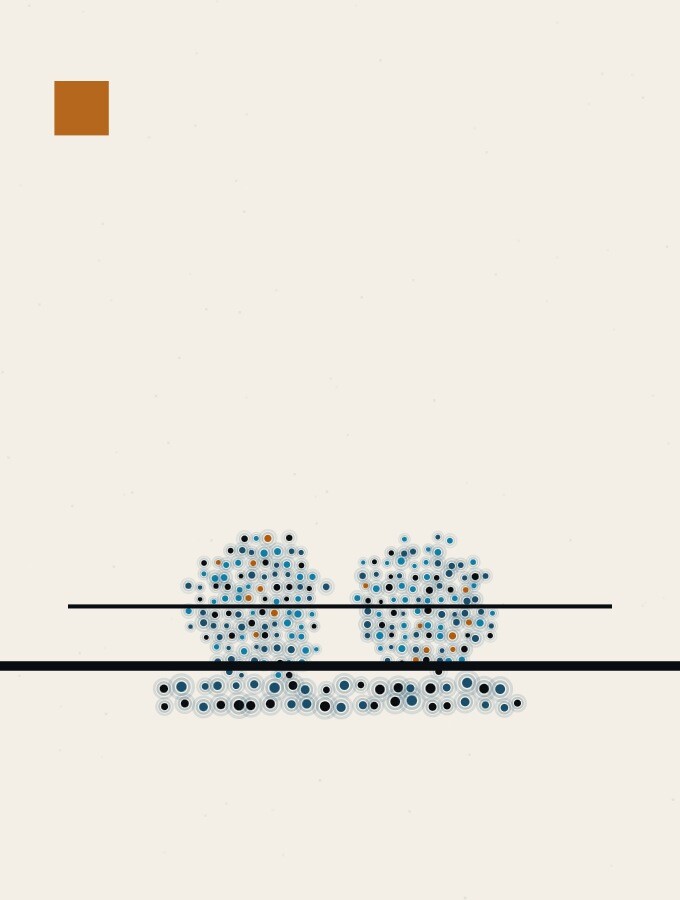
Instrumented mouthguards now measure the forces directly. In elite men and women, high tackles were more than 30 times as likely as medium-height tackles to produce a head acceleration above 30 g in the ball carrier. But low tackles raised the risk for the tackler, whose head then meets the ball carrier’s hip or knee. That trade-off is consistent with what happened in the failed trial, where tacklers were concussed more often after the target was lowered to the armpit. The scrum is the other historic danger. In France, catastrophic neck injuries ran at 1.6 per 100,000 players a year from 2006 to 2013, higher in adults than juniors, and fell over that period, with significantly fewer from scrums after a 2010 law change on how scrums engage. In South Africa, scrums caused a third of catastrophic injuries from 2008 to 2012, which led to amateur scrum law changes in 2013.
Where tackle risk concentrates
Injury and head injury risk by type of contact, community and elite rugby.
Source: Roberts et al., British Journal of Sports Medicine (2015); Tucker et al., British Journal of Sports Medicine 51(15):1152 (2017).
What has been measured to work
Rugby has something most sports lack: randomised trials of a prevention programme. Activate is a neuromuscular warm-up designed for rugby. In a trial in 40 English schools with 3,188 players aged 14 to 18, the overall result was inconclusive, but teams that used it at least three times a week had 72% fewer injuries and 59% fewer concussions. In a second trial in adult men’s community clubs, overall injuries did not clearly change, but concussions fell by 60%. Both trials reported 90% confidence intervals rather than the usual 95%, which makes them a little easier to call positive.
The Activate warm-up trials
Rate ratios below 1.00 mean fewer injuries. Both trials report 90% confidence intervals.
All teams: injuries 0.85, concussion 0.71 (inconclusive)
Three or more times a week:
injuries 0.28, concussion 0.41
Hislop et al., 2017
Overall injuries: 0.9 (no clear effect)
Concussion: 0.4 (0.2–0.7)
Lower-limb injuries: 0.6
Attwood et al., 2017
Source: Hislop et al., British Journal of Sports Medicine 51(15):1140–1146 (2017); Attwood et al., British Journal of Sports Medicine (2017).
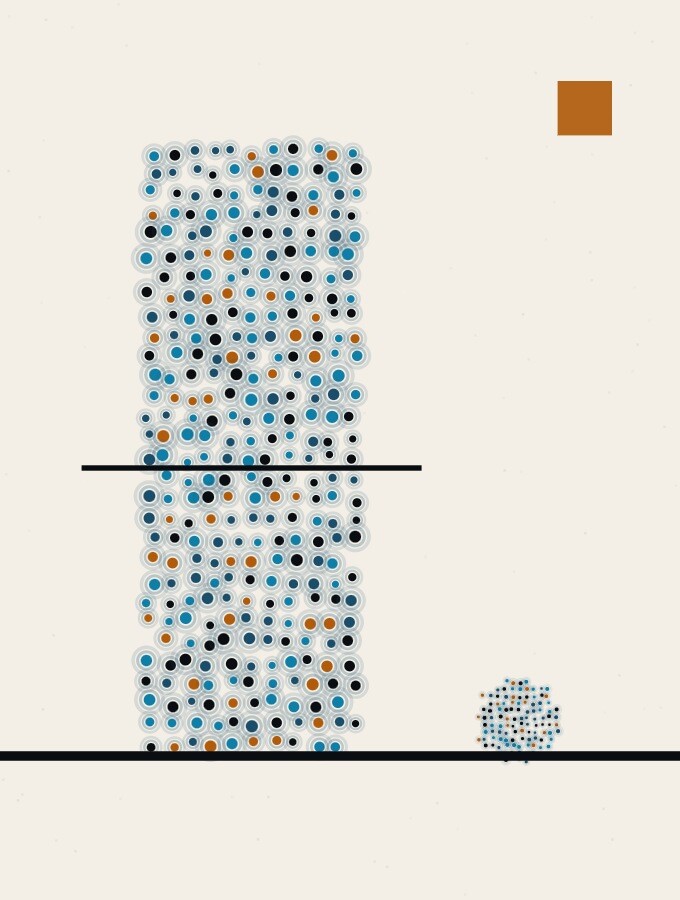
Tackle height laws have a mixed record, and it is instructive. The Championship Cup trial reduced head contact but raised tackler concussions and was stopped. A South African university trial at armpit height found fewer concussions, but not significantly. In English schools, an armpit-height law reduced shoulder-height tackles without changing concussion rates. Scottish community studies found head-on-head contacts fell by 45% and players bent lower in the tackle, but concussion did not change significantly in women. The Irish study, across seven seasons and almost 9,000 player-seasons, was the first to show clear falls in tackle concussions in adults, although not in schoolboys. On that accumulating evidence, drawn from ten national unions and more than 150,000 tackles, World Rugby made the lower tackle height permanent in community rugby from July 2026, letting each union choose the waist or the base of the sternum. The first elite trial started at the under-20 championship the same summer, with no results yet.
Lower tackle height trials
Change in concussions after tackle height was lowered. Below 1.00 means fewer.
Source: Guilfoyle et al., Journal of Science and Medicine in Sport (2026); van Tonder et al., Injury Prevention 29(1):56 (2023); Stokes et al., British Journal of Sports Medicine 55(4):220–225 (2021).
Equipment has a smaller role. After mouthguards became compulsory in New Zealand rugby, dental injury claims fell by 43%. A meta-analysis across collision sports found mouthguards linked to 26% fewer concussions, although an older rugby cohort found no such benefit. Since 2024, elite rugby has used instrumented mouthguards as part of its head injury assessment, flagging high-force impacts for a medical check. World Rugby also raised the minimum return to play after a community concussion to 21 days.
Why the answer is not to stop
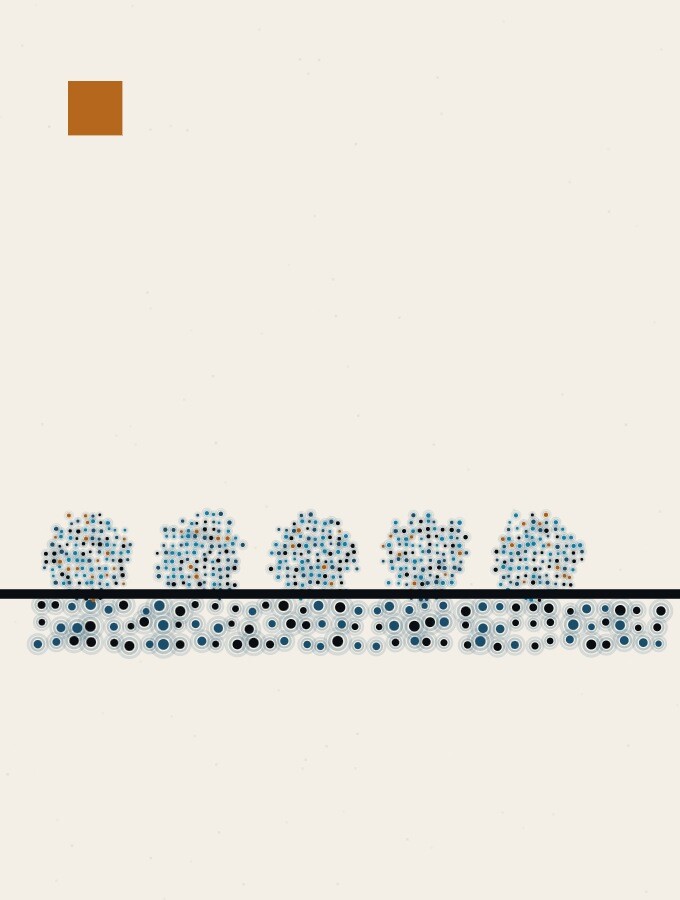
A scoping review of 198 studies concluded that all forms of rugby provide health-enhancing physical activity, and it is also a team sport with a strong community around it. The same review was frank that evidence on the physical health effects of contact rugby is mixed, and that injury and concussion rates are high compared with other sports. Long-term studies of former players point both ways. Former elite English players over 50 had far less diabetes than the general population but four times the osteoarthritis. Former Scottish internationals had about two and a half times the risk of neurodegenerative disease, yet fewer deaths before 70 than expected. In 2026 a group action by former players over brain injury was still moving through the English courts.
After rugby: former players’ health
Standardised ratios against the general population. Above 1.00 means more common.
Source: Davies et al., Scientific Reports (2017); Russell et al., Journal of Neurology, Neurosurgery & Psychiatry (2022), as reported by the University of Glasgow.
What the evidence shows most clearly is that rugby’s risk is not fixed. It sits largely in one event, the tackle, and in one part of the body, the head. The Activate trials showed that a warm-up done consistently can cut concussions sharply. The tackle height story showed that changing the law can work, but that it has to be tested, because moving a tackler’s target can move the danger rather than remove it. For players and parents, that points to practical choices: clubs that use a structured warm-up at least three times a week, coaching that teaches players to tackle low and bent at the waist, strict refereeing of high and shoulder-charge tackles, a mouthguard, and respect for concussion return-to-play rules. None of these ends rugby’s risk. All of them move it.
Questions people ask
What is the most common rugby injury?
In elite rugby union, concussion has been the most common match injury for twelve seasons in a row. The tackle causes about half of all match injuries.
Is rugby more dangerous than football?
Rugby union’s elite match injury rate is among the highest in team sport, at about 76 per 1,000 player-hours in England’s Premiership.
Does lowering the tackle height reduce concussions?
It depends how it is done. An armpit-height trial was stopped when concussions rose, but a below-the-sternum law in Irish community rugby cut tackle concussions substantially.
What is the Activate programme?
A structured rugby warm-up. In trials it cut concussions by about 60% in adult community players, and injuries by 72% in schools that used it at least three times a week.
Do mouthguards prevent concussion in rugby?
They clearly reduce dental injuries. A meta-analysis across collision sports linked them to fewer concussions, but the rugby-specific evidence is mixed.
The short version
- Elite rugby union records about 76 match injuries per 1,000 player-hours; concussion is the most common.
- The tackle causes half of match injuries; head contact and upright tacklers raise the risk sharply.
- The Activate warm-up cut concussions by about 60% in adult community rugby.
- Lowering tackle height backfired at armpit level but worked below the sternum in Irish community rugby.
- Choose clubs that warm up properly, coach low tackling and take concussion rules seriously.
This is a summary of published research, not medical advice. Any player with a suspected concussion should stop playing and be assessed by a doctor, and follow a graded return-to-play protocol.
Further reading: Attwood et al., British Journal of Sports Medicine (2017), for the Activate adult trial. Stokes et al., British Journal of Sports Medicine 55(4):220–225 (2021), for the stopped tackle height trial. Our article on American football and the kickoff rule covers another rule change that was tested.
- Concussed, Sam Peters (2023). A sports journalist’s investigation of how rugby and other sports handled brain injury, and what changed.
- Unforgettable, Steve Thompson (2022). A World Cup winner’s account of living with a dementia diagnosis after his playing career. Personal and difficult, and an important counterweight to the statistics.
- A Delicate Game, Hana Walker-Brown (2022). On brain injury across contact sports, told through the players and families affected.
Sources
Stokes KA, et al. British Journal of Sports Medicine 55(4):220–225 (2021), doi:10.1136/bjsports-2019-101557. — ITV News, 24 January 2019. — Guilfoyle et al. Journal of Science and Medicine in Sport (2026), doi:10.1016/j.jsams.2026.05.011. — World Rugby. Community tackle height law, news release, 17 June 2026. — RFU, Premiership Rugby and Rugby Players’ Association. Professional Rugby Injury Surveillance Project, 2022–23 season report (2024). — Stokes et al. British Journal of Sports Medicine, conference abstract (2024), doi:10.1136/bjsports-2023-concussion.187. — Starling LT, et al. British Journal of Sports Medicine 57(4):212–217 (2023), doi:10.1136/bjsports-2022-105831. — Scantlebury S, et al. Journal of Science and Medicine in Sport (2024). — Sabesan VJ, et al. Open Access Journal of Sports Medicine 7:135–142 (2016). — Roberts SP, et al. British Journal of Sports Medicine (2015). — Tucker R, et al. British Journal of Sports Medicine 51(15):1152 (2017). — Woodward J, et al. BMJ Open Sport & Exercise Medicine 10(3):e002013 (2024). — Reboursière E, et al. British Journal of Sports Medicine (2016), doi:10.1136/bjsports-2016-096122. — Hendricks S, et al. British Journal of Sports Medicine, conference abstract (2014). — Hislop MD, et al. British Journal of Sports Medicine 51(15):1140–1146 (2017), doi:10.1136/bjsports-2016-097434. — Attwood MJ, et al. British Journal of Sports Medicine (2017), doi:10.1136/bjsports-2017-098005. — van Tonder R, et al. Injury Prevention 29(1):56 (2023). — Roberts SP, et al. Journal of Science and Medicine in Sport 29(3):238–248 (2026), doi:10.1016/j.jsams.2025.09.008. — Walton SR, et al. BMJ Open Sport & Exercise Medicine 11(2):e002499 (2025). — University of Edinburgh news release, 8 April 2025. — Quarrie KL, et al. British Journal of Sports Medicine 39:650 (2005). — Eliason PH, et al. British Journal of Sports Medicine 57(12):749 (2023), doi:10.1136/bjsports-2022-106656. — Marshall SW, et al. International Journal of Epidemiology (2004). — World Rugby. Instrumented mouthguards and head injury assessment, 9 October 2023. — Griffin SA, et al. British Journal of Sports Medicine 55(6):319 (2021). — Davies MAM, et al. Scientific Reports (2017). — Russell ER, et al. Journal of Neurology, Neurosurgery & Psychiatry (2022). — Insider Sport, 24 August 2026.