
Cookie Consent Banners: What the Evidence Shows
Only 11.8% of banners on top UK sites met minimal legal requirements in one study. How banner design steers choices, what the law requires and how to protect your privacy.
Risk landing on personal data, digital assets, online accounts, digital identity and identity theft.
Only 11.8% of banners on top UK sites met minimal legal requirements in one study. How banner design steers choices, what the law requires and how to protect your privacy.
Most data breach victims report little loss, but just under 6% report $10,000 or more. What research shows about breaches, fraud and what protects you.
A third of 14,733 employees clicked a test phishing email, and training pages made some click more. What large field studies show about phishing training.
File photo: a dispatch room at the Redding Interagency Command Center, California. Photo: Region 5 Photography, via Wikimedia Commons, public domain. In the news · July 2026 The FCC published a Next Generation 911 reliability and interoperability rule in the Federal Register, effective 10 August 2026. It requires covered providers to make location facilities reliable,…
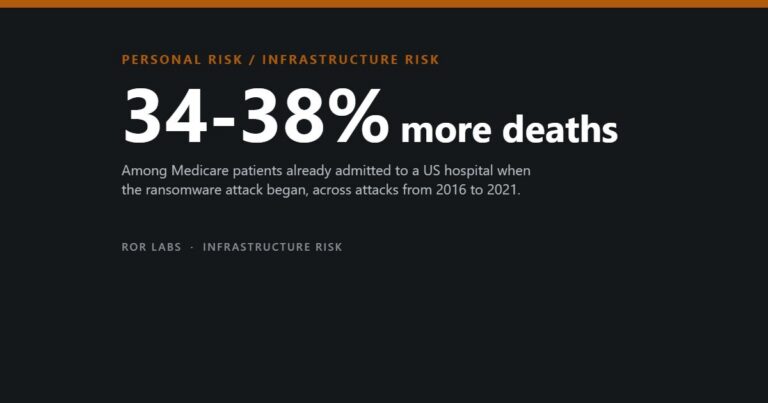
Among Medicare patients already admitted when a ransomware attack began, in-hospital mortality rose 34 to 38 per cent. The harm also spreads to hospitals that were never attacked — and the security remediation that follows a breach has a measurable cost of its own.
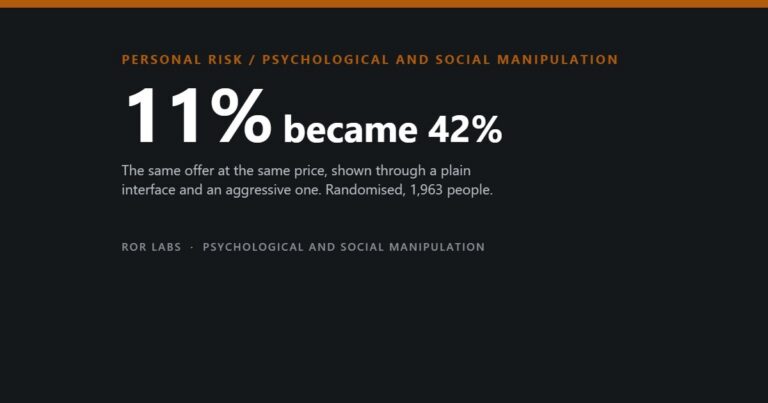
Randomised experiments show manipulative interface design nearly quadrupling acceptance of an unchanged offer, while raising its price fourfold changed nothing. What works, what is overstated, and why enforcement rather than vigilance is what altered the interfaces.
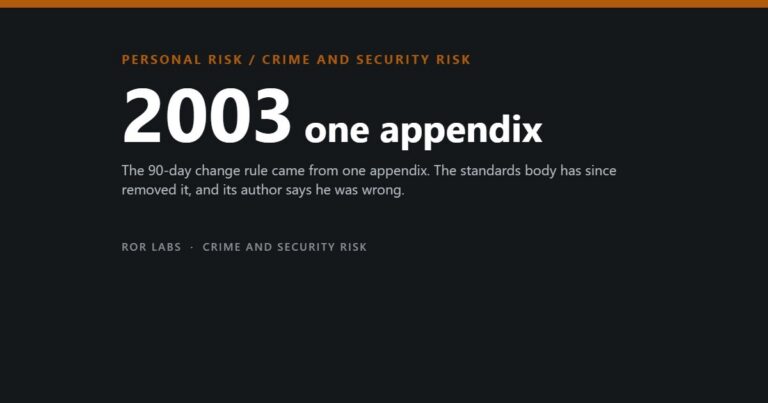
The composition and expiry rules came from one 2003 appendix, and its author regrets it. What actually takes over accounts is reuse, infostealers and phishable codes.
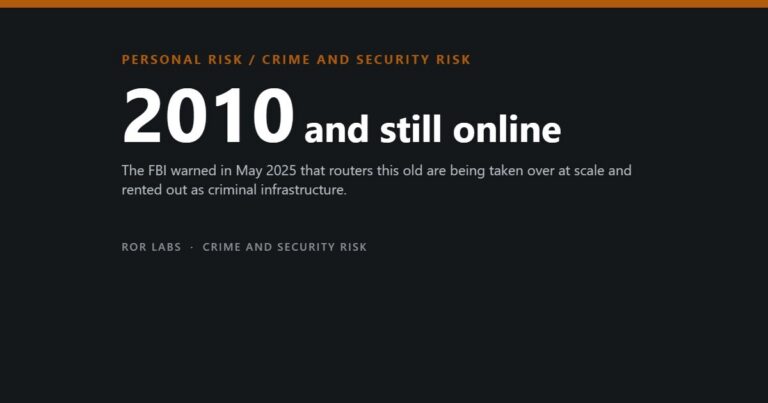
The FBI warned in May 2025 that end-of-life home routers are being taken over for criminal proxy networks, using malware that needs no password. What attackers actually want is your residential IP address. The eight settings that matter, why the guest network is the highest-value free change, and the backup rule that is the only answer to ransomware.
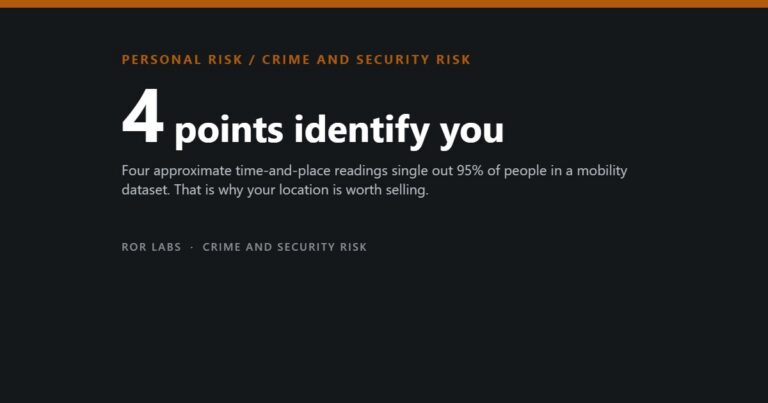
Four known places-and-times identify 95% of people in an anonymised mobility dataset, and coarsening the data barely helps. How real-time bidding broadcasts your location to bidders who keep it even when they lose, what the FTC found inside Mobilewalla and X-Mode, and which defences actually work – including the deletion platform California switched on this month.
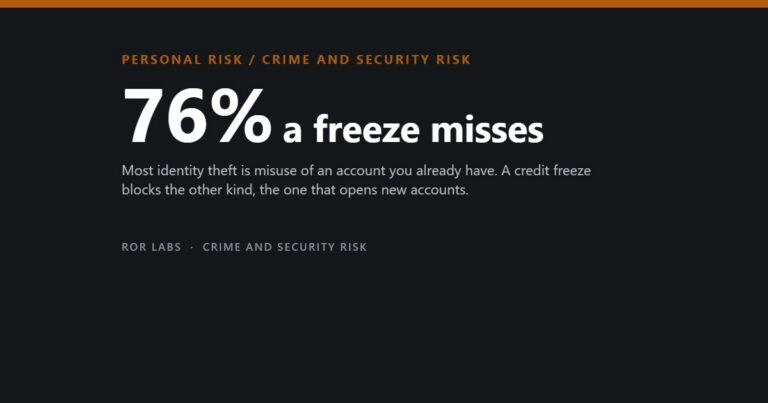
Seventy-six per cent of identity theft involves an account you already have, and a credit freeze does not touch that category. What a freeze actually blocks, how fast the bureaus must act by law, the difference between a freeze, a lock and a fraud alert, and what covers the other three quarters.