
Turbulence Injuries: What the Evidence Shows
Turbulence causes more than a third of US airline accidents, and most serious injuries fall on flight attendants. Of 26 seriously injured passengers, one wore a seat belt.
Exposure while travelling: domestic trips, foreign travel, tourist sites and stays abroad.
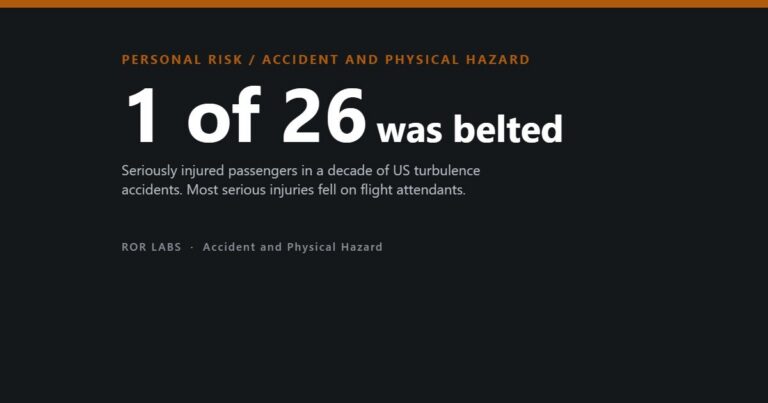
Turbulence causes more than a third of US airline accidents, and most serious injuries fall on flight attendants. Of 26 seriously injured passengers, one wore a seat belt.
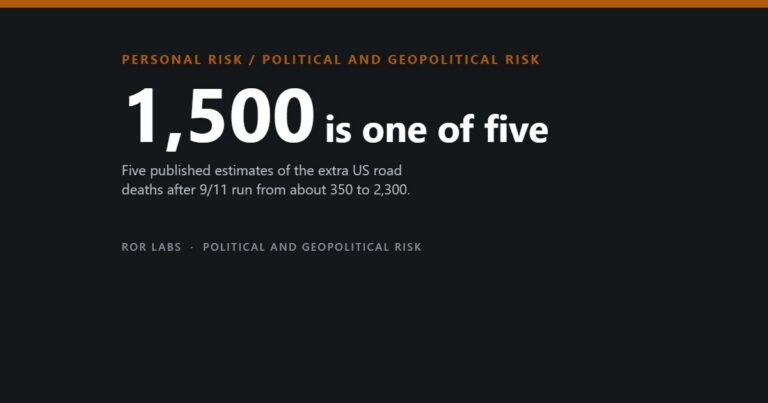
After 9/11 Americans drove instead of flying, and more died on the roads. The famous estimate is 1,500; published figures run from about 350 to 2,300. What the dread-risk research found, and why the second strike depends on the alternatives at hand.
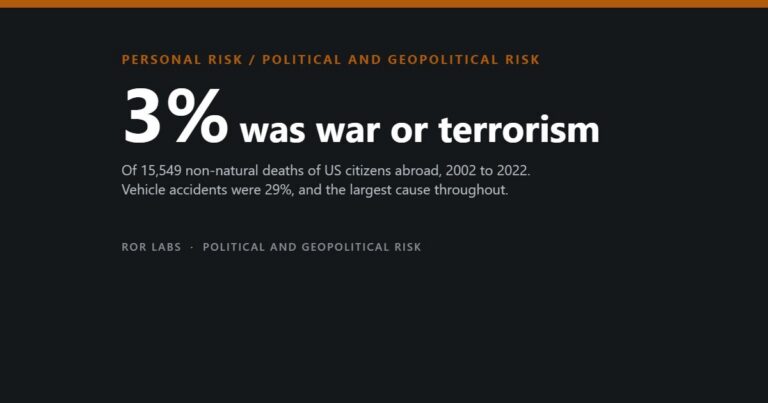
Two decades of consular records put war and terrorism at 3% of non-natural deaths of US citizens abroad and vehicles at 29%. What the advisory levels do not do, why the insurance excludes exactly this event, and why a government evacuation is a promissory note rather than a rescue.
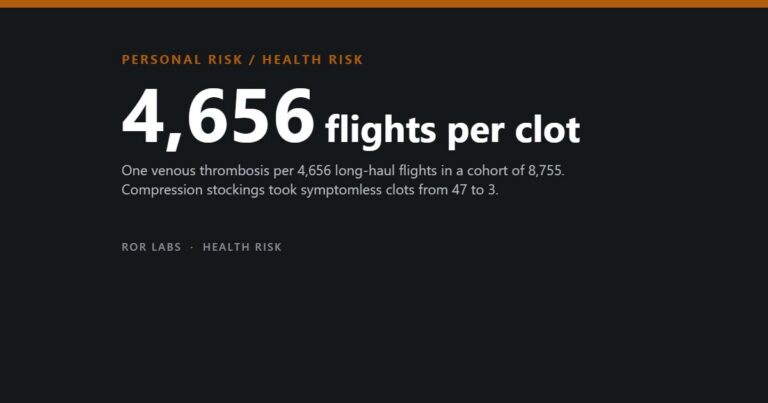
Long flights roughly double clot risk from a small baseline, and the risk peaks two weeks after landing. Compression stockings have high-certainty Cochrane evidence behind them, with one caveat worth reading.