Half a Million Dead Children Carried the Argument About Sanctions. Three Later Surveys Found the Rise Never Happened.
Key takeaways · 13 min read
- The half-million figure rests on one survey: the 1999 Iraq Child and Maternal Mortality Survey, about 38,000 households.
- It reported under-five deaths rising from 59 to 116 per 1,000 between 1990 and 1991, reaching 142 by 1998.
- Three later national surveys — 2004, 2006 and 2011, covering 75,000 households — show no such rise and put the rate near 40 per 1,000 for the same years.
- In the centre and south the 1999 fieldwork was staffed by the Iraqi government. In the north, supervised by UNICEF, the results match everything found since.
For most of two decades, one number carried the argument about economic sanctions. Half a million Iraqi children were said to have died under the United Nations embargo of the 1990s. It appeared in campaign literature and in parliamentary debate, it was used to oppose the 2003 invasion of Iraq and by others to justify it, and a former British prime minister cited a version of it to a public inquiry in 2010.
The number came from a single household survey conducted in 1999. Three later surveys, covering more than seventy thousand households between them, found no trace of the rise in child mortality that survey reported. The most likely explanation, set out in a 2017 paper in BMJ Global Health, is that the 1999 data were rigged.
This is not an argument that sanctions are harmless. The best recent evidence, published in 2025, finds a real causal effect of sanctions on mortality. It is an argument about what happens to a figure that everyone wants to be true, and about how long a corrected number keeps circulating after the correction.

The survey and the number
Between February and May 1999, with the cooperation of Saddam Hussein’s government, UNICEF ran the Iraq Child and Maternal Mortality Survey. It was a serious undertaking: about 14,000 households in the autonomous Kurdish north, supervised directly by UNICEF, and about 24,000 in the government-controlled centre and south, where the field staff were provided by Iraq’s health ministry. The interviewers were junior doctors and recent medical graduates. The questionnaire was pre-tested. UNICEF convened an independent panel of experts to assess the survey’s procedures and data quality, and the panel identified no problems.
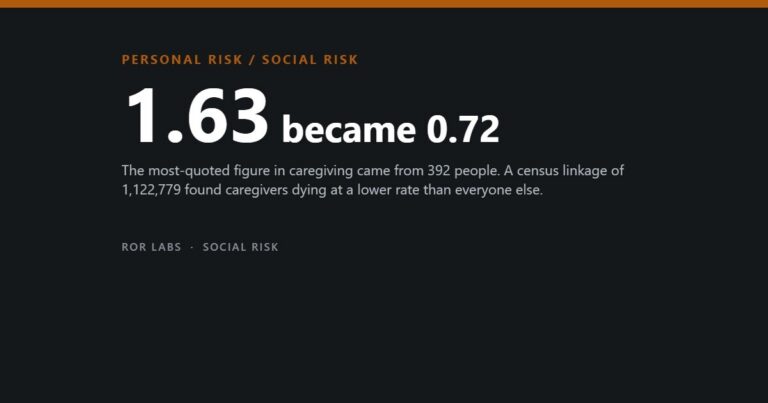
The results said that children in the centre and south were dying at more than twice the rate of ten years earlier. UNICEF’s executive director noted that there would have been 500,000 fewer child deaths during 1991 to 1998 had the mortality decline of the 1980s continued. A detailed analysis published in 2000 put the under-five death rate at 56 per 1,000 in 1984–1989 and 131 per 1,000 in 1994–1999. A later paper gave annual figures: a jump from 59 to 116 per 1,000 between 1990 and 1991, rising to 142 by 1998.
A rise of that shape — sudden, at exactly the year sanctions bit, and sustained — is what made the figure so powerful. It looked like a policy killing people on a schedule.
What the 1999 survey reported for central and southern Iraq
Under-five deaths per 1,000 live births, from the Iraq Child and Maternal Mortality Survey. Roughly 38,000 households nationally.
Source: figures as reported in Dyson, T. and Cetorelli, V., “Changing views on child mortality and economic sanctions in Iraq: a history of lies, damned lies and statistics”, BMJ Global Health 2(2):e000311, 2017, citing Ali and Shah 2000 and subsequent annual estimates.
How far it travelled
The results were treated as reliable and cited everywhere — to warn against the consequences of the 2003 invasion, and by supporters of that invasion as evidence of what the previous regime had presided over.
Giving evidence to the Chilcot Inquiry in 2010, Tony Blair said that under Saddam Hussein Iraqis “had a child mortality rate of 130 per 1,000 children under the age of five … That equates to roughly about 90,000 deaths under the age of five a year. The figure today is not 130, it is 40 … that’s the result that getting rid of Saddam makes.”
Both halves of that sentence come from the same problem. The 130 is the discredited survey. The 40 is roughly what the later, better surveys find for the 1990s as well — so the improvement being claimed is largely the gap between a false measurement and a real one.
Three surveys that found nothing
After 2003 three major household surveys collected full birth histories from women across the whole of Iraq. The 2004 Iraq Living Conditions Survey covered 21,000 households, funded by the UN Development Programme with Norwegian technical assistance. The 2006 Multiple Indicator Cluster Survey covered 18,000 households, and the 2011 round covered about 36,000. The MICS instrument is the same one UNICEF has used in more than sixty countries.
None of them shows the rise. All three put the under-five death rate in Iraq during 1995–2000 in the vicinity of 40 per 1,000 — roughly a third of what the 1999 survey reported for the same years.
The 2004 team ran into the opposite problem first. When birth histories started arriving from the field they concluded that child deaths were being badly under-reported, and re-interviewed every household with a small dedicated questionnaire. The rates came back still surprisingly low. Older women under-report child deaths, which biases estimates of the distant past downward; once that is allowed for, the three post-2003 surveys agree with each other closely, and disagree with 1999 sharply.
Four surveys, one country, one decade
Under-five deaths per 1,000 live births in Iraq for the mid-to-late 1990s, by the survey that produced the estimate.
Source: Dyson, T. and Cetorelli, V., BMJ Global Health 2(2):e000311, 2017, figure 1 and accompanying text.
How the deception surfaced
The unravelling began by accident. After the 2003 invasion, occupation authorities looking for population data discovered that a census had been conducted in the centre and south in 1997, and that it had included basic questions on child mortality. A copy reached the US Census Bureau. In August 2003 a Census Bureau official told the New York Times that child mortality might not have been quite as high in the mid-to-late 1990s as had been thought.
In 2005 a working group of the UN Secretary-General’s Independent Inquiry Committee into the oil-for-food programme published an analysis of that census data. The census itself was error-ridden, and the working group said so. It nonetheless questioned whether the 1991 jump had happened at all, and suggested the Iraqi government might have tampered with the 1999 survey. Demographers who saw no reason to doubt the survey rejected the suggestion.
What settled it was the arrival of the three later surveys. Where the falsification happened is not certain: it may have been at data entry, or during fieldwork, since the government supplied the interviewers in the centre and south — something that appears to have happened during a smaller 1995 survey in Baghdad. The objective is not in doubt. Heightened international concern was the route to ending the sanctions.
The correction has been quiet. The UN revised its own estimates in 2009 without announcement, including a sudden upward revision of Iraqi life expectancy for 2000–2005 from 57 to 70 years. UNICEF has neither acknowledged the error nor released the 1999 data. The 2000 paper analysing that survey remains widely cited. The Chilcot report of 2016 is one of the few official documents to treat the pre-2003 rate as inflated.
The correction moved slower than the claim
Key moments between the survey and the point at which its results were shown to be unsupportable.
Source: Dyson, T. and Cetorelli, V., BMJ Global Health 2(2):e000311, 2017.
What is still true
Several things in the original story survive, and they matter more than the number that did not.
The sanctions greatly reduced Iraq’s ability to import food and medicine. That is not in dispute in any of this work. All three post-2003 surveys do show a slight increase in child mortality between 1990 and 1991. A 1992 survey published in the New England Journal of Medicine, conducted by an international team independent of the Iraqi authorities and covering 16,076 children, found the age-adjusted relative risk of death after the war began was 3.2 compared with before — a real and large short-run effect, measured before the period the 1999 survey falsified.
In the north, the 1999 survey itself showed a rise starting well before 1991, which reflected the persecution of the Kurds rather than the embargo; the poison gas attack on Halabja was in 1988. And the long trend is bleak in a way the dramatic version obscured. From the early 1980s onward Iraq’s progress on child mortality stalled while its neighbours’ continued, and by 2010–2015 its under-five rate was roughly twice that of Syria and Jordan. The authors of the 2017 paper describe the sanctions as a small part of a much longer list of troubles.
Nor is the dispute one-sided in the literature. In 2007, the authors of the detailed 1999 analysis published a response arguing that the UN working group’s estimates were themselves seriously flawed, that the 1999 survey was internally coherent, and that the 400,000 to 500,000 figure stood. They lost the argument on the arrival of new data rather than on debate, which is the ordinary way these things are settled.
The parts of the story that held up
Findings from the same body of work that survived the collapse of the 1999 survey.
Sources: Ascherio, A., Chase, R., Coté, T., Dehaes, G., Hoskins, E., Laaouej, J. et al., “Effect of the Gulf War on infant and child mortality in Iraq”, New England Journal of Medicine 327(13), 1992; Dyson and Cetorelli 2017, figure 2, using UN estimates.
What the cross-national evidence says
The question underneath all of this — do economic sanctions kill civilians? — now has a much better answer than it did in 1999. In 2025 a panel analysis in The Lancet Global Health examined age-specific mortality and sanctions episodes across 152 countries from 1971 to 2021, using entropy balancing, Granger causality tests, event-study representations and instrumental variables in an attempt to get at causation rather than correlation.
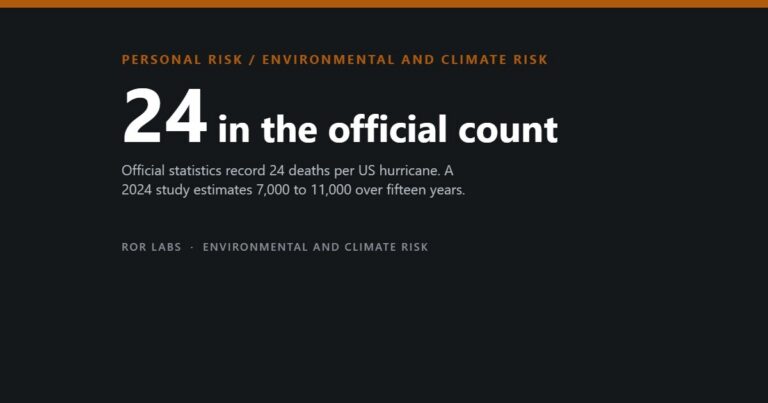
It found a significant causal association between sanctions and increased mortality, largest for the youngest: 8.4 log points for children under five, with a 95 per cent confidence interval of 3.9 to 13.0, falling to 2.4 log points for other age groups. The effects were strongest for unilateral sanctions, for economic sanctions, and for sanctions imposed by the United States.
And then the finding that cuts against the case it is usually recruited for. The same analysis found no statistical evidence of an effect for sanctions imposed by the United Nations. Iraq’s were United Nations sanctions. The strongest modern evidence that sanctions cost lives does not, on its own terms, support the specific claim the 1999 survey was built to make.
Sanctions and mortality across 152 countries, 1971 to 2021
Estimated effect on mortality rates in log points, from a panel analysis using methods designed for causal identification in observational data.
Source: Rodríguez, F., Rendón, S. and Weisbrot, M., “Effects of international sanctions on age-specific mortality: a cross-national panel data analysis”, The Lancet Global Health, August 2025. Under-five estimate 8.4 log points, 95% CI 3.9–13.0; other ages 2.4, 95% CI 0.9–4.0.

Questions people ask
Did the sanctions kill anyone, then?
Almost certainly yes, and nobody in this literature says otherwise. The embargo greatly reduced Iraq’s capacity to import food and medicine, there was a measurable rise in child deaths around the 1991 war, and cross-national work finds sanctions raise mortality in general. What collapsed is the specific claim that child mortality doubled in 1991 and stayed doubled for seven years. That claim, and the half-million figure derived from it, came from data that three later surveys contradict.
How confident is the fraud finding?
The direct evidence is circumstantial: nobody has produced the instruction to falsify. What exists is three independent surveys, run by different organisations with different funders, covering the same years and finding nothing like the reported rise; a 1997 census pointing the same way; a documented precedent of interference in a smaller 1995 survey; and the fact that the Iraqi government supplied the interviewers in exactly the region where the anomaly appears and not in the region where it does not. The 2017 authors call it beyond doubt. That is their judgement of a body of indirect evidence, not a confession.
Why did nobody catch it at the time?
An independent expert panel did examine the survey’s procedures and found no problems, which is a reminder of what such reviews can and cannot detect: a well-run survey with manipulated numbers looks like a well-run survey. The 2017 authors add a less technical reason — the result fitted a widely held view that the sanctions were wrong, so it met little resistance. Numbers that confirm what an audience already believes are checked less carefully, and this is the same failure mode whichever direction it runs in.
Does this mean survey estimates of war and sanctions deaths cannot be trusted?
It means the identity of the fieldworkers matters as much as the sample size. The 1999 survey was large, well-designed and well-trained, and its northern half — supervised directly by UNICEF — produced results consistent with everything found since. The half staffed by a government with a direct interest in the answer did not. That distinction is checkable in advance and is usually reported.
Is the corrected figure now widely known?
No. UNICEF has not acknowledged the error or released the data, the UN revised its estimates without comment, and the 2000 analysis of the survey continues to be cited in the scientific literature. The 2017 paper exists partly to say that the correction has never had a fraction of the reach of the original.
The short version
- The half-million figure rests on one survey: the 1999 Iraq Child and Maternal Mortality Survey, about 38,000 households.
- It reported under-five deaths rising from 59 to 116 per 1,000 between 1990 and 1991, reaching 142 by 1998.
- Three later national surveys — 2004, 2006 and 2011, covering 75,000 households — show no such rise and put the rate near 40 per 1,000 for the same years.
- In the centre and south the 1999 fieldwork was staffed by the Iraqi government. In the north, supervised by UNICEF, the results match everything found since.
- A UN inquiry working group suggested tampering in 2005; the later surveys settled it. The UN quietly revised Iraqi life expectancy for 2000–2005 from 57 to 70 years in 2009.
- UNICEF has not acknowledged the error or released the data, and the 2000 analysis is still cited.
- What holds: the embargo did cut food and medicine imports, and an independent 1992 survey of 16,076 children found a relative risk of child death of 3.2 after the war began.
- What also holds: Iraq’s progress on child mortality stalled from the early 1980s, and by 2010–2015 its under-five rate was about twice that of Syria and Jordan.
- A 2025 panel study of 152 countries finds sanctions do raise mortality — 8.4 log points for under-fives — strongest for unilateral, economic and US sanctions.
- The same study finds no statistical evidence of an effect for UN sanctions, which is what Iraq’s were.
This article summarises published demographic and epidemiological research on child mortality in Iraq and on the health effects of economic sanctions. It is a description of what the surveys and analyses found and where they disagree, not a position on the sanctions themselves or on the 2003 invasion. Estimates of deaths under any coercive policy are contested and depend heavily on the baseline chosen; where that is the case here, it is said.
Further reading: the 2017 BMJ Global Health paper by Dyson and Cetorelli is open access, six pages, and written for a general reader. The 2025 Lancet Global Health panel study is the best current answer to the wider question and reaches a conclusion the 2017 paper does not address. Reading them as a pair is worth more than reading either alone.
- Why We Fight, Christopher Blattman (2022). An economist synthesizing decades of quantitative conflict research — including how reliable the casualty data really is.
- The Data Detective, Tim Harford (2020). Ten rules for reading numbers in the news skeptically.
- How to Read Numbers, Tom Chivers & David Chivers (2021). Common statistical traps explained through news examples.
Sources
- Dyson, T. and Cetorelli, V., “Changing views on child mortality and economic sanctions in Iraq: a history of lies, damned lies and statistics”, BMJ Global Health 2(2):e000311, 2017. (The 1999 survey design: about 14,000 households in the north supervised by UNICEF, about 24,000 in the centre and south with government-supplied field staff, an independent expert panel that found no problems, and the 500,000 inference. Compares the 1999, 2004, 2006 and 2011 surveys; the three later ones put 1995–2000 near 40 per 1,000. Notes the 2009 UN revision of life expectancy for 2000–2005 from 57 to 70 years, and that UNICEF has neither acknowledged the error nor released the data.)
- Dyson, T., “New evidence on child mortality in Iraq”, London School of Economics, 2009. (Two additional surveys show no sign of a sharp rise in the early 1990s; concludes the 1999 data were probably deliberately manipulated.)
- Ascherio, A., Chase, R., Coté, T., Dehaes, G., Hoskins, E., Laaouej, J., Megalli, M., Mishkin, F., Muaddi, N., Nagler, J., Nasir, S. and Waldman, R.J., “Effect of the Gulf War on infant and child mortality in Iraq”, New England Journal of Medicine 327(13), 1992. (271 clusters, an international team independent of the Iraqi authorities, 16,076 children and 768 deaths, January 1985 to August 1991. Age-adjusted relative mortality after the war began, against before, 3.2, 95% CI 2.8–3.7, unchanged after adjusting for region and maternal education and age.)
- Blacker, J., Ali, M.M. and Jones, G., “A response to criticism of our estimates of under-5 mortality in Iraq, 1980–98”, Population Studies 61(1), 2007. (Defends the 400,000 to 500,000 estimate for 1991–98, calls the UN working group’s own estimates seriously flawed, and holds the 1999 survey internally coherent.)
- Rodríguez, F., Rendón, S. and Weisbrot, M., “Effects of international sanctions on age-specific mortality: a cross-national panel data analysis”, The Lancet Global Health, August 2025. (152 countries, 1971 to 2021; entropy balancing, Granger causality, event studies and instrumental variables. 8.4 log points, 95% CI 3.9–13.0, for under-fives; 2.4, 95% CI 0.9–4.0, for other ages. Strongest for unilateral, economic and US sanctions; no statistical evidence of an effect for UN sanctions.)
- Daponte, B.O. and Garfield, R., “The effect of economic sanctions on the mortality of Iraqi children prior to the 1991 Persian Gulf War”, American Journal of Public Health 90(4), 2000. (Individual child records isolating August to December 1990, before the war; a statistically significant increase in the risk of dying once sanctions enter the model.)
- Gibbons, E. and Garfield, R., “The impact of economic sanctions on health and human rights in Haiti, 1991–1994”, AJPH 89(10), 1999. (A separate embargo: declining income, poorer nutrition, rising mortality among one- to four-year-olds.)
- Miromanova, A., “Sanctions and their impacts on medical trade and health outcomes”, Review of International Economics, 2023. (US sanctions in particular reduce medical exports to targeted countries and raise mortality there.)