

Trend summary
- Australians are less likely to die of heart disease or cancer at any given age than they were twenty years ago, but an ageing population means more people are living with, and dying from, long-term illness.
- In 2024 dementia became Australia’s leading cause of death for the first time, with 17,549 deaths, overtaking ischaemic (coronary) heart disease at 16,275.
- About three in five Australians (61%) have at least one chronic condition and almost two in five (38%) have two or more, according to the AIHW’s Australia’s health 2026.
- Cancer is estimated to cause about 3 in every 10 deaths: around 169,759 new cases and 53,545 deaths in 2025, even though the age-standardised death rate keeps falling.
What the numbers show
The Australian Bureau of Statistics’ Causes of Death, Australia, 2024 counts 187,268 registered deaths, 4,137 more than in 2023. Dementia, including Alzheimer’s disease, caused 9.4% of them and ischaemic heart disease 8.7%; 2024 was the first year in which dementia caused more than 1,000 more deaths than heart disease. Dementia deaths have risen 39% over the past decade, and women make up 62.4% of them. Heart disease is still the leading cause of death for men. The AIHW’s heart, stroke and vascular disease report puts all cardiovascular disease at 42,300 deaths, 23% of the 2024 total, and counts 57,100 heart attacks and unstable angina events in 2023, around 156 a day.
Cancer shows the same split between rates and numbers. The AIHW’s Cancer data in Australia estimates 169,759 new cases and 53,545 deaths in 2025. The age-standardised death rate has fallen from 257 to an estimated 194 per 100,000 people between 2000 and 2025, and five-year survival has risen from 50% (1987–1991) to 72% (2017–2021). Across all illness and injury, the Australian Burden of Disease Study 2024 found five disease groups (cancer, mental health and substance use, musculoskeletal conditions, cardiovascular disease and neurological conditions such as dementia) caused 64% of the total health burden in 2024.
What is driving it
Age is the biggest single factor. More than two-thirds (68.2%) of deaths registered in 2024 were of people over 75, compared with 63.3% twenty years earlier, according to the ABS. Fewer people dying of heart disease in middle age means more live long enough to develop dementia. Risk factors remain common: in the ABS National Health Survey 2022, 65.8% of adults were overweight or obese, and measured waist sizes in the National Health Measures Survey 2022–24 suggest about 48% of adults have abdominal obesity. About 6.5% of Australians (around 1.3 million) live with diabetes, according to the AIHW’s Diabetes: Australian facts.
The burden is uneven. The AIHW reports that, after adjusting for age, the death rate in 2022–2024 was 1.5 times as high in the poorest areas as in the richest, and 1.6 times as high in very remote areas as in major cities. Governments are responding with earlier detection and prevention: the National Lung Cancer Screening Program started on 1 July 2025, offering free low-dose CT scans every two years to people aged 50 to 70 with a heavy smoking history, and a new 10-year chronic conditions framework was published in March 2026.
Policy and budget changes
The main government measures and money figures behind this risk, newest first. Each item links to the official text we checked; where only a news report was available, the source says so.
Main policy changes
- July 2025 National Lung Cancer Screening Program begins. Screening under the new National Lung Cancer Screening Program began in July 2025, offering low-dose CT scans to high-risk people without symptoms, mainly older adults with a heavy smoking history. (Department of Health, Disability and Ageing)
- 1 July 2024 Vapes restricted to pharmacy supply. The main parts of the Therapeutic Goods and Other Legislation Amendment (Vaping Reforms) Act 2024 came into force, restricting vapes to supply as therapeutic goods through pharmacies and tightening advertising and enforcement rules. (Federal Register of Legislation (Act No. 50, 2024))
- 1 April 2024 New national tobacco and e-cigarette law takes effect. The Public Health (Tobacco and Other Products) Act 2023 came into force, bringing rules on tobacco and e-cigarette advertising, plain packaging and product requirements into one law. (Federal Register of Legislation (commencement proclamation))
- 22 November 2023 National register for occupational lung disease created. The National Occupational Respiratory Disease Registry Act 2023 received Royal Assent. It sets up a national register and requires prescribed doctors to notify diagnoses of prescribed work-related lung diseases. (Federal Register of Legislation (Act No. 95, 2023))
Budget and costs
- 2025 Health spending on disease reaches $180.4 billion. The AIHW estimates that health system spending attributed to disease and injury rose by $10.2 billion to $180.4 billion in 2023–24, up from $170.2 billion in 2022–23 (nominal). (AIHW)
- 2025 Cancer is the costliest disease group. In 2023–24 the highest health system spending was for cancer (A$19.7 billion), followed by cardiovascular diseases (A$16.9 billion) and musculoskeletal disorders (A$16.3 billion), according to the AIHW. (AIHW)
Recent cases
- 2 October 2026: the AIHW publishes a chronic conditions dashboard that brings key statistics for a range of chronic conditions together in one place (AIHW).
- 9 July 2026: Australia’s health 2026 reports that 61% of Australians have at least one chronic condition and 38% have two or more, and that dementia now causes almost 1 in 10 deaths (AIHW).
- 14 November 2025: the ABS reports that dementia overtook ischaemic heart disease as Australia’s leading cause of death in 2024, with more than 17,500 deaths (ABS).
Our read: what the numbers add up to
The headline here is a crossover rather than a surge. In 2024 dementia, with 17,549 deaths, overtook ischaemic heart disease at 16,275 to become Australia’s leading cause of death. That sounds alarming, but much of the page points the other way on individual risk: the age-standardised cancer death rate has fallen from 257 to an estimated 194 per 100,000 since 2000, and five-year survival has climbed to 72%. Put together, the figures describe a population that is dying later and of different things, not one that is getting sicker at every age.
The more telling number is the share of deaths among people over 75: 68.2% in 2024, against 63.3% twenty years earlier. Fewer people dying of heart disease in middle age means more live long enough to develop dementia, which helps explain why dementia deaths rose 39% over a decade. The same arithmetic sits behind cancer, where 169,759 new cases and 53,545 deaths estimated for 2025 are large totals even as each person’s odds improve. What does not fit the comfortable version is the risk-factor data. With 65.8% of adults overweight or obese and about 6.5% living with diabetes, the pipeline of future chronic illness is still full, and an age-adjusted death rate 1.5 times as high in the poorest areas shows the gains are not shared evenly.
Some caution is needed. Cancer figures for 2025 are estimates, and a ranking between two causes of death can shift with how deaths are certified, so I would not lean heavily on the exact margin between dementia and heart disease. What I would watch next is whether the chronic conditions framework published in March 2026 and the lung cancer screening programme that began in July 2025 show up as earlier diagnosis. My bottom line: chronic disease is growing in absolute terms because Australians live longer, while the underlying risk at each age is still falling.
Press releases and official reports, 2023–2026
Five key releases a year for the last four years, newest first. Most come from Australian Government agencies, state and territory agencies, regulators, accident investigators and national statistics; a few news reports are included where they are the clearest public record of an event. Releases from 2007–2022 are in the expandable list after 2023.
2026
- 2 Oct 2026AIHWChronic conditions dashboard
- Jul 2026AIHWNew data shows progress in cancer outcomes for First Nations people
- 9 Jul 2026AIHWLatest report card on Australia’s health reveals areas of improvement and challenges
- 27 May 2026AIHWHeart, stroke and vascular disease: Australian facts
- 2 Mar 2026Department of HealthNew 10-year framework and program for chronic condition launched
2025
- 14 Nov 2025ABSDementia is Australia’s leading cause of death
- 14 Nov 2025ABSCauses of Death, Australia, 2024
- Oct 2025AIHWCancer outcomes improving overall
- Jul 2025Minister for HealthFirst National Lung Cancer Screening Program launches
- 31 Mar 2025ABSNational Health Measures Survey, 2022-24
2024
- 12 Dec 2024AIHWAustralian Burden of Disease Study 2024
- 12 Dec 2024AIHWHeart, stroke and vascular disease: Australian facts (December 2024 edition)
- 10 Oct 2024ABSAustralia’s leading cause of death on the brink of change
- 10 Oct 2024ABSCauses of Death, Australia, 2023
- 2 Jul 2024AIHWAustralians’ health faring well despite ongoing challenges, Australia’s health 2024 shows
2023
- 15 Dec 2023ABSNational Health Survey, 2022
- 27 Sep 2023ABSCOVID-19 first infectious disease in top 5 causes of death since 1970
- 27 Sep 2023ABSCauses of Death, Australia, 2022
- Jun 2023AIHWNational Strategic Framework for Chronic Conditions, reporting framework
- Feb 2023AIHWImpact of dementia on the rise among older Australians
View 20 years of major Australian chronic disease press releases (2007–2026)53 more from 2007–2022, up to five a year, newest first
2022
- 19 Oct 2022ABSLow death rate, almost no flu but more alcohol-induced deaths in 2021
- 19 Oct 2022ABSCauses of Death, Australia, 2021
- 21 Mar 2022ABSOver three quarters of Australians have a long-term health condition
- 21 Mar 2022ABSHealth Conditions Prevalence, 2020-21
- 21 Mar 2022ABSDiabetes, 2020-21 financial year
2021
- Dec 2021AIHWCancer survival rates continue to improve, while death and incidence rates fall
- Oct 2021AIHWAustralian Burden of Disease Study 2018: key findings for Aboriginal and Torres Strait Islander people
- 29 Sep 2021ABSMortality rate declines during the first year of the pandemic
- 29 Sep 2021ABSCauses of Death, Australia, 2020
- Aug 2021AIHWAustralian Burden of Disease Study 2018: key findings
2020
- 23 Oct 2020ABSDementia rises to second leading cause of death for men
- 23 Oct 2020ABSCauses of Death, Australia, 2019
- 23 Jul 2020AIHWNational report card examines COVID-19 and other health issues in Australia
2019
- 25 Sep 2019ABSCauses of Death, Australia, 2018
- Jun 2019AIHWHealthier population eases Australia’s disease burden
- 27 Mar 2019ABSACT residents healthier than other Australians
- 21 Mar 2019AIHWCancer in Australia 2019
2018
- 12 Dec 2018ABSNational Health Survey: First results, 2017-18 financial year
- 12 Dec 2018ABSHow healthy is the typical Australian?
- 26 Sep 2018ABSCauses of Death, Australia, 2017
- Jun 2018AIHWOur health report card is in—and here’s what we can learn
2017
- 27 Sep 2017ABSCauses of Death, Australia, 2016
- 3 Feb 2017AIHWCancer in Australia 2017
2016
- 28 Sep 2016ABSDementia deaths continue to rise as population ages
- 28 Sep 2016ABSCauses of Death, Australia, 2015
- Sep 2016AIHWAustralia’s health 2016
- 10 May 2016AIHWAustralian Burden of Disease Study: impact and causes of illness and death in Australia 2011
- 8 Mar 2016ABSCauses of Death, Australia, 2014
2015
- 8 Dec 2015ABSNational Health Survey: First Results, 2014-15
- 8 Dec 2015ABSFewer Australian adults smoking
- 31 Mar 2015ABSChanges in Australia’s leading causes of death
- 31 Mar 2015ABSCauses of Death, Australia, 2013
2014
- 10 Sep 2014ABSAustralian Aboriginal and Torres Strait Islander Health Survey: Biomedical Results, 2012-13
- Jun 2014AIHWAustralia’s health 2014
- 25 Mar 2014ABSHeart disease deaths still falling, but dementia on the rise
- 25 Mar 2014ABSCauses of Death, Australia, 2012
2013
- 5 Aug 2013ABSAustralian Health Survey: Biomedical Results for Chronic Diseases, 2011-12
- 5 Aug 2013ABS5.6 million Australian adults have high total cholesterol
- 5 Aug 2013ABSOne case of undiagnosed diabetes for every four diagnosed
- 7 Jun 2013ABSProfiles of Health, Australia, 2011-13
- 15 Mar 2013ABSCauses of Death, Australia, 2011
2012
- 29 Oct 2012ABSAustralian Health Survey: First Results, 2011-12
- Sep 2012AIHWDementia in Australia 2012
- Jun 2012AIHWAustralia’s health 2012
- 20 Mar 2012ABSCauses of Death, Australia, 2010
2011
- 3 May 2011ABSCauses of Death, Australia, 2009
2010
- Dec 2010AIHWCancer in Australia 2010: an overview
- Jun 2010AIHWAustralia’s health 2010
- 31 Mar 2010ABSCauses of Death, Australia, 2008
2009
- 25 Aug 2009ABSNational Health Survey: Summary of Results, 2007-2008 (Reissue)
- 18 Mar 2009ABSCauses of Death, Australia, 2007
2008
- 14 Mar 2008ABSCauses of Death, Australia, 2006
2007
- 14 Mar 2007ABSCauses of Death, Australia, 2005
Some early years list fewer than five items. Many older Australian government releases are no longer online at their original addresses, and we only list items we could find and check.
Photo list
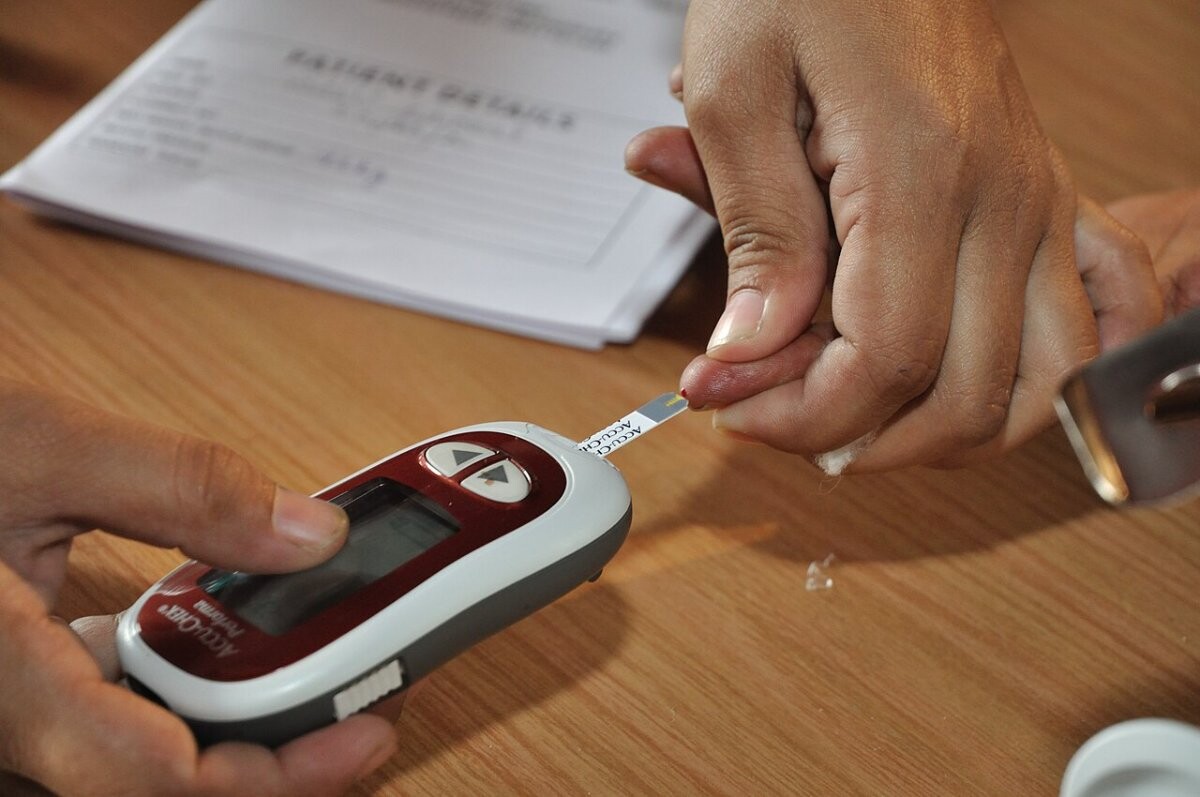
How this page is built. Figures come from the official statistical releases linked above; where agencies publish provisional numbers we say so, because they are revised. Australian statistics are often published separately by each state and territory, and financial years run from July to June, so we say which area and period each figure covers. Photos are public-domain or Creative Commons images credited in each caption; file photos are illustrative and are not from the events described unless the caption says so. This page tracks trends and is not personal safety, medical, legal or financial advice.