
Leveraged ETFs: What the Evidence Shows
How the daily reset makes leveraged ETFs drift from their multiple, what studies of real investors found, the case for them, and the new SEC and Korean rules.
Articles where cognition, judgement, stress tolerance or digital comprehension changes the outcome.
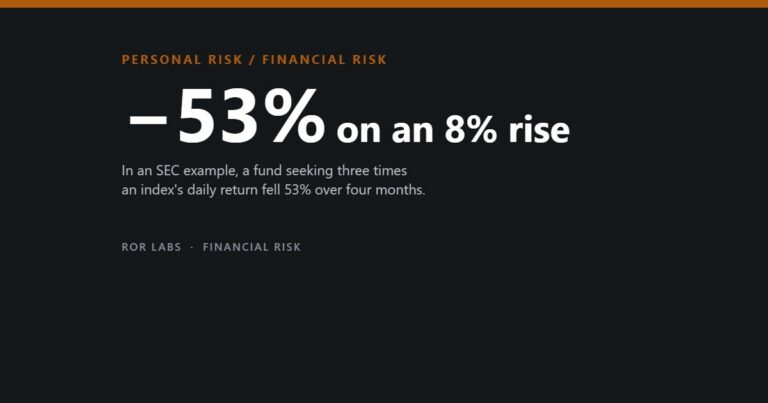
How the daily reset makes leveraged ETFs drift from their multiple, what studies of real investors found, the case for them, and the new SEC and Korean rules.
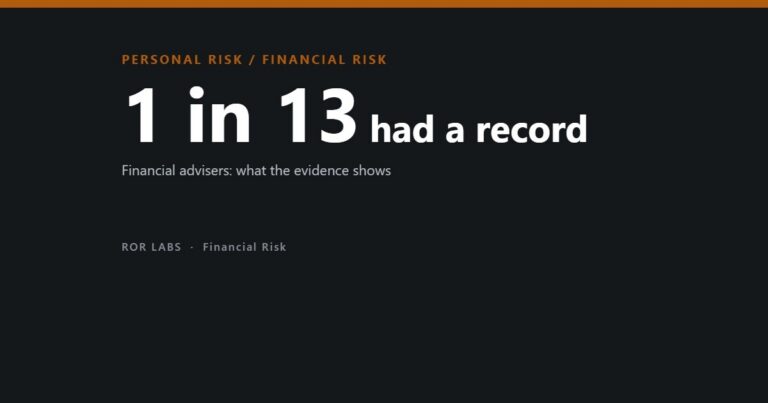
About one US adviser in 13 has a misconduct record, and many keep working. What research shows about adviser misconduct, conflicts, fees and when advice still helps.
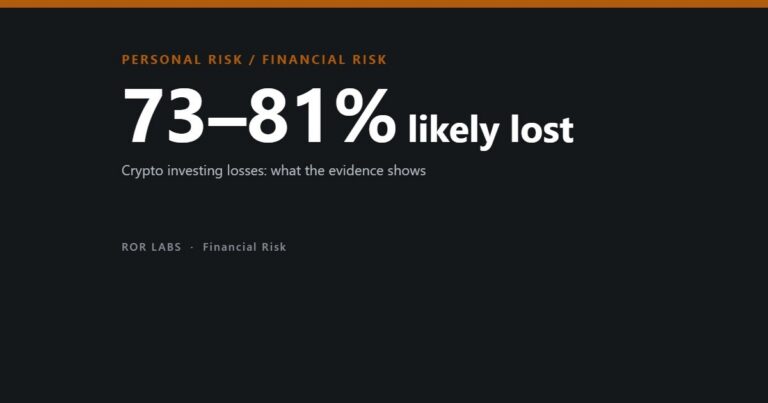
A BIS study estimated that 73% to 81% of retail bitcoin investors had likely lost money on their first purchase. What the evidence shows about timing, failed coins, fraud and leverage, and what it cannot show.
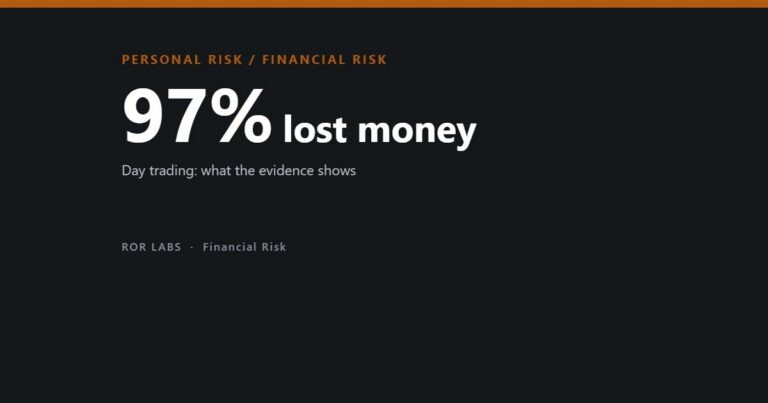
The households that traded most earned 11.4% a year against 17.9% for the market, and fewer than 1% of day traders profit reliably. What 25 years of trading records show, including the case for retail traders.
Mistaken eyewitnesses played a role in 76% of the first 250 US DNA exonerations. What research shows about confidence, lineups and wrongful convictions.
Missed payments begin rising about six years before a dementia diagnosis, and confidence in managing money does not fall as ability does. What the evidence shows.
About 29% of older medical inpatients develop delirium, and many cases are missed. Prevention programmes cut cases by 43%, but did not reduce deaths. What the evidence shows on detection, dementia and treatment.
File photo: a smartphone display. Photo: Skitterphoto, via Wikimedia Commons, CC0. In the news · August 2026 An experiment with 165 participants showed Instagram-style posts that were either new or repeated, with high or low like counts. Repeated statements were again judged more true than new ones, and like counts did not change that effect….
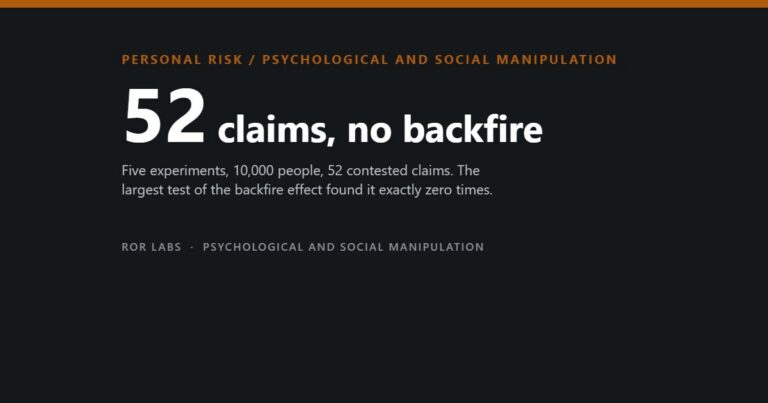
Key takeaways · 12 min read The backfire effect comes from a 2010 paper whose own second experiment failed to reproduce it at the group level. The largest test since — five experiments, more than 10,000 people, 52 corrected claims — found it zero times. Across the literature, 81% of reported backfires used a single-question…
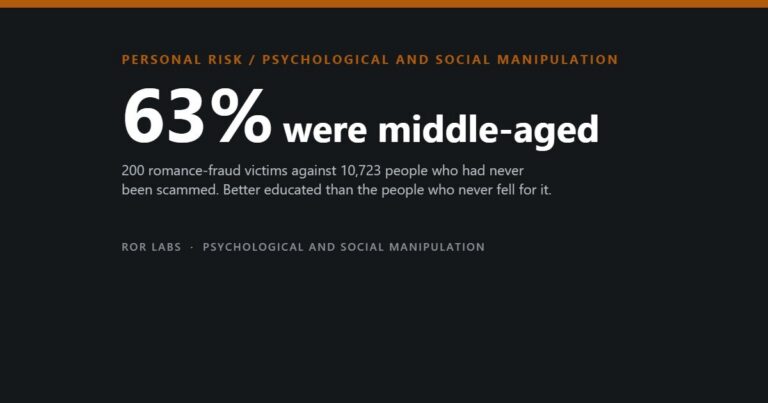
A comparison of 200 romance fraud victims with 10,723 people who were never scammed found victims middle-aged and better educated, with self-rated security knowledge predicting nothing. The current version of the fraud asks for an investment rather than a favour, stepping between the two standard warnings.