
Trend summary
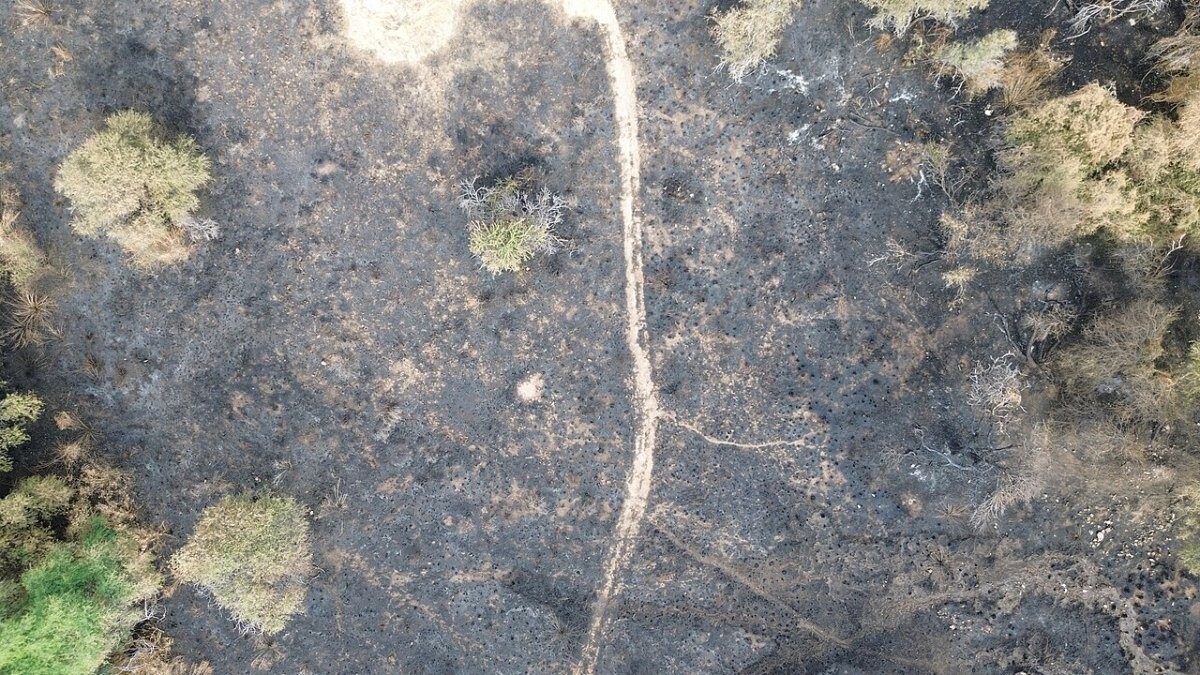
- Mexico’s 2024 fire season burned a record 1,672,215 hectares in 8,002 forest fires, according to CONAFOR, the national forestry commission. 2023 (1,047,493 ha) and 2025 (1,230,212 ha) were the next worst years on record for area burned.
- The 2026 season was one of the mildest on record: 5,102 fires and 403,759 hectares by its close in July. Rain and an early El Niño helped.
- Almost all fires are started by people. Farm and pasture burning that gets out of control is a leading cause, along with fires set on purpose. In the 2024 data, 23.4% were intentional and 17.8% agricultural, but the cause of 29.8% was unknown.
- Fire crews pay a price: 18 firefighters died in 2019 and again in 2024, and 91 died between 2019 and 2026. Smoke also reaches big cities; in May 2019 it roughly doubled fine-particle (PM2.5) levels in Mexico City.
What the numbers show
CONAFOR counts forest fires and the area they burn each year, using weekly national reports that are revised once state fire centres validate the data. For decades the big years were 1998, with 14,445 fires and about 849,632 hectares, and 2011, with 12,113 fires and 956,405 hectares (CONAFOR SNIF; SEMARNAT). From 1991 to 2017 the average was 8,094 fires and about 284,000 hectares a year (SEMARNAT, Informe 2018). That changed in 2023, when 7,611 fires burned 1,047,493 hectares, and again in 2024, when 8,002 fires burned 1,672,215 hectares, a new record (Senate initiative citing CONAFOR; UnoTV). In 2025, 7,016 fires burned 1,230,212 hectares, the second-largest area on record (Excélsior, citing CONAFOR). The 2026 season closed with 5,102 fires and 403,759 hectares, the second-lowest number of fires after 2015 and the third-smallest area after 2015 and 2020 (Excélsior).
Fires are most frequent in central Mexico but burn the most land elsewhere. Over 2019 to 2023, the State of Mexico, Mexico City and Michoacán had the most fires, while Jalisco, Chihuahua and Chiapas had the largest burned area (CONAFOR SNIF). Mexico City’s fires are many but small: in 2025 it had 570 fires but only about 3,720 hectares burned, while Chihuahua lost about 215,462 hectares (UnoTV, preliminary CONAFOR data). Most of the burned area is grass and scrub, not tall forest: in 2024, 58% of the affected hectares had only minimal impact. Even so, satellite data show Mexico lost 93,091 hectares of primary forest in 2024, about twice 2023, and fire caused 60% of its tree-cover loss; half was in Campeche and Quintana Roo (Mongabay, citing WRI and CONAFOR). Firefighter deaths were 18 in 2019, 15 in 2020, 18 in 2024, 12 in 2025 and 4 in 2026 (Excélsior, citing CONAFOR).
What is driving it
Drought sets the size of a bad year. A study of the 2011 record found that burned areas clustered where drought had built up over 12 to 24 months (Zúñiga-Vásquez et al., Geocarto International, 2019). A national satellite study found that 38% of burned area was in croplands, and that burned area tracked temperature, rainfall and poverty (Montoya et al., International Journal of Wildland Fire, 2023). People supply the spark. From 2004 to 2017, uncontrolled farm burning caused 39% of fires, campfires 12%, cigarette ends 10% and arson 9% (SEMARNAT). More recent CONAFOR data put far more fires in the ‘unknown’ and ‘intentional’ groups: in 2024, 29.8% unknown, 23.4% intentional, 17.83% agricultural and 13% livestock, with only 1.34% natural (Mongabay, citing CONAFOR).
Smoke is a public health issue in the Valley of Mexico. From 10 to 17 May 2019, smoke plumes pushed average PM2.5 in Mexico City from about 29 to 65 µg/m³, around twice the national standard, and cut visibility by about 80% (Carabalí et al., Scientific Reports, 2021). UNAM’s atmospheric scientists linked that episode to hundreds of fire hotspots in the State of Mexico, Hidalgo and Morelos (Gaceta UNAM). Resources are another factor: an opposition Senate initiative said CONAFOR’s budget fell from MX$7,628 million in 2014 to MX$2,672 million in 2024 (Senate). For 2026, Mexico had 416 brigades and 4,384 firefighters (Excélsior).
Recent cases
- 11 August 2026: A fourth Mexican contingent of 102 firefighters and technicians arrived in Canada, taking the number of Mexican personnel fighting fires there to more than 300 (Excélsior).
- 15 July 2026: CONAFOR closed the 2026 season with 5,102 fires and 403,759 hectares burned, one of the mildest seasons on record. Four people died fighting fires: three volunteers and one municipal civil protection crew member (Excélsior).
- 10 February 2026: CONAFOR’s 2025 figures showed 7,016 fires and 1,230,212 hectares burned, the second-largest area after 2024. Chihuahua, Sinaloa and Guerrero led the list of states for area burned (Excélsior).
Press releases and official reports, 2023–2026
Five key releases a year for the last four years, newest first. Most come from national bodies such as INEGI, the Ministry of Health, CENAPRED, the National Seismological Service, CONAFOR, the Navy, CONDUSEF and the Official Gazette, from Congress, from international agencies such as PAHO and WHO, and from research journals. Key events, especially in earlier years where official archives are missing, come from Mexican news outlets such as La Jornada, El Universal, Excélsior, El Financiero, Animal Político and Mexico News Daily. Headlines are our English translations of the Spanish originals. Releases from 2007–2022 are in the expandable list after 2023.
2026
- 11 Aug 2026ExcélsiorCanada receives fourth Mexican contingent to fight forest fires
- 15 Jul 2026Excélsior2026 forest fire season ends, with tribute to firefighters
- 27 Jun 2026ExcélsiorRain and El Niño curb the impact of forest fires in the country
- 10 Feb 2026ExcélsiorMexico has 4,384 firefighters to face the forest fire season
- 16 Jan 2026UnoTVForest fires rose in 2025; see the states with the most cases
2025
- 25 Sep 2025Gaceta UNAMResearchers use AI to detect smoke from forest fires
- 10 Jun 2025Mongabay LatamFor the first time, Mexico enters the list of the 10 countries with the greatest primary forest loss in the world in 2024
- 23 Apr 2025SenateBill to amend Articles 17 and 119 of the General Law on Sustainable Forest Development (forest fires)
- 18 Apr 2025UnoTVMexico burns: 1998 set the forest fire record and 2025 is a concern; see the figures
- 31 Mar 2025UnoTVMexico tops 1,700 forest fires in 2025; which states are most affected?
2024
- 18 Aug 2024ExcélsiorFires set a record for devastation; drought and heat intensified them
- 13 May 2024Gaceta UNAMThis year could see more forest fires than 2023
- May 2024CONAFORNational weekly forest fire report, 1 January to 9 May 2024
- Apr 2024CONAFORNational weekly forest fire report, 1 January to 18 April 2024
- 28 Mar 2024Mexico News Daily4 dead as Mexico battles a record 120 wildfires in 19 states
2023
- 7 Sep 2023Gaceta UNAMIxaya, a satellite project for fire prevention and management
- 19 Jun 2023Gaceta UNAMLarge, long-lasting forest fires, a global phenomenon
- 4 May 2023Gaceta UNAMThe number of deliberately set forest fires is rising
- 4 May 2023Gaceta UNAMUNAM strengthens satellite monitoring to detect forest fires
- 21 Mar 2023Gaceta UNAMMegafires are rare, but their harm is greater
View 20 years of major Mexican wildfire press releases (2007–2026)30 more from 2007–2022, up to five a year, newest first
2022
- 13 Apr 2022La JornadaTamaulipas: six fires have devastated 3,600 hectares
- 4 Apr 2022Gaceta UNAMFewer forest fires in protected natural areas
- 4 Apr 2022Gaceta UNAMMost fires are caused by illegal activities
- 28 Mar 2022Gaceta UNAMMore than a thousand forest fires in the country so far this year
2021
- 23 Sep 2021Gaceta UNAMBad news: more hurricanes, droughts and fires, and shrinking water resources
- 18 Apr 2021La JornadaForest fires are more extensive than in other years: Conafor
- 25 Mar 2021Gaceta UNAMForest fire risk is rising
- 25 Mar 2021Mexico News Daily1,100 evacuated after winds fan flames of Nuevo León forest fire
- 24 Mar 2021Mexico News DailyIt's proving to be a bad year for wildfires, says forestry agency
2020
- 10 Jun 2020Mexico News DailyTijuana wildfires leave 2 dead; firefighters hampered by lack of water
- 15 Apr 2020Mexico News DailyOaxaca wildfires trigger emergency declaration in 9 municipalities
- 31 Jan 2020La JornadaConafor forest firefighters complain they were issued uniforms that do not protect them from fire
- 20 Jan 2020Gaceta UNAMFires caused by poor management of fire and natural resources
2019
- 14 May 2019Gaceta UNAMForest fires contribute to high pollution levels in Mexico City
2018
- 21 Aug 2018Mexico News DailyMexico sends record number of firefighters to battle fires in Canada
- 29 May 2018La JornadaVolume of forest fires fell 50%; Chihuahua the hardest hit: Conafor
- 2018SEMARNATReport on the State of the Environment in Mexico, 2018 edition: Chapter 2, Ecosystems (forest fires section)
2016
- 24 Apr 2016ExcélsiorFires are wiping out Mexico City's forests; 99% are human-caused
- 18 Mar 2016INEGIStatistics for the International Day of Forests (21 March)
2015
- 19 Mar 2015INEGIStatistics for the International Day of Forests (21 March)
- 2015SEMARNATReport on the State of the Environment in Mexico, 2015 edition: Chapter 2, Terrestrial ecosystems (forest fires section)
2014
- 18 Mar 2014INEGIStatistics for the International Day of Forests (21 March)
2013
- 26 Mar 2013El UniversalConafor urges the public to report forest fires
2012
- 12 Jul 2012La JornadaDurango: drought damages 200,197 hectares
- 2 May 2012La JornadaTwo firefighters die battling a blaze in Oaxaca
2011
- 18 May 2011El UniversalGuerrero ranks seventh in forest fires: Conafor
- 21 Apr 2011La Jornada30-metre fire whirl puts Conafor brigade members at risk in Coahuila
- 18 Apr 2011El UniversalFifteen fires still active in Quintana Roo
2008
- 28 Apr 2008La JornadaZacatecas: 450 fires so far this year
2007
- 23 Apr 2007El Universal44% of forest fires attributed to agricultural burning
Many years list fewer than five items, and some have none yet. Several official archives (parts of gob.mx, the Official Gazette and older agency pages) could not be opened when we compiled this list, and we only list items we could open and check. We are still adding to these lists. Where a page shows no date, the date comes from the publisher’s own index; annual reports with no printed date are listed under the year they were released.
Photo list
How this page is built. Figures come from the official statistical releases and research linked above; where agencies publish provisional numbers we say so, because they are revised. National death data come from INEGI’s death registrations, which are finalised the year after; preliminary figures are labelled. Some figures come from news reports quoting officials, and we name the outlet. Money is given in Mexican pesos (MX$). Headlines and quotes are our translations from Spanish. Photos are public-domain or Creative Commons images credited in each caption; file photos are illustrative and are not from the events described unless the caption says so. This page tracks trends and is not personal safety, medical, legal or financial advice.