
Trend summary
- Mexico’s recorded drowning death rate fell from 1.83 per 100,000 people in 2012 to about 1.25 in 2023, according to the Health Ministry’s accident-prevention secretariat. Most drownings happen inland, in tanks, rivers and lakes, not at sea.
- Holiday weeks are the danger points. Drownings peak in April, July and August, and on Sundays. The Navy now runs “Operación Salvavidas” on beaches at Holy Week, summer and winter: it rescued 117 people at sea in summer 2025.
- The worst single offshore disaster was the Usumacinta rig accident in the Campeche Sound on 23 October 2007, when a cold front drove the jack-up rig into a production platform; 22 people died. Fires on Pemex platforms killed workers again in 2015 and 2023.
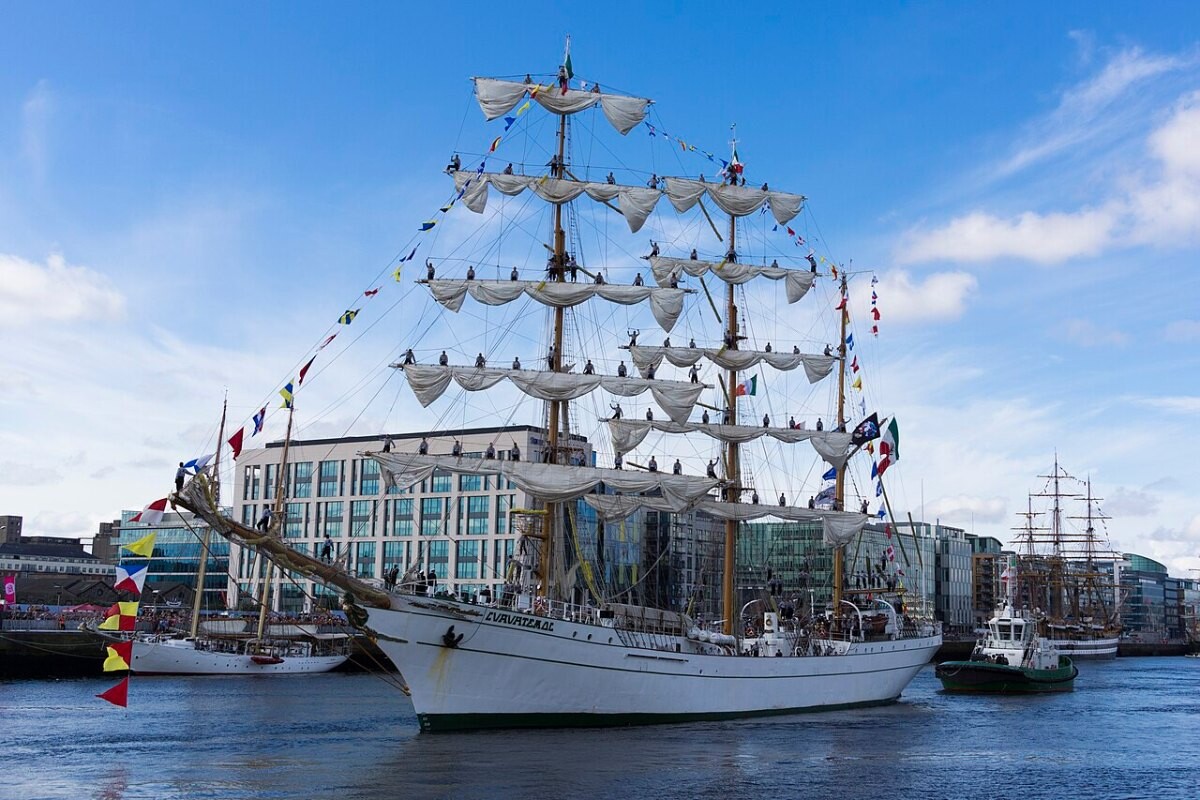
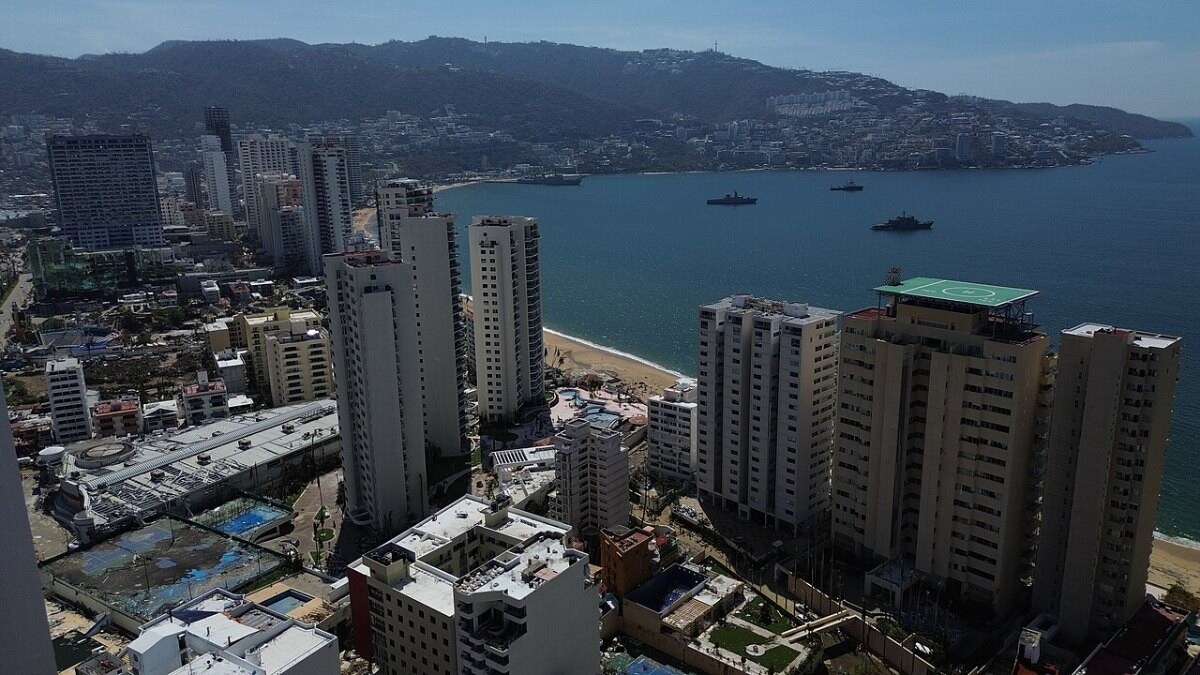
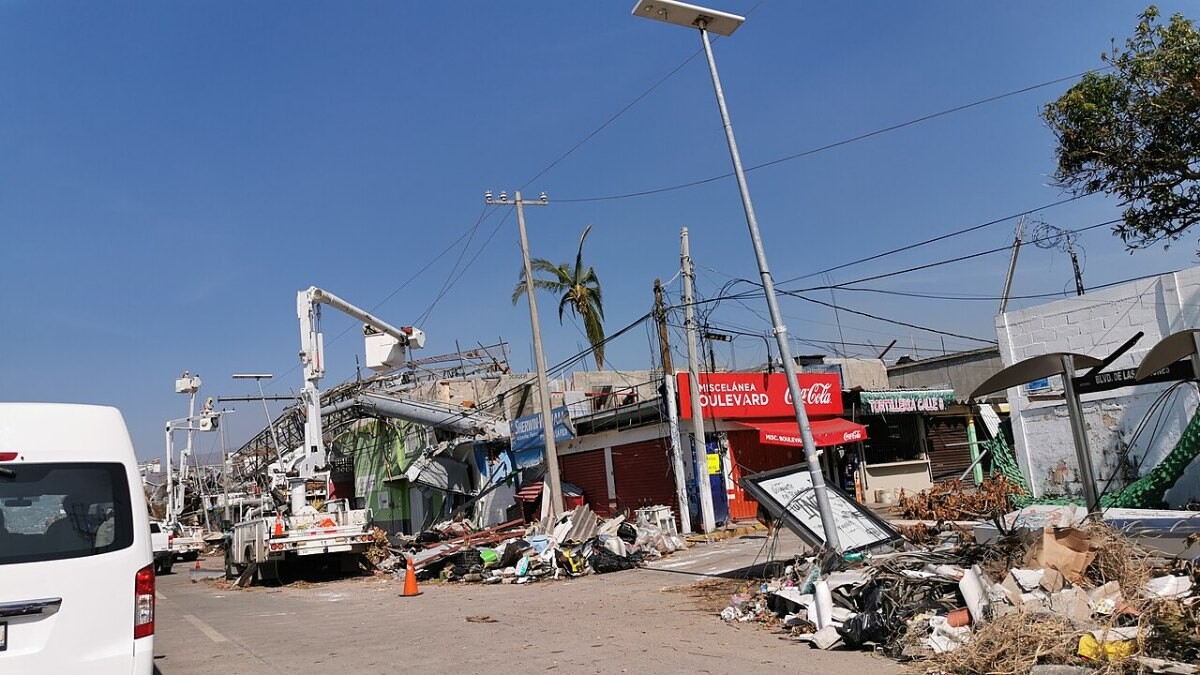
- Storms sink boats in harbour. After Hurricane Otis hit Acapulco in October 2023, the Navy counted about 60 sunken vessels and more than 30 sailors were missing. In May 2025 the Navy training ship Cuauhtémoc struck New York’s Brooklyn Bridge, killing two crew.
What the numbers show
Mexico has no single published count of deaths at sea, so the best national gauge is drowning in general. A study of official death records found 107,319 drowning deaths from 1979 to 2005, with the rate falling 65%, from 6.58 to 2.28 per 100,000 people (Celis et al., Revista Panamericana de Salud Pública, 2008). The Health Ministry’s accident-prevention secretariat (STCONAPRA), using INEGI death records, counts 34,097 drowning deaths from 2000 to 2013 and puts the rate at 1.83 per 100,000 in 2012, 1.41 in 2019, 1.24 in 2020 and about 1.25 in 2023. The most common recorded place of drowning is “other specified” sites such as water tanks and cisterns, followed by natural waters (STCONAPRA country report, via PAHO).
The Navy (SEMAR) publishes results for each holiday beach operation. In Holy Week 2010 it reported 242 people rescued from drowning and four bodies recovered, with 3,937 personnel and nine search and rescue stations (SEMAR). In Holy Week 2025 it deployed 3,552 personnel and 34 search, rescue and maritime surveillance stations (ENSAR), and rescued 93 people at sea (SEMAR). Summer 2025 (11 July to 31 August) brought 117 rescues at sea and 997 medical attentions (El Imparcial), and winter 2025-26 (19 December to 11 January) 36 rescues (Excélsior). These releases count rescues, not deaths, so they show workload rather than a death trend.
What is driving it
Timing and age matter most. A national study of 100,834 unintentional asphyxia deaths from 1999 to 2017 found 44.66% were drownings and 77% of all victims were male. Drownings mainly hit children and adolescents and cluster in April, July and August, on Sundays and in the afternoon (Pérez-Núñez and Vera-López, Gaceta Sanitaria, 2020). April is usually Holy Week, the busiest beach week of the year. Earlier work found the highest rates in Tabasco, a low-lying state of rivers and lagoons, and in towns of fewer than 2,500 people (Celis et al., 2008).
Offshore, the risk comes from weather and the oil industry in the Campeche Sound. On 23 October 2007 a cold front with winds near 130 km/h and 8-metre waves rocked the jack-up rig Usumacinta into the Kab-101 platform, causing a leak; lifeboats capsized during the evacuation (Hanlon, Memorial University case study, 2013). Twenty-two people died and 68 were injured, and in 2009 the National Human Rights Commission said the rig had operated without required safety rules (Quadratín). In September 2011 the Navy pulled seven survivors and two bodies from the sea after the Trinity II platform was lost, and found the last missing worker’s body days later (SEMAR; SEMAR). A fire on the Abkatun A-Permanente platform on 1 April 2015 killed four and injured 16 (Expansión), and a fire on Nohoch-Alfa on 7 July 2023 left two dead and one missing (El Financiero). Other hazards are migrant and tourist boats: in October 2007 a boat carrying 26 presumed migrants sank off San Francisco del Mar, Oaxaca, leaving 15 dead and nine missing (SEMAR).
Recent cases
- 12 January 2026: The Navy’s winter beach operation, from 19 December 2025 to 11 January 2026, ended with 36 people rescued at sea and more than 600 medical attentions, using 3,035 personnel and 34 search and rescue stations (Excélsior).
- 3 September 2025: SEMAR reported 117 rescues at sea and 997 medical attentions during “Operación Salvavidas Verano 2025”, which ran from 11 July to 31 August across 17 coastal states (El Imparcial).
- 30 June 2025: The US National Transportation Safety Board released preliminary findings on the Mexican Navy training ship Cuauhtémoc, which struck the Brooklyn Bridge on 17 May 2025 while moving astern at about 5.9 knots. Two crew died and 19 people were injured out of 277 aboard (NTSB).
Press releases and official reports, 2023–2026
Up to five key releases a year for the last four years, newest first. Most come from national bodies such as INEGI, the Ministry of Health, CENAPRED, the National Seismological Service, CONAFOR, the Navy, CONDUSEF and the Official Gazette, from Congress, from international agencies such as PAHO and WHO, and from research journals. Key events, especially in earlier years where official archives are missing, come from Mexican news outlets such as La Jornada, El Universal, Excélsior, El Financiero, Animal Político and Mexico News Daily. Headlines are our English translations of the Spanish originals. Releases from 2007–2022 are in the expandable list after 2023.
2026
- 19 Aug 2026La JornadaTwo fishermen missing in Chiapas rescued after five days on the high seas
- 1 Mar 2026Navy (SEMAR), via Security CabinetThe Navy reports cumulative results at sea, in the air and on land during 2026
- 12 Jan 2026ExcélsiorNavy rescues 36 people on the country's beaches over the holidays
- 4 Jan 2026La JornadaThree boats go missing off Puerto Chiapas
- 1 Jan 2026La JornadaSemar rescues three castaways after a boat sinks off Puerto Chiapas
2025
- 7 Dec 2025La RazónNavy rescues 5 missing foreign divers
- 3 Sep 2025El ImparcialSemar carried out 117 rescues and almost a thousand medical attentions during 'Operación Salvavidas Verano 2025'
- 11 Jul 2025Navy (SEMAR), via Security CabinetPlan Marina 'Operación Salvavidas Verano 2025' begins on the country's busiest beaches
- 30 Jun 2025NTSBContact of Mexican Navy ARM Cuauhtémoc BE 01 with the Brooklyn Bridge: preliminary information
- 28 Apr 2025Navy (SEMAR), via Security CabinetNavy reports beach safety results during 'Operación Salvavidas Semana Santa 2025'
2024
- 13 Dec 2024Navy (SEMAR), via Security CabinetPlan Marina 'Operación Salvavidas, Invierno 2024' begins at the country's main tourist destinations for the holiday season
- 11 Oct 2024La JornadaRescue operation for fishermen missing in Yucatán fails
- 8 Apr 2024La JornadaFire on Pemex platform in Campeche left one dead and 13 injured
- 2 Feb 2024La JornadaPretrial detention for captain of boat that sank off Isla Mujeres
2023
- 24 Dec 2023La JornadaSemar deploys operation after boat capsizes in Quintana Roo
- 11 Dec 2023La JornadaTwo reported dead after tourist boat sinks in Quintana Roo
- 18 Nov 2023El FinancieroHurricane Otis: families of missing sailors demand the government continue the search
- 3 Nov 2023TV AztecaDivers search for more than 30 missing sailors in Acapulco
- 7 Jul 2023El FinancieroNohoch-Alfa platform explosion: two of the missing workers die
View 20 years of major Mexican maritime and boat safety press releases (2007–2026)41 more from 2007–2022, up to five a year, newest first
2022
- 6 Jun 2022La JornadaBoat capsizes in Guaymas; seven members of a family die
- 7 Mar 2022Mexico News Daily2 tourists struck by tour boat and killed while diving off Cancún
2021
- 23 Aug 2021La JornadaFive dead in platform explosion, Pemex confirms
- 3 Jul 2021Mexico News DailyPipeline rupture causes balls of flames on surface of Gulf of Mexico
- 2 Feb 2021Mexico News DailyAcapulco fishermen rescued off coast of Oaxaca after three weeks at sea
2018
- 22 Feb 2018La JornadaExplosion on ferry in Playa del Carmen; 25 injured
2016
- 15 Jun 2016QuadratínPemex must report on investigation into 2007 accident
- 8 Feb 2016La JornadaFire on oil platform; two dead
2015
- 13 Aug 2015La OpiniónPemex, a long history of incidents
- 6 May 2015La JornadaTwo workers die in accident on an oil platform
- 1 Apr 2015ExpansiónFour dead in fire on a Pemex platform in Campeche
2012
- 20 Aug 2012Navy (SEMAR)The Navy saves more than 50 lives during the summer holidays
- 1 Aug 2012Navy (SEMAR)The Navy rescues three Jamaican fishermen who had spent two weeks at sea
- 16 Apr 2012Navy (SEMAR)The Navy concludes 'Operación Salvavidas 2012'
- 5 Mar 2012Navy (SEMAR)The Navy rescues 12 people near Ensenada
- 2 Mar 2012Navy (SEMAR)Air and land units join the search for castaways near Isla Cedros, Baja California
2011
- 26 Oct 2011Navy (SEMAR)The Navy rescues 46 people on the high seas off Sonora
- 15 Sep 2011Navy (SEMAR)The Navy finds the body of the last worker from the 'Trinity II' platform
- 11 Sep 2011Navy (SEMAR)The Navy evacuates seven survivors from the 'Trinity II' platform
- 22 Aug 2011Navy (SEMAR)The Navy concludes 'Operación Salvavidas Verano 2011'
- 4 Jul 2011Navy (SEMAR)The Navy goes to the rescue of castaways from a tourist boat sunk in Baja California
2010
- 21 Dec 2010Navy (SEMAR)The Navy activates 'Operación Salvavidas 2010' for the holiday season
- 24 Nov 2010Navy (SEMAR)In search and rescue operations at sea, the Navy rescues 16 people
- 6 Oct 2010Navy (SEMAR)The Navy saves four Argentines, six Norwegians and three Mexicans from drowning at sea
- 25 Aug 2010Navy (SEMAR)The Navy concludes 'Operación Salvavidas-Verano 2010'
- 11 Apr 2010Navy (SEMAR)As 'Operación Salvavidas' nears its end, the Navy reports 242 people rescued from drowning
2009
- 8 Dec 2009Navy (SEMAR)The Navy assists the fishing boat 'Hipocampo' with four crew aboard, one of them injured
- 4 Oct 2009Navy (SEMAR)Navy personnel rescue three fishermen lost on the high seas
- 23 Jun 2009Navy (SEMAR)The Navy supports five boats and rescues their 21 crew on the high seas
- 26 May 2009Navy (SEMAR)The Navy rescues five Ecuadorian castaways off the coast of Chiapas
- 12 Apr 2009Navy (SEMAR)Results of 'Operación Salvavidas 2009' during Holy Week
2008
- 7 Nov 2008Navy (SEMAR)The Navy helps rescue three fishermen lost off the coast of Guerrero
- 6 Nov 2008Navy (SEMAR)The Navy supports a boat carrying undocumented migrants off Quintana Roo
- 9 Sep 2008Navy (SEMAR)The Navy rescues the crew of a boat that sank in the port of Veracruz
- 20 Aug 2008Navy (SEMAR)The Navy concludes 'Operación Salvavidas 2008'
- 13 Aug 2008Navy (SEMAR)The Navy locates and assists a fishing boat with four crew off Campeche
2007
- 23 Nov 2007ExpansiónPemex will demolish the Usumacinta platform
- 22 Oct 2007Navy (SEMAR)Navy assists a supply ship after an explosion near the Campeche Sound
- 22 Oct 2007Navy (SEMAR)The Navy continues searching for victims of the shipwreck of Central Americans in Oaxaca
- 20 Oct 2007Navy (SEMAR)Navy personnel carry out search and rescue operations off the coast of Oaxaca
- 14 Jun 2007Navy (SEMAR)59 Cubans rescued at sea
Many years list fewer than five items, and some have none yet. Several official archives (parts of gob.mx, the Official Gazette and older agency pages) could not be opened when we compiled this list, and we only list items we could open and check. We are still adding to these lists. Where a page shows no date, the date comes from the publisher’s own index; annual reports with no printed date are listed under the year they were released.
Photo list
How this page is built. Figures come from the official statistical releases and research linked above; where agencies publish provisional numbers we say so, because they are revised. National death data come from INEGI’s death registrations, which are finalised the year after; preliminary figures are labelled. Some figures come from news reports quoting officials, and we name the outlet. Money is given in Mexican pesos (MX$). Headlines and quotes are our translations from Spanish. Photos are public-domain or Creative Commons images credited in each caption; file photos are illustrative and are not from the events described unless the caption says so. This page tracks trends and is not personal safety, medical, legal or financial advice.