
Trend summary
- Brazil sits in the middle of the South American plate, so its earthquake risk is low. Most tremors are small and few are felt.
- The country has recorded one earthquake death: a five-year-old girl in Caraíbas, Itacarambi (Minas Gerais), on 9 December 2007, when a magnitude 4.9 quake brought down her home’s walls.
- Small swarms recur in places such as Montes Claros and Sete Lagoas (MG), Parauapebas (PA) and off the Rio de Janeiro coast. Very deep Andean quakes under Acre reach magnitude 6.6 but cause no damage.
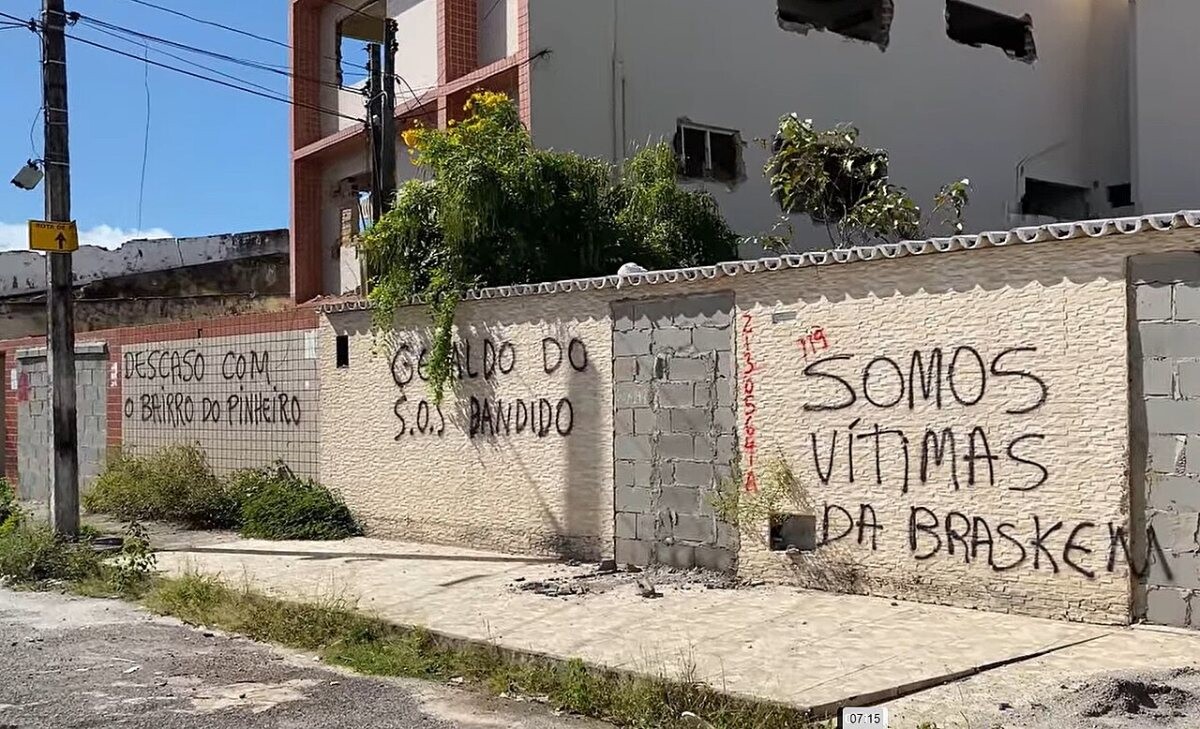
- The worst ground-movement disaster was man-made: salt mining under Maceió caused subsidence that forced about 60,000 people from their homes. A small tremor in March 2018 was one of the first warning signs.
What the numbers show
Brazil’s earthquakes are mostly small. The largest on record was a magnitude 6.2 event on 27 January 1955 in the Serra do Tombador, Mato Grosso. It did little harm because few people lived nearby (Jornal da USP). The only recorded death came on 9 December 2007. A magnitude 4.9 (mb) quake struck the village of Caraíbas in Itacarambi, Minas Gerais. It killed a five-year-old girl, injured six people and damaged 76 buildings (Chimpliganond et al., Tectonophysics; Estado de Minas). Six houses were destroyed and about 380 people lost their homes (Vermelho, 10 Dec 2007).
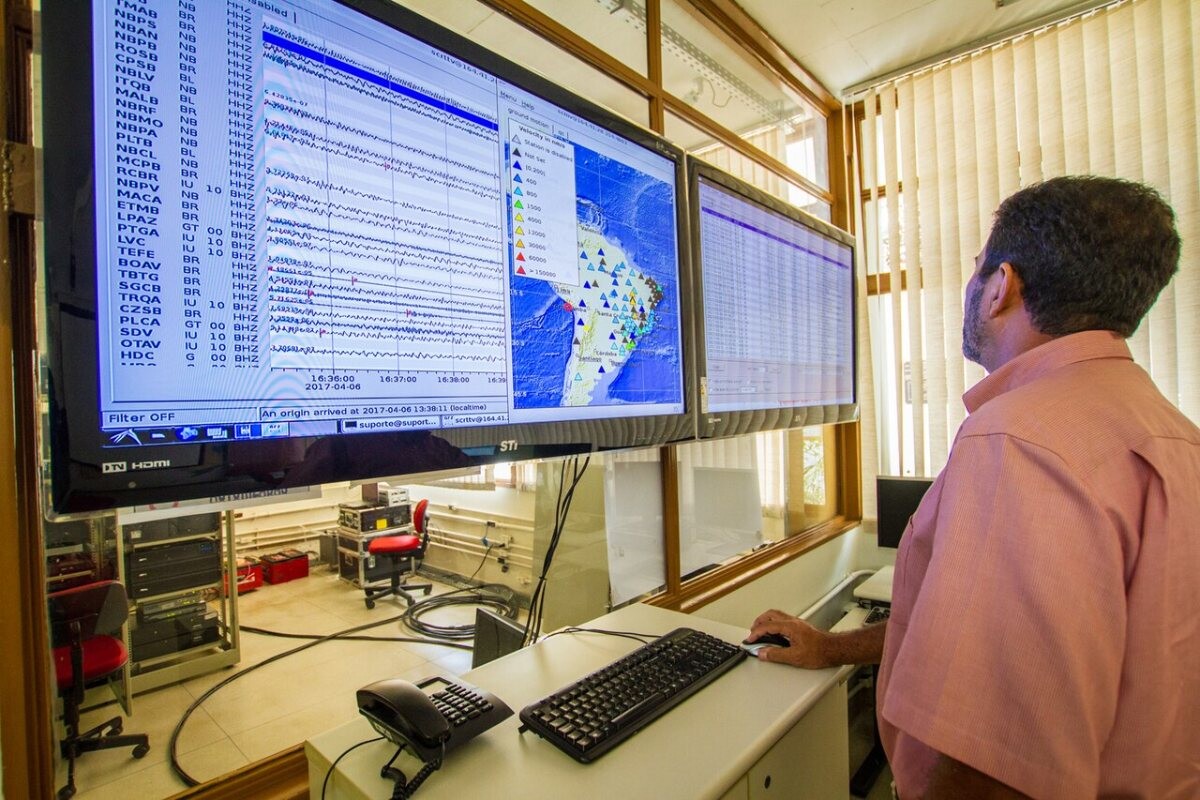
In 2025 the five largest tremors inside the plate ranged from magnitude 4.0 to 4.5. The largest were in Rorainópolis (Roraima, 4.5) and Poconé (Mato Grosso, 4.4), and three were in Parauapebas, Pará. The Brazilian Seismographic Network (RSBR) tracked them with almost 100 stations (Diário do Pará, citing RSBR). Deep quakes under Acre are bigger: magnitude 6.6 in January 2024 at more than 600 km depth, with no damage (Ministry of Mines and Energy / SGB). The biggest human toll from ground movement was in Maceió. Salt mining there affected more than 14,000 properties, and about 60,000 people were evacuated (Senate News Agency).
What is driving it
Natural tremors in Brazil come from old faults inside the plate being squeezed. In Caraíbas, researchers found very shallow reverse faulting, 0.3 to 1.2 km deep. They linked it to old basement faults reactivated under east–west compression (UnB doctoral thesis, 2013). In the far west, the Nazca plate dives under South America. This produces deep quakes under Acre that people feel but that rarely do harm (Agência Brasil). Big Andean quakes can also sway tall buildings in São Paulo, because the city sits on a sedimentary basin that amplifies seismic waves (Revista Oeste, citing USP).
Some shaking is human-made. Researchers report four confirmed cases of reservoir-triggered seismicity at the edge of the Paraná Basin. A reservoir-induced magnitude 3.3 tremor at Miranda (MG) nearly brought down a house (Barros, UnB thesis, 2010). Quarry blasts are mixed into the Montes Claros records (USP/UnB report, 2013). In Maceió, the Geological Survey of Brazil (CPRM) linked ground subsidence to Braskem’s salt-rock mining in 2019. A magnitude 2.4 tremor on 3 March 2018 was among the early signs (TNH1; Chamber of Deputies).
Recent cases
- 10 September 2026: USP seismologists said the year’s large quakes abroad were within the normal range. They added that Brazil, far from plate edges, can still have intraplate quakes (Jornal da USP).
- 31 July 2026: A magnitude 5.6 quake 150 km under Pucallpa, Peru, was felt in Cruzeiro do Sul, Acre. No injuries or damage were reported (Agência Brasil).
- 6 July 2026: A magnitude 3.0 quake about 60 km off Maricá, Rio de Janeiro, was recorded on 4 July. Nine small quakes had been logged near Saquarema in late June (Agência Brasil).
Press releases and official reports, 2023–2026
Up to five key releases a year for the last four years, newest first. Most come from federal ministries and agencies such as the Ministry of Health, INPE, the Federal Highway Police, CENIPA and the Central Bank, from Agência Brasil, the public news agency, and from the Senate and Chamber news services and state governments; a few news reports are included where they are the clearest public record of an event. Headlines are our English translations of the Portuguese originals. Releases from 2007–2022 are in the expandable list after 2023.
2026
- 10 Sep 2026Jornal da USPRecent earthquakes are within expectations and new tremors are expected
- 31 Jul 2026Agência BrasilMagnitude 5.6 earthquake in Peru is felt on the border with Acre
- 6 Jul 2026Agência BrasilMaricá, on the Rio coast, records a magnitude 3.0 earthquake
- 11 Jun 2026USP Seismology CentreTremors in Tucuruí, Pará, June 2026
- 8 Jan 2026Diário do ParáPará has three of the largest tremors of 2025
2025
- 20 Oct 2025Senate News AgencyInfrastructure Committee reviews bill transferring licensing of high-risk mining to the federal government
- 22 Mar 2025Poder360Magnitude 2.5 earthquake recorded in Betim (MG)
- 21 Feb 2025Agência BrasilLow-magnitude earthquake recorded in inland São Paulo state
2024
- 10 Dec 2024CanaltechThe 5 largest earthquakes that have ever happened in Brazil
- 19 Jul 2024Revista OesteEarthquake in Chile shakes buildings and furniture in São Paulo
- 21 May 2024Senate News AgencyCPI approves report and holds Braskem responsible for damage in Maceió
- 15 May 2024Senate News AgencyBraskem CPI: report proposes 14 indictments and a new inspection fee
- 22 Jan 2024Agência Gov / Ministry of Mines and EnergyMagnitude 6.6 earthquake recorded in inland Acre
2023
- 11 Dec 2023Maceió City Hall (Civil Defence)Civil Defence works to resume monitoring of ruptured mine soon
- 11 Dec 2023Agência BrasilRock salt mine collapses in northeastern Brazil
- 10 Dec 2023Agência BrasilBraskem's Mine 18 ruptures in Mundaú Lagoon, Maceió
- 2 Dec 2023Agência BrasilMine area in Maceió records stronger seismic tremor
- 1 Dec 2023Agência BrasilGovernment recognises state of emergency in Maceió
View 20 years of major Brazilian earthquake press releases (2007–2026)58 more from 2007–2022, up to five a year, newest first
2022
- 28 Dec 2022Agência BrasilNew earthquake hits Sete Lagoas
- 13 Dec 2022Observatório NacionalShip's collision with the Rio–Niterói Bridge generates a tremor recorded on an Observatório Nacional seismograph
- 7 Jun 2022MetSul MeteorologiaStrong earthquake in northern Brazil
- 4 Apr 2022Minas Gerais State News AgencyEarthquake monitoring puts Unimontes among the country's references
- 14 Feb 2022Jornal da USPFelt it? USP researchers monitor earthquakes across the country
2021
- 24 Nov 2021Senate News AgencySinking of Maceió neighbourhoods and compensation debated in the Senate oversight committee
- 9 Nov 2021Senate News AgencySenate oversight committee will debate ground subsidence caused by a mining company in Maceió
- 2 Oct 2021Agência BrasilMagnitude 5.9 earthquake recorded in Acre
- 9 Mar 2021USP Seismology CentreThe 'earth tremor' in the Catanduva region on 9 March 2021
- 2 Feb 2021USP Seismology CentreThe Roraima/Guyana earthquake of 31 January 2021
2020
- 19 Nov 2020Diário do NordesteThe Pacajus earthquake, the largest tremor recorded in the North and Northeast, turns 40
- 31 Oct 2020TNH1Parts of Maceió's Mutange neighbourhood could disappear by 2025, says geologist
- 27 Oct 2020Tribuna HojeFormer Bom Conselho students bid farewell to the historic building
- 8 Apr 2020USP Seismology CentreBrazilian Seismographic Network records the effect of the lockdown, and could even monitor public compliance
- 2 Apr 2020Tribuna HojeTeachers' union Sinteal to move out of its headquarters on Friday (3rd)
2019
- 16 Oct 2019Chamber of DeputiesWork plan of the external committee monitoring ground subsidence in Maceió
- 3 Jul 2019TNH1Pinheiro: Braskem challenges CPRM report, citing inconsistencies and hasty conclusions
- 20 May 2019USP Seismology CentreMagnitude 3.9 earthquake in Delfinópolis, Minas Gerais
- 8 May 2019TNH1CPRM names Braskem's mining as the cause of instability in Pinheiro and nearby areas
- 19 Mar 2019Senate News AgencySenate oversight committee to hold public hearing on earth tremors in Maceió
2018
- 14 Aug 2018Observatório NacionalNew low-magnitude tremors detected by the Brazilian Seismographic Network in Mangaratiba, Rio de Janeiro
- 14 May 2018Observatório NacionalBrazilian Seismographic Network records tremors near Araruama (RJ)
- 3 May 2018Observatório NacionalLow-magnitude tremors recorded in São José de Ubá (RJ)
- 2 Apr 2018MigalhasCourts and ministries evacuated because of an earth tremor in the Federal District
- 6 Mar 2018USP Seismology CentreEarthquake in Maceió, Alagoas, 3 March 2018
2017
- 13 Dec 2017Jornal da USPUSP updates Brazil's earthquake risk map
- 10 Dec 2017Estado de MinasEarthquake in the Minas Gerais town of Itacarambi marks 10 years
- 19 Sep 2017Jornal da USPTremor felt in Paraná was of moderate magnitude
- Jun 2017Pesquisa FAPESPBeneath the earth: characterising geological fault movements in the crust sheds light on seismic tremors in Brazil
- 3 Jan 2017USP Seismology CentreThe Maranhão earthquake of 3 January 2017
2016
- 19 May 2016Jornal da USPUSP installs seismic station to monitor tremors in Jurupema (SP)
- 22 Jan 2016USP Seismology Centre / State University of LondrinaTremors in Londrina – technical report 2
- 12 Jan 2016USP Seismology Centre / State University of LondrinaTremors in Londrina, January 2016
2015
- 26 Nov 2015Agência BrasilTremor in Acre is also felt in Rondônia and Amazonas
- 24 Nov 2015Senate News AgencyEarth tremors did not cause the dam collapse in Mariana, specialist tells the Senate
- 6 Nov 2015USP Seismology CentreEarthquakes in Mariana, Minas Gerais, November 2015
- 1 Sep 2015USP Seismology CentreEarthquakes in Angra dos Reis, Rio de Janeiro, May 2015
- 10 Mar 2015Sesc São PauloAre we free of earthquakes?
2014
- Sep 2014Anais da Academia Brasileira de Ciências (UnB author)On the footprints of a major Brazilian Amazon earthquake
- 20 May 2014University of São PauloIAG centre monitors seismic activity in Brazil
- 6 Apr 2014USP Seismology CentreReactivation of seismicity in Montes Claros, Minas Gerais, 6 April 2014
2013
- 5 Aug 2013University of São PauloProject involving the USP Seismology Centre detects a seismic event automatically
- 11 Mar 2013USP Seismology Centre / UnB Seismological ObservatoryStudy of the 2012 Montes Claros, MG, earthquakes
- 2013University of BrasíliaStudies of the seismicity of Caraíbas-Itacarambi, Minas Gerais: causes and characteristics (doctoral thesis)
2012
- 19 Dec 2012Jornal do BrasilStrong earthquakes felt in inland Minas Gerais
- Nov 2012Brazilian Geophysical Society (UnB/USP authors)Preliminary studies of the seismicity recorded in Montes Claros, Minas Gerais
- 2 Apr 2012ExameThe ground shakes again in the Minas Gerais city of Montes Claros
2011
- 30 Apr 2011Conexão TocantinsFrightened residents report a loud boom and a small tremor in Brejinho de Nazaré this Saturday
- 18 Mar 2011Senate News AgencyCould an earthquake be a threat to Brazil's nuclear plants?
- 8 Jan 2011Conexão TocantinsEarthquake frightens residents of Porangatu
2010
- 15 Oct 2010Senate News AgencyRádio Senado looks at how rammed-earth (taipa) houses withstand earthquakes
- 29 Jan 2010University of BrasíliaSeismicity, tectonic stresses and crustal structure of the Porto dos Gaúchos Seismic Zone, MT (doctoral thesis)
- 2010Tectonophysics (USP/UnB authors)The intracratonic Caraíbas–Itacarambi earthquake of December 09, 2007 (4.9 mb), Minas Gerais State, Brazil
2008
- 23 Apr 2008Diário do Grande ABCEarthquake reached magnitude 5.2 in the Greater ABC region
- 23 Apr 2008MigalhasMagnitude 5.2 tremor hit SP, RJ, PR and SC last night
- 21 Mar 2008Jornal do Brasil (Agência Brasil report)Minas Gerais government moves residents out of earthquake areas
2007
- 10 Dec 2007VermelhoUnB technicians assess the tremor that killed a child
- 10 Dec 2007Congresso em FocoToday's newspaper headlines – 10 Dec 2007 (front pages: 'Earthquake causes first death in the country')
Many years list fewer than five items, and some have none yet. Older federal releases and the 2007–2013 Agência Brasil archive are hard to reach at their original addresses, and we only list items we could open and check. We are still adding to these lists. Where a page shows no date, the date comes from the release address or the publisher’s own index.
Photo list
How this page is built. Figures come from the official statistical releases linked above; where agencies publish provisional numbers we say so, because they are revised. Brazil’s national death data come from the Ministry of Health mortality system (SIM/DATASUS) and are usually final about two years later, and some topics, such as fires, have no single national count, so we say which year and source each figure covers. Money is given in reais (R$). Headlines and quotes are our translations from Portuguese. Photos are public-domain or Creative Commons images credited in each caption; file photos are illustrative and are not from the events described unless the caption says so. This page tracks trends and is not personal safety, medical, legal or financial advice.