Skip to content
ROR Labs — Return on Risk

ROR Labs

  • Accident TrendsExpand
    • United StatesExpand
      • FireExpand
        • Home fires
        • Building fires
        • Wildfires
      • Earthquakes
      • Transport accidentsExpand
        • Road
        • Maritime
        • Aviation
      • Financial fraud
      • DiseaseExpand
        • Infectious disease
        • Chronic disease
      • Injuries
    • United KingdomExpand
      • FireExpand
        • Home fires
        • Building fires
        • Wildfires
      • Earthquakes
      • Transport accidentsExpand
        • Road
        • Maritime
        • Aviation
      • Financial fraud
      • DiseaseExpand
        • Infectious disease
        • Chronic disease
      • Injuries
    • AustraliaExpand
      • FireExpand
        • Home fires
        • Building fires
        • Wildfires
      • Earthquakes
      • Transport accidentsExpand
        • Road
        • Maritime
        • Aviation
      • Financial fraud
      • DiseaseExpand
        • Infectious disease
        • Chronic disease
      • Injuries
    • JapanExpand
      • FireExpand
        • Home fires
        • Building fires
        • Wildfires
      • Earthquakes
      • Transport accidentsExpand
        • Road
        • Maritime
        • Aviation
      • Financial fraud
      • DiseaseExpand
        • Infectious disease
        • Chronic disease
      • Injuries
  • InterestsExpand
    • NutrientsExpand
      • Macronutrients
      • Vitamins
      • Minerals
      • Other
    • SportsExpand
      • Team SportsExpand
        • Baseball
        • Basketball
        • American Football
        • Soccer
        • Volleyball
        • Ice Hockey
        • Rugby
        • Cricket
      • Racket and ClubExpand
        • Tennis
        • Pickleball
        • Golf
        • Badminton
      • Individual and CombatExpand
        • Running
        • Cycling
        • Swimming
        • Wrestling
        • Boxing
      • Outdoor and AdventureExpand
        • Hiking
        • Climbing
        • Skiing
        • Horse Riding
        • Surfing
  • Topics
  • Tools
  • HealthExpand
    • Infectious Disease
    • Heart, Blood and Circulation
    • Brain and Ageing
    • Sleep and Overwork
    • Food and Allergy
    • Medical Care
  • AccidentsExpand
    • Fire and Burns
    • Home and Indoor Hazards
    • Falls and Impact
    • Road and Vehicles
    • Public Transport
    • Work and Machinery
    • Crowds and Public Space
  • CrimeExpand
    • Fraud and Scams
    • Accounts and Devices
    • Privacy and Data
    • Burglary and Personal Crime
  • ManipulationExpand
    • Interface and Persuasion
    • Relationship Manipulation
    • Social Engineering
    • Information and Belief
    • Groups and Influence
  • MoneyExpand
    • Investing and Markets
    • Retirement and Withdrawal
    • Insurance
    • Banking and Deposits
    • Debt and Credit
  • EnvironmentExpand
    • Air Quality
    • Water and Contaminants
    • Heat and Cold
    • Storms and Flooding
    • Earthquake and Wildfire
  • SocialExpand
    • Isolation and Belonging
    • Work and Livelihood
    • Family and Care
    • Bullying and Harassment
    • Youth and Digital Life
  • GeopoliticsExpand
    • Conflict and War
    • Civil Unrest and Policing
    • Travel and Borders
    • Sanctions and Economic Coercion
    • Law and Governance
  • InfrastructureExpand
    • Power and Energy
    • Water and Sanitation
    • Healthcare Systems
    • Telecom and Internet
    • Transport Networks
  • EN日本語
ROR Labs — Return on Risk
ROR Labs
EN日本語
  • 94.6% of escalator casualties on the Beijing subway were falls
    Accident and Physical Hazard | Crowds and Public Space

    Escalator Injuries: What the Evidence Shows

    BySeung Hyoun Kim September 24, 2026October 2, 2026

    Escalator stories are about trapped feet, but most escalator injuries are falls, and most of the injured are older adults. What the evidence shows.
    Read More Escalator Injuries: What the Evidence ShowsContinue

  • Only 1 of 26 seriously injured passengers in US turbulence accidents was wearing a seat belt
    Accident and Physical Hazard | Public Transport

    Turbulence Injuries: What the Evidence Shows

    BySeung Hyoun Kim September 24, 2026October 2, 2026

    Turbulence causes more than a third of US airline accidents, and most serious injuries fall on flight attendants. Of 26 seriously injured passengers, one wore a seat belt.
    Read More Turbulence Injuries: What the Evidence ShowsContinue

  • Weekend hospital mortality odds ratio of 1.02 once illness severity is adjusted for
    Health Risk | Medical Care

    The Weekend Effect in Hospitals: What the Evidence Shows

    BySeung Hyoun Kim September 24, 2026October 2, 2026

    Patients admitted to hospital at weekends die at slightly higher rates. Adjust for how ill they are on arrival and most of the gap disappears. What the evidence shows.
    Read More The Weekend Effect in Hospitals: What the Evidence ShowsContinue

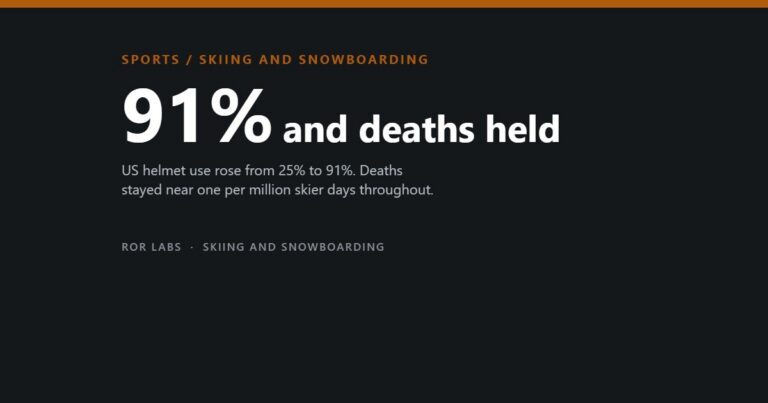
  • Cover: 91% and deaths held. US helmet use rose from 25% to 91%; deaths stayed near one per million skier days.
    Skiing and Snowboarding

    Skiing and snowboarding injuries, and what the helmet cannot do

    BySeung Hyoun Kim September 24, 2026October 2, 2026

    File photo: a ski lift above a snowy slope. Photo: DimiTalen, via Wikimedia Commons, CC0. In the news · September 2026 The National Ski Areas Association’s end-of-season report found that helmets were worn on 94% of U.S. skier visits in 2025-26, up from about 25% in 2002-03. Use was lowest in the Midwest (88%) and…
    Read More Skiing and snowboarding injuries, and what the helmet cannot doContinue

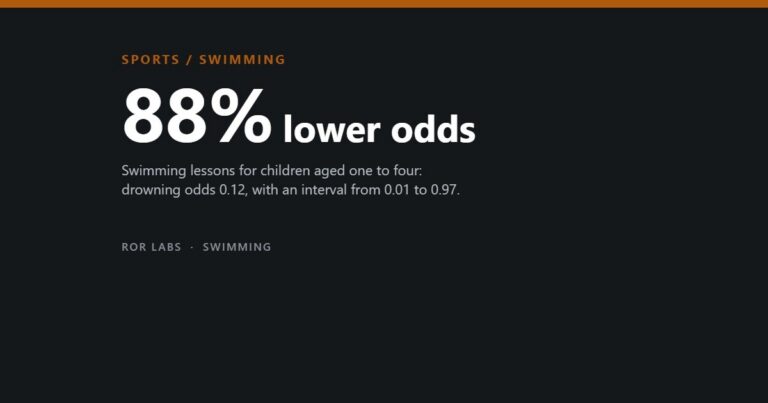
  • Cover: 88% lower odds. Swimming lessons for children aged one to four, drowning odds 0.12, interval 0.01 to 0.97.
    Swimming

    Swimming injuries, shoulders, and the lesson that changes the odds

    BySeung Hyoun Kim September 24, 2026October 2, 2026

    File photo: a swimming pool. Photo: Marc Ryckaert (MJJR), via Wikimedia Commons, CC BY 3.0. In the news · March 2026 Researchers followed 167 Portuguese competitive swimmers over six months, 75 of them with shoulder injuries and 92 without. Swimming-adapted questionnaires (ASES-swim, SSV-swim) distinguished injured from healthy swimmers better than generic shoulder scores, with ASES-swim…
    Read More Swimming injuries, shoulders, and the lesson that changes the oddsContinue

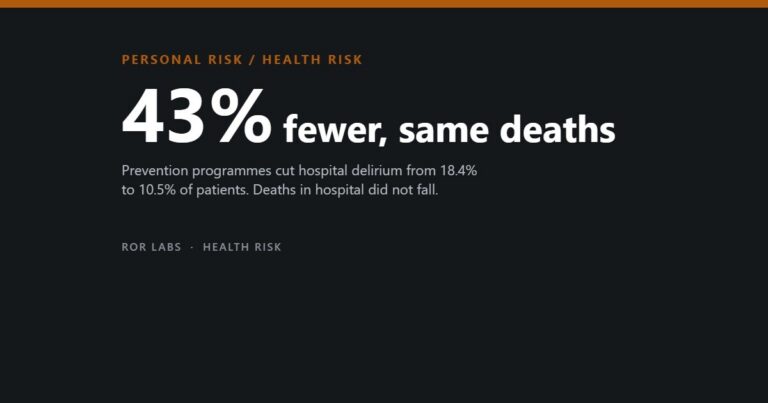
  • Cover: delirium prevention cut cases by 43% but did not reduce deaths in hospital.
    Brain and Ageing | Health Risk

    Hospital Delirium in Older Adults: What the Evidence Shows

    BySeung Hyoun Kim September 24, 2026October 2, 2026

    About 29% of older medical inpatients develop delirium, and many cases are missed. Prevention programmes cut cases by 43%, but did not reduce deaths. What the evidence shows on detection, dementia and treatment.
    Read More Hospital Delirium in Older Adults: What the Evidence ShowsContinue

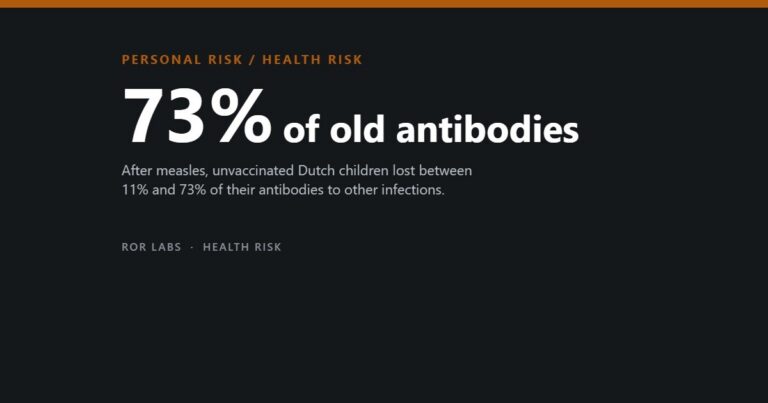
  • Cover: measles erased up to 73% of existing antibodies in unvaccinated children.
    Health Risk | Infectious Disease

    Measles: What the Evidence Shows About the Risk

    BySeung Hyoun Kim September 24, 2026October 2, 2026

    US measles cases went from 285 in 2024 to 3,471 by September 2026. How contagious measles is, how well the vaccine works, what immune amnesia is, and where the famous numbers are firmer or softer than they sound.
    Read More Measles: What the Evidence Shows About the RiskContinue

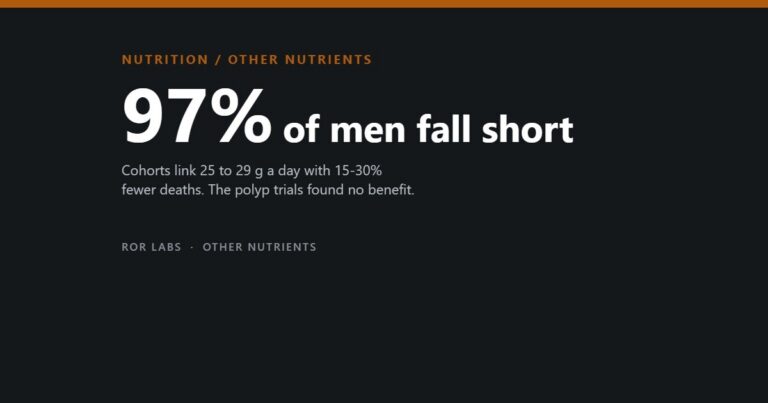
  • Cover: 97% of men fall short. Cohorts link 25 to 29 g a day with fewer deaths; the polyp trials found no benefit.
    Water and Other Nutrients

    Fiber food sources and the trials that never matched the cohorts

    BySeung Hyoun Kim September 24, 2026October 2, 2026

    File photo: whole wheat bread. Photo: Stacy Spensley, via Wikimedia Commons, CC BY 2.0. In the news · September 2026 A meta-analysis of 87 randomised trials, published in the European Heart Journal, found the greatest cardiometabolic benefit at 60 to 100 grams of wholegrain a day, around four to six servings. Benefits included lower weight,…
    Read More Fiber food sources and the trials that never matched the cohortsContinue

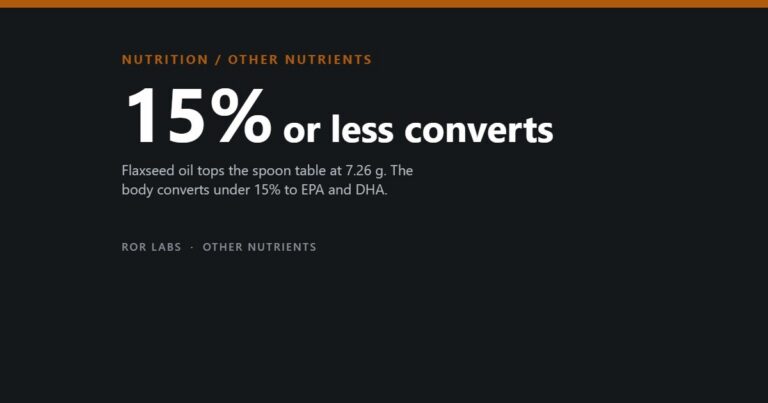
  • Cover: 15% or less converts. Flaxseed oil tops the spoon table at 7.26 g; the body converts under 15% to EPA and DHA.
    Water and Other Nutrients

    Omega-3 food sources and the spoon your body barely converts

    BySeung Hyoun Kim September 24, 2026October 2, 2026

    File photo: raw salmon fillets. Photo: FULVIO_TOGNON, via Wikimedia Commons, CC0. In the news · June 2026 A two-year placebo-controlled trial of 365 adults aged 55 to 80 at raised Alzheimer’s risk, published in eBioMedicine, tested 2,000 mg of DHA daily. Brain fluid DHA rose 17%, yet memory, cognition and hippocampal shrinkage did not improve…
    Read More Omega-3 food sources and the spoon your body barely convertsContinue

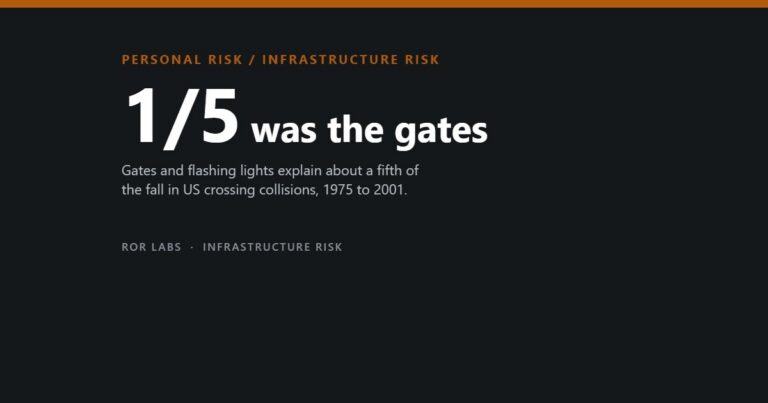
  • Cover: gates and flashing lights explain about a fifth of the fall in US level crossing collisions.
    Infrastructure Risk | Transport Networks

    Railway Level Crossing Deaths: What the Evidence Shows

    BySeung Hyoun Kim September 24, 2026October 2, 2026

    US level crossing collisions fell by more than three-quarters between 1981 and 2010, then stopped falling. Gates and lights explain about a fifth of the decline. Who dies at crossings, which kinds are safest, and why the safest kind is not always chosen.

    Read More Railway Level Crossing Deaths: What the Evidence ShowsContinue

Page navigation

Previous PagePrevious 1 … 4 5 6 7 8 … 15 Next PageNext
  • About
  • Contact
  • Affiliate Disclosure
  • Tools
  • Privacy Policy
  • RSS Feed
  • Terms of Service

© 2026 ROR Labs - WordPress Theme by Kadence WP

  • Topics
  • Tools
  • Health
    • Infectious Disease
    • Heart, Blood and Circulation
    • Brain and Ageing
    • Sleep and Overwork
    • Food and Allergy
    • Medical Care
  • Accidents
    • Fire and Burns
    • Home and Indoor Hazards
    • Falls and Impact
    • Road and Vehicles
    • Public Transport
    • Work and Machinery
    • Crowds and Public Space
  • Crime
    • Fraud and Scams
    • Accounts and Devices
    • Privacy and Data
    • Burglary and Personal Crime
  • Manipulation
    • Interface and Persuasion
    • Relationship Manipulation
    • Social Engineering
    • Information and Belief
    • Groups and Influence
  • Money
    • Investing and Markets
    • Retirement and Withdrawal
    • Insurance
    • Banking and Deposits
    • Debt and Credit
  • Environment
    • Air Quality
    • Water and Contaminants
    • Heat and Cold
    • Storms and Flooding
    • Earthquake and Wildfire
  • Social
    • Isolation and Belonging
    • Work and Livelihood
    • Family and Care
    • Bullying and Harassment
    • Youth and Digital Life
  • Geopolitics
    • Conflict and War
    • Civil Unrest and Policing
    • Travel and Borders
    • Sanctions and Economic Coercion
    • Law and Governance
  • Infrastructure
    • Power and Energy
    • Water and Sanitation
    • Healthcare Systems
    • Telecom and Internet
    • Transport Networks
  • EN日本語
Accident trends
By countryAccident TrendsUnited States
FireEarthquakesTransportFraudDiseaseInjuries
United Kingdom
FireEarthquakesTransportFraudDiseaseInjuries
AustraliaJapan
Beyond risk
Beyond riskInterestsNutrientsMacronutrientsVitaminsMineralsOtherSportsTeam Sports
BaseballBasketballAmerican FootballSoccerVolleyballIce HockeyRugbyCricket
Racket and Club
TennisPickleballGolfBadminton
Individual and Combat
RunningCyclingSwimmingWrestlingBoxing
Outdoor and Adventure
HikingClimbingSkiingHorse RidingSurfing