Skip to content
ROR Labs — Return on Risk

ROR Labs

  • Accident TrendsExpand
    • United StatesExpand
      • FireExpand
        • Home fires
        • Building fires
        • Wildfires
      • Earthquakes
      • Transport accidentsExpand
        • Road
        • Maritime
        • Aviation
      • Financial fraud
      • DiseaseExpand
        • Infectious disease
        • Chronic disease
      • Injuries
    • United KingdomExpand
      • FireExpand
        • Home fires
        • Building fires
        • Wildfires
      • Earthquakes
      • Transport accidentsExpand
        • Road
        • Maritime
        • Aviation
      • Financial fraud
      • DiseaseExpand
        • Infectious disease
        • Chronic disease
      • Injuries
    • AustraliaExpand
      • FireExpand
        • Home fires
        • Building fires
        • Wildfires
      • Earthquakes
      • Transport accidentsExpand
        • Road
        • Maritime
        • Aviation
      • Financial fraud
      • DiseaseExpand
        • Infectious disease
        • Chronic disease
      • Injuries
    • JapanExpand
      • FireExpand
        • Home fires
        • Building fires
        • Wildfires
      • Earthquakes
      • Transport accidentsExpand
        • Road
        • Maritime
        • Aviation
      • Financial fraud
      • DiseaseExpand
        • Infectious disease
        • Chronic disease
      • Injuries
  • InterestsExpand
    • NutrientsExpand
      • Macronutrients
      • Vitamins
      • Minerals
      • Other
    • SportsExpand
      • Team SportsExpand
        • Baseball
        • Basketball
        • American Football
        • Soccer
        • Volleyball
        • Ice Hockey
        • Rugby
        • Cricket
      • Racket and ClubExpand
        • Tennis
        • Pickleball
        • Golf
        • Badminton
      • Individual and CombatExpand
        • Running
        • Cycling
        • Swimming
        • Wrestling
        • Boxing
      • Outdoor and AdventureExpand
        • Hiking
        • Climbing
        • Skiing
        • Horse Riding
        • Surfing
  • Topics
  • Tools
  • HealthExpand
    • Infectious Disease
    • Heart, Blood and Circulation
    • Brain and Ageing
    • Sleep and Overwork
    • Food and Allergy
    • Medical Care
  • AccidentsExpand
    • Fire and Burns
    • Home and Indoor Hazards
    • Falls and Impact
    • Road and Vehicles
    • Public Transport
    • Work and Machinery
    • Crowds and Public Space
  • CrimeExpand
    • Fraud and Scams
    • Accounts and Devices
    • Privacy and Data
    • Burglary and Personal Crime
  • ManipulationExpand
    • Interface and Persuasion
    • Relationship Manipulation
    • Social Engineering
    • Information and Belief
    • Groups and Influence
  • MoneyExpand
    • Investing and Markets
    • Retirement and Withdrawal
    • Insurance
    • Banking and Deposits
    • Debt and Credit
  • EnvironmentExpand
    • Air Quality
    • Water and Contaminants
    • Heat and Cold
    • Storms and Flooding
    • Earthquake and Wildfire
  • SocialExpand
    • Isolation and Belonging
    • Work and Livelihood
    • Family and Care
    • Bullying and Harassment
    • Youth and Digital Life
  • GeopoliticsExpand
    • Conflict and War
    • Civil Unrest and Policing
    • Travel and Borders
    • Sanctions and Economic Coercion
    • Law and Governance
  • InfrastructureExpand
    • Power and Energy
    • Water and Sanitation
    • Healthcare Systems
    • Telecom and Internet
    • Transport Networks
  • EN日本語
ROR Labs — Return on Risk
ROR Labs
EN日本語
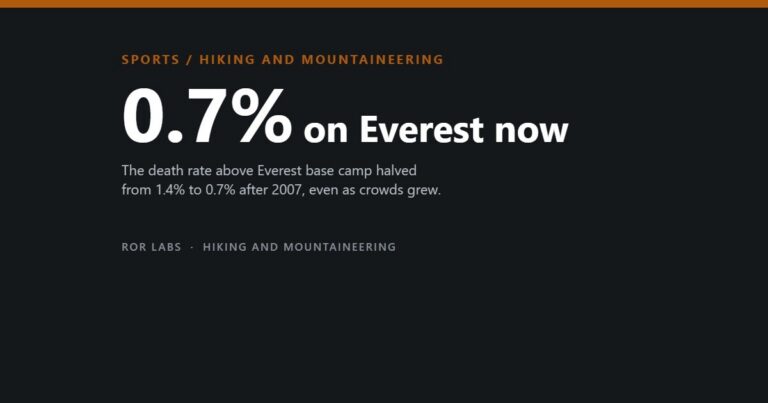
  • Cover: 0.7% on Everest now. The death rate above Everest base camp halved from 1.4% to 0.7% after 2007, even as crowds grew.
    Hiking and Mountaineering

    Hiking and mountaineering deaths, and why Everest got safer

    BySeung Hyoun Kim September 27, 2026October 2, 2026

    Hiking deaths: falls, first-day cardiac arrests, national park causes, and why Everest’s death rate halved to 0.7% even as crowds grew.
    Read More Hiking and mountaineering deaths, and why Everest got saferContinue

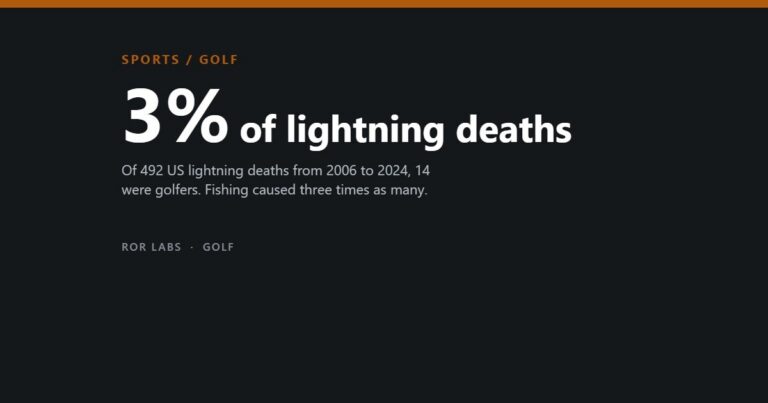
  • Cover: 3% of lightning deaths. Of 492 US lightning deaths from 2006 to 2024, 14 were golfers. Fishing caused three times as many.
    Golf

    Golf injuries, golf carts and the lightning myth

    BySeung Hyoun Kim September 27, 2026October 2, 2026

    Golf injuries to backs and elbows, child club accidents, golf cart risks, and why only 3% of US lightning deaths happen on golf courses.
    Read More Golf injuries, golf carts and the lightning mythContinue

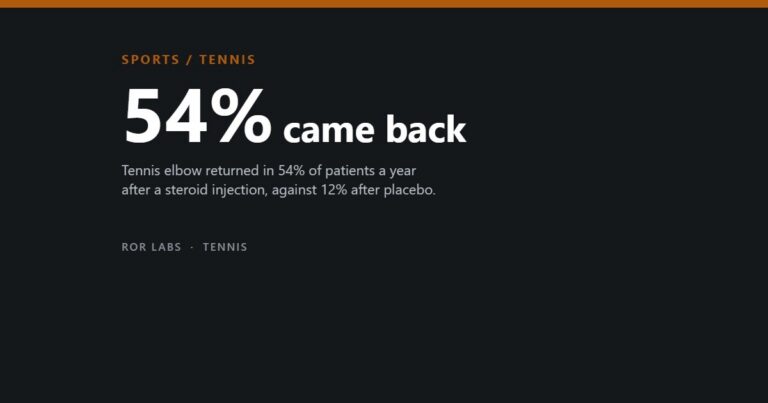
  • Cover: 54% came back. Tennis elbow returned in 54% of patients a year after a steroid injection, against 12% after placebo.
    Tennis

    Tennis injuries, tennis elbow and the injection that backfired

    BySeung Hyoun Kim September 27, 2026October 2, 2026

    Tennis injuries by body part, the tennis elbow injection trial where 54% saw pain return, and how to play carefully when training time rises.
    Read More Tennis injuries, tennis elbow and the injection that backfiredContinue

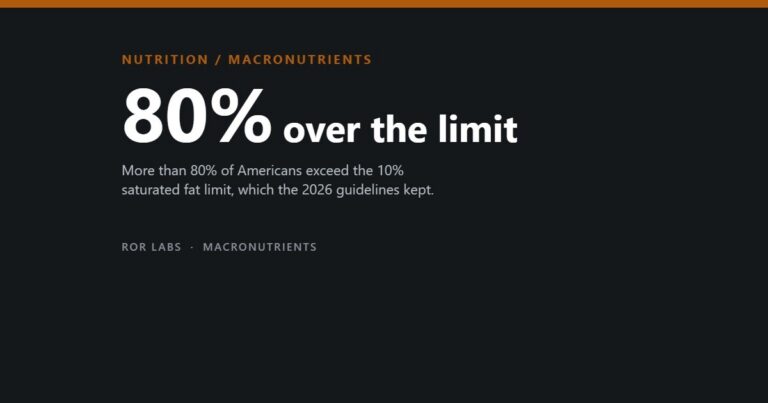
  • Cover: 80% over the limit. More than 80% of Americans exceed the 10% saturated fat limit, which the 2026 guidelines kept.
    Macronutrients

    Dietary fat food sources and the limit that stayed at 10%

    BySeung Hyoun Kim September 27, 2026October 2, 2026

    Dietary fat by the spoonful: butter and tallow against the 10% saturated fat limit kept in 2026, why most Americans exceed it, and what trials found.
    Read More Dietary fat food sources and the limit that stayed at 10%Continue

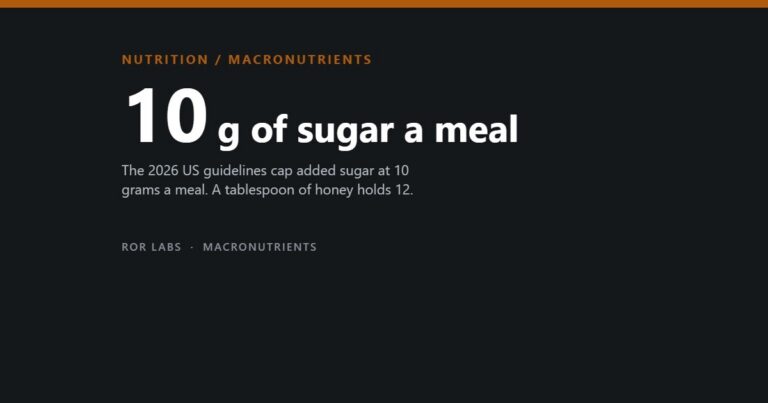
  • Cover: 10 g of sugar a meal. The 2026 US guidelines cap added sugar at 10 grams a meal. A tablespoon of honey holds 12.
    Macronutrients

    Carbohydrate food sources and the 10-gram meal

    BySeung Hyoun Kim September 27, 2026October 2, 2026

    Carbohydrate food sources by the spoonful, the 130-gram brain floor, the 2026 rule of 10 grams of added sugar per meal, and what diet trials found.
    Read More Carbohydrate food sources and the 10-gram mealContinue

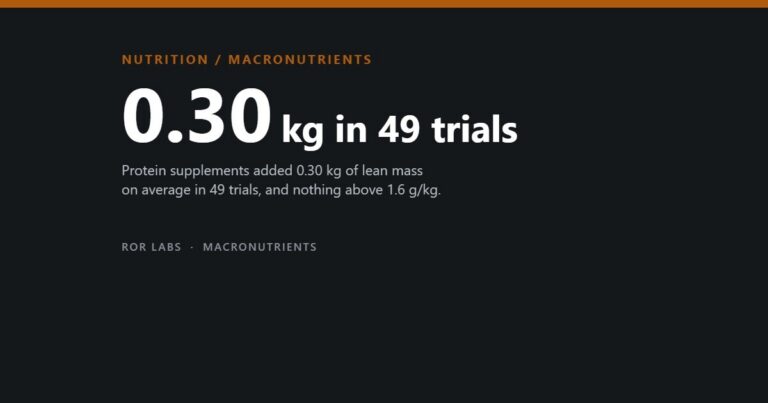
  • Cover: 0.30 kg in 49 trials. Protein supplements added 0.30 kg of lean mass on average in 49 trials, and nothing above 1.6 g/kg.
    Macronutrients

    Protein food sources and the new target above the RDA

    BySeung Hyoun Kim September 27, 2026October 2, 2026

    Protein food sources by the spoonful, why gelatin’s tryptophan is zero, the 2026 guideline target above the RDA, and what 49 trials found about muscle.
    Read More Protein food sources and the new target above the RDAContinue

  • Coercive control: what the evidence shows — ROR Labs cover showing 156 recorded.
    Psychological and Social Manipulation | Relationship Manipulation

    Coercive Control: What the Evidence Shows

    BySeung Hyoun Kim September 26, 2026October 2, 2026

    Coercive control is a pattern of domination, not a single incident. What research shows about how common it is, its link to homicide, the laws that criminalise it, and the warning signs.
    Read More Coercive Control: What the Evidence ShowsContinue

  • What reduces loneliness? What the evidence shows — ROR Labs cover showing 1 in 6 lonely.
    Isolation and Belonging | Social Risk

    What Reduces Loneliness? What the Evidence Shows

    BySeung Hyoun Kim September 26, 2026October 2, 2026

    A 2026 meta-analysis of 280 studies found loneliness interventions work on average, but not always the ones people expect. What helps, how much, and for whom.
    Read More What Reduces Loneliness? What the Evidence ShowsContinue

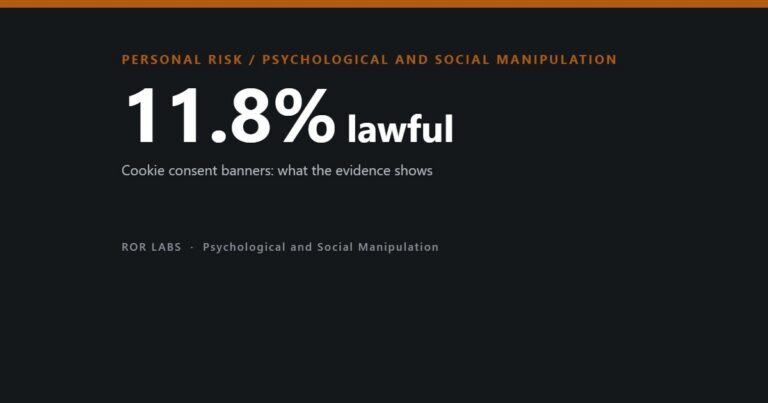
  • Cookie consent banners: what the evidence shows — ROR Labs cover showing 11.8% lawful.
    Interface and Persuasion | Psychological and Social Manipulation

    Cookie Consent Banners: What the Evidence Shows

    BySeung Hyoun Kim September 26, 2026October 2, 2026

    Only 11.8% of banners on top UK sites met minimal legal requirements in one study. How banner design steers choices, what the law requires and how to protect your privacy.
    Read More Cookie Consent Banners: What the Evidence ShowsContinue

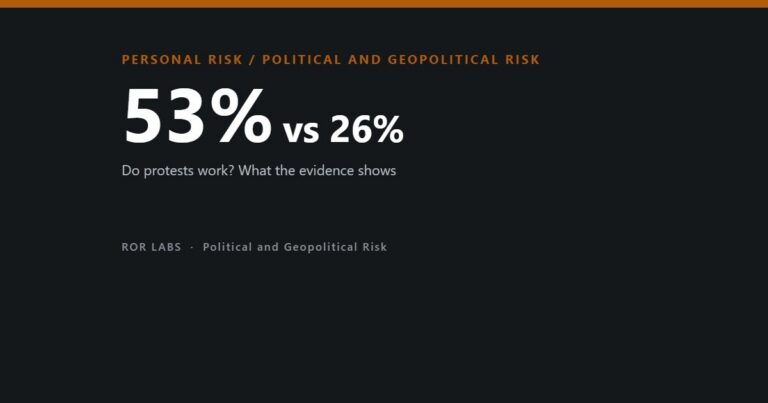
  • Do protests work? What the evidence shows — ROR Labs cover showing 53% vs 26%.
    Civil Unrest and Policing | Political and Geopolitical Risk

    Do Protests Work? What the Evidence Shows

    BySeung Hyoun Kim September 26, 2026October 2, 2026

    Nonviolent campaigns succeeded about twice as often as violent ones in the 20th century, but success rates have fallen. What the research shows about protest, violence and personal risk.

    Read More Do Protests Work? What the Evidence ShowsContinue

Page navigation

Previous PagePrevious 1 2 3 4 5 … 15 Next PageNext
  • About
  • Contact
  • Affiliate Disclosure
  • Tools
  • Privacy Policy
  • RSS Feed
  • Terms of Service

© 2026 ROR Labs - WordPress Theme by Kadence WP

  • Topics
  • Tools
  • Health
    • Infectious Disease
    • Heart, Blood and Circulation
    • Brain and Ageing
    • Sleep and Overwork
    • Food and Allergy
    • Medical Care
  • Accidents
    • Fire and Burns
    • Home and Indoor Hazards
    • Falls and Impact
    • Road and Vehicles
    • Public Transport
    • Work and Machinery
    • Crowds and Public Space
  • Crime
    • Fraud and Scams
    • Accounts and Devices
    • Privacy and Data
    • Burglary and Personal Crime
  • Manipulation
    • Interface and Persuasion
    • Relationship Manipulation
    • Social Engineering
    • Information and Belief
    • Groups and Influence
  • Money
    • Investing and Markets
    • Retirement and Withdrawal
    • Insurance
    • Banking and Deposits
    • Debt and Credit
  • Environment
    • Air Quality
    • Water and Contaminants
    • Heat and Cold
    • Storms and Flooding
    • Earthquake and Wildfire
  • Social
    • Isolation and Belonging
    • Work and Livelihood
    • Family and Care
    • Bullying and Harassment
    • Youth and Digital Life
  • Geopolitics
    • Conflict and War
    • Civil Unrest and Policing
    • Travel and Borders
    • Sanctions and Economic Coercion
    • Law and Governance
  • Infrastructure
    • Power and Energy
    • Water and Sanitation
    • Healthcare Systems
    • Telecom and Internet
    • Transport Networks
  • EN日本語
Accident trends
By countryAccident TrendsUnited States
FireEarthquakesTransportFraudDiseaseInjuries
United Kingdom
FireEarthquakesTransportFraudDiseaseInjuries
AustraliaJapan
Beyond risk
Beyond riskInterestsNutrientsMacronutrientsVitaminsMineralsOtherSportsTeam Sports
BaseballBasketballAmerican FootballSoccerVolleyballIce HockeyRugbyCricket
Racket and Club
TennisPickleballGolfBadminton
Individual and Combat
RunningCyclingSwimmingWrestlingBoxing
Outdoor and Adventure
HikingClimbingSkiingHorse RidingSurfing