Cricket umpires and fielders struck by the ball, half a second from bat to umpire
Key takeaways · 10 min read
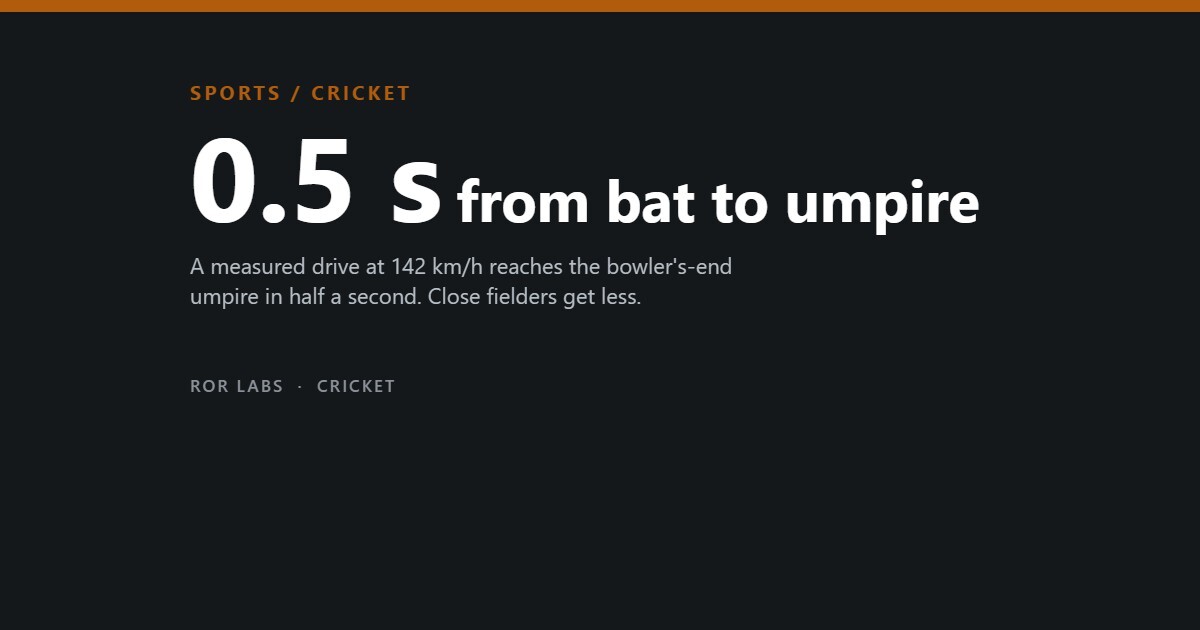
- A measured straight drive left the bat at up to 142 km/h and would cover the 20 metres to the bowler’s-end umpire in about half a second.
- A close fielder 7.3 metres away gets about a quarter of a second at average speed, close to human reaction time.
- Umpires have died after being struck in Israel in 2014 and Wales in 2009 and 2019; an umpire in Delhi was reportedly admitted to intensive care in August 2026.
- Batting helmets are tested to BS 7928; umpire helmets and arm shields are used but have not been tested for the job.
On 17 August 2026, in the 18th over of a Delhi Premier League match at the Arun Jaitley Stadium, Lakshay Thareja drove a left-arm spinner straight back down the pitch. The ball hit the umpire, Dharmesh Bhardwaj, on the right side of his face. Reports said he tried to get out of the way but had very little time, and that he was taken for assessment and admitted to intensive care.
Very little time can be measured. When sports scientists tracked 239 drives by club to international batters, the ball left the bat at up to 39.5 metres a second, about 142 km/h. At that speed a straight drive covers the 22 yards to the bowler’s end in about half a second. A fielder within 8 yards of the bat can get less than a fifth of a second.
This article covers how hard and fast a ball comes off the bat, the umpires and fielders it has killed or injured, where the risk concentrates, what helmets and shields have and have not been tested for, why the numbers on umpires are thinner than they look, and why the answer is better protection and positioning rather than leaving the field.
What a ball off the bat does
Under Law 4 a new men’s ball weighs 155.9 to 163 grams and measures 22.4 to 22.9 centimetres round. A letter in Heart pointed out that it is similar in size, weight and hardness to a baseball, and commonly travels at similar speeds. The difference is that nobody in cricket is supposed to be the target of a hit ball.
The study, by Peploe and colleagues, used 20 batters hitting balls from a bowling machine at about 25 metres a second, or 90 km/h, who were asked to hit a straight drive for maximum distance. The ball came off the bat at an average 28.1 metres a second, roughly 101 km/h, faster than it arrived. Hits away from the sweet spot were slower: two centimetres off the middle cost about 6% of the speed.
How fast a drive leaves the bat
Instantaneous ball speed just after impact, 239 forward drives by 20 club to international batters against a bowling machine. Speeds converted from metres a second.
Source: Peploe et al., Journal of Sports Sciences (2018). Elite T20 power hitting was not measured; we found no published equivalent.
Distance turns those speeds into time. The pitch is 22 yards, 20.12 metres, and the bowler’s-end umpire stands just behind the stumps, so a straight drive travels about 20 metres to reach him. A close fielder, by the definition the England and Wales Cricket Board uses for helmet rules, stands within 8 yards, or 7.3 metres, of the striker. Peter McLeod’s classic film study found that even international batters take about 200 milliseconds to react to an unexpected change in the ball’s path.
Time for a drive to arrive
Seconds for a ball to travel straight from the bat at the measured speeds. Simple arithmetic that ignores air drag and any bounce, so it is a rough guide, not a measurement.
Sources: speeds from Peploe et al. (2018); distances from MCC Law 6 and ECB safety guidelines (2025); reaction time from McLeod, Perception (1987).
What the ball does on arrival is documented mostly for batters. A review of 36 head injuries in professional cricket found five fatal and nine career-ending; fielders made up 5.5% of cases and wicketkeepers 8%, and three keepers lost their careers to eye injuries. A blow over the heart is a separate danger: in 2012 a 25-year-old batting without a chest guard collapsed within 30 seconds of a strike; he survived because coaching staff started CPR and paramedics shocked his heart nine minutes later.
Where the risk concentrates
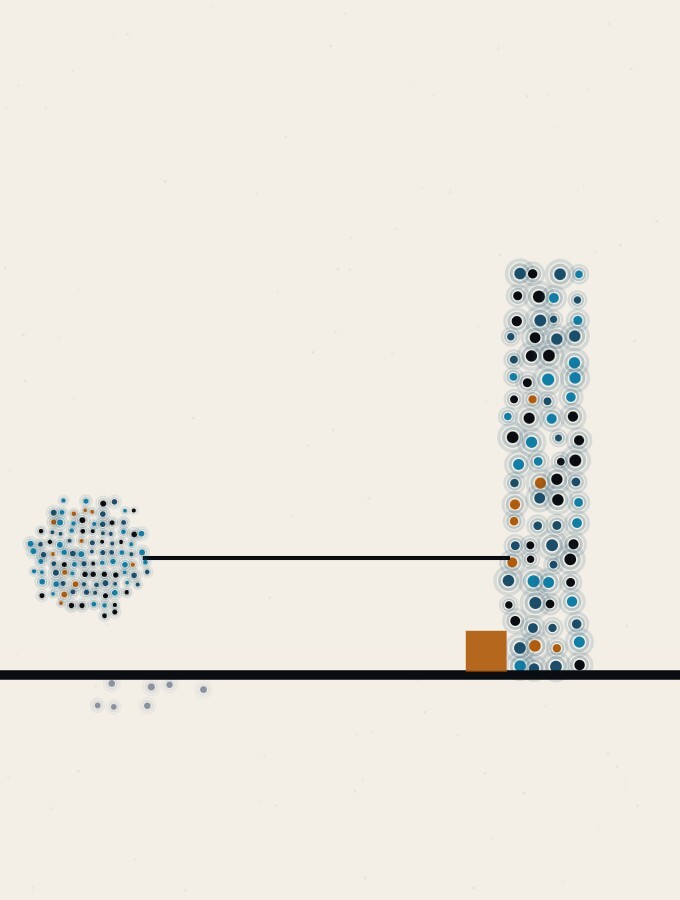
The umpire at the bowler’s end stands in the line of the straight drive, without the pads, gloves or helmet the batter wears. Hillel Oscar, 55, a former captain of Israel, was umpiring in Ashdod in November 2014 when a shot came back down the pitch; a player said it ricocheted off the stumps into him. He died in hospital in Ashkelon. A year later the Australian umpire John Ward was hit on the head in a Ranji Trophy match in India and spent a couple of nights in hospital with concussion and a small brain bleed.
Club umpires, often older volunteers, have fared worse. In July 2019 John Williams, 80, was struck on the head in a Pembrokeshire league match, flown to Cardiff and placed in an induced coma; he died five weeks later. In November 2024 Tony DeNobrega was hit flush in the face by a straight drive in a Perth suburban game and kept in hospital overnight. Throws count too: in 2009 Alcwyn Jenkins, 72, was killed in Swansea by a fielder’s return from about 37 metres that hit him on the head while his back was turned.
Who died in organised cricket in Australia
Deaths from on-field trauma in organised matches or training, 1858 to 2016, where the activity of the person who died was reported (72 of 83). Found by searching digitised newspapers.
Source: Brukner, Gara and Fortington, Medical Journal of Australia (2018). A further 91 deaths happened in informal play.
Close fielders carry the next share. In a prospective registry of elite Australian cricket in 2015–16 there were 3.9 head impacts per 1,000 player days in elite men’s matches; most hit batters, and the next most often affected were wicketkeepers and close-in fielders. Children are a separate concern. In Australian emergency departments in 1989–93, 44% of cricket injuries in under-15s were to the head, and New Zealand data found that for under-10s most hospital admissions came from being hit by the bat or other equipment, not the ball.
A legal scholar, Steve Greenfield, has argued that Twenty20’s demand for fast scoring, together with changes in bat design, puts umpires increasingly in the path of fiercely struck straight shots. That is a plausible argument, not a measurement: no study has compared exit speeds or umpire injuries across formats.
What has been measured, and what has only been adopted
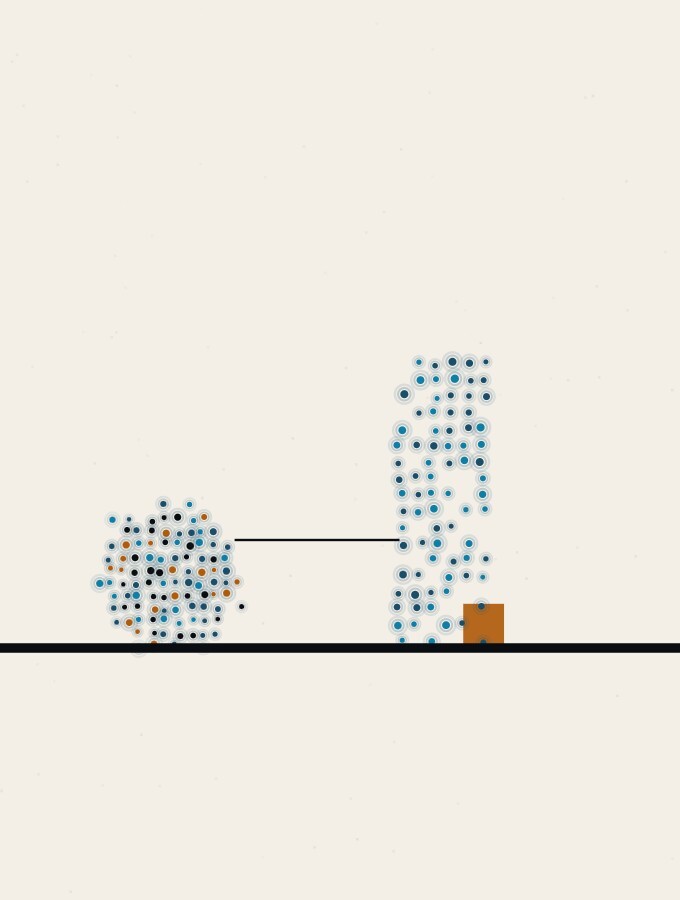
Batting helmets have a laboratory standard. The British Standard BS 7928:2013 was revised after high-profile injuries to add a projectile test: a ball of 140 to 150 grams is fired at the gap between peak and grille at up to 28 metres a second, and neither ball nor grille may touch the face. A separate drop test caps the headform’s deceleration at 250 g. The England and Wales Cricket Board made helmets compulsory for county batters from the 2016 season.
The helmets themselves have been tested more than they have been studied in the field. In air-cannon tests at 19 to 45 metres a second, McIntosh and Janda found that every helmet produced a good reduction in headform acceleration at the lower speeds, and noted how few field data show helmets preventing head injury. Richard Stretch’s drop tests found that 14 of 18 impact sites on six helmets met the recommended standard of the time. A 2018 study at 110 km/h measured about 60% less pressure on a model head with a helmet.
Laboratory speeds and real drives
Ball speeds used in helmet testing compared with the speeds measured off the bat. Converted to km/h.
Sources: Peploe et al. (2018); Stone et al. (2017), quoting BS 7928:2013; McIntosh and Janda, BJSM 37(4):325 (2003); Stretch, Journal of Sports Sciences (2000).
For close fielders the rules are about distance first and helmets second. Under ECB fielding regulations, players in under-15 cricket may not field closer than 8 yards from the bat, other than behind the wicket on the off side, and under-13s not closer than 11 yards, with or without a helmet. The ECB’s safety guidelines, updated in December 2025, require 16- and 17-year-olds fielding within 8 yards of the striker to wear a helmet, and recommend one for adults.
How close a young fielder may stand
Minimum distance from the striking batter in England and Wales, except behind the wicket on the off side, and the helmet rule at each age.
Sources: ECB fielding regulations, as published by Schools Cricket Online; ECB Recreational Cricket Safety Guidelines (December 2025 update).
Umpires have equipment but no evidence base. Bruce Oxenford introduced a clear plastic forearm shield at a World T20 warm-up in March 2016, and the ICC supplied optional helmets to umpires at that tournament; Gerard Abood had already worn one in the Big Bash League. None of this has been tested in any published laboratory study we could find, and the ECB’s recreational guidelines mention umpires only to recommend concussion and life-support training.
Why the answer is to stand carefully, not to stop
The numbers on umpires are thin, and should be read that way. Nobody counts umpire-hours, so there is no injury rate, only cases. The Australian figures come from newspaper searches, which miss the unreported and favour the dramatic; they count three umpire deaths in 158 years, and only five cricket deaths of any kind in the 30 years to 2016. When a Welsh official called a fatality less than one in a million after Jenkins died, that was a guess, not a statistic. Even the helmet standard was written for batters, not for a 140 km/h drive arriving from 20 metres.
What the cases share is more useful than any rate: a straight hit or throw, a person with little or no protection, and no time. For close fielders, wear a helmet within 8 yards and keep juniors at their legal distances. For umpires, a helmet or arm guard is a reasonable personal choice; a firmer rule is never to turn your back on a throw. Rod Marsh once suggested changing the no-ball law so umpires could stand further back. Clubs should have someone trained in CPR and a defibrillator within reach. For fast bowlers, batters and neck guards, see our earlier article on cricket injuries.
Questions people ask
Has an umpire ever been killed by a cricket ball?
Yes, though rarely. Hillel Oscar died in Israel in 2014 and John Williams in Wales in 2019 after being struck on the head; Alcwyn Jenkins died in Swansea in 2009 after being hit by a throw. An Australian review found three umpire deaths in organised cricket from 1858 to 2016.
How fast does a cricket ball come off the bat?
In one laboratory study of club to international batters, straight drives averaged about 101 km/h and reached 142 km/h. Elite power hitters may go faster, but published measurements are lacking.
Do close fielders have to wear a helmet?
In England and Wales, players aged 16 and 17 must wear one within 8 yards of the striker, younger players may not field that close at all, and adults are recommended to. Rules differ by country and league.
Do umpires wear helmets?
Some do, along with forearm shields, but it is optional and the equipment has not been tested specifically for umpires.
The short version
- A measured straight drive left the bat at up to 142 km/h and would cover the 20 metres to the bowler’s-end umpire in about half a second.
- A close fielder 7.3 metres away gets about a quarter of a second at average speed, close to human reaction time.
- Umpires have died after being struck in Israel in 2014 and Wales in 2009 and 2019; an umpire in Delhi was reportedly admitted to intensive care in August 2026.
- Batting helmets are tested to BS 7928; umpire helmets and arm shields are used but have not been tested for the job.
- There is no injury rate for umpires, only cases. The practical answer is helmets for close fielders, protection and positioning for umpires, and CPR skills at every club.
This is a summary of published research and reports, not medical advice. Anyone struck on the head or chest by a ball should stop and be assessed, and see a doctor or physiotherapist about any lasting symptoms. If someone collapses after a blow to the chest, call emergency services, start CPR and use an AED: in that situation they save lives.
Further reading: Peploe et al., Journal of Sports Sciences (2018), for ball speed off the bat. Brukner, Gara and Fortington, Medical Journal of Australia (2018), for 174 cricket deaths in Australia. Greenfield (2017), for umpires and the duty of care.
- Hitting Against the Spin, Nathan Leamon and Ben Jones (2021). Two cricket analysts on what data reveals about the modern game, including how batting has changed; not about safety.
- The Data Detective, Tim Harford (2021). Ten rules for reading statistics, useful when a risk is known only from news reports and no denominator exists.
- The Art of Uncertainty, David Spiegelhalter (2024). A Cambridge statistician on rare risks and acting on thin evidence, as umpire safety requires.
Sources
- Peploe C, McErlain-Naylor SA, Harland AR, King MA. The relationships between impact location and post-impact ball speed, bat torsion, and ball direction in cricket batting. Journal of Sports Sciences (2018), doi:10.1080/02640414.2017.1389484.
- McLeod P. Visual reaction time and high-speed ball games. Perception (1987), doi:10.1068/p160049.
- Marylebone Cricket Club. The Laws of Cricket, Law 4 (the ball) and Law 6 (the pitch), lords.org.
- Sadler DW. Commotio cordis: sudden death due to chest wall impact in sports (letter). Heart 82(4):534 (1999).
- Tripathi M, Shukla DP, Bhat DI, et al. Craniofacial injuries in professional cricket: no more a red herring. Neurosurgical Focus 40(4):E11 (2016).
- Spencer R, Sugumar H, Jones E, Farouque O. Commotio cordis: a case of ventricular fibrillation caused by a cricket ball strike to the chest. Lancet (2014), doi:10.1016/S0140-6736(14)60486-4.
- Brukner PD, Gara TJ, Fortington LV. Traumatic cricket-related fatalities in Australia: a historical review of media reports. Medical Journal of Australia (2018), doi:10.5694/mja17.00908.
- Kountouris A, Orchard JW. Incidence of head impacts at elite-level male and female cricket in Australia (abstract). British Journal of Sports Medicine (2017), doi:10.1136/bjsports-2016-097270.58.
- McLeod G, O’Connor S, Morgan D, et al. Medical-attention injuries in community cricket: a systematic review. BMJ Open Sport & Exercise Medicine 6(1):e000670 (2020).
- Greenfield S. Standing in the line of fire: cricket umpires, injuries and liability. University of Westminster (2017), WestminsterResearch 20212.
- Stone B, Harland AR, Jones JA, et al. On the dynamic response of an instrumented headform for alternative mounting stiffnesses when subjected to ballistic impacts (2017), accepted manuscript, UTS OPUS hdl:10453/117440.
- McIntosh AS, Janda DH. Evaluation of cricket helmet performance and comparison with baseball and ice hockey helmets. British Journal of Sports Medicine 37(4):325 (2003).
- Stretch RA. The impact absorption characteristics of cricket batting helmets. Journal of Sports Sciences (2000), doi:10.1080/026404100446766.
- Mohotti D, Fernando PLN, Zaghloul A. Evaluation of possible head injuries ensuing a cricket ball impact. Computer Methods and Programs in Biomedicine (2018), doi:10.1016/j.cmpb.2018.02.017.
- England and Wales Cricket Board. Recreational Cricket Safety Guidelines, December 2025 update.
- England and Wales Cricket Board fielding regulations, as published by Schools Cricket Online.
- Cricket ball kills umpire in Israel. Al Jazeera, 30 November 2014.
- Umpire struck by ball dies. Sowetan, 7 July 2009; Waters C. Now is time to start protecting our endangered umpires. Yorkshire Post, 5 September 2015.
- Umpire hit on head by ball in Pembrokeshire County Division Two match dies. The Cricketer, August 2019; Wisden, August 2019.
- Australian umpire John Ward hit on head in Ranji Trophy match. cricket.com.au, 2 December 2015; An incident that could trigger a revolution. BCCI.tv, 15 December 2015.
- Perth cricket umpire suffers gruesome injury during third-grade WASTCA match. The Nightly, 18 November 2024.
- The latest in officials’ safety equipment unveiled during Australia-Windies warm-up. cricket.com.au, 13 March 2016; Oxenford shield used in international cricket for first time. cricket.com.au, 25 June 2016.
- Umpire suffers terrifying blow on face, reportedly admitted to ICU during DPL 2026. Free Press Journal, 18 August 2026.