Ice hockey eye injuries, and the 43 eyes that built the face mask
Key takeaways · 10 min read
- In the 1974–75 season Canadian amateur hockey blinded 43 eyes. After high-sticking rules and certified face protectors, no player wearing one suffered a blinding eye injury.
- Over ten NHL seasons, players without visors had 4.23 times the risk of an eye injury; pucks caused 37% of eye injuries and high sticks 28%.
- Pucks now cause most hockey facial fractures, usually of the lower jaw, and nearly half need surgery; teeth are hit often.
- About 12% of US hockey eye injuries seen in emergency departments threaten vision, and the most serious ones happen to adults.
On 15 November 2025, in the second period of a game in Montreal, a slap shot from Noah Dobson struck the Boston Bruins defenceman Charlie McAvoy in the mouth. He left the ice bleeding and needed help to get off. He later described a displaced fracture of the jaw and said he had lost “a lot of teeth” on the bottom. After surgery he lived on soups and smoothies, lost nearly 20 pounds, and returned to practice wearing a full clear shield.
Half a century earlier, Canada counted the cost of a bare face more starkly. In the 1974–75 season alone, eye doctors reporting to a national survey recorded 43 eyes blinded in amateur hockey, and in the early data the stick caused about three-quarters of eye injuries. What followed became one of the cleanest prevention stories in sport: Tom Pashby, the ophthalmologist who led the work, reported that no player wearing a certified protector had suffered a blinding eye injury.
This article covers what pucks and sticks do to eyes, teeth and faces, where the risk concentrates, what has been measured to work, where that evidence is weaker than it looks, and why the answer is to play carefully with full protection rather than to stop. In July 2026 a US study of 20 years of emergency visits found hockey eye injuries rising again after years of decline.
What a puck or a stick does to an eye, a jaw and a face
A puck is a disc of hard rubber; in one laboratory test of face protectors it was fired at a dummy head at 27 to 45 metres per second, about 60 to 100 miles per hour. A stick blade has a long reach and a narrow edge. Blunt force to the eye can bleed into its front chamber, tear the drainage angle, dislocate the lens or detach the retina, and some players need years of follow-up for complications that appear later.
The newest picture comes from the US National Electronic Injury Surveillance System. A University of California San Diego team found 215 hockey-related eye injuries in its sample of emergency departments from 2004 to 2023, which extrapolates to about 6,500 nationally. Sticks, pucks and balls caused 83%. Most were minor injuries to the front of the eye, but 12% threatened vision: hyphaema, corneal and scleral cuts, bleeding inside the eye, retinal detachment and ruptured globes.
Hockey eye injuries in US emergency departments
Share of 215 sampled cases, 2004 to 2023, extrapolated to about 6,466 nationally (95% CI 3,736 to 9,195). Covers all forms of hockey.
Source: Meller et al., JAMA Ophthalmology (2026), doi:10.1001/jamaophthalmol.2026.2676, as reported by Review of Optometry and MedicalResearch.com.
Below the eyes the damage is to bone and teeth. Finnish insurance records from 1979 to 1982 counted 6,885 accidents to registered players; 11.5% hit the face, jaws or teeth, and 84.5% of those injuries were to teeth. A stick blow caused 54.1%. Because each cost over three times the average, they made up 38% of the cost of all hockey injuries. A Finnish trauma centre’s recent series shows the puck now dominates facial fractures.
Hockey facial fractures at a Finnish trauma centre
All 66 patients treated for a hockey-related facial fracture, January 2013 to July 2020, professional and recreational players; 98.5% male.
Source: Karhuketo et al., Acta Odontologica Scandinavica (2022), doi:10.1080/00016357.2022.2158127. Dental injuries were significantly linked to puck strikes.
Where the risk concentrates
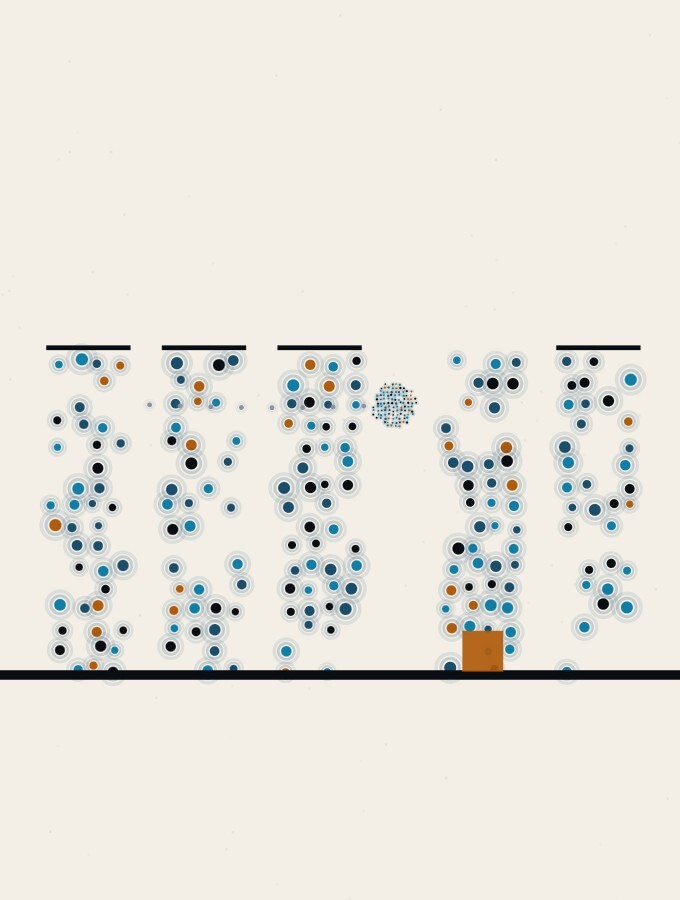
At the top of the game the risk sat with players who chose bare faces. Jonathan Micieli of the University of Toronto and colleagues reviewed ten NHL seasons, from 2002 to 2013, and counted 149 eye injuries. Players without visors had 4.23 times the risk of an eye injury. Pucks caused 37% of the injuries, high sticks 28% and fights or scrums 18%. Games missed through eye injuries were costed at more than $32 million.
The study, presented at the American Academy of Ophthalmology’s 2013 meeting, found that the bare-faced players also played more aggressively, with more penalty minutes, hits and fights, and penalty minutes correlated weakly with eye injury. Micieli drew a blunt lesson: “The majority of hockey injuries are accidental in nature, so it is not good enough for players to try to be more cautious.”
What caused eye injuries in the NHL
Share of 149 eye injuries over ten NHL seasons, 2002 to 2013.
Source: Micieli et al., “Do visors have an impact on eye injuries? A 10-year review of the National Hockey League”, American Academy of Ophthalmology annual meeting 2013 (conference presentation).
Lower down, the risk moves to adult recreational players. In a Kingston, Ontario series of 119 head, face and neck injuries seen in emergency departments, 71% were cuts, players aged 20 to 34 were hurt most, and the usual cause was a stick or puck striking a player in a helmet without a face shield. In Sudbury, 85% of 226 such injuries were to the face, and face protection was rare except among younger players.
The new US data point the same way for the most serious harm. Children and teenagers made up 69% of injured patients and had mostly minor injuries to the front of the eye; every major injury to the back of the eye was in an adult. The authors could not say whether children are more likely to be hurt, because they had no counts of players by age.
What has been measured to work
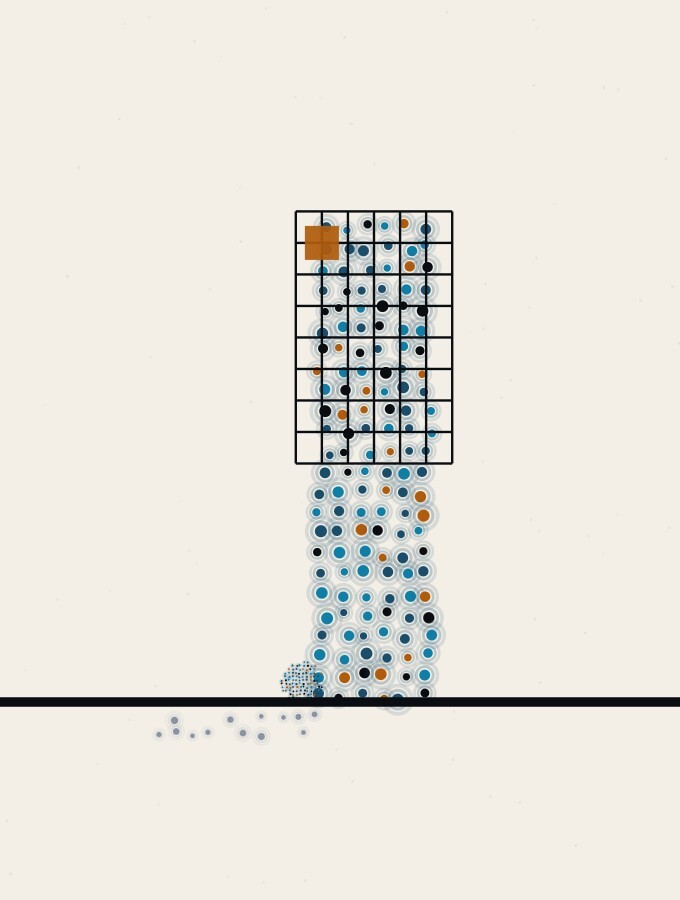
Canada ran the first large experiment. In January 1974 the Canadian Ophthalmological Society formed a committee and asked its members to report every hockey eye injury they treated. A retrospective study of 1972–73 and a prospective one of 1974–75 each gathered almost 300 injuries; 13.7% and then 16% of injured players were left legally blind. Children of 11 to 15 had the most injuries, older players the most blindness, and sticks caused most of them.
The response came in layers. The Canadian Amateur Hockey Association brought in new high-sticking rules in 1975. Tests showed that early protectors let a stick blade through just above the eye, so in 1978 the Canadian Standards Association published a national standard, and certified protectors became mandatory for all minor players. By the early 1990s Pashby had counted 262 amateur players blinded in total, and no blinding injury in anyone wearing a certified protector.
Blinding eye injuries in Canadian amateur hockey
Counts reported by the Canadian Ophthalmological Society’s eye injury surveys, which began in the 1970s.
Sources: Pashby, ASTM Special Technical Publications (1989), doi:10.1520/STP24032S, and (1993), doi:10.1520/STP13134S.
A 1995 review of North American and European injury reports concluded that mandatory helmets and face masks had cut facial and eye injuries to a quarter between 1972 and 1983. US amateur hockey followed a similar path: a 1991 review said blinding eye injuries no longer occurred in players wearing certified full face protectors. In the United States, certification is run by the Hockey Equipment Certification Council, whose approval USA Hockey requires.
The professional game moved slowly. About a fifth of NHL players wore visors in 2001–02, rising to 73% by 2012–13 without any rule. In June 2013 the league made visors compulsory for new players and let established ones choose; in 2013–14, 77.8% wore one. By July 2025 only four skaters under NHL contract still played without a visor.
NHL players wearing a visor
Share of players by season. Early estimates differ slightly between reports (21% or 23% for 2001–02). Visors became mandatory for new players from 2013–14.
Sources: Micieli and Micieli, Open Access Journal of Sports Medicine 5:43 (2014), citing Stevens et al. (2006) and the 2013 ten-season review.
Not every claim survives scrutiny. Visors do not prevent concussion: in the 2001–02 NHL season wearers had similar concussion rates, and a systematic review found no difference between full and half shields (relative risk 0.97). Two economists, tracking players forced into visors in junior and European leagues, estimated an extra 0.19 penalty minutes a game, against an average of 1.14, and called it risk compensation. That is an unreviewed working paper, and the Toronto group found the reverse pattern.
The surveillance figures carry caveats too. The new US estimate rests on 215 cases with a wide confidence interval, covers more than ice hockey, counts only emergency visits and has no count of players, so it gives no rate. Eye protection is rarely recorded in emergency notes. And partial visors leave gaps: in Finland, a third of hockey eye injuries happened to players who were wearing one.
Why the answer is not to stop playing
Serious eye injuries are uncommon. The US estimate works out at a few hundred emergency visits a year across all forms of hockey, and the authors described them as “relatively uncommon but can be serious and, in some cases, threaten vision.” The Canadian record shows that most of the remaining harm can be removed without changing the game: protectors and high-sticking rules took blinding injuries out of minor hockey, while skating, passing and shooting stayed the same.
For players the steps are specific. Wear a certified full cage or full shield, CSA in Canada or HECC in the US, fastened so a stick cannot slide underneath; one 17-year-old lost most of the sight in an eye when a stick went under his half visor. Adults in recreational leagues, where half visors or bare faces are often allowed, gain most from upgrading.
The cost is small. In a laboratory study of 28 varsity players, a cage added about 23 milliseconds to response time. Full cages also cut facial injuries in junior players far more than half shields, as our article on body checking and the rule that halved injuries described. Spectators share a little of the risk too. In March 2002 Brittanie Cecil, 13, died two days after a deflected puck struck her at a Columbus Blue Jackets game, and that June the NHL approved netting behind the goals.
Questions people ask
Do visors prevent eye injuries?
They greatly reduce them. Over ten NHL seasons, players without visors had 4.23 times the risk of an eye injury. A half visor still leaves the mouth, the jaw and the gap underneath exposed, so a full cage or full shield protects more.
Do face shields reduce concussions?
No. Studies of NHL players and a systematic review found similar concussion rates with and without visors, and with full or half protection. Concussion is driven by head impacts, not by what covers the face.
Is a wire cage or a clear full shield better?
Both work if certified. In laboratory puck tests, wire and polycarbonate full protectors allowed no contact with the face until about 74 miles per hour. Clear shields can fog and scratch; cages can let a stick tip through if badly fitted.
Are hockey eye injuries increasing?
In US emergency data they fell from 2004 to 2018 and rose again over the last five years of the study. The data cannot say why, because they include no count of how many people play.
The short version
- In the 1974–75 season Canadian amateur hockey blinded 43 eyes. After high-sticking rules and certified face protectors, no player wearing one suffered a blinding eye injury.
- Over ten NHL seasons, players without visors had 4.23 times the risk of an eye injury; pucks caused 37% of eye injuries and high sticks 28%.
- Pucks now cause most hockey facial fractures, usually of the lower jaw, and nearly half need surgery; teeth are hit often.
- About 12% of US hockey eye injuries seen in emergency departments threaten vision, and the most serious ones happen to adults.
- Visors do not prevent concussion, and partial visors leave gaps. Play carefully, in a certified full cage or shield, with a mouthguard.
This is a summary of published research, not medical advice. Any blow to the eye followed by blurred or lost vision, flashes, floaters, a shadow across the vision, blood in the eye or pain needs urgent assessment by an eye doctor or an emergency department. For jaw and tooth injuries, see a doctor or dentist promptly.
Further reading: Pashby, American Journal of Sports Medicine (1979), for the Canadian surveys that started it. Meller et al., JAMA Ophthalmology (2026), for 20 years of US emergency data. Micieli and Micieli, Open Access Journal of Sports Medicine (2014), for visor use in the NHL.
- Built to Move, Kelly Starrett and Juliet Starrett (2023). Ten simple physical habits for keeping the body durable enough for sport; general rather than hockey-specific.
- The Art of Uncertainty, David Spiegelhalter (2024). A Cambridge statistician on risk, chance and acting on imperfect evidence, useful for reading injury numbers without a denominator.
- Proof, Adam Kucharski (2025). An epidemiologist on how we decide something is true; useful when the strongest evidence is a before-and-after count rather than a trial.
Sources
- Associated Press. Bruins’ McAvoy out indefinitely, has surgery to repair facial injuries after being struck by puck. 20 November 2025; USA Today, Bruins’ Charlie McAvoy lost a lot of teeth, weight when hit by puck, December 2025; Tovell J, The Hockey News, 11 December 2025.
- Pashby T, Pashby RC, Chisholm L, Crawford JS. Eye injuries in Canadian hockey (1975). PMID 1181024.
- Pashby TJ. Eye injuries in Canadian amateur hockey. American Journal of Sports Medicine (1979), doi:10.1177/036354657900700410.
- Pashby T. Epidemiology of eye injuries in hockey. ASTM Special Technical Publication (1989), doi:10.1520/STP24032S.
- Pashby T. Eye protection in ice hockey: an historical review. ASTM Special Technical Publication (1993), doi:10.1520/STP13134S.
- Meller LLT, Chau D, Shoji MK, et al. Trends in hockey-related ocular trauma. JAMA Ophthalmology (2026), doi:10.1001/jamaophthalmol.2026.2676; Review of Optometry, 27 July 2026; MedicalResearch.com, 24 July 2026.
- Vinger PF. Ocular injuries in hockey. Archives of Ophthalmology (1976), doi:10.1001/archopht.1976.03910030032009.
- Morris DS. Ocular blunt trauma: loss of sight from an ice hockey injury. British Journal of Sports Medicine 40(3):e5 (2006).
- Smith TA, Bishop PJ. Impact of full face and visor type hockey face guards. ASTM Special Technical Publication (1989), doi:10.1520/STP24052S.
- Sane J, Ylipaavalniemi P, Leppänen H. Maxillofacial and dental ice hockey injuries. Medicine and Science in Sports and Exercise 20(2):202–207 (1988).
- Karhuketo L, Toivari M, Snäll J, Puolakkainen T. Maxillofacial injuries among ice hockey players: a retrospective study from a Finnish trauma centre. Acta Odontologica Scandinavica (2022), doi:10.1080/00016357.2022.2158127.
- Micieli J, et al. Do visors have an impact on eye injuries? A 10-year review of the National Hockey League. American Academy of Ophthalmology annual meeting, New Orleans, November 2013 (poster PO072); AAO news release.
- Deady B, Brison RJ, Chevrier L. Head, face and neck injuries in hockey: a descriptive analysis. Journal of Emergency Medicine (1996), doi:10.1016/S0736-4679(96)00134-5.
- Rampton J, Leach T, Therrien SA, Bota GW, Rowe BH. Head, neck, and facial injuries in ice hockey: the effect of protective equipment. Clinical Journal of Sport Medicine (1997), doi:10.1097/00042752-199707000-00002.
- Biasca N, Simmen HP, Bartolozzi AR, Trentz O. Review of typical ice hockey injuries (1995). PMID 7610390.
- Castaldi CR. Prevention of craniofacial injuries in ice hockey (1991). PMID 1936406.
- Hockey Equipment Certification Council (HECC), hecc.org, accessed October 2026.
- Micieli R, Micieli JA. Factors influencing visor use among players in the National Hockey League (NHL). Open Access Journal of Sports Medicine 5:43–46 (2014), doi:10.2147/OAJSM.S61010.
- Stevens ST, Lassonde M, de Beaumont L, Keenan JP. The effect of visors on head and facial injury in National Hockey League players. Journal of Science and Medicine in Sport (2006), doi:10.1016/j.jsams.2006.03.025.
- Asplund C, Bettcher S, Borchers J. Facial protection and head injuries in ice hockey: a systematic review. British Journal of Sports Medicine (2009), doi:10.1136/bjsm.2009.060152.
- Chong A, Restrepo P. Regulatory protective measures and risky behavior: evidence from ice hockey. Working paper, International Center for Public Policy, Georgia State University (2017).
- Leivo T, Haavisto AK, Sahraravand A. Sports-related eye injuries: the current picture. Acta Ophthalmologica (2015), doi:10.1111/aos.12633.
- Tovell J. The final four NHL skaters who play without visors. The Hockey News, 27 July 2025; Associated Press, The number of NHL players still playing without face visors is dwindling, 13 March 2025.
- Dowler PM, Pearsall DJ, Stapley PJ. Effects of ice hockey facial protectors on the response time and kinematics in goal-directed tasks. Proceedings of the IMechE, Part P (2009), doi:10.1243/17543371JSET29.
- Associated Press. NHL approves safety nets for fans. 21 June 2002.