Skip to content
ROR Labs — Return on Risk

ROR Labs

  • Accident TrendsExpand
    • United StatesExpand
      • FireExpand
        • Home fires
        • Building fires
        • Wildfires
      • Earthquakes
      • Transport accidentsExpand
        • Road
        • Maritime
        • Aviation
      • Financial fraud
      • DiseaseExpand
        • Infectious disease
        • Chronic disease
      • Injuries
    • United KingdomExpand
      • FireExpand
        • Home fires
        • Building fires
        • Wildfires
      • Earthquakes
      • Transport accidentsExpand
        • Road
        • Maritime
        • Aviation
      • Financial fraud
      • DiseaseExpand
        • Infectious disease
        • Chronic disease
      • Injuries
    • AustraliaExpand
      • FireExpand
        • Home fires
        • Building fires
        • Wildfires
      • Earthquakes
      • Transport accidentsExpand
        • Road
        • Maritime
        • Aviation
      • Financial fraud
      • DiseaseExpand
        • Infectious disease
        • Chronic disease
      • Injuries
    • JapanExpand
      • FireExpand
        • Home fires
        • Building fires
        • Wildfires
      • Earthquakes
      • Transport accidentsExpand
        • Road
        • Maritime
        • Aviation
      • Financial fraud
      • DiseaseExpand
        • Infectious disease
        • Chronic disease
      • Injuries
  • InterestsExpand
    • NutrientsExpand
      • Macronutrients
      • Vitamins
      • Minerals
      • Other
    • SportsExpand
      • Team SportsExpand
        • Baseball
        • Basketball
        • American Football
        • Soccer
        • Volleyball
        • Ice Hockey
        • Rugby
        • Cricket
      • Racket and ClubExpand
        • Tennis
        • Pickleball
        • Golf
        • Badminton
      • Individual and CombatExpand
        • Running
        • Cycling
        • Swimming
        • Wrestling
        • Boxing
      • Outdoor and AdventureExpand
        • Hiking
        • Climbing
        • Skiing
        • Horse Riding
        • Surfing
  • Topics
  • Tools
  • HealthExpand
    • Infectious Disease
    • Heart, Blood and Circulation
    • Brain and Ageing
    • Sleep and Overwork
    • Food and Allergy
    • Medical Care
  • AccidentsExpand
    • Fire and Burns
    • Home and Indoor Hazards
    • Falls and Impact
    • Road and Vehicles
    • Public Transport
    • Work and Machinery
    • Crowds and Public Space
  • CrimeExpand
    • Fraud and Scams
    • Accounts and Devices
    • Privacy and Data
    • Burglary and Personal Crime
  • ManipulationExpand
    • Interface and Persuasion
    • Relationship Manipulation
    • Social Engineering
    • Information and Belief
    • Groups and Influence
  • MoneyExpand
    • Investing and Markets
    • Retirement and Withdrawal
    • Insurance
    • Banking and Deposits
    • Debt and Credit
  • EnvironmentExpand
    • Air Quality
    • Water and Contaminants
    • Heat and Cold
    • Storms and Flooding
    • Earthquake and Wildfire
  • SocialExpand
    • Isolation and Belonging
    • Work and Livelihood
    • Family and Care
    • Bullying and Harassment
    • Youth and Digital Life
  • GeopoliticsExpand
    • Conflict and War
    • Civil Unrest and Policing
    • Travel and Borders
    • Sanctions and Economic Coercion
    • Law and Governance
  • InfrastructureExpand
    • Power and Energy
    • Water and Sanitation
    • Healthcare Systems
    • Telecom and Internet
    • Transport Networks
  • EN日本語
ROR Labs — Return on Risk
ROR Labs
EN日本語
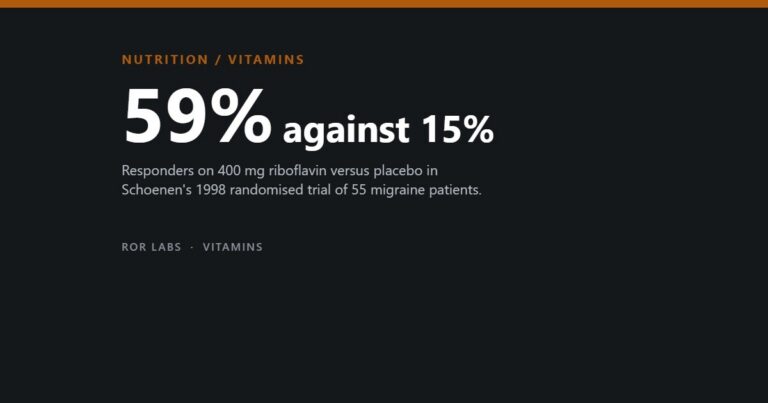
  • Dark cover tile reading NUTRITION / VITAMINS, then 59% against 15%, over a note on responder rates in the 1998 riboflavin migraine trial.
    Vitamins

    Riboflavin: Food Sources, Deficiency, and the Migraine Trials

    BySeung Hyoun Kim September 14, 2026October 2, 2026

    Riboflavin per measured tablespoon, why deficiency almost never occurs alone, and what four hundred milligrams a day did in the migraine trials.
    Read More Riboflavin: Food Sources, Deficiency, and the Migraine TrialsContinue

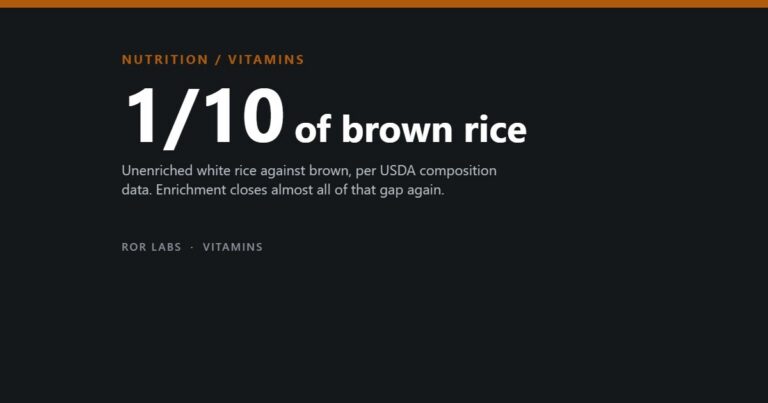
  • Dark cover tile reading NUTRITION / VITAMINS, then 1/10 of brown rice, over a note that unenriched white rice holds about a tenth of the thiamin of brown rice.
    Vitamins

    Thiamin: Food Sources, Beriberi, and Why There Is No Upper Limit

    BySeung Hyoun Kim September 14, 2026October 2, 2026

    Thiamin per measured tablespoon, the milling step that turned beriberi into an epidemic, and why the Food and Nutrition Board set no upper limit at all.
    Read More Thiamin: Food Sources, Beriberi, and Why There Is No Upper LimitContinue

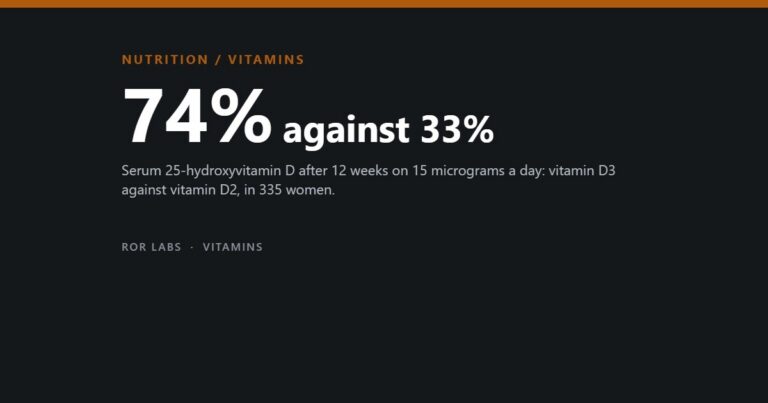
  • Dark title card reading 74 per cent against 33 per cent, over a note about serum 25-hydroxyvitamin D after 12 weeks on 15 micrograms a day of vitamin D3 or D2.
    Vitamins

    Vitamin D2 vs D3: What the Head-to-Head Trials Found

    BySeung Hyoun Kim September 14, 2026October 2, 2026

    There is no vitamin D1. There are two forms, the label treats them as interchangeable, and the randomised comparisons put D3 ahead by about 15 nmol/L — with most of the gap in a dosing schedule almost nobody uses.
    Read More Vitamin D2 vs D3: What the Head-to-Head Trials FoundContinue

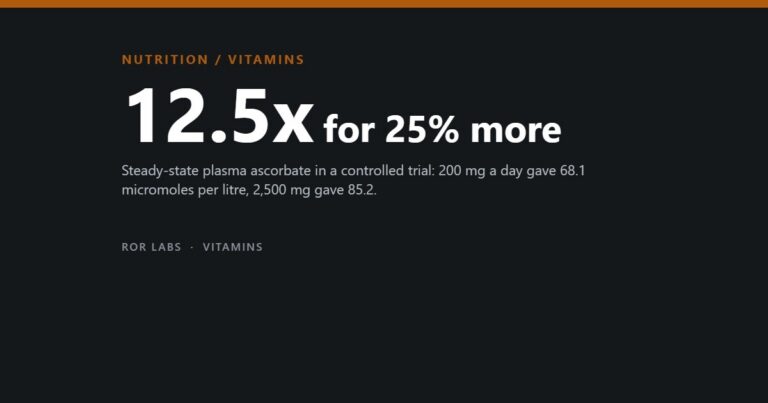
  • Dark title card reading 12.5x for 25 per cent more, over a note about steady-state plasma ascorbate at 200 and 2,500 milligrams a day.
    Vitamins

    Vitamin C: Food Sources, Scurvy, and the Ceiling the Body Sets

    BySeung Hyoun Kim September 14, 2026October 2, 2026

    Vitamin C per measured tablespoon, what a deliberate depletion showed about scurvy, and why the dose-response curve flattens long before the tablet does.
    Read More Vitamin C: Food Sources, Scurvy, and the Ceiling the Body SetsContinue

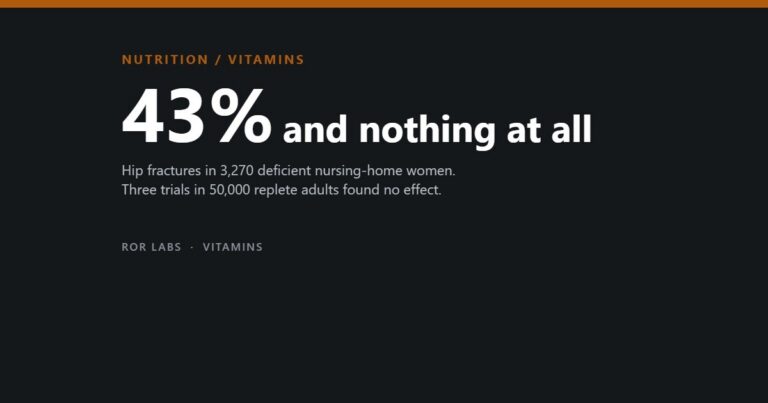
  • Dark title card reading 43 per cent and nothing at all, over a note about hip fractures in deficient nursing-home women against three trials in replete adults.
    Vitamins

    Vitamin D: Food Sources, Sunlight, and What the Trials Found

    BySeung Hyoun Kim September 14, 2026October 2, 2026

    Vitamin D per measured tablespoon, why the food table misses most of the supply, and why three large trials found nothing where a smaller one cut hip fractures by 43 per cent.
    Read More Vitamin D: Food Sources, Sunlight, and What the Trials FoundContinue

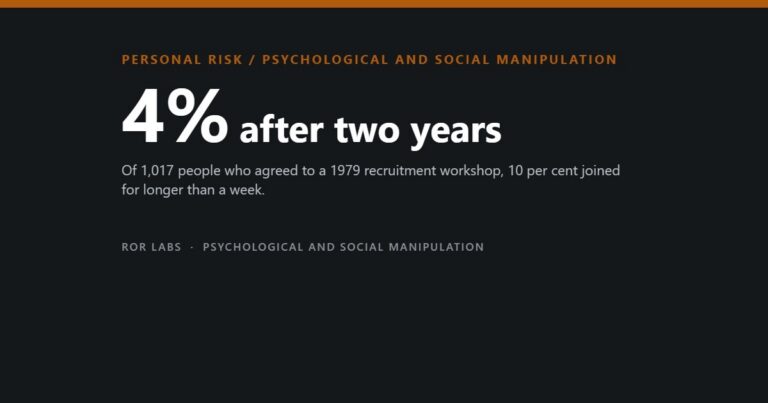
  • Dark cover tile reading 4% after two years, over a subtitle about 1,017 people who agreed to a 1979 recruitment workshop.
    Groups and Influence | Psychological and Social Manipulation

    One Thousand and Seventeen People Agreed to the Recruitment Weekend. Two Years Later, Four Per Cent Were Still Members.

    BySeung Hyoun Kim September 14, 2026October 2, 2026

    File photo: silhouettes of a group of people at sunset. Photo: Sue Huan (Unsplash), via Wikimedia Commons, CC0. In the news · July 2026 A Victorian parliamentary inquiry made 39 recommendations after reviewing 317 submissions and hearing from survivors of groups such as the Two by Twos and Geelong Revival Centre. It proposes outlawing group-based…
    Read More One Thousand and Seventeen People Agreed to the Recruitment Weekend. Two Years Later, Four Per Cent Were Still Members.Continue

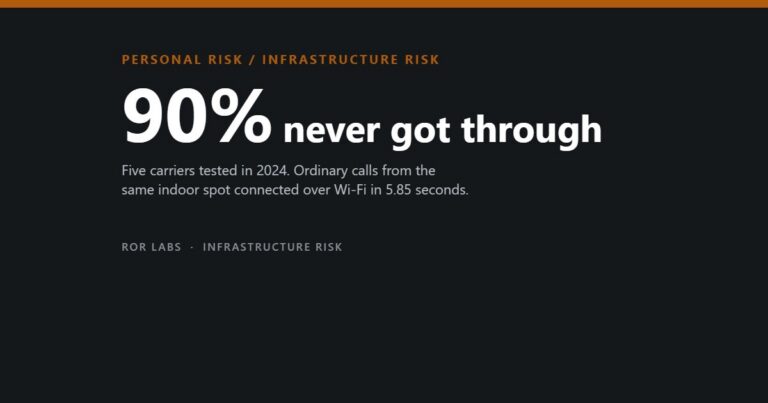
  • Dark cover tile reading 90% never got through, over a subtitle about emergency calls from an indoor spot failing to reach a dispatcher within two minutes.
    Infrastructure Risk | Telecom and Internet

    Ninety Per Cent of Emergency Calls From One Indoor Spot Missed the Dispatcher. Ordinary Calls From the Same Spot Connected in Six Seconds.

    BySeung Hyoun Kim September 14, 2026October 2, 2026

    File photo: a dispatch room at the Redding Interagency Command Center, California. Photo: Region 5 Photography, via Wikimedia Commons, public domain. In the news · July 2026 The FCC published a Next Generation 911 reliability and interoperability rule in the Federal Register, effective 10 August 2026. It requires covered providers to make location facilities reliable,…
    Read More Ninety Per Cent of Emergency Calls From One Indoor Spot Missed the Dispatcher. Ordinary Calls From the Same Spot Connected in Six Seconds.Continue

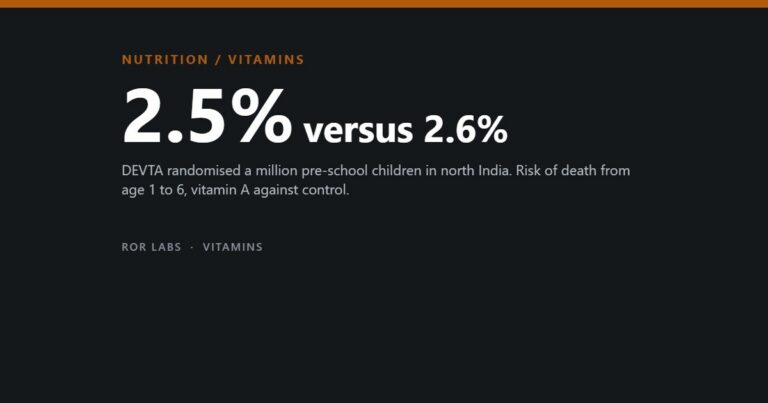
  • Dark title card reading 2.5 per cent versus 2.6 per cent, over a note about the DEVTA vitamin A trial.
    Vitamins

    Vitamin A: Food Sources, Deficiency, and Safe Limits

    BySeung Hyoun Kim September 13, 2026October 2, 2026

    How much vitamin A a tablespoon of liver, cod liver oil or sweet potato actually carries — what deficiency does, and why the 3,000 microgram upper limit matters.
    Read More Vitamin A: Food Sources, Deficiency, and Safe LimitsContinue

  • Dark title card reading four numbers, not one, over a note about the Recommended Dietary Allowance.
    Nutrients

    How Nutrients Are Classified — and What the Reference Numbers Mean

    BySeung Hyoun Kim September 13, 2026October 2, 2026

    Macronutrients, micronutrients and the thirteen vitamins — plus what EAR, RDA, AI and UL actually mean, and why an intake below the RDA is not a deficiency.
    Read More How Nutrients Are Classified — and What the Reference Numbers MeanContinue

  • Dark cover tile reading 63 more hours a day, over a subtitle about what it would take to move a teenager wellbeing half a standard deviation.
    Social Risk | Youth and Digital Life

    A Teenager Would Need Sixty-Three More Hours of Screen Time a Day to Move Their Wellbeing Half a Standard Deviation.

    BySeung Hyoun Kim September 13, 2026October 2, 2026

    File photo: a teenager texting on a smartphone. Photo: Summer Skyes 11, via Wikimedia Commons, CC BY 2.0. In the news · June 2026 A Eurobarometer survey of 26,297 teenagers and 12,750 parents across the EU, carried out in March and April 2026, found that 25% of teens exceed six hours of daily screen time…

    Read More A Teenager Would Need Sixty-Three More Hours of Screen Time a Day to Move Their Wellbeing Half a Standard Deviation.Continue

Page navigation

Previous PagePrevious 1 … 7 8 9 10 11 … 15 Next PageNext
  • About
  • Contact
  • Affiliate Disclosure
  • Tools
  • Privacy Policy
  • RSS Feed
  • Terms of Service

© 2026 ROR Labs - WordPress Theme by Kadence WP

  • Topics
  • Tools
  • Health
    • Infectious Disease
    • Heart, Blood and Circulation
    • Brain and Ageing
    • Sleep and Overwork
    • Food and Allergy
    • Medical Care
  • Accidents
    • Fire and Burns
    • Home and Indoor Hazards
    • Falls and Impact
    • Road and Vehicles
    • Public Transport
    • Work and Machinery
    • Crowds and Public Space
  • Crime
    • Fraud and Scams
    • Accounts and Devices
    • Privacy and Data
    • Burglary and Personal Crime
  • Manipulation
    • Interface and Persuasion
    • Relationship Manipulation
    • Social Engineering
    • Information and Belief
    • Groups and Influence
  • Money
    • Investing and Markets
    • Retirement and Withdrawal
    • Insurance
    • Banking and Deposits
    • Debt and Credit
  • Environment
    • Air Quality
    • Water and Contaminants
    • Heat and Cold
    • Storms and Flooding
    • Earthquake and Wildfire
  • Social
    • Isolation and Belonging
    • Work and Livelihood
    • Family and Care
    • Bullying and Harassment
    • Youth and Digital Life
  • Geopolitics
    • Conflict and War
    • Civil Unrest and Policing
    • Travel and Borders
    • Sanctions and Economic Coercion
    • Law and Governance
  • Infrastructure
    • Power and Energy
    • Water and Sanitation
    • Healthcare Systems
    • Telecom and Internet
    • Transport Networks
  • EN日本語
Accident trends
By countryAccident TrendsUnited States
FireEarthquakesTransportFraudDiseaseInjuries
United Kingdom
FireEarthquakesTransportFraudDiseaseInjuries
Australia
FireEarthquakesTransportFraudDiseaseInjuries
Japan
Beyond risk
Beyond riskInterestsNutrientsMacronutrientsVitaminsMineralsOtherSportsTeam Sports
BaseballBasketballAmerican FootballSoccerVolleyballIce HockeyRugbyCricket
Racket and Club
TennisPickleballGolfBadminton
Individual and Combat
RunningCyclingSwimmingWrestlingBoxing
Outdoor and Adventure
HikingClimbingSkiingHorse RidingSurfing